

Day trading means buying and selling a financial instrument within the same trading session so that no position stays open overnight. A stock purchased at 10 AM and sold by 12 PM the same day counts as a day trade. If that same position is held until the next morning, it’s no longer a day trade. Because every position is closed before the session ends, day traders avoid the risk of overnight price gaps that can move against them while they sleep. The approach applies across stocks, options, futures, forex, and cryptocurrencies, and it sits firmly on the speculation side of the spectrum rather than the long-term investing side.
Unlike buy-and-hold or value investing, day trading doesn’t rely on a company’s fundamentals or multi-year growth potential. Traders lean on technical analysis, chart patterns, and predefined strategies to find short-lived price moves they can profit from. The pace varies. Scalping trades might last only seconds to minutes, while other intraday trades play out over a few hours. Either way, the clock resets at the end of each session.
How does day trading work?
Day traders look for instruments that move enough in a single session to generate a profit after fees, which means they need high intraday volatility; a stock that barely budges all day doesn’t offer enough price movement to justify the risk of entering a trade. Liquidity matters just as much, because a liquid market lets you enter and exit large positions without the price slipping away from you (a problem called slippage), protecting your planned profit margin on each trade.
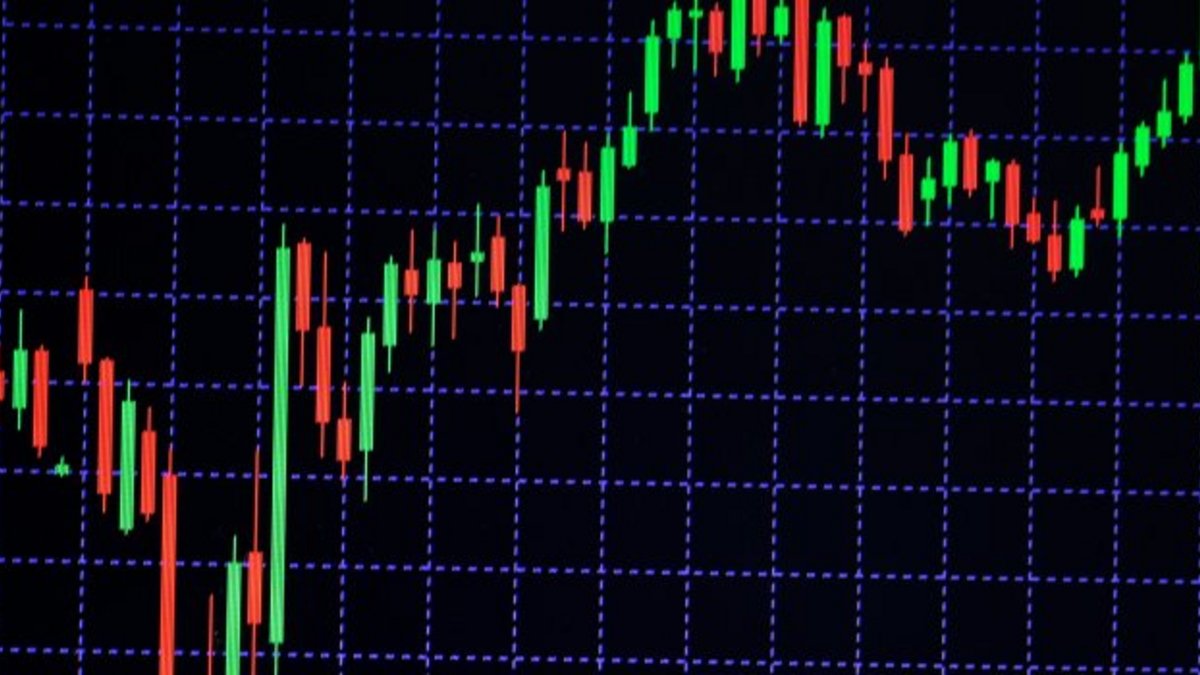
A day trade can start from either direction: buying long if you expect the price to rise, or selling short by borrowing shares and selling them first with the expectation of buying them back cheaper. Both are valid opening transactions, and experienced day traders use whichever fits the setup.
Borrowed capital is a major part of how many day traders operate. Under Regulation T, U.S. brokers permit an initial maximum borrowing ratio of 2:1. For qualified intraday traders, brokers may allow up to 4:1 buying power during the session, reduced back to 2:1 by the close. Some countries allow margin rates of 30:1 or higher in certain markets. Borrowing amplifies buying power, but it amplifies losses at exactly the same rate, which is why a single bad trade on heavy margin can wipe out days or weeks of gains.
News catalysts, earnings reports, and macroeconomic events create the intraday price swings traders target. A stock that receives a positive FDA headline, for example, has moved up more than 500% intraday, illustrating how powerful catalyst-driven volatility can be. Peak liquidity and volatility windows typically occur near market open and again near market close, which is why many day traders concentrate their activity during those hours.
Successful day traders follow a detailed plan covering which securities to trade, entry and exit patterns, time-of-day rules, and a daily stop-loss limit that caps how much they’re willing to lose before stepping away. Without that structure, the speed of intraday price action makes it easy to react emotionally rather than strategically.
Pattern day trader rule and margin requirements
FINRA defines a pattern day trader as someone who executes four or more day trades within five business days, provided those trades make up more than 6% of total trades in the margin account during that period. Once classified, the trader must maintain minimum equity of $25,000 in the account at all times. That $25,000 can be a combination of cash and securities.
If the account drops below $25,000, trading is restricted until the shortfall is corrected. Day-trade buying power is calculated from the firm’s maintenance excess plus available cash, divided by the broker’s margin requirement for the security being traded. For example, $3,000 in cash plus a firm maintenance excess at a 30% margin requirement would give $10,000 in day-trade buying power.
Exceeding that buying power and closing the position the same day triggers a day-trade call, which requires the trader to deposit additional funds. If the call goes unmet, the account faces a 90-day restriction limiting all trading to a cash-available basis. Funds deposited to meet a day-trade call must remain in the account for two full business days, not counting the deposit date itself.
Traders who haven’t been classified as pattern day traders still face consequences if they’re careless. Three unmet day-trade calls within 12 months can lead to restrictions on a non-pattern day trader’s account.
Why you need $25,000 to day trade
FINRA, rather than federal statute, sets the $25,000 minimum, and it applies specifically to margin accounts at U.S. broker-dealers and exists because pattern day traders take frequent leveraged positions that can produce rapid, outsized losses. FINRA’s reasoning is that someone trading this aggressively needs enough capital in the account to absorb those losses without creating a shortfall that destabilizes the brokerage.
Cash accounts aren’t subject to the same rule, but they come with a different limitation: trade-settlement delays. When you sell a stock in a cash account, the proceeds typically take two business days to settle, so you can’t immediately reuse that money. This effectively limits how many round trips you can make in a day.
Certain non-U.S. accounts also fall outside the pattern day trader rule, though they carry their own regulatory frameworks. Crypto exchanges generally don’t enforce the PDT rule either, which lowers the capital barrier for anyone who wants to day trade digital assets.
How much money do you need to start day trading?
The answer depends on which market you’re trading and what type of account you use.
For stocks in a U.S. margin account, unrestricted day trading requires $25,000 under the pattern day trader rule. Even before that classification kicks in, the legal minimum for opening a margin account at some brokers is $2,000. Cash accounts let you start with less, but the settlement delays mentioned above limit how actively you can trade.
Futures and forex accounts often have lower minimums than stock margin accounts. You can technically open some forex micro-accounts or crypto accounts with as little as $100, though an account that small severely limits your position sizing and makes meaningful risk management nearly impossible. Every trade’s commission and spread eats a larger percentage of a tiny account.
A practical guideline: your account size should be at least 10 times your daily profit goal. That keeps each day’s target at a manageable percentage of capital, which means a single losing day doesn’t blow a hole in your account that takes weeks to recover from.
Risks of day trading
The federal government’s investor education site describes day trading as an extremely stressful and expensive full-time job and warns that traders should be prepared to suffer severe financial losses. That warning isn’t boilerplate. Here’s what makes the risk concrete:
- You can lose your entire investment. With borrowed capital, you can lose more than you deposited. A leveraged position that moves against you doesn’t just zero out your stake; it can leave you owing money to your broker.
- Leverage magnifies losses at the same rate it magnifies gains. A 4:1 leveraged position that drops 5% costs you 20% of your equity. Most beginners underestimate how fast this math works against them.
- Margin calls can force liquidation without warning. If your equity falls below the broker’s maintenance requirement, the broker may sell your holdings to cover the shortfall. The broker, not you, chooses which securities to sell, and the timing may be the worst possible moment.
- Fast-moving markets make planned exits unreliable. During volatile sessions, the price can gap past your stop-loss order, filling you at a much worse price than you expected. This is called slippage, and it turns a small planned loss into a large unplanned one.
- Emotional decision-making causes expensive mistakes. Fear pushes traders to cut winners short. Greed pushes them to hold losers, hoping for a reversal. Under real-time pressure with real money at stake, these impulses distort judgment in ways that are hard to appreciate until you’ve experienced them.
- Most day traders lose money. The activity is classified as high-risk speculation by the SEC, and research consistently shows that a large majority of participants end up unprofitable over time.
What is the success rate of day traders?
Fewer than 10% of day traders are consistently profitable, a figure commonly cited across the industry. The research that exists paints an even starker picture.
A 2014 study from the University of California analyzed over 3.7 billion trades on the Taiwan Stock Exchange covering 1992 to 2006. It found roughly 3% of day traders were profitable. A separate study of Brazilian equity futures traders between 2012 and 2017 found that 97% of those who traded more than 300 days lost money. Out of 1,551 persistent traders in the Brazilian sample, only 17 individuals (1.1%) earned more than the Brazilian minimum wage equivalent of about US$16 per day. Just 8 of them (0.5%) earned more than a bank-teller starting salary. Even the top earner, who averaged US$310 per day, experienced wild swings, with standard deviations of daily profit ranging from US$632 to US$3,308.
These studies cover specific markets and time periods, so they don’t automatically apply to every trader in every market. But they reveal a consistent pattern: the overwhelming majority of people who try day trading don’t make money at it. Brokers hold the actual customer-level profitability data, and publicly available studies remain limited.
Advantages and disadvantages of day trading
Day trading offers real structural advantages over traditional employment or starting a physical business, but those advantages come with equally real downsides.
Advantages:
- Geographic flexibility. You can trade from anywhere with a reliable internet connection. There’s no commute and no physical location to maintain.
- Schedule independence. Profitable traders may work only a few hours per day, concentrating on the high-volatility windows and stepping away when the market goes quiet.
- Low overhead. Compared with launching a traditional business, startup costs are minimal: a computer, a brokerage account, charting software, and trading capital.
- Self-employment. You answer to yourself, set your own rules, and keep what you earn after taxes and fees.
Disadvantages:
- Your startup capital is directly at risk. Unlike a business where equipment retains some resale value, money lost in the market is gone.
- The learning curve is steep and long. Most traders spend months or years before developing any consistent edge, and many never get there.
- The emotional toll is significant. Daily swings between gains and losses create stress that compounds over time, especially during drawdown streaks.
- Success demands a specific temperament. You need the discipline to follow rules mechanically, the willingness to accept repeated losses without spiraling, and a competitive drive that doesn’t bleed into recklessness.
Popular day trading strategies
Your strategy determines which securities you trade, which chart patterns you watch, when during the day you’re active, and how you exit. Being able to adjust your approach as market conditions shift is itself a core skill.
Momentum (trend following)
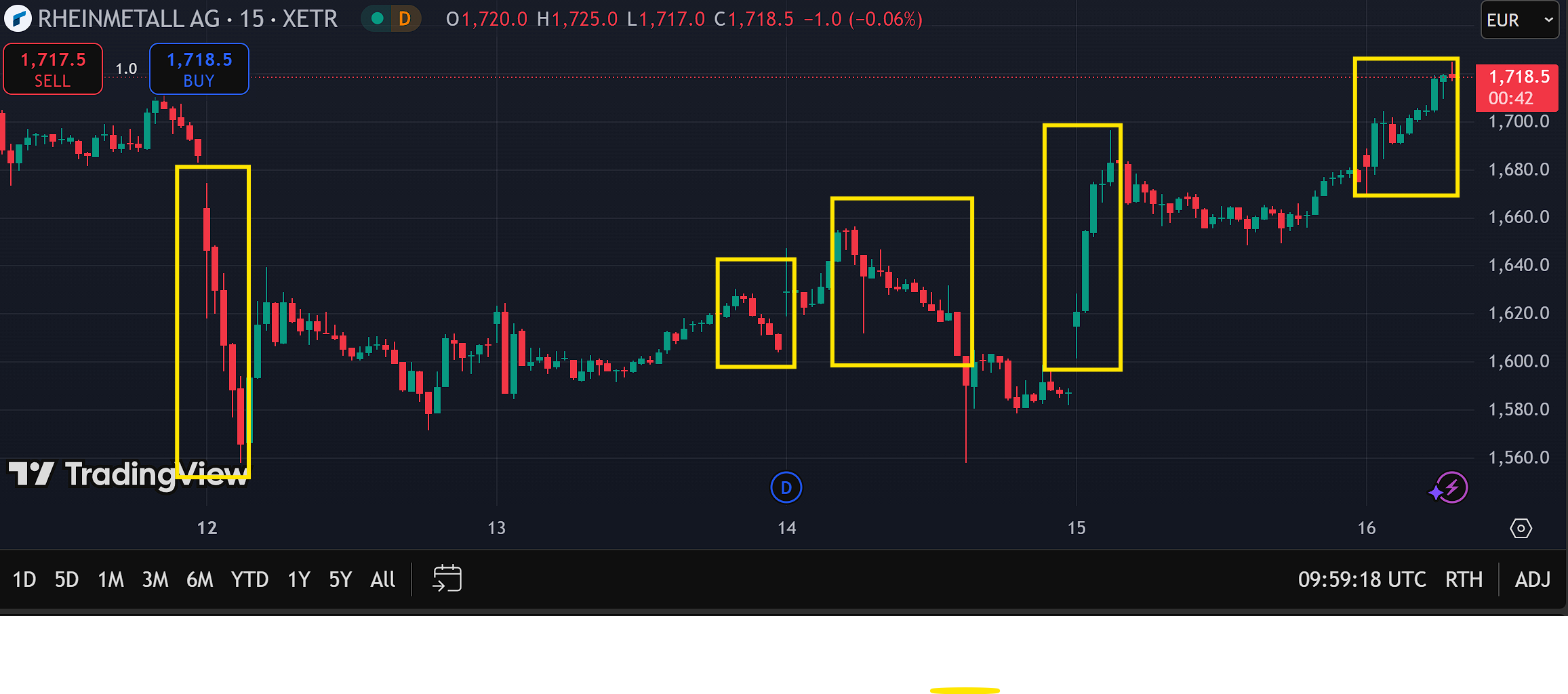
Momentum trading means buying instruments that are already moving up, or shorting those that are moving down, with the expectation that the trend will continue. Day traders apply this on intraday charts, using technical indicators to confirm both the direction and the strength of the trend. When a stock breaks above resistance on heavy volume, for instance, a momentum trader buys expecting the move to keep going. The logic is simple: assets in motion tend to stay in motion until something changes.
Scalping
Scalping targets the smallest price moves, often just the gap between the bid and ask price. Trades last seconds to minutes, and the profit on each one is tiny. The strategy works because the volume of trades compensates for the small per-trade gain. Scalpers rely on support and resistance zones, overbought and oversold signals, and the fade technique, which involves trading against sudden spikes that are likely to reverse quickly. It requires fast execution and very tight risk management, since one bad trade can erase the gains from dozens of good ones.
Range trading
Range trading works on stocks that are moving sideways rather than trending. The trader buys near a defined support level and sells near resistance, repeating the pattern as the price oscillates between those boundaries. It’s the opposite of trend following. The strategy breaks down when the price finally breaks out of the range, which is why range traders watch for signs that the boundaries are weakening.
Contrarian trading
Contrarian traders bet against the prevailing momentum, buying when others are selling and selling when others are buying. The assumption is that overextended moves will reverse as the market corrects irrational short-term behavior. This approach is often combined with algorithmic execution to act on those reversals faster than manual traders can.
Most popular markets for day trading
Each market has its own character, rules, and capital requirements. Your choice shapes everything from how much money you need to when you can trade.
- Stocks. The widest range of tickers and high liquidity on major U.S. exchanges. The tradeoff is the pattern day trader rule, which locks you out of unrestricted trading in a margin account unless you maintain $25,000.
- Futures. Lower margin requirements relative to contract value and nearly 24-hour sessions. The PDT rule doesn’t apply, making futures accessible with less capital than stocks in a margin account.
- Forex. A 24-hour weekday market with high leverage available and deep liquidity on major currency pairs like EUR/USD and GBP/USD. The round-the-clock schedule gives flexibility but also means the market can move while you’re asleep.
- Cryptocurrencies. Trading runs 24/7, 365 days a year. No PDT rule, accessible with small accounts, and high volatility on many tokens. The tradeoff is less regulatory protection and exchange-specific risks.
- Options. Used for leveraged plays on stock price direction with defined risk on the buying side. However, options pricing is complex, involving time decay, implied volatility, and the Greeks, which adds a layer of risk that goes beyond simply being right about direction.
Day trading in crypto markets
Crypto markets run around the clock, every day of the week. U.S. stock exchanges operate roughly 6.5-hour regular sessions, so crypto’s 24/7 availability means there’s always an active market, whether it’s a Sunday evening or a holiday morning. That continuous access is a structural advantage for anyone whose schedule doesn’t align with traditional market hours.
FINRA’s pattern day trader rule doesn’t apply to crypto exchanges, which removes the $25,000 barrier entirely. You can open an account with a small amount and trade as frequently as you want without worrying about a day-trade count. Volatility on smaller-cap tokens often exceeds what you’d see in most stocks, creating frequent intraday setups for traders who know how to read them.
Exchange selection matters more in crypto than in equities. Fees, available order types, supported trading pairs, and security features vary significantly from one platform to the next, and reviewing the best crypto exchanges can help you understand how those differences directly affect your execution quality and costs. The exchange reviews and comparisons on AXL Research Hub break down these differences so you can match an exchange to your trading style.
Leverage is available on many crypto exchanges, but the mechanics differ from stock margin accounts. In equities, a margin call gives you time to deposit funds. On many crypto exchanges, your position is automatically liquidated once your margin ratio hits a threshold, and it can happen in seconds during a sharp move. This liquidation mechanic means leveraged crypto trades can go to zero faster than most beginners expect.
The absence of centralized regulation also means you’re responsible for vetting the exchange’s reliability and fund security. Researching an exchange’s track record, security practices, and proof-of-reserves reporting isn’t optional; it’s the price of operating in a market with fewer regulatory guardrails.
Essential tools for day trading
Before your first trade, simulated or live, you’ll need the right setup. Each tool serves a specific function, and skipping one creates a blind spot.
- Brokerage account with fast order execution and competitive commissions. Slow fills and high fees erode profits on short-term trades. Look for a broker that matches your chosen market and offers the order types your strategy requires.
- Charting platform with customizable time frames and technical indicators. Candlestick charts are the standard, conveying four data points per period: open, high, low, and close. Your platform should let you overlay indicators like moving averages, RSI, and VWAP on any time frame from one minute to daily.
- Stock or asset scanner. Scanners filter the market in real time by criteria like volume, price change, relative volume, and float. Without a scanner, you’re guessing which instruments are in play today.
- Real-time news feed. Catalysts drive intraday price movement. An earnings surprise, an FDA decision, or a macroeconomic data release can move a stock within seconds. You need to know about these events as they happen, not after.
- Paper-trading simulator. This lets you practice placing orders, managing positions, and following your strategy without risking real money. Every beginner should spend meaningful time here before going live.
- Trade journal or metrics tracker. Record every trade’s entry, exit, size, strategy, and result. Over time, this data reveals your win rate, profit-to-loss ratio, best trading times, and which strategies actually work for you versus which ones you only think work.
How to start day trading as a beginner
- Learn core terminology and basic technical analysis. Before you place even a simulated trade, understand what support, resistance, candlestick patterns, and volume mean and how traders use them to make decisions. You don’t need to master everything, but you need enough vocabulary to follow a strategy.
- Study and adopt a specific trading strategy. Pick one approach, whether it’s momentum, scalping, or range trading, and define your rules: what triggers an entry, what triggers an exit, and what your maximum daily loss will be before you walk away. Vague intentions aren’t a strategy.
- Select your tools. Choose a broker, charting platform, scanner, and news source that align with your strategy and your chosen market. If you’re day trading crypto, our exchange comparison guides on AXL Research Hub can help you narrow down the options.
- Practice in a paper-trading simulator. Trade with fake money until you can demonstrate consistent simulated profitability. This isn’t a formality. Simulators teach you how orders actually fill, how fast prices move, and whether your strategy holds up under real market conditions, all without risking a dollar.
- Assess your own strengths and weaknesses. Are you disciplined enough to stop at your daily loss limit? Can you handle watching a winning trade reverse? Do you recognize patterns quickly? Honest self-assessment now saves expensive lessons later.
- Track metrics from every trade. From your very first simulated trade, log the details. The patterns in your data will tell you what’s working and what isn’t far more reliably than your memory or gut feeling.
- Start live trading small. When you transition to real money, consider trading with only 10 shares per position. The goal of your first live sessions isn’t to make money. It’s to work out execution kinks, experience the emotional difference between simulated and real trading, and confirm that your process holds up before you scale up.
Is day trading illegal?
Day trading is legal in the United States and most other major markets. In the U.S., it’s regulated by the SEC and FINRA, with specific rules like the pattern day trader classification governing how it’s practiced. The activity itself isn’t restricted. What’s restricted is trading without meeting the applicable capital and margin requirements.
Certain practices are illegal regardless of whether you’re day trading or investing long term. Spoofing (placing fake orders to manipulate prices), wash trading (buying and selling the same security to create misleading activity), and insider trading (acting on material nonpublic information) are all prohibited and carry serious penalties.
Tax implications of day trading
Profits from day trades are taxed as short-term capital gains in the U.S. because the holding period is always less than one year. Short-term capital gains are taxed at your ordinary income tax rate, which is higher than the long-term capital gains rate that applies to investments held longer than a year. Crypto taxes follow the same split, so a coin flipped inside a year is taxed at the higher rate. This tax treatment eats into returns more than many new traders realize.
The wash-sale rule is a frequent trap. If you sell a security at a loss and repurchase a substantially identical security within 30 days, the IRS disallows that loss for tax purposes. Day traders, who often trade the same handful of tickers repeatedly, can accidentally trigger wash sales dozens of times in a single month, inflating their taxable income well beyond their actual net profit.
Traders who meet IRS criteria for trader tax status can elect mark-to-market accounting under Section 475(f). This election eliminates wash-sale complications entirely because all positions are marked to fair market value at year end, and gains and losses are treated as ordinary. The downside is that you can’t defer gains, and the election must be filed on time. It’s a powerful tool, but it changes how your entire portfolio is taxed.
The record-keeping burden alone is substantial. Every trade needs a documented entry price, exit price, date, and cost basis. Hundreds of trades per month generate a paperwork load that requires either meticulous spreadsheets or specialized tax software. Consulting a tax professional experienced with active trading before your first tax year is well worth the cost.
Managing emotions and building discipline
Fear of loss pushes traders to exit winning positions too early, locking in a small gain and missing the larger move their strategy was designed to capture. On the other side, greed convinces traders to hold past their planned exit, watching profits evaporate as the price reverses. Both impulses feel rational in the moment but systematically degrade your results over time.
Revenge trading is the most destructive pattern. After a loss, the urge to increase position size and “make it back” is powerful. But trading bigger after a loss means you’re taking more risk precisely when your judgment is most compromised. This behavior accelerates drawdowns and is one of the fastest ways to blow up a small account.
Before the session starts, decide how much you’re willing to lose that day, and when you hit that number, stop trading with no exceptions. This pre-set daily loss limit acts as a circuit breaker that prevents the worst-case emotional spirals.
Routine reinforces discipline. A consistent pre-market preparation period, where you review news, scan for setups, and identify key levels, puts you in a focused state before the bell rings. A defined trading window keeps you from sitting at the screen all day, which leads to overtrading. A post-session review, where you log your trades and evaluate your decisions against your plan, closes the loop and turns each day into data you can learn from.
Spending meaningful time in a simulator before trading real money teaches more than the mechanics: it conditions you to follow your rules mechanically, building the habit before real money adds emotional weight. When the transition to live trading comes, the rules should feel automatic, not effortful.
Frequently asked questions
Can you day trade with $100?
Yes, in markets that don’t impose a $25,000 minimum. Crypto exchanges and forex micro-accounts both allow you to start with very small amounts. However, a $100 account severely limits your position sizing. You can’t spread risk across multiple trades, your profit potential per trade is tiny, and a single bad trade can wipe out a large percentage of your capital. It’s enough to learn the mechanics, but don’t expect meaningful income from it.
How much can a day trader make with $1,000?
Returns depend on your strategy, market, and risk management. With a $1,000 account, fees take a proportionally larger bite out of each trade, and you have less room to absorb losses before your account size starts limiting what you can do. Realistic daily dollar gains at this level are modest. The account is better suited for learning and building a track record than for generating income.
How much do day traders make per year?
Salary-aggregation sites report self-employed day-trader income in the range of roughly $94,000 to $134,000 per year, but those figures reflect only traders who remain active and self-report. They don’t capture the majority who quit at a loss. As a reference point, earning $400 per day in profit across approximately 250 trading days in U.S. equity markets would produce about $100,000 annually before taxes. Reaching that level consistently requires significant capital, a proven strategy, and the discipline to execute it day after day.
Can I make $1,000 a day day trading?
It’s possible with sufficient capital, skill, and favorable market conditions, but it’s far from guaranteed on any given day. Consistent $1,000 daily profit requires a well-capitalized account and a proven edge. Many traders who target that number prematurely end up taking excessive risk and accelerating their losses.
What is the best time of day to day trade?
The highest volatility and volume typically occur in the first hour after market open and the last hour before close. These windows offer the most opportunities because more participants are active and price moves are larger. The midday hours tend to be quieter, with choppier, less directional price action that many traders avoid.
Can I day trade in a retirement account?
Technically, yes, but retirement accounts come with restrictions that limit the approach. Margin access is typically unavailable or heavily limited, which reduces your buying power. The pattern day trader rule may still apply depending on the account type and broker. Tax consequences differ from taxable accounts, and early withdrawals to cover losses can trigger penalties. Most active traders keep speculative trading in a separate taxable account.
Day trading versus long-term investing
Day trading and long-term investing pursue returns through fundamentally different paths. Day trading seeks many small gains from daily price fluctuations, closing every position before the session ends. Long-term investing seeks compounding growth over years or decades, relying on the historical tendency of diversified portfolios to recover from drawdowns over time.
Because day trading racks up frequent commissions and triggers short-term capital gains tax rates on every profitable trade, its cost structure is far heavier than that of long-term investing, which incurs lower transaction costs and, for positions held over a year, qualifies for lower long-term capital gains rates. Over time, these cost differences compound.
The time commitment differs sharply too. Day trading demands active monitoring throughout the trading session. Long-term investing requires periodic review, perhaps quarterly rebalancing and an annual check on your allocation. The SEC’s guidance is direct: investing for the long term is the approach most likely to build a secure financial future.
The risk profiles aren’t comparable. Day trading carries a high probability of loss in any given period, and the research on success rates reinforces that. Diversified long-term portfolios experience drawdowns, but they’ve historically recovered given enough time. That said, the two approaches can coexist in a financial plan. Some traders separate speculative capital from retirement savings, keeping their day-trading account sized to an amount they can afford to lose entirely without affecting their long-term goals.
Key takeaways before placing your first day trade
Day trading is legal and accessible, but the odds run against most participants. Research across multiple markets consistently shows the majority of day traders lose money. Knowing that going in doesn’t guarantee you’ll beat those odds, but ignoring it virtually guarantees you won’t.
Before you risk real capital, understand the margin rules and capital requirements that apply to your chosen market. If you’re trading stocks in a margin account, the $25,000 pattern day trader threshold isn’t optional. If you’re trading crypto or futures, the barriers are lower, but the risks aren’t.
Practice in a simulator until your results are consistently profitable. Not for a day or a week, but long enough that you’ve traded through different market conditions and your metrics show a real edge. Then start live with small position sizes and scale up only as your track record justifies it.
Your choice of market matters. Stocks, futures, forex, and crypto each have different hours, capital requirements, leverage rules, and regulatory structures. Match the market to your available capital, risk tolerance, and daily schedule.
Finally, emotional discipline and a rule-based strategy are what separate the small percentage of profitable traders from everyone else. The strategy tells you what to do. The discipline makes you actually do it, especially on the days when your instincts are screaming at you to do the opposite.