

Bybit ranks among the top three centralized crypto exchanges by trading volume, with a registered user base cited between 60 million and 80 million. That scale brings deep liquidity, but it also brings questions about fees that vary by region, custody risks highlighted by a record-breaking hack, and a product lineup so broad that the real cost of trading often hides behind the headline rate.
What is Bybit?
Bybit is a crypto exchange founded in 2018 by Ben Zhou. Originally a derivatives-only platform, it has since expanded into spot trading, margin, options, copy trading, bots, earn products, P2P, tokenized stocks, TradFi CFDs, an NFT marketplace, and a debit card. The company relocated its headquarters from Singapore to Dubai, UAE in 2022, and it now operates separate regional entities: Bybit Global, Bybit EU, and a UK offering, each with different product availability and fee schedules.
The platform’s matching engine processes 100,000 transactions per second with roughly 1 ms latency. You can trade through the web platform, an iOS app, or an Android app, with MT4 and TradingView integrations available depending on your service zone.
Products and features
Bybit’s product menu spans distinct risk profiles. A spot balance, a leveraged derivative position, a copied strategy, and a tokenized asset each create fundamentally different exposures, and understanding those differences matters before you fund an account.
One structural detail worth knowing: the Unified Trading Account pools collateral across spot, margin, perpetuals, and options. Cross-collateralization means your spot holdings serve as shared margin. If a derivatives position moves sharply against you, the system can liquidate your spot assets to cover the loss, even if you didn’t intend those tokens as margin. This is a meaningful risk if you hold long-term spot positions alongside leveraged trades in the same account.
Spot, margin, and derivatives
- Spot trading covers roughly 640 pairs on the global order book. Fiat-quoted pairs sit on a separate fee schedule with higher rates than crypto-quoted pairs.
- Margin trading lets you borrow against collateral to amplify spot exposure. Liquidation kicks in when your equity drops below the maintenance margin requirement, so borrowed positions need active monitoring.
- Perpetual contracts come in three flavors: USDT-margined, USDC-margined, and inverse (coin-margined), spanning roughly 740 derivatives pairs. Perpetuals don’t expire. Instead, funding payments are exchanged every eight hours to pull the contract price toward the spot index. When the funding rate is positive, longs pay shorts; when it’s negative, the flow reverses.
- Options are USDC-settled, European-style contracts available on daily, weekly, monthly, and quarterly expirations.
- Leverage goes up to 100x on flagship crypto perpetuals, with some contracts reaching 125x or higher through promotional products.
- Hedging is supported. You can hold simultaneous long and short positions, and isolated mode lets you assign different leverage to each position independently.
Copy trading, bots, and Aurora AI
- Copy trading lets you select a master trader and replicate their positions within preset allocation and risk limits. Discovery screens show ROI, win rate, maximum drawdown, assets under management, and follower profit and loss. Keep in mind that followers rarely get the master’s exact outcome because of position-copying delay, slippage, minimum order sizes, and profit-sharing deductions.
- Spot Grid bot places recurring buys and sells within a set price range. It profits from sideways movement but may accumulate a falling asset if the price drops through the bottom of the range.
- Futures Grid applies the same grid logic to perpetuals, adding funding rate exposure, leverage, and liquidation risk on top of the grid mechanics.
- DCA bot buys at preset intervals, reducing timing dependence. The trade-off: it continues allocating during prolonged declines, so it doesn’t protect you from a sustained downturn.
- Futures Martingale adds exposure after adverse moves. If the trend continues against you, losses compound because each new entry increases position size into a losing direction.
- Aurora AI proposes parameter sets for bots using historical backtests. It helps you configure settings, not manage a portfolio autonomously. Backtest results may reflect curve fitting or a narrow price regime, so they aren’t reliable predictions of future performance.
Earn, Bybit Alpha, and TradFi
- Earn hub ranges from flexible savings (Easy Earn) and fixed-term deposits to structured products like Dual Asset and Shark Fin, where your outcome depends on the settlement price relative to a predefined range. Launchpool distributes new token allocations proportionally to staked amounts, and staked tokens can be unstaked at any time.
- On-Chain Earn routes assets to external staking protocols. A protocol service fee of roughly 1% is deducted from rewards.
- Bybit Alpha gives you simplified access to on-chain tokens through your exchange account, handling wallet and gas mechanics so you don’t need a separate self-custody wallet for those trades.
- TradFi perpetuals track US stocks, ETFs, gold, silver, and oil around the clock at up to 10x leverage, settled in USDT. Stock CFDs, operated through a Mauritius-licensed entity, offer 380+ instruments with leverage up to 500x.
- XStocks are tokenized share exposures. Holders don’t receive shareholder ownership, voting rights, or dividends.
- Crypto loans allow overcollateralized borrowing with hourly interest accrual on flexible or fixed terms.
Bybit fee structure
Bybit uses a maker-taker model across all markets. A limit order qualifies for the maker fee only if it rests on the book without immediately matching. Post-only mode prevents accidental taker execution. Perpetual and futures fees are calculated on the full position value, not just the posted margin, which catches some traders off guard.
Paying spot fees in MNT reduces them by an additional 25%, a discount worth factoring in if you trade spot regularly on the global platform.
| Market | Maker (VIP 0) | Taker (VIP 0) | Notes |
|---|---|---|---|
| Spot (crypto pairs) | 0.10% | 0.10% | MNT payment cuts both by 25% |
| Spot (fiat-quoted pairs) | 0.15% | 0.20% | Higher than crypto-quoted pairs |
| Perpetuals & futures | 0.02% | 0.055% | Calculated on full position value |
| Options | 0.02% | 0.03% | Plus a small delivery fee on exercise |
| Bybit EU spot (entry tier) | — | 0.25% | Materially higher than the 0.10% global taker rate |
VIP tiers reduce fees progressively. VIP 1 requires a $100,000 asset balance or qualifying volume and brings spot fees down to 0.0675% maker and 0.0800% taker.
The Bybit EU entry-level taker fee of 0.25% is 2.5 times the global rate for the same trade. If you’re an EEA-based trader, this difference adds up fast on active accounts. A $10,000 spot taker trade costs $10 on the global platform and $25 on Bybit EU at the base tier.
Hidden costs beyond the trading fee
The headline maker-taker rate is only part of what you actually pay.
- Perpetual funding payments are exchanged every eight hours. When positions stay open for days or weeks, cumulative funding can exceed the trading fee itself, especially during periods when the funding rate spikes.
- Margin borrowing interest accrues over the holding period. The longer you hold a margin position, the more the interest compounds, and it’s easy to underestimate when focused on the trade’s P&L.
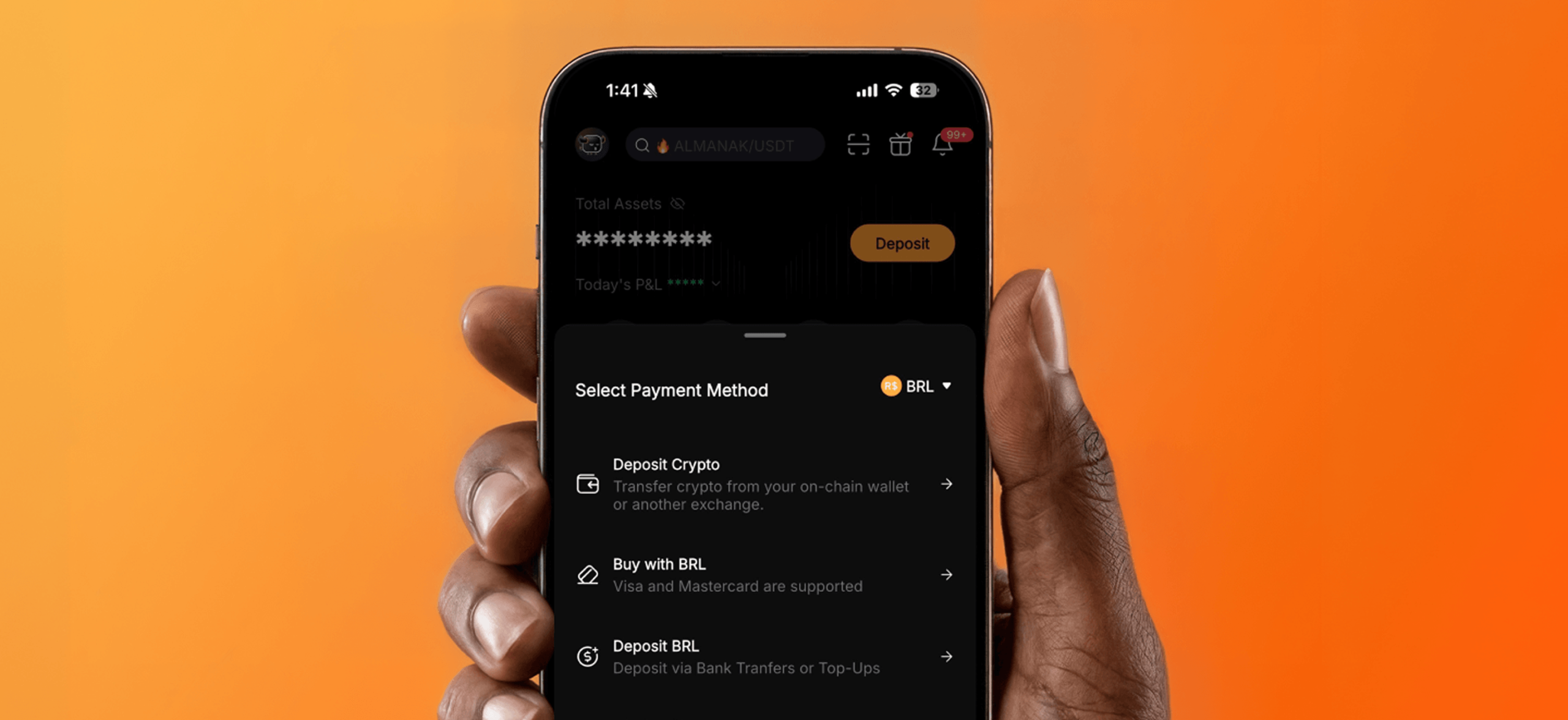
- Fiat deposit fees through third-party providers range from about 0.2% to nearly 4%, depending on the payment method and currency. Credit cards tend to sit at the high end.
- Bybit Card crypto conversion costs 0.9% when a transaction draws on crypto instead of fiat. On top of that, a foreign-exchange markup of 0.5% to 1% above the network rate applies to cross-currency card purchases.
- Spreads and slippage on less liquid pairs or during volatile markets add to effective cost. This is harder to quantify in advance but matters most on large orders or thinly traded tokens.
Deposits and withdrawals
- Crypto deposits carry no platform fee, though miner or network fees may apply on the sending side. There’s no minimum deposit for most assets; SOL has a 0.01 minimum.
- Fiat purchases are available through third-party providers in 55+ currencies via credit card, debit card, Apple Pay, Google Pay, and bank transfer.
- Crypto withdrawals are processed in batches, typically three times per day at 8:00 AM, 4:00 PM, and 12:00 AM UTC, with a 30-minute cutoff before each window. Instant withdrawals are supported but may take up to 30 minutes to one hour depending on network traffic.
- P2P marketplace supports 80+ payment methods with escrow protection. Most fiat currencies carry no platform fee, though selected currencies incur a 0.25% charge.
- Daily withdrawal cap: 100 BTC.
Representative withdrawal fees and minimums:
| Asset | Withdrawal fee | Minimum withdrawal |
|---|---|---|
| BTC | 0.0005 BTC | 0.001 BTC |
| ETH | 0.005-0.01 ETH | 0.02 ETH |
| XRP | 0.25 XRP | 20 XRP |
| USDT | 5-10 USDT | 50 USDT |
| EOS | 0.1 EOS | 0.2 EOS |
The range on ETH and USDT fees reflects different network options (e.g., ERC-20 vs. cheaper L2 routes).
Is Bybit safe?
Bybit stores customer assets in multi-signature cold wallets, segregated from company operating funds. At the account level, you can enable passkeys, two-factor authentication, a fund password, a withdrawal address whitelist, and a withdrawal lock.

Hacken has verified Proof of Reserves monthly since June 2024 using Merkle-tree proofs. Every published snapshot has shown customer liabilities backed above 100%.
Bybit also offers a Mutual Insurance product as a risk management tool against unfavorable price swings on derivatives positions.
These controls are real, but they need to be weighed against the exchange’s actual security record.
The February 2025 hack
On February 21, 2025, attackers stole roughly $1.5 billion in ETH from a Bybit cold wallet, making it the largest single crypto theft on record. The attack was traced to a compromised developer machine at the third-party multisig provider. Injected code displayed what looked like a routine transfer while secretly changing wallet control.
Bybit kept withdrawals open throughout the crisis. The ETH shortfall was replaced within 72 hours through bridge loans and market purchases, and no customer balances were lost.
Investigators linked the attack to Lazarus, a North Korean state-backed hacking group. Bybit’s LazarusBounty program has paid analysts whose work helped freeze more than $73 million in stolen assets. In August 2026, a US federal lawsuit was filed against the attackers, and an injunction was obtained to freeze identified stolen assets.
The response was fast, and customer funds were made whole. That said, the compromised cold-wallet signing process remains a serious custody warning. If you’re holding large balances on the exchange, the breach showed that even multi-sig cold wallet storage can be defeated through supply-chain attacks on third-party signing infrastructure.
Is Bybit regulated?
- Austria (MiCA): Bybit EU GmbH holds MiCA authorization from Austria’s FMA, granted May 2025, with passporting rights across 29 EEA countries.
- UAE: A full Virtual Asset Platform Operator license from the UAE Securities and Commodities Authority was awarded in October 2025, covering trading, brokerage, and custody.
- Kazakhstan: An AFSA license covers trading and custody in the Astana financial center.
- India: Bybit is registered with India’s Financial Intelligence Unit, having resumed services after an earlier withdrawal.
- United Kingdom: Bybit relaunched in December 2025 through an arrangement with an FCA-authorized digital securities firm. Retail crypto derivatives remain unavailable to UK users.
- Global entity: Registered in the British Virgin Islands. The Seychelles FSA register shows “Assessment” status, which does not constitute a tier-one supervisory framework.
- Enforcement actions: Regulators in Malaysia, Hong Kong, Ontario, and Singapore have issued warnings or enforcement actions against Bybit.
The regulatory picture is a patchwork. The MiCA and UAE licenses represent genuine oversight, while the global entity’s BVI and Seychelles registrations don’t carry the same weight.
Is Bybit available in the United States?
Bybit expressly excludes US residents under its terms of service. If you attempt to access the platform from the US, you risk account freezes and loss of access to funds.
The restricted-country list also includes Canada, Singapore, Hong Kong, mainland China, Iran, North Korea, Syria, and several other jurisdictions.
Using a VPN to bypass restrictions conflicts with platform terms, creates inconsistent login and KYC records, triggers compliance checks, and leaves you with weak recourse during a withdrawal review. It’s not a reliable workaround.
Bybit Global vs Bybit EU vs Bybit UK
| Feature | Bybit Global | Bybit EU | Bybit UK |
|---|---|---|---|
| Jurisdiction | BVI / Seychelles | Austria (MiCA) | FCA-authorized arrangement |
| Spot trading | ~640 pairs | Available | ~100 pairs |
| Perpetuals & options | Yes | No (pending MiFID II application) | No |
| TradFi / stock CFDs | Yes | No | No |
| Earn products | Yes | Yes | No |
| P2P | Yes | P2P Express | Yes |
| Copy trading | Yes | No | No |
| Bots | Yes | Yes | No |
| Card | Yes | Yes | No |
| Base spot taker fee | 0.10% | 0.25% | — |
Balances, KYC, and VIP status don’t transfer automatically between entities. EEA users had to migrate when global access was restricted on July 1, which meant fresh KYC and, in many cases, higher fees. Product availability may narrow further by nationality, tax residence, or sanctions status even within an entity’s covered region.
For EEA traders who relied on Bybit Global’s derivatives and lower fee tiers, migrating to Bybit EU meant losing access to futures and options entirely, while paying a 0.25% entry-level taker fee on spot instead of 0.10%. That’s a significant hit for active accounts.
User interface and mobile app
The web trading terminal features a customizable layout with advanced technical indicators and charting powered by TradingView. Before you execute a trade, a breakdown preview shows fees, estimated liquidation price, and other position details.
Order types include limit, market, conditional, post-only, time-in-force settings, take-profit, stop-loss, and OCO where supported. On derivatives, one-click position reversal lets you flip from long to short (or the reverse) without closing and reopening manually. Orders enter the order book through straight-through processing.
The mobile app mirrors desktop functionality. Trade placement, position monitoring, deposits, and withdrawals are all accessible, and the app is well-built for on-the-go management.
That said, the interface has a steep learning curve for beginners. The menus are crowded, multiple account modes can be confusing, and high-leverage products are easy to stumble into without fully understanding the risk. Bybit doesn’t offer a native desktop application for Windows or Mac; desktop trading runs through the web browser.
MT4 integration is available in some service zones, though only USDT deposits are supported in the MT4 account.
A demo (testnet) account pre-loaded with 166,000 USDT in virtual funds lets you practice on futures, perpetuals, options, and leveraged tokens using simulated real-world market depth. The demo doesn’t cover spot trading. Bybit reports a platform uptime track record of 99.99%.
Customer support and common complaints
Bybit offers 24/7 support through live chat on web and app, email, and social media channels, along with a help center that includes step-by-step tutorials and video guides. Multi-language support is available.
Review scores tell two different stories depending on the platform. On one user-review aggregator, Bybit holds a 2.5 out of 5 rating across roughly 7,700 reviews. On another, it scores 4.5 out of 5 across roughly 28,700 ratings.
The negative reviews cluster around a few recurring themes. Prolonged compliance reviews freeze accounts for weeks or months, with reported durations ranging from 15 days to over 75 days. Users describe template-only responses with no specific timelines and funds held without document requests. P2P disputes resolved against sellers, despite evidence of fraudulent buyers, appear in multiple complaints.
Some resolved cases show eventual fund release after escalation, but the wait can be long and stressful. The company replies to 98% of negative reviews, typically within 24 hours, though those replies are often described as generic rather than addressing the specific issue.
Positive reviews cite fast execution, an intuitive interface, low fees, and smooth deposit and withdrawal experiences during normal operation. The pattern suggests that when everything works, the experience is strong, but when a compliance flag gets raised, the resolution process can be frustratingly slow and opaque.
Bybit KYC requirements
- Standard identity verification is required for meaningful use of the platform. Without it, withdrawal limits and product access are restricted.
- Bybit uses a two-tier system: individual and business verification. Higher KYC levels increase withdrawal limits and unlock additional services such as Launchpad and Launchpool participation.
- Full KYC is needed to withdraw up to the 100 BTC daily cap.
- Bybit EU requires fresh KYC even for users who previously verified on the global platform. If you’re migrating from Global to EU, expect to go through the verification process again from scratch.
Pros and cons of Bybit
Strengths:
- Deep derivatives and options offering with high liquidity, covering perpetuals in three margin types plus European-style options
- Fiat gateway supporting 55+ currencies and multiple payment methods
- Trading competitions and a welcome bonus program for new users
- Low base perpetual fees (0.02% maker) compared to most competitors
Weaknesses:
- Unavailable in the United States and several other major markets
- Bybit EU taker fees significantly higher than global rates (0.25% vs. 0.10% on spot)
- Centralized custody risk underscored by the $1.5 billion cold-wallet breach in 2025
- Recurring user complaints about prolonged compliance freezes and generic support responses
- Limited trading pairs available for automated bots compared to the full spot catalog
Isolated margin vs cross margin
Isolated margin limits the amount at risk to the margin you allocate to a single position. Your maximum loss equals that position’s margin, and nothing else in your account is touched if the position gets liquidated.
Cross margin uses your entire available balance in the corresponding trading pair as margin. This gives you higher capital efficiency because the full balance absorbs drawdowns before liquidation triggers, but it also means all of those funds are exposed if the position moves far enough against you.
You can switch between isolated and cross margin on an open position, as long as the switch itself wouldn’t trigger immediate liquidation. If you’re starting with derivatives on Bybit, isolated mode is the safer choice. It contains risk per position, letting you learn without putting your whole account balance on the line.
In the context of Bybit’s Unified Trading Account, cross margin takes on added significance. Because the UTA shares your collateral across every product type in the account, running cross margin on a derivatives position means your spot holdings can be liquidated to cover that position’s losses. Isolated mode prevents that bleed-through.
Who Bybit suits and where it falls short
Bybit’s strongest fit is experienced derivatives traders who need perpetual futures, options, copy trading, bots, and detailed order controls in one venue. It also serves systematic traders running grid, DCA, or Martingale bots, and passive-yield seekers who use the Earn products.
It’s a poor fit for US residents (who are excluded entirely), complete beginners (the interface and product density create real risk of costly mistakes), or investors storing large long-term balances on an exchange, given the custody concerns the 2025 breach highlighted.
Before depositing, verify which legal entity you’ll be assigned to, confirm that the specific products you want are available under that entity, and calculate your full trading cost, including funding rates and fiat-provider fees, not just the maker-taker spread.
A practical first step: make a small deposit, place a small spot trade, and test a withdrawal. This confirms your account works end-to-end, that withdrawals process without delays, and that your KYC level supports what you need, all before you commit larger funds. The exchange comparison guides on axltoken.com from AXL Research Hub cover the best crypto exchanges and wallets that matter most to active crypto traders and can help you weigh Bybit against alternatives side by side.