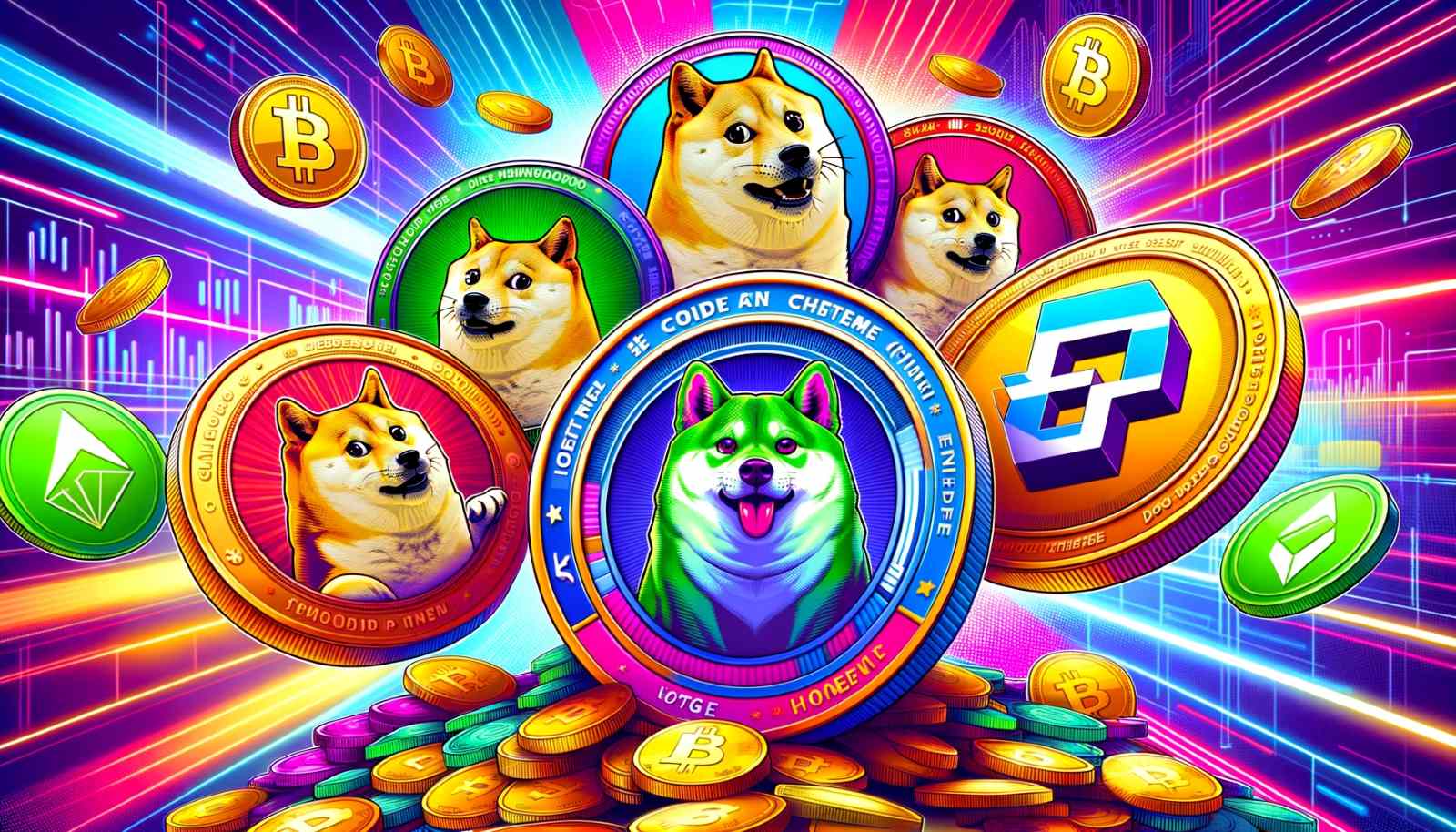

A meme coin is a cryptocurrency that starts from an internet meme, viral joke, or piece of satirical commentary rather than a defined technical purpose. Unlike Bitcoin or Ethereum, which were designed around specific functions like decentralized payments or smart contracts, meme coins are priced almost entirely by social media momentum, community enthusiasm, and speculation.
Most meme coins have limited or no built-in utility. They don’t generate yield, and they typically give holders no claim to future income or business assets. Each unit of a meme coin is fungible, meaning one token is interchangeable with any other of the same type. That makes them different from non-fungible tokens (NFTs), which represent unique digital items.
Dogecoin (DOGE) launched in late 2013 as a satirical take on the crypto boom and is widely considered the original meme coin (we look at Dogecoin as an investment separately). Shiba Inu (SHIB) followed in August 2020, built on Ethereum. Pepe (PEPE) launched in April 2023, also on Ethereum. As of October 2021, 124 meme coins were circulating. The number has grown significantly since then.
The term “meme coin” is sometimes used dismissively to critique speculative corners of the crypto market. That said, some meme coins have reached multi-billion-dollar market capitalizations, making them hard to ignore regardless of what you think about their fundamentals.
How meme coins differ from Bitcoin and Ethereum
Meme coins and established cryptocurrencies differ in purpose, infrastructure, and what drives the price. This table lays out the key differences.
| Feature | Bitcoin | Ethereum | Meme coins |
|---|---|---|---|
| Original purpose | Decentralized peer-to-peer payment network | Programmable smart contracts and decentralized applications | Humor, community, or viral commentary |
| Supply model | Capped at 21 million coins | No hard cap, but controlled issuance | Varies widely; many have enormous or unlimited supplies |
| Own blockchain | Yes | Yes | Usually no; most ride on an existing blockchain |
| Whitepaper / roadmap | Yes | Yes | Typically none |
| Price drivers | Adoption, network activity, institutional demand | Adoption, developer activity, institutional demand | Hype cycles, community sentiment, social media |
| Common examples | BTC | ETH | DOGE, SHIB, PEPE, BONK |
Most meme coins are built on top of someone else’s blockchain rather than maintaining their own. Dogecoin is a notable exception: it operates on its own independent chain. Newer entries like Pudgy Penguins (PENGU), which launched on Solana in late 2024, follow the more common pattern of using an existing network.
Because meme coins typically lack a whitepaper, a technical roadmap, or a novel blockchain function, there’s no underlying technology story for investors to evaluate. Price comes down to whether enough people are buying at any given moment.
How meme coins work
Meme coins rely on established blockchains like Ethereum, Solana, and BNB Chain, using existing token standards. This is what lets creators launch a new coin quickly and cheaply. A new meme coin can appear seemingly overnight because creating a token on a supported chain requires minimal development. Platforms that automate token creation on Solana, like Pump.fun, have accelerated this even further, making it possible for someone with no coding background to spin up a token in minutes.
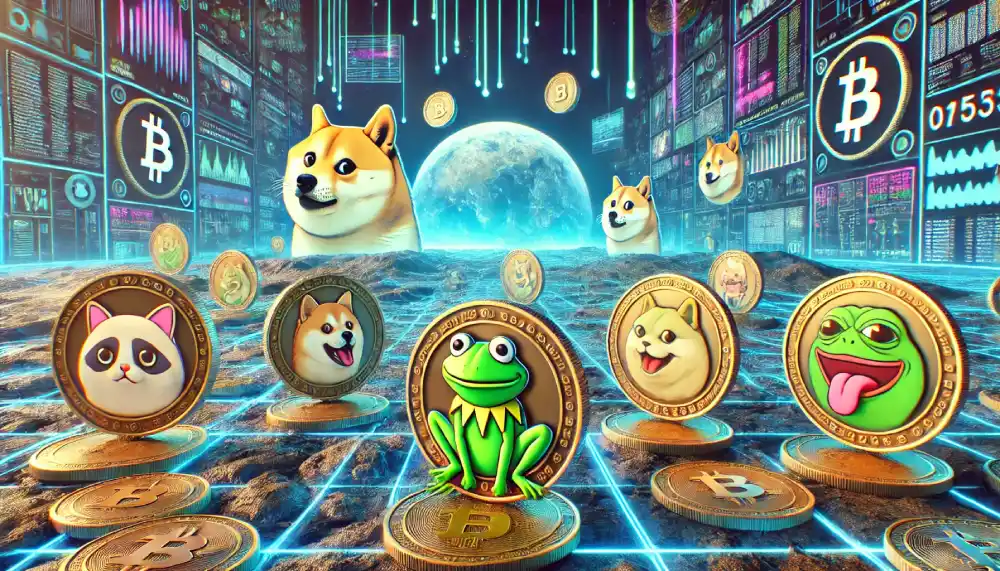
Once a token exists, it gets traded on cryptocurrency exchanges, which means setting up a crypto wallet comes before buying most of them. Newer meme coins often show up first on decentralized exchanges (DEXs) because centralized platforms may not list them right away, if ever. DEXs allow almost anyone to create and list a new token, which lowers the barrier to entry but also increases your exposure to low-quality or outright fraudulent coins. Bonk (BONK) launched in December 2022 on Solana, and Fartcoin started trading in late October 2024, also on Solana, both appearing initially through decentralized trading. Centralized venues with long listing tails pick up many of these coins later; MEXC alone lists more than 3,000 cryptocurrencies.
Traders monitor real-time price, trading volume, and overall activity to gauge a coin’s momentum. Many exchanges feature top-gainers lists that highlight tokens with the biggest recent price moves, which can funnel even more attention toward a coin that’s already climbing. Market capitalization, calculated by multiplying the price by the circulating supply, is the standard measure of a meme coin’s size. Many meme coins have small market caps, which amplifies price swings in both directions: a relatively small amount of buying or selling can move the price dramatically.
In theory, meme coins can be exchanged for goods and services just like any other cryptocurrency (see our cryptocurrency basics guide for how that works). In practice, real-world acceptance remains very limited. You’re far more likely to trade a meme coin for another crypto asset or cash it out than to spend it at a store.
Why meme coins are created and what drives their price
Online communities on Discord, Reddit, X, and TikTok often generate the initial wave of interest in a new meme coin. A joke catches on, a community rallies behind a mascot or concept, and within hours there’s a token to go with it. Cultural relevance and humor give meme coins a viral quality that traditional crypto projects rarely match.
Celebrity mentions and endorsements can trigger sharp price spikes. Elon Musk’s tweets about Dogecoin, for example, coincided with surges exceeding 50%. Dogecoin’s price moved from roughly $0.0004 in 2013 to nearly $0.75 in 2021, a trajectory shaped in large part by social media attention and high-profile endorsements during that period.
Low unit prices play a psychological role too. When a coin trades at fractions of a cent, it feels accessible to newcomers and gives the impression of low-stakes participation. Buying a million tokens for a few dollars doesn’t feel like a big risk, even though the percentage loss can be just as severe as with any other asset.
Fear of missing out (FOMO) draws new buyers into a rising coin, temporarily pushing the price higher. A steady flow of new buyers sustains the price. But when interest fades or new money slows, prices frequently collapse because little fundamental value underpins the market cap. The cycle tends to be fast and brutal.
Political figures have also launched or promoted meme coins, creating waves of speculative buying followed by steep crashes. $TRUMP hit a peak market value over $14.5 billion by January 19, 2025, then declined sharply. $MELANIA reached a reported market cap around $2.2 billion shortly after launch and was down about 90% from its peak by February 6, 2025. $LIBRA, promoted by the Argentine president, reached a peak valuation around $4.5 billion before crashing. $CAR, announced by the Central African Republic’s president on February 10, 2025, dropped 95% one day after trading began. In each case, the pattern was the same: a burst of speculative buying followed by a collapse that left most latecomers with losses.
History and timeline of meme coins
Meme coins have a longer history than most people realize, stretching back over a decade. Here’s how the timeline has unfolded:
- Late 2013: Dogecoin is released by two software engineers who combined early Bitcoin mania with the Shiba Inu “Doge” meme. It started as a joke but quickly built a genuine community. Dogecoin’s peak market cap eventually reached approximately $88 billion.
- August 2020: Shiba Inu launches on Ethereum, positioning itself as a “Dogecoin killer.” It peaked at an approximate market cap of $43 billion.
- 2021-2022: Dogecoin’s popularity surges after endorsements from high-profile figures, including statements that branded merchandise could be purchased with DOGE. Thailand’s SEC bans meme coins in early 2021, calling them tokens with no clear objective or substance, one of the first regulatory actions targeting the category specifically.
- June 2021: Floki Inu launches on BNB Chain, inspired by Elon Musk’s Shiba Inu dog. The UK Advertising Standards Authority banned its London transit ads in 2022.
- December 2022: Bonk launches on Solana. It was described as a community effort to rally the Solana ecosystem after the collapse of FTX. Bonk’s reported market cap reached around $3 billion during a late-2024 rally.
- April 2023: Pepe launches on Ethereum, referencing the Pepe the Frog meme. It reached an approximate peak market cap of $11.37 billion.
- Late 2024: Meme coins see a resurgence after the 2024 U.S. presidential election. Fartcoin’s peak market cap topped $2.3 billion.
- January 17, 2025: $TRUMP launches three days before inauguration. Two days later, on January 19, $MELANIA launches. Both generate enormous trading volume.
- February 2025: $CAR and $LIBRA follow, each collapsing sharply after brief spikes. $HAWK reached a $490 million peak before plummeting to $25 million.
The pattern over this timeline is consistent: each generation of meme coins launched faster, attracted attention more quickly, and, in most cases, crashed more abruptly than the last.
Well-known meme coins and what sets them apart
Not all meme coins are the same. The ones that have lasted or made headlines share some distinguishing traits, but they differ in important ways.
Dogecoin (DOGE) is the original meme coin and one of the few that runs its own blockchain rather than sitting on top of someone else’s network. It has a long track record and broad exchange listings that most meme coins never achieve. Over time, Dogecoin has expanded beyond a single token to include a DEX, NFTs, and additional community tokens.
Shiba Inu (SHIB) launched on Ethereum and moved beyond pure meme status by adding its own DEX (ShibaSwap), NFTs, and companion tokens. That expansion doesn’t mean it has the kind of utility a project like Ethereum offers, but it does distinguish SHIB from meme coins that never developed anything beyond the token itself.
Pepe (PEPE) is Ethereum-based and driven almost entirely by meme virality. There’s no utility layer, no DEX, no companion products. Its success is a pure expression of how far community enthusiasm and internet culture can carry a token.
Bonk (BONK) launched on Solana as a community-oriented effort aimed at recovering sentiment after the FTX collapse, originating from an NFT brand before bridging into a fungible token. Its aggressive advertising drew regulatory scrutiny in the UK, and an ETF proposal followed in 2025. Pudgy Penguins (PENGU) took a similar NFT-to-token path on Solana but stands apart for reaching a peak market cap of roughly $2.9 billion.
$TRUMP launched on Solana by a sitting U.S. president. It generated nearly $100 million in trading fees while many small traders lost money. More than most meme coins, $TRUMP illustrated the tension between the people promoting a token and the people buying it late.
Meme coin risks
Buying a meme coin means exchanging real money for an asset with no clear long-term value. Total loss of the invested amount is a real possibility, not a remote worst-case scenario.
Extreme volatility
Meme coin prices can swing by double-digit percentages in a single day or even within hours. Because the price depends on hype and sentiment rather than revenue or adoption metrics, a coin’s value can fall as fast as it rose, often without warning.
Even the most established meme coins have suffered steep losses during market downturns. $MELANIA lost roughly 90% of its peak value within weeks. Approximately 764,000 people who bought $TRUMP after its all-time high on January 19, 2025, lost money. These aren’t obscure tokens; they were among the most heavily covered meme coins of their moment.
Scams, rug pulls, and pump-and-dump schemes
Meme coins are frequent vehicles for fraud, and the tactics are varied enough that even experienced traders get caught.
A pump-and-dump works like this: insiders or influencers hype a coin to inflate the price, then sell their holdings all at once. Later buyers are left holding a near-worthless token. The $HAWK token creator was accused of this kind of scheme; the token reached a $490 million peak and collapsed to $25 million.
A rug pull is more abrupt. Developers or insiders abandon a project entirely, draining the liquidity pool and leaving holders unable to sell at any price. The MALAYSIA token rug pull drained $1.7 million from buyers.
Honeypot tokens are coded so that buyers can purchase the coin but can’t sell it. The smart contract literally blocks sell transactions while allowing buys, which means you can watch your holdings appear to grow in value while having no way to cash out.
Hackers have hijacked verified government and public-figure social media accounts to promote fraudulent meme coins. The CUBA token saw trading volume drop from $158.7 million to $4.3 million after a hijacked-account promotion drove a brief spike and collapse.
Authorities have prosecuted some pump-and-dump cases, especially those tied to celebrity endorsements, but enforcement is uneven and victim recovery is rare.
Liquidity limitations
Many newer or smaller meme coins have thin liquidity, meaning there aren’t enough active buyers and sellers for smooth trading. When sentiment turns negative, low liquidity means you may not be able to sell at a fair price, or at all. Coins listed only on decentralized exchanges or with low trading volume are especially vulnerable. You might see a price on your screen that doesn’t reflect what you’d actually receive if you tried to sell.
Theft and wallet security
Meme coins stored in crypto wallets are targets for hackers. Anyone who gains access to your wallet can drain its contents, and there’s no bank or customer service line to call for a reversal. Standard precautions apply: strong unique passwords, two-factor authentication, and skepticism toward offers that seem too good to be true.
Are meme coins regulated?
The SEC’s Division of Corporation Finance stated in 2025 that meme coins are generally not considered securities. That distinction matters because it means meme coins don’t fall under the same disclosure and registration requirements that apply to stocks or tokens classified as securities. The broader regulatory picture, however, is still evolving, and rules vary by jurisdiction.
The UK’s Advertising Standards Authority banned Floki Inu ads on London transit in 2022, an example of how regulation can come from unexpected directions. Thailand’s SEC banned meme coins entirely in early 2021. A sudden regulatory change in any major market could affect a coin’s availability or value with little notice.
In the United States, selling or trading meme coins typically triggers a taxable event. The IRS treats crypto dispositions, whether you’re selling for cash or swapping one token for another, as taxable. If you’ve traded several meme coins across different exchanges and wallets, tracking your cost basis gets complicated fast. Each buy, each swap, and each sale needs to be recorded with the price at the time of the transaction. Many meme coin traders make dozens or hundreds of trades, and sorting that out at tax time can be a genuine headache.
How to tell a meme coin from a legitimate crypto project
The line between a meme coin and a traditional crypto project isn’t always obvious, but several practical red flags can help you evaluate what you’re looking at.
- No whitepaper or roadmap. Legitimate projects typically publish a whitepaper explaining the technology, the problem being solved, and the development plan. Meme coins often have none of these. If the only “roadmap” is social media hype, that’s a warning sign.
- Anonymous or pseudonymous founding teams. When you can’t find out who built a project, the risk that creators will exit without accountability goes up significantly.
- Listed only on decentralized exchanges. Listing on a major centralized exchange suggests that some level of due diligence has been performed. Availability only on DEXs increases your exposure to fraud.
- Playful or absurd branding. Mascots, joke names, and pop-culture references signal meme status. That doesn’t automatically make a token a scam, but it tells you what category you’re in.
- Honeypot code or hidden mechanics. Some tokens are coded to let you buy but block you from selling. Token-scanning tools exist that can flag these contracts before you commit money.
- Copycat tokens. Over 700 copycat tokens were sent to a single prominent crypto wallet in early 2025, attempting to falsely imply endorsement. Always verify the contract address of any token you’re considering.
How to buy meme coins
If you’ve weighed the risks and still want to buy a meme coin, here’s the general process:
- Set up a crypto wallet that supports the blockchain the target meme coin runs on. If the coin is on Solana, you need a Solana-compatible wallet. If it’s on Ethereum or BNB Chain, you need a wallet that supports those networks.
- Fund the wallet by purchasing a base cryptocurrency (like SOL, ETH, or BNB) on a centralized exchange, then transferring it to your wallet.
- For coins listed on centralized exchanges, you can buy directly through the exchange’s interface. This is the simpler path and typically involves tokens that have already passed some level of screening.
- For coins available only on decentralized exchanges, connect your wallet to the DEX and swap the base cryptocurrency for the meme coin.
- Verify the correct token contract address before swapping. Fake copies of popular meme coins circulate widely. One wrong character in the contract address can send your funds to a completely different, often worthless or malicious, token.
- Store your tokens securely. For larger holdings, consider a hardware wallet, which keeps your private keys offline and out of reach of remote attackers.
Do meme coins have any real value?
A handful of meme coins have developed something that looks like value, though it’s a different kind of value than what you’d find in a stock or a revenue-generating crypto project. Dogecoin gained social currency through years of community activity and high-profile endorsements. Shiba Inu expanded past its origins as a simple meme token by introducing a DEX, NFTs, and companion tokens, giving its broader project more surface area even if none of those additions generate traditional revenue.
Three U.S. asset managers filed to launch exchange-traded funds investing in meme coins linked to political figures in January 2025. That kind of institutional attention doesn’t validate meme coins as investments, but it does reflect how much capital flows through this part of the market.
At AXL Research Hub, we think it’s worth being honest about what “value” means in this context. Price momentum alone doesn’t equal lasting value. Demand can and often does decline as hype fades, and there’s no earnings report or product launch to bring it back. Some traders view cheaply priced meme coins as a low-stakes way to practice trading and learn about crypto assets firsthand. That’s a reasonable framing, as long as the money involved is genuinely money you can afford to lose.
Frequently asked questions about meme coins
Can you cash out meme coins?
Yes. Meme coins can be sold on the exchange where they’re traded and converted to fiat currency or another cryptocurrency. The practical catch is liquidity. If you’re holding a low-volume token, you may not be able to sell at the price you see quoted, especially during a downturn when everyone else is trying to sell at the same time.
Why are meme coins so volatile?
Prices are driven by fleeting trends, social media hype, and speculation rather than fundamentals like adoption or utility. There’s no revenue stream or user base to anchor the price, so sentiment can reverse in hours. A single tweet or viral post can send a meme coin up 50%, and the silence that follows can send it down just as fast.
How are meme coins different from pump-and-dump schemes?
A meme coin is a type of token. A pump-and-dump is a fraud tactic where insiders inflate the price and then dump their holdings on later buyers. Meme coins are frequently the vehicle for pump-and-dump schemes, but not every meme coin is one. Dogecoin, for example, has been around since 2013 and isn’t controlled by a small group of insiders pumping and dumping.
Can you make money with meme coins?
Prices can rise sharply, and some early buyers have profited. But increases are unpredictable, and losses are common due to high volatility and fading demand. For every person who bought early and sold near the top, many more bought after the spike and watched the value drop.
How much is one meme coin worth?
Unit prices vary enormously, from fractions of a cent to several dollars, depending on supply and demand. Price alone says nothing about total value without considering circulating supply and market cap. A coin that costs $0.00001 with trillions of tokens in circulation can have a larger market cap than a coin trading at $5 with a small supply.
Meme coins at the crossroads of internet culture and financial risk
Meme coins reflect the internet’s growing influence on financial markets, blending humor with speculation in a way that no previous asset class has. The space is moving fast: new tokens, new scam tactics, and new regulatory actions can appear at any time. The crypto industry may develop uses for digital tokens that are hard to predict right now, and some of what looks like pure speculation today could evolve into something more structured.
That said, the track record so far is clear. Most meme coins lose most of their value after the initial hype fades. Buyers who treat meme coins as entertainment, spending only what they’d comfortably write off, can limit financial harm. Research, risk awareness, and honest self-assessment about how much you can afford to lose remain the most practical defenses you have.