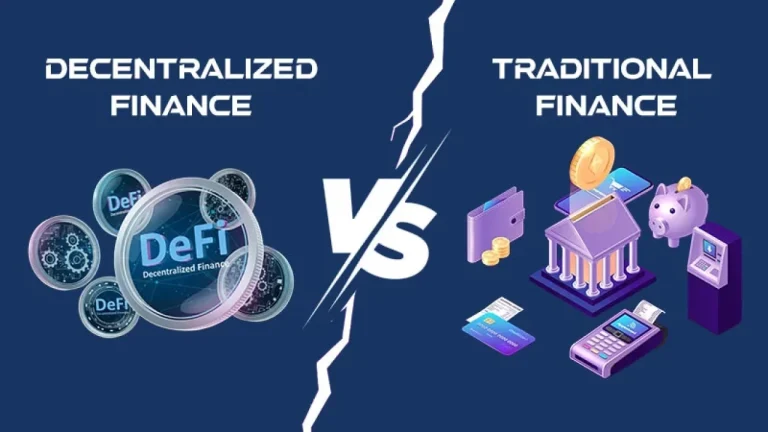


Cryptocurrency is a type of digital currency that uses cryptographic algorithms to secure transactions and control how new units are created. It runs on a decentralized network, meaning no government, central bank, or single institution issues or manages it. Instead, it works as a peer-to-peer payment system, letting people send money directly to each other without a bank sitting in the middle.
Unlike dollars or euros, cryptocurrency exists only in digital form. There are no paper bills, no metal coins, nothing you can hold in your hand. The “crypto” in cryptocurrency refers to the encryption software that protects the network, verifies transactions, and keeps the whole system decentralized.
The first cryptocurrency, Bitcoin, launched in 2009. Its creation is credited to an individual or group using the pseudonym Satoshi Nakamoto. Since then, thousands of other cryptocurrencies have appeared, each with its own purpose and design, but they all share that same core idea: digital money that doesn’t rely on a central authority.
How does cryptocurrency work?
Cryptocurrency runs on blockchain technology, which is essentially an open-source, distributed digital ledger. Every transaction that happens on the network gets recorded on this ledger, and copies of it exist on thousands of computers around the world. That wide distribution makes tampering nearly impossible, because changing a record on one copy would conflict with every other copy on the network.
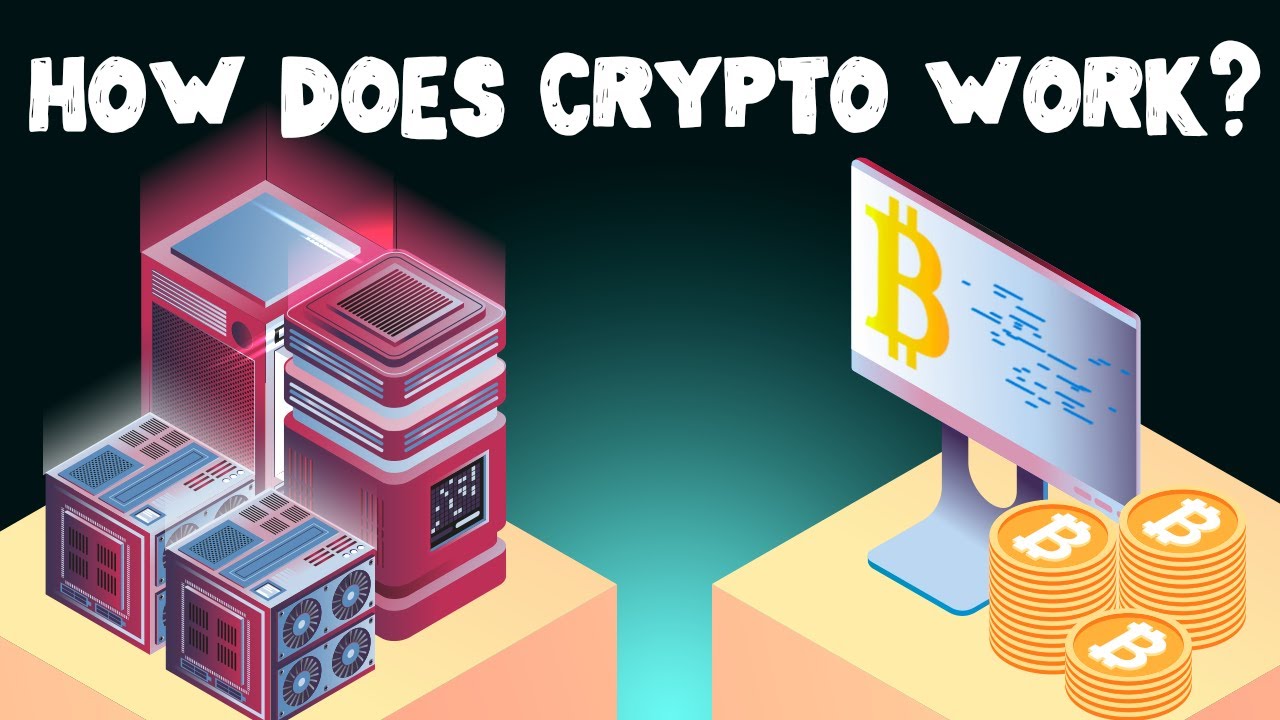
Each transaction forms a “block” containing data about the parties involved, the amount transferred, and a timestamp. Every block also includes a unique hash of the previous block, which chains them together in chronological order. This chain structure is what makes the ledger so hard to alter or counterfeit. To change one block, you’d have to change every block that came after it, across thousands of machines simultaneously.
Because a public ledger handles verification, there’s no need for a central authority to clear transactions. Instead, miners or validators verify each transaction by solving complex mathematical problems using specialized hardware and software. Once verified, the transaction is added to the blockchain, and the miner receives cryptocurrency as a reward. On the Bitcoin blockchain, a new block of transactions is added approximately every 10 minutes, and the current mining reward is 6.25 new bitcoins per block. That reward halves roughly every four years, which is one of the mechanisms that controls Bitcoin’s supply.
Bitcoin has a hard cap of 21 million coins. Once all 21 million have been mined, no new bitcoins will ever be created. This built-in scarcity is a defining feature that sets it apart from traditional currencies, which central banks can print without a fixed ceiling.
Owning cryptocurrency doesn’t mean you have a file sitting on your computer the way you might have a photo or a document. It means you hold a private key, a long string of characters, that lets you move a record on the ledger. That private key proves the crypto is yours and allows you to send it to someone else without needing a bank or any other trusted third party.
Blockchain technology and its role in crypto
Blockchain acts as a permanent, time-stamped record of every transaction, available to anyone on the network. It’s often called a distributed ledger because no single entity owns or controls it. Cryptography secures the data with complex mathematical codes, making corruption extremely difficult. And as the chain grows longer over time, altering older transactions becomes progressively harder because each block is cryptographically linked to the ones that follow it.
Beyond simple payments, blockchains can support smart contracts. These are self-executing agreements written in code that run automatically when preset conditions are met. Think of a smart contract like a vending machine: you put in the right input, and the output happens on its own, with no clerk or cashier needed. The Ethereum network was the first major blockchain built specifically to support smart contracts and decentralized applications (dApps). That capability opened the door to services like lending, trading, and digital collectibles, all running on code rather than through traditional financial institutions.
The technology also has potential uses well beyond cryptocurrency. In supply-chain management, for example, blockchain could create tamper-proof records that track goods from factory to shelf, while financial-asset settlement could move faster by cutting out layers of intermediaries. Decentralized applications, meanwhile, could reshape how people interact with software and services. These use cases are still developing, but they all rely on the same distributed, cryptographically secured ledger that powers crypto transactions today.
Cryptocurrency vs. traditional currency
The differences between cryptocurrency and traditional (fiat) currency come down to who controls it, how it’s stored, and what protections exist.
| Feature | Traditional currency (fiat) | Cryptocurrency |
|---|---|---|
| Issuer | Government, managed by a central bank (e.g., the US dollar is regulated by the Federal Reserve) | No central issuer; operates independently on a decentralized network |
| Source of value | Derives value partly from legal-tender status | No legislated or intrinsic value; worth only what buyers will pay |
| Physical form | Exists as paper bills, metal coins, and digital bank balances | Exists only as digital entries on a blockchain |
| Transaction verification | Banks and card networks act as trusted intermediaries | Distributed network of nodes verifies transactions |
| Insurance/protection | Bank deposits insured by the FDIC in the US | No equivalent insurance coverage |
| Storage | Bank account, cash, or physical safe | Digital wallet secured by a private key |
One of the most significant practical differences is protection against loss. If a US bank fails, the FDIC insures depositors’ funds. There is no equivalent safety net for cryptocurrency. If you lose access to your wallet or your private key is stolen, those funds are gone with no institution to turn to for recovery.
Is cryptocurrency real money?
No, not by the standard economic definition. When tested against the three core functions of money, cryptocurrency falls short on each one.
The first function is serving as a means of payment. For something to work as money, you need to be able to spend it widely. Cryptocurrency is accepted by only a small number of retailers, and surveys indicate that only a small fraction of crypto holders use it regularly for purchases. Most people who own crypto treat it as an investment, not a spending tool.
The second function is acting as a store of value, meaning it reliably holds purchasing power over time. Cryptocurrency’s large price swings work against this. A coin that drops 30% in a week doesn’t preserve your buying power the way a savings account does. That volatility makes it unreliable as a place to park money you’ll need later.
The third function is serving as a unit of account, meaning goods and services are priced in it. Almost nothing is priced in Bitcoin or any other cryptocurrency. Even merchants who accept crypto typically display prices in dollars and convert at the moment of sale. Until grocery stores, landlords, and utility companies quote prices in crypto units, it doesn’t meet this criterion.
Cryptocurrency can facilitate payments, but it doesn’t currently display the characteristics that define money in the way economists and central banks use the term. The Reserve Bank of Australia draws a similar distinction in its analysis of digital currencies.
Central bank digital currencies (CBDCs) are a separate concept worth understanding. A CBDC is digital currency issued directly by a central bank. Unlike decentralized crypto, a CBDC would have legal-tender status, exchange one-for-one with physical cash, and use the national currency as the unit of account. In other words, a CBDC could meet all three functions of money because it’s backed by the same authority that issues traditional currency. Nearly all central banks are researching the idea, though only a few worldwide have actually issued a digital currency to date, and no high-income country has launched one yet.
Popular types of cryptocurrency
Every cryptocurrency other than Bitcoin is collectively called an altcoin. Here are the most widely held coins and categories (for a fuller breakdown, see types of cryptocurrency).

Bitcoin (BTC) was the first cryptocurrency and remains the largest by market cap, which sat at $1.35 trillion as of February 2026. It has a fixed supply of 21 million coins and uses proof-of-work consensus, where miners compete to solve mathematical puzzles to validate transactions. Because of that hard cap on supply, Bitcoin is often compared to digital gold.
Ethereum (ETH) is the second-largest cryptocurrency, with a market cap of $237.4 billion as of February 2026. Ethereum isn’t just a currency; it’s a decentralized software platform that supports smart contracts, NFTs, and dApps. Unlike Bitcoin, Ethereum has no fixed supply cap, but it uses a burning mechanism that permanently removes a portion of transaction fees from circulation, helping manage inflation.
Stablecoins are designed to minimize the wild price swings that define most crypto. They do this by pegging their value to a fiat currency, usually the US dollar. Within the crypto world, stablecoins serve as the primary medium of exchange because their steady value reduces the risk that a coin’s price will shift significantly between when you send it and when the recipient converts it.
- Tether (USDT) was the first stablecoin and aims to maintain a value near one US dollar; our USDT stablecoin guide explains how it holds that peg. Its market cap was $183.67 billion as of February 2026.
- USD Coin (USDC) is an open-source stablecoin on the Ethereum blockchain, also pegged to the US dollar, with a market cap of $74.43 billion as of February 2026.
XRP is the native coin of the Ripple payment-settlement network. It’s designed for fast transfers and can track various transaction types beyond cryptocurrency. Its market cap was $87.1 billion as of February 2026.
Solana (SOL) is built for fast, low-cost transactions. Its native token is used for transaction fees and can be staked to help secure the network. Market cap as of February 2026 was $48.37 billion.
Cardano (ADA) lets holders stake their ADA tokens to earn rewards and participate in the network’s operations. Its market cap was $10.25 billion as of February 2026.
Coins vs. tokens
The terms “coin” and “token” get used interchangeably in casual conversation, but they refer to different things. A coin operates on its own native blockchain. Bitcoin runs on the Bitcoin blockchain, Ethereum runs on the Ethereum blockchain, and each has its own infrastructure from the ground up.
Crypto tokens, on the other hand, are built on top of an existing blockchain. A developer can create a token on Ethereum, for example, without building an entirely new network. Tokens can represent currency, but they can also represent asset ownership, voting rights in a project’s governance, or access to specific features on a platform.
This distinction matters when you’re evaluating a crypto project. A coin with its own blockchain has independent infrastructure, which means its own validators, its own security model, and its own development roadmap. A token depends on the blockchain it’s built on, inheriting both its strengths and its limitations.
How to buy, sell, and trade cryptocurrency
- Choose a platform. You can use a dedicated cryptocurrency exchange or a traditional broker that also offers crypto trading; if you’re unsure how crypto exchanges work, start there. Exchanges let you trade directly with other buyers and sellers and tend to offer a wider selection of coins. Brokers act as intermediaries and may provide a simpler interface, which can be easier for beginners. Compare platforms on available cryptocurrencies, fee structures, security features, storage options, and withdrawal methods before committing.
- Fund your account. Deposit fiat currency via bank transfer, debit card, or another accepted payment method. Be cautious with credit cards: credit-card crypto purchases are considered risky, often carry extra fees or restrictions, and some card issuers and exchanges block them entirely.
- Place an order. Use the platform’s web or mobile interface to specify the cryptocurrency you want, the order type (market, limit, etc.), and the amount. You can buy, sell, or trade from there.
If you’d rather not hold cryptocurrency directly, investment products offer indirect exposure. Spot exchange-traded products (ETPs), futures, mutual funds, and blockchain-focused equity ETFs let you gain exposure to crypto price movements without managing wallets or private keys. The SEC approved trading in exchange-traded products holding spot bitcoin on January 10, 2024. Investors in those products own securities that track bitcoin’s price, not bitcoin itself.
What is a cryptocurrency wallet?
A cryptocurrency wallet is a tool that stores the private and public keys you need to send, receive, and access your crypto. It doesn’t hold coins the way a physical wallet holds cash; instead, it holds the cryptographic keys that prove ownership of the records on the blockchain.
Wallets fall into a few categories based on how they connect (or don’t connect) to the internet.
Hot wallets are software-based and stay connected to the internet through your computer, phone, or tablet. They’re convenient for frequent transactions and typically free to use. The trade-off is that an internet connection means more exposure to cyber attacks, phishing, and malware.
Cold wallets are offline hardware devices, often resembling USB drives, that store your private keys without ever touching the internet. They’re generally considered the most secure option for long-term storage. The downside is that they typically cost money to buy, and accessing your crypto takes a few extra steps compared to a hot wallet.
Paper wallets are exactly what they sound like: printed copies of your keys stored offline. They’re grouped with cold wallets for security purposes, since they aren’t connected to the internet, but they come with their own risks. Paper can be lost, damaged, or stolen.
Some exchange platforms provide built-in wallet services, so your crypto stays on the platform after you buy it. Others require you to set up an external wallet. Choosing between them comes down to balancing convenience, security, and the value of what you’re storing. If you’re holding a small amount for occasional trading, a hot wallet may be fine. If you’re storing a significant amount long-term, a cold wallet adds a meaningful layer of protection.
What gives cryptocurrency its value?
Cryptocurrency’s price comes down to supply and demand: how much others want to own or use a given coin and how many units are available. There’s no government backing it, no physical asset behind it, and no legal-tender status giving it a floor. It’s worth what buyers are willing to pay, and that number can change fast.
Scarcity plays a direct role. Bitcoin’s hard cap of 21 million coins means no new supply can be created once that limit is reached. As demand grows against a fixed supply, prices tend to rise. Coins without a supply cap rely on other mechanisms, like Ethereum’s burning feature, to manage how much is in circulation.
How useful the underlying technology is, or is seen to be, also matters. A blockchain that supports smart contracts, runs quickly, or solves a specific problem can attract more users and developers, which drives demand for its native coin.
Investor sentiment, media coverage, and hype cycles amplify price movements in both directions. News about corporate adoption, world events, or regulatory decisions can shift demand rapidly. Bitcoin’s price, for example, rose from roughly $30,000 in mid-2021 to nearly $70,000 late in 2021, then fell to around $35,000 in early 2022. That kind of swing illustrates how quickly market mood can move prices.
Some holders treat crypto as a store of value or a hedge against inflation, similar to how people think about gold. That use case exists, but it lacks a long-term established track record. Crypto has only been around since 2009, and the price history so far includes dramatic rises and equally dramatic crashes.
Risks and downsides of cryptocurrency
Cryptocurrency carries real risks that anyone considering it should understand before putting money in.

- Extreme price volatility. Swings of double-digit percentages within a single day are not uncommon. A coin worth $50,000 in the morning can be worth $42,000 by evening, and there’s no mechanism to stop the slide.
- Fraud and scams. The crypto space attracts fake investment websites, Ponzi schemes, celebrity-impersonation schemes, and romance scams. The BitClub Network Ponzi scheme raised more than $700 million before its perpetrators were indicted in December 2019. The FBI Internet Crime Complaint Center received more than 1,800 reports of crypto-focused romance scams in the first seven months of 2021, with losses reaching $133 million.
- No way to recover lost funds. If you lose your private key, lose your wallet, or lose access to your backups, those funds are gone permanently. There’s no centralized recovery process, no customer service number, and no bank to reverse the transaction.
- No insurance. Unlike bank deposits protected by the FDIC, crypto holdings have no equivalent insurance coverage. If an exchange is hacked, you may have no recourse. The Coincheck hack resulted in $534 million in losses, and the BitGrail hack in 2018 cost users $195 million.
- Regulatory uncertainty. Future laws could restrict, tax, or ban certain crypto activities. Regulatory shifts can affect prices, usability, and whether a particular coin remains legal to trade in your country.
- Concentration risk. In major cryptocurrencies, the top wallet addresses hold a large share of the total supply. If those large holders sell suddenly, or if their wallets are compromised, the resulting flood of coins onto the market could crash prices. This is a structural risk that doesn’t exist in the same way with traditional investments.
- Encryption vulnerability. Advancing computing power, including quantum computing, could eventually crack the cryptographic protections that secure blockchain networks. This isn’t an immediate threat, but it’s a long-term concern the industry is actively watching.
- Software bugs. Code flaws in a blockchain’s software could alter supply unexpectedly or cause the network to malfunction. Because these systems are built on code, a bug can have financial consequences.
- Association with illegal activity. Cryptocurrency’s relative anonymity and global reach make it a tool for money laundering and fraud. While most crypto activity is legal, the association persists and influences how regulators approach the space.
- Environmental impact. Proof-of-work mining, the method Bitcoin uses, consumes vast amounts of electricity and computing power. Bitcoin’s annual energy consumption is estimated to be roughly equal to the electricity use of a mid-sized country. Proof-of-stake systems like Ethereum’s use far less energy, but proof-of-work remains the standard for the largest cryptocurrency.
How cryptocurrency is taxed
The IRS treats cryptocurrency as property, not currency. That means buying, selling, and spending crypto all trigger capital-gains tax rules, just like selling stocks or real estate.
This catches some people off guard: even purchasing goods or services with crypto counts as selling a portion of your holdings in the IRS’s eyes, one of several crypto tax rules worth learning early. If you bought Bitcoin at $20,000 and later use it to buy something when it’s worth $40,000, you’ve realized a gain on that transaction and owe taxes on it. The gain or loss equals the difference between the fair market value of what you received and your adjusted cost basis in the crypto you spent.
Every taxable crypto transaction needs to be calculated and reported. If you don’t report crypto gains or income, you can face penalties. If you’re actively trading or spending crypto, keeping detailed records of every transaction, including the date, amount, and cost basis, will save you headaches at tax time.
What can you buy with cryptocurrency?
Cryptocurrency was originally envisioned as a way to buy everything from coffee to real estate, but large real-world transactions using crypto are still rare. That said, acceptance has been growing steadily.
A growing number of retailers and e-commerce platforms accept crypto payments, particularly in technology and luxury goods. Some auto dealerships accept Bitcoin, and the Swiss insurer AXA began accepting Bitcoin for all insurance lines except life insurance in April 2021. Crypto debit cards have also expanded the options: they let you spend crypto at any retailer that accepts regular card payments, converting your holdings to fiat at the point of sale.
As noted above, stablecoins fill the role of everyday money inside the crypto ecosystem. Because they hold a steady price, there’s little chance the amount changes between the moment a transaction starts and the moment it settles, which makes them practical for trading, lending, and other activity on decentralized-finance (DeFi) platforms.
Cross-border transfers are another area where crypto offers a clear advantage. Sending money internationally through traditional banks involves currency-conversion fees, intermediary bank charges, and delays tied to banking hours. Crypto transfers skip those layers entirely, often settling faster and cheaper.
Cryptocurrency scams to watch for
Scams are one of the biggest practical threats to crypto holders. Knowing the common types makes them easier to spot.
- Fake websites featuring fabricated testimonials and promises of guaranteed high returns. These sites are often polished enough to look legitimate and may mimic the branding of real exchanges.
- Virtual Ponzi schemes that pay earlier investors with money from newer investors. The returns look real until new money dries up and the whole thing collapses.
- Celebrity-impersonation schemes where scammers pose as public figures, solicit crypto deposits, and then sell their own holdings once prices rise. This is a form of pump and dump.
- Romance scams through dating apps or social media, where someone builds a relationship with you over weeks or months and then convinces you to send crypto to a fake investment platform.
- Bogus exchanges and fraudulent retirement-account pitches designed to collect deposits that victims will never see again.
- Direct wallet hacking, where criminals break into digital wallets to steal private keys and drain funds.
The red flags are consistent across most of these schemes: unsolicited offers, promises of guaranteed returns, and pressure to invest quickly. Any investment opportunity that guarantees profits or demands an immediate decision is almost certainly a scam.
Tips for protecting your cryptocurrency
You can’t eliminate crypto’s risks entirely, but you can reduce your exposure with straightforward habits.
- Research before you buy. Read the project’s documentation (often called a whitepaper) and look for independent analysis. If you can’t find clear information about who’s behind a project or how it works, that’s a warning sign.
- Pick a wallet that matches your needs. A hot wallet works for small amounts you trade often. A cold wallet is worth the cost for larger holdings you plan to keep long-term. At AXL Research Hub, we review wallets across both categories to help you compare security and usability.
- Back up your keys and recovery phrases. Store backups in a secure, separate location from the device holding your wallet. If your only copy is on a phone that breaks, those funds are gone.
- Spread your holdings across multiple cryptocurrencies rather than putting everything into a single coin. Diversification won’t prevent losses, but it limits how much damage one coin’s drop can do.
- Start small. Buy a modest amount to get familiar with how exchanges, wallets, and transactions work before committing larger sums.
- Turn on two-factor authentication (2FA) on every exchange account and wallet that supports it. A password alone isn’t enough.
- Invest only what you can afford to lose entirely. This isn’t a cliché with crypto. The volatility, the lack of insurance, and the risk of total loss make this rule more literal here than in most other investments.
Common cryptocurrency terms
If you’re new to crypto, the vocabulary can feel overwhelming. Here are the terms you’ll run into most often.
- Address: A unique identifier, similar to an email address, used to send and receive a specific cryptocurrency. Generating a new address for each transaction is recommended for privacy.
- Altcoin: Any cryptocurrency other than Bitcoin.
- Blockchain: The distributed, cryptographically secured ledger that records all transactions on a network.
- Mining: The process of solving complex codes to verify transactions and add new blocks to the blockchain.
- Digital wallet: Software or hardware that keeps your private and public keys safe, giving you control over your crypto holdings.
- Stablecoin: A cryptocurrency tied to a government-issued currency (usually the US dollar) so its price stays relatively stable.
- Smart contract: An agreement written in code that executes automatically when predetermined conditions are met.
- Initial coin offering (ICO): A crowdfunding method where a project sells a new token in exchange for fiat or existing crypto to fund development.
- Proof of work: A consensus method where miners compete to solve mathematical puzzles to validate transactions. Bitcoin uses this approach. It’s secure but energy-intensive.
- Proof of stake: A consensus method where the network randomly selects a validator who has staked (locked up) cryptocurrency to update the ledger. Ethereum uses this approach. It requires far less energy than proof of work.
- DeFi (decentralized finance): Financial services, like lending, borrowing, and trading, built on blockchain and operating without traditional intermediaries like banks.
Frequently asked questions about cryptocurrency
How much is $1 or $100 worth in crypto today?
The value changes constantly based on market prices. There’s no fixed conversion rate the way there is between, say, US dollars and euros at a given moment. To find out what your dollars would buy in Bitcoin, Ethereum, or any other coin right now, check a live market-data site for the latest conversion rate.
Where cryptocurrency goes from here
Regulatory frameworks around cryptocurrency are still evolving. Future legislation will shape how crypto is used, taxed, and traded, but the specifics remain uncertain. Central bank digital currencies are under research by nearly all central banks, though no high-income country has issued one yet. If and when CBDCs launch widely, they’ll create a new category of digital money that operates very differently from decentralized cryptocurrencies.
Institutional interest in crypto continues to grow alongside retail participation, broadening who’s involved and how much capital flows into the space. But broader adoption doesn’t remove the risks covered throughout this guide.
Whether you’re considering your first purchase or just trying to understand what everyone’s talking about, the foundation is the same: learn how the technology works, understand the risks and tax obligations, and never put in more than you can afford to walk away from.