

A crypto token is a digital unit of value built on top of an existing blockchain rather than running its own. Tokens are created by projects and organizations to do specific jobs: raise funds, grant access to a platform, represent ownership of an asset, or let holders vote on how a protocol evolves. You can trade them, transfer them, and store them in compatible crypto wallets right alongside coins like Bitcoin or Ether. The word “token” gets tossed around loosely to mean any crypto asset other than Bitcoin and Ethereum, but its more precise meaning points to assets that depend on another chain’s infrastructure to exist.
What is a crypto token?
A crypto token is a digital asset issued on an existing blockchain through a smart contract on the host chain, which is a self-executing program that defines the token’s rules, supply, and how transactions are processed. Unlike a coin such as Bitcoin or Ether, a token doesn’t need its own blockchain. It rides on the infrastructure of one that already exists.
Smart contracts are what make tokens programmable. The issuing project writes a contract that spells out how many tokens exist, who can transfer them, and under what conditions. Once that contract is deployed, the blockchain handles the rest: recording every transaction, validating it through the chain’s own consensus mechanism, and making the full history publicly verifiable.
Ethereum hosts the largest number of tokens, and many of them follow the ERC-20 standard, a common template that ensures wallets, exchanges, and other contracts can all interact with the token in a predictable way. DAI, a stablecoin pegged to the US dollar, runs on Ethereum. Tether (USDT), another dollar-pegged token, operates across multiple blockchains. Both are tokens because neither maintains its own chain.
Projects create tokens for purposes defined by the issuing organization: a gaming platform might issue one to pay for in-game items, while a decentralized lending protocol might use a token to let holders vote on interest rate changes. In every case, the token’s value and usefulness are tied directly to what the project behind it actually does.
How do crypto tokens work?
Tokens depend on their host blockchain for everything a coin handles on its own: recording transactions, reaching consensus, and enforcing security. When you send a token from one wallet to another, that transaction is validated and stored by the same network of nodes that secures the host chain itself.
The smart contract sitting on that chain acts as the token’s rulebook. It defines the total supply, sets transfer permissions, and can include special logic like minting new tokens or burning existing ones. Once conditions written into the contract are met, execution happens automatically, with no middleman approving the transaction.
Cryptographic techniques protect tokens against counterfeiting and double spending. Elliptical curve encryption, public and private key pairs, and hashing functions all work together so that only the holder of a private key can authorize a transfer, and every transaction produces a unique cryptographic fingerprint that’s recorded permanently on-chain.
Creating a token is far simpler than building a new blockchain from scratch. Standardized templates on the host chain, like Ethereum’s ERC-20, give developers a ready-made framework. ERC-20 defines required functions and events that every compliant token must implement, such as transfer, approve, and balanceOf. A developer writes a smart contract using that template, deploys it, and the token exists. No new consensus mechanism, no new network of miners or validators to bootstrap.
Because tokens inherit the host chain’s properties, they’re permissionless and transparent. Anyone can participate, and all transactions are visible on the public ledger. Holders can also stake certain tokens to help secure the network, earning transaction fees or rewards in return.
The range of what tokens can represent is broad. A token on a retail blockchain can stand in for customer loyalty points. Another might represent an entitlement to a fixed number of streaming hours on a content platform. What ties them together is that they all rely on smart contracts and an existing blockchain to function.
What is the difference between a crypto token and a crypto coin?
Coins and tokens both use cryptographic security. They can be bought, sold, and traded, but they differ in how they’re built and what they’re designed to do.
| Feature | Crypto coin | Crypto token |
|---|---|---|
| Blockchain | Operates on its own native blockchain | Built on top of an existing blockchain |
| Creation | Requires building and maintaining a blockchain | Requires deploying a smart contract on a host chain |
| Primary purpose | Digital currency: store of value and medium of exchange | Broader uses: access, governance, ownership, fundraising |
| Security and validation | Uses its own consensus mechanism | Inherits the host blockchain’s security and validation |
| Examples | Bitcoin (BTC), proof-of-work blockchain; Ethereum (ETH), proof-of-stake blockchain; Litecoin (LTC); Bitcoin Cash (BCH) | Chainlink and Aave, both running on Ethereum |
The structural difference matters when you’re evaluating a project. A coin’s team is responsible for the security and upkeep of an entire blockchain. A token’s team focuses on the smart contract and the product it powers, while the host chain handles the underlying infrastructure.
What is the difference between a token and an altcoin?
Altcoin means any cryptocurrency other than Bitcoin. That’s a wide net, and it catches both coins with their own blockchains and tokens built on someone else’s chain. The two categories overlap, but they aren’t the same thing.
Dogecoin (DOGE) is an altcoin, and it’s also a coin because it runs on its own blockchain with its own consensus rules. Decentraland (MANA) is an altcoin too, but it’s a token because it runs on Ethereum. Calling both of them “altcoins” is accurate, but it hides a meaningful difference in how they operate.
That difference matters because a token’s functionality, security, and transaction processing all depend on the host chain. If Ethereum goes down or changes its fee structure, every ERC-20 token feels it. An altcoin with its own blockchain sets its own rules, controls its own upgrades, and bears its own security risks. When you’re researching a project, knowing whether it’s a token or a coin with its own chain tells you where the infrastructure risk actually sits.
Types of crypto tokens
Types of crypto tokens grew out of differences in function, the rights they grant holders, and how regulators treat them. Each type fills a distinct role within its project, and how regulators classify a token often determines whether it must comply with securities law.
Utility tokens
Utility tokens grant holders access to a specific product or service offered by the issuing project. Think of them as digital prepaid passes: you hold the token, and in exchange you can use a feature within the platform, whether that’s paying for in-game items, covering transaction fees inside a dApp, or subscribing to a service.
Most tokens issued through ICOs have fallen into this category. Because utility tokens are designed for access rather than investment returns, they typically aren’t classified as securities and face less strict regulation. That distinction isn’t always clean-cut, though, and regulators look closely at how a token is marketed and sold.
A utility token’s value is tied to the success and adoption of the underlying project. If the platform grows and demand for access rises, the token may appreciate. If the project stalls, the token’s usefulness, and its value, can drop to zero.
Security tokens
Security tokens represent ownership or a stake in an external asset like shares in a company, a slice of a real estate holding, or a bond. They behave like traditional securities: holders may receive dividend-like payments, voting rights, or repayment claims.
Because of that resemblance, security tokens are subject to securities laws and must comply with regulatory requirements in the jurisdiction where they’re issued. In the United States, the SEC uses the Howey Test to determine whether a token qualifies as a security. The test asks three questions: Was there an investment of money? Was it in a common enterprise? Is there an expectation of profit derived primarily from the efforts of others? If a token meets all three criteria, its sale falls under SEC regulation, meaning registration requirements, disclosure obligations, and potential enforcement actions for noncompliance.
The Howey Test has practical consequences for token buyers. If a token you purchased was sold without proper registration and later gets flagged by the SEC, the exchange listing it may delist it, liquidity can dry up overnight, and the project behind it could face legal action. That risk is worth weighing before you buy any token whose marketing leans heavily on potential returns.
Major companies have explored security tokens as a way to raise capital that bypasses traditional brokerages, offering fractional ownership and around-the-clock trading through blockchain rails instead of legacy settlement systems.
Governance tokens
Governance tokens give holders voting rights on protocol upgrades, fee changes, treasury allocation, and other decisions within a decentralized project. They serve as coordination tools for global communities that have no board of directors, no CEO, and no central authority making calls.
The Compound protocol, for example, issues a governance token called COMP. Each COMP holder gets proportional voting power on proposed upgrades to the protocol. If a developer submits a proposal to change the interest rate model, COMP holders vote on-chain, and the outcome is enforced automatically by the smart contract. Vote weight scales with the number of tokens held, so a wallet holding 10,000 COMP carries more influence than one holding 100.
This model is common in DAOs (decentralized autonomous organizations), where governance tokens align decision-making with stakeholder interest. The tradeoff is that large token holders, often early investors or the founding team, can dominate votes. Some protocols address this with delegation mechanisms or quadratic voting, but concentration of voting power remains a real dynamic in most governance systems.
Non-fungible tokens (NFTs)
NFTs are tokens that represent a unique item rather than an interchangeable unit. Each one carries a distinct identifier, making it useful for proving and recording ownership of digital art, collectibles, virtual real estate, and in-game items on the blockchain.
CryptoKitties, collectible digital cats that could be bought, sold, and bred on Ethereum, was one of the earliest NFT projects to gain mainstream attention. Decentraland uses NFTs to represent virtual real estate parcels that owners can develop, trade, or hold.
Because ownership history is publicly verifiable on-chain, NFTs make it harder to copy and redistribute digital creations without authorization. They’re traded on specialized marketplaces, and the provenance of any given NFT, every wallet that has ever held it, is visible to anyone who checks the blockchain.
Commodity tokens
Commodity tokens are backed by tangible commodities such as gold, oil, or agricultural products. They allow holders to buy, sell, and transfer claims on those commodities on-chain, giving them fractional ownership or trading access to the underlying asset without physically handling it.
What separates commodity tokens from security tokens is the nature of the backing. A commodity token is tied to a physical good classified as a commodity, not to equity in a company or a debt instrument. Owning a gold-backed commodity token means your token represents a claim on a specific quantity of gold held in reserve, not a share in a gold mining company.
This structure opens commodity markets to smaller participants who might not have the capital or logistics to buy, store, and insure physical gold or barrels of oil. The blockchain provides a transparent ledger for tracking ownership and transfers, while the token’s smart contract defines redemption rules and supply limits.
How tokens are created: the tokenization process
Creating a token doesn’t require building a blockchain. The process uses an existing chain’s infrastructure, a standardized template, and a smart contract. Here’s how it works at a conceptual level:
- Choose a host blockchain. The developer picks a blockchain that supports smart contracts. Ethereum is the most common choice, but other platforms like NEO also support token creation using their own standards.
- Select a token standard. The standard ensures compatibility with wallets, exchanges, and other contracts on the host chain. On Ethereum, ERC-20 is the dominant standard. It defines required functions, including
transfer(move tokens between addresses),approve(authorize a third party to spend tokens on your behalf), andbalanceOf(check an address’s token balance). Every compliant token must implement these functions. - Write the smart contract. The contract specifies the token’s transfer rules, permissions, and any special logic governing its behavior. That logic might include the ability to mint new tokens, burn existing ones, or pause all transfers in an emergency. This is where the token’s behavior gets locked in.
- Deploy the contract to the blockchain. Once the smart contract is deployed, it becomes part of the host chain’s permanent record. The token now exists, and every transaction involving it is recorded on-chain. No new blockchain infrastructure is needed because the host chain handles consensus, validation, and security.
- Distribute tokens to initial holders. Tokens reach their first owners through an ICO (initial coin offering), an airdrop (free distribution to qualifying wallets), or direct allocation to team members, advisors, and early backers.
The entire process piggybacks on the host chain’s existing network of validators. A developer doesn’t need to recruit miners or build out node infrastructure, which is why token launches are dramatically faster and cheaper than launching a new blockchain.
How tokens are used for fundraising: ICOs and IEOs
Initial coin offerings (ICOs) let projects sell newly created tokens to investors in exchange for capital. The concept is similar to an IPO: a project publishes a whitepaper outlining the token’s purpose, the structure of the sale, how the raised funds will be allocated, and what benefit investors can expect. Buyers send cryptocurrency (usually Bitcoin or Ether) and receive tokens in return.
Mastercoin is recognized as the first ICO, launched after J.R. Willet announced its whitepaper, titled “The Second Bitcoin Whitepaper,” in January 2012 on a Bitcoin forum. The paper described using protocol layers to add functionality on top of Bitcoin’s base chain, a concept that laid the groundwork for every token project that followed.
ICO activity surged between 2012 and 2017 as investors discovered that early token purchases could appreciate dramatically in value. The boom peaked around 2017, then the bubble burst in 2018. Thousands of projects had raised money, but many delivered nothing, and outright scams were common.
After the ICO decline, initial exchange offerings (IEOs) emerged as an alternative. In an IEO, a cryptocurrency exchange facilitates the token sale and claims to vet the project before listing it, which was supposed to reduce investor risk. The vetting helped in some cases, but scammers exploited IEOs too. Regulatory agencies responded by issuing alerts warning investors and requiring exchanges to register if they were acting as broker-dealers.
Risks and red flags when evaluating crypto tokens
Tokens can carry real value, but they also attract fraud. Knowing what to watch for before you buy is as important as understanding how tokens work.

- Scam tokens remain a persistent threat. Some fraudulent tokens mimic legitimate business ventures convincingly enough to fool experienced investors. BananaCoin, for example, was issued as a fundraiser for banana plantations in Laos. Investors were told they could exchange tokens for an equal value of bananas or funds after launch. Projects like this can be difficult to distinguish from real ventures without thorough research.
- Regulatory exposure is real. In the United States, the SEC considers many tokens securities and requires registration unless an exemption applies. If you’re holding a token that gets hit with an enforcement action, you could face delistings and sudden loss of liquidity.
- Check the team behind the offering. Look up the project’s business registration with the relevant Secretary of State. Verify physical addresses and contact information. A team that can’t be identified or located is a red flag.
- Watch where the token is listed. Tokens available only on unregulated exchanges outside the United States carry higher scam risk. Even tokens listed on registered exchanges can turn out to be fraudulent, but at least those exchanges face regulatory consequences for listing them.
- Foreign ICOs are harder to research. ICOs originating outside the US may operate under unfamiliar legal frameworks with limited transparency, making due diligence more difficult.
- Tokens are not legal tender. You can trade them and use them within a platform, but no law requires any merchant to accept them as payment.
FINRA continues to issue alerts about cryptocurrency and token fraud. The due diligence you’d apply to a stock purchase, checking filings, reading financials, verifying the people involved, is just as warranted before buying any token.
The evolution of crypto tokens: from Mastercoin to DeFi
The earliest tokens forked from or layered on top of Bitcoin. Mastercoin pioneered the idea of adding functionality through protocol layers rather than building a separate blockchain, and that concept set the stage for everything that came after.
The ICO explosion between 2012 and 2017 brought thousands of new tokens into existence and raised massive amounts of capital. It also brought widespread fraud. After the 2018 crash cooled the market, IEOs introduced exchange-level vetting as a filter, though scams persisted even under that model.
DeFi tokens emerged as a major category in the years that followed. Protocols reproducing traditional financial functions, lending, saving, insurance, and trading, began issuing their own tokens to govern the protocol and incentivize participation. This wave pushed token use cases well beyond fundraising.
Golem, for example, built a decentralized supercomputer powered by computing resources from data centers and individual machines worldwide, using Ethereum-based tokens to coordinate access and payment. Other projects used tokens for digital identity verification and virtual real estate ownership. The scope of what a token could represent kept expanding.
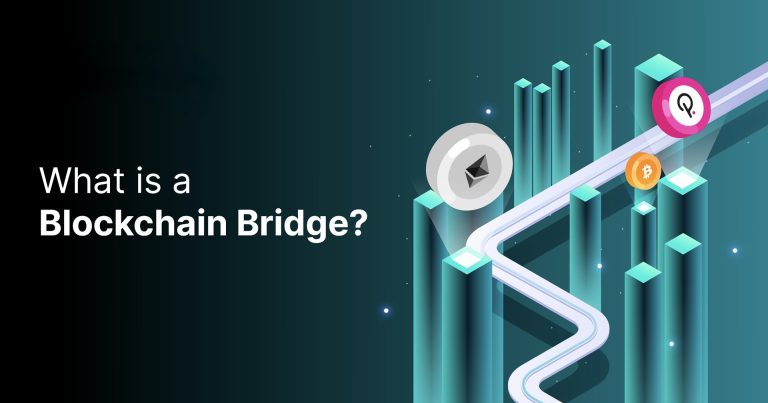
Cross-chain movement of tokens also matured. Bridging allows direct wallet-to-wallet transfer of a token between two blockchains, essentially locking the token on one chain and minting an equivalent on the other. Swapping uses automated market maker pools to exchange one token for another, even across chains, without needing a traditional order book. These mechanisms matter because a token that’s stuck on a single chain has limited reach. Bridging and swapping connect chains that would otherwise be isolated, though they introduce their own risks, including smart contract vulnerabilities in the bridge itself.
Examples of popular crypto tokens
Tokens span a wide range of purposes and communities. Here are some of the most recognized categories and the tokens within them.
- Tether (USDT) is a stablecoin pegged 1:1 to the US dollar, designed to minimize the volatility that makes other crypto assets unpredictable for everyday transactions and trading pairs. USD Coin (USDC) serves the same dollar-pegged function.
- Chainlink is a DeFi token running on Ethereum that connects smart contracts to real-world data feeds, letting protocols access off-chain information like price quotes and weather data.
- Aave is a DeFi lending protocol token on Ethereum, used for governance of one of the largest decentralized lending and borrowing platforms.
- Decentraland (MANA) powers a virtual world where users buy, sell, and develop parcels of virtual real estate, all tracked as NFTs on Ethereum.
- Meme-based tokens gained traction through community interest and social media momentum rather than a specific technical use case. Their value is driven almost entirely by demand and cultural relevance, which makes them among the most volatile tokens in the market.
Tokens, coins, and the expanding role of blockchain assets
Tokens represent what blockchain technology can do beyond simple digital currency. By digitizing real-world and virtual assets through tokenization, projects create new forms of ownership, transparent transaction records, and programmable rules that execute without intermediaries.
The regulatory framework is still catching up. Agencies are working to classify tokens and protect investors without blocking the technology’s potential uses. For anyone evaluating a new project, understanding the structural difference between a token and a coin is a starting point that shapes every question that follows: Where does this asset’s security come from? Who controls upgrades? What regulations apply? The guides and reviews on AXL Research Hub at axltoken.com cover these distinctions because the answers change how you assess risk, choose wallets, and pick exchanges.