
Ethereum is the programmable blockchain behind smart contracts, decentralized apps, and the second-largest cryptocurrency by market cap. It went live on July 30, 2015, two years after a 19-year-old Vitalik Buterin published the whitepaper, and it has run ever since on thousands of independent nodes that no single company controls.
What is Ethereum?
Ethereum is a decentralized, open-source blockchain platform that lets developers build and deploy smart contracts and decentralized applications (dApps). Unlike a traditional server owned by one company, Ethereum runs on thousands of independent computers (called nodes) spread across the world. Each node runs the same software, validates transactions, and maintains a shared record of every change that’s ever happened on the network. Think of it as a global computer that no single person or company controls.
Vitalik Buterin published the Ethereum whitepaper in 2013, when he was 19 years old. He envisioned a blockchain that could handle far more than payments. Co-founders Gavin Wood, Charles Hoskinson, Anthony Di Iorio, and Joseph Lubin helped bring the idea to life. After a crowdfunding campaign in 2014, the network went live on July 30, 2015, with a release called Frontier.
Because no CEO or central authority sits at the top, changes to Ethereum happen through a public process called Ethereum Improvement Proposals (EIPs). Anyone can submit a proposal, and the community of developers and node operators discusses and adopts changes openly.
Today, Ethereum hosts thousands of cryptocurrencies and applications spanning decentralized finance (DeFi), NFTs, gaming, stablecoins, and decentralized social media. The collection of projects built on top of Ethereum is often called web3, a term that describes an internet phase centered on user ownership rather than corporate platforms.
What is the difference between Ethereum and ether (ETH)?
Ethereum is the entire blockchain platform: the network, the protocol, and the applications running on it. Ether, which trades under the ticker symbol ETH on exchanges and wallets, is the native cryptocurrency that powers that platform.
ETH has a few specific jobs. It pays transaction fees (called gas fees) every time someone uses the network. It rewards validators who help secure and run the blockchain. And it serves as the collateral validators lock up to participate in the consensus process.
When people say they’re “investing in Ethereum,” they almost always mean they’re buying ether. A useful analogy: Ethereum is the operating system, and ether is the fuel that keeps it running.
How does Ethereum work?
When you send ETH or interact with a dApp, your transaction gets broadcast to the network and lands in a public waiting area called the mempool. A block proposer, selected from the pool of validators, picks up a batch of waiting transactions, bundles them into a block, and broadcasts that block to the rest of the network. The proposer earns a fee in ETH for this work.
Other validators then double-check the block and attest to its validity. Once enough validators confirm it, the block is added to the chain. Every transaction and state change gets synced across thousands of independent nodes, which makes the record transparent and extremely difficult to censor or tamper with.
At the core of all this sits the Ethereum Virtual Machine, or EVM. The EVM is the software environment where every smart contract runs. You can think of it as a sandbox that exists identically on every node in the network. When a smart contract executes, every node runs the same code through its copy of the EVM and arrives at the same result. That’s how the network stays in agreement without anyone coordinating from the top.
The EVM is also Turing-complete, which means it can run programs of arbitrary complexity. Bitcoin’s scripting system, by comparison, is intentionally limited. Turing-completeness is what makes Ethereum flexible enough to support lending protocols, games, NFT marketplaces, and thousands of other applications, not just simple transfers of value.
Proof of stake: how Ethereum reaches consensus
Ethereum originally used proof of work, the same energy-intensive mining method Bitcoin still uses. Miners competed to solve complex puzzles, burning significant electricity in the process. In 2022, the network transitioned to proof of stake through an upgrade called The Merge, cutting energy consumption by over 99%.
Under proof of stake, there are no miners. Instead, validators lock up ETH as a security deposit, called a stake, to earn the right to propose and validate new blocks. Honest validators earn ETH rewards for their work. Dishonest ones face slashing, meaning a portion of their staked ETH is permanently destroyed as a penalty. This creates a strong financial incentive to play by the rules.
Running a solo validator node requires a minimum of 32 ETH. That’s a significant amount, so liquid staking services have emerged to lower the barrier. These services pool ETH from many participants, letting you contribute a smaller amount and still earn a share of staking rewards. You receive a token representing your staked ETH, which you can hold or use elsewhere in DeFi while your original deposit continues earning.
What are smart contracts and decentralized applications (dApps)?
Smart contracts are self-executing programs stored directly on the blockchain. Their terms are written in code and enforced automatically, with no middleman needed. They operate on if-then logic: when predefined conditions are met, the contract carries out its instructions on its own.
Once a smart contract is deployed to Ethereum, it runs around the clock, accessible to anyone in the world, and it can’t be altered, censored, or shut down by a single party. In Q4 2025, 8.7 million smart contracts were deployed on Ethereum, an all-time record, which gives you a sense of how actively developers are building on the platform.
Decentralized applications, or dApps, are the user-facing layer built on top of smart contracts. You interact with a dApp through a crypto wallet and an internet connection. There’s no registration form, no bank approval, and no requirement to hand over personal data. You connect your wallet, and you’re in.
Smart contracts aren’t limited to finance. They power DAOs (decentralized autonomous organizations), where decisions are made by token-holder votes instead of a board of directors. They handle digital identity verification, automate licensing and royalty payments for creators, and enable automated insurance payouts when conditions, like a flight delay, are met by external data feeds.
Gas fees and how EIP-1559 changed the fee model
Every action on Ethereum costs a transaction fee paid in ETH, called gas. Sending ETH to a friend, minting an NFT, swapping tokens on a decentralized exchange: each one requires computational work from the network, and gas is how you pay for it. Gas serves two purposes. It compensates validators for processing your transaction, and it prevents spam by making it costly to flood the network with junk requests.
Gas is measured in tiny units called gwei (one billionth of one ETH). The cost of a transaction depends on two things: how complex the operation is and how busy the network is at that moment. A simple ETH transfer uses less gas than a complicated smart contract interaction. And when lots of people are trying to use Ethereum at the same time, gas prices rise because users bid higher to get their transactions processed faster. A gas limit caps how much computation a transaction can use, protecting both the user and the network from runaway costs.
Before 2021, gas fees worked like a blind auction. You submitted a bid, and if it was high enough, a miner picked it up. You had to guess what other people were bidding, and overpaying was common. The London upgrade in 2021 introduced EIP-1559, which overhauled this system.
Under EIP-1559, each fee splits into two parts. The first is a base fee set algorithmically by the network based on demand. When blocks are more than half full, the base fee goes up; when they’re less than half full, it goes down. This makes costs more predictable because you can see the current base fee before you submit. The second part is a priority tip, an optional amount you add to incentivize validators to include your transaction sooner.
Here’s the twist: the base fee isn’t paid to validators. It’s burned, meaning it’s permanently removed from the ETH supply. During periods of high network activity, more ETH gets burned than new ETH is issued to validators, making the total supply shrink. That’s when people say ETH is “deflationary.” On quieter days, though, new issuance can exceed the burn, so the supply fluctuates rather than always shrinking.
Layer 2 networks have also changed the fee picture dramatically. By processing transactions off Ethereum’s main chain and settling them back in batches, L2s can bring costs down to less than a cent per transaction on average.
Ethereum use cases: DeFi, NFTs, stablecoins, and more
Ethereum’s programmability means it supports a wide range of real-world applications. Some have already moved billions of dollars in value; others are still finding their footing.
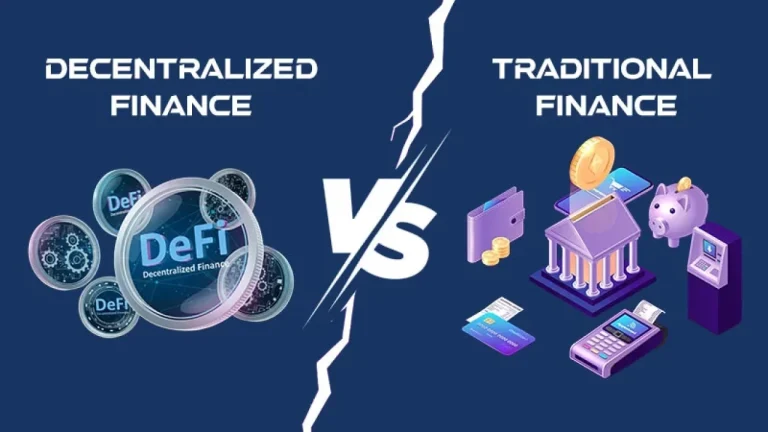
- Decentralized finance (DeFi): Lending, borrowing, and trading without banks or brokers, all enforced by smart contracts. Ethereum holds 54.71% of all DeFi total value locked as of August 2026, more than eight times any single rival chain.
- Stablecoins: Tokens pegged to assets like the US dollar. Ethereum hosts the largest stablecoin supply and the most stablecoin activity of any blockchain. A major payments company launched its own stablecoin, PYUSD, on Ethereum in 2023, and a major e-commerce platform launched stablecoin payments on an Ethereum-based layer 2 in 2025.
- Non-fungible tokens (NFTs): Unique digital assets representing art, collectibles, virtual real estate, and gaming items. Each NFT is verified on-chain, so ownership and provenance are publicly traceable.
- Creator economy: Creators build their own tokens and dApps to earn directly from their audiences instead of relying on platforms that take a cut and control distribution.
- Enterprise adoption: Businesses use Ethereum to launch global payment systems, tokenize assets like event tickets or certificates, and build on-chain loyalty programs.
- Government applications: Ukraine’s Ministry of Digital Transformation used Ethereum smart contracts to distribute wartime aid directly to citizens and NGOs. Other government use cases include transparent distribution of public funds, digital identity issuance, and tamper-proof voting and land registries.
- Supply chain management: Tokenized supply chains improve traceability and authenticity of goods, letting buyers verify where a product came from and whether it’s genuine.
How layer 2 networks scale Ethereum
Ethereum’s main chain (layer 1) can only handle so many transactions per block. Layer 2 networks, or L2s, run on top of Ethereum to increase transaction capacity while inheriting its security guarantees. They work like express lanes on a highway: you get faster finality and lower fees, but the underlying settlement still happens on Ethereum.
L2s come in two main flavors, and the difference matters.
Optimistic rollups bundle a batch of transactions, execute them off-chain, and post the results back to Ethereum. They assume every transaction in the batch is valid unless someone challenges it. There’s a dispute window, typically about seven days, during which anyone can submit a fraud proof if they spot something wrong. If a challenge succeeds, the bad transaction gets rolled back. The tradeoff is that withdrawals from an optimistic rollup back to layer 1 are delayed by that dispute window.
Zk-rollups (zero-knowledge rollups) take a different approach. Instead of assuming validity and waiting for challenges, they generate a cryptographic proof that the entire batch of transactions is correct. This proof is verified on Ethereum in a single step, so there’s no dispute window and withdrawals can be faster. The tradeoff is that generating these proofs requires more computation on the L2 side, which has historically made zk-rollups more complex to build and deploy.
Popular L2s process millions of transactions worth billions of dollars annually. But there’s an ongoing tension: as more activity shifts to L2s, transaction fees on Ethereum’s base layer decline. That’s great for users paying less, but it may affect the long-term economics for ETH holders, since fewer fees on layer 1 means less ETH being burned.
The Fusaka upgrade, launched on December 3, 2025, expanded data capacity for L2s through a feature called PeerDAS and raised the default gas limit to roughly 60 million. This gives L2s more room to post data back to Ethereum cheaply, which in turn lowers costs for L2 users.
How Ethereum differs from Bitcoin
| Feature | Bitcoin | Ethereum |
|---|---|---|
| Primary purpose | Store of value and peer-to-peer payments | Programmable infrastructure for applications |
| Smart contracts | Limited scripting language | Turing-complete smart contracts |
| Supply | Fixed cap of 21 million coins | Dynamic supply with validator issuance and fee burning |
| Consensus and energy | Proof of work, high electricity consumption | Proof of stake since 2022, over 99% less energy |
| Design philosophy | Predictability and durability | Programmability and a broad application ecosystem |
Bitcoin was designed to do one thing well: serve as a decentralized, censorship-resistant form of money. Its scripting language is intentionally simple, which limits what you can build on it but also reduces the attack surface.
Ethereum made a different bet. By supporting a Turing-complete programming environment, it opened the door to DeFi, NFTs, DAOs, and thousands of other applications. That flexibility comes with a larger attack surface and more frequent upgrades, but it’s also why Ethereum has become the foundation for most of web3.
Bitcoin’s fixed supply of 21 million coins gives holders a clear scarcity argument, a central point when weighing Bitcoin versus Ethereum. Ethereum’s supply, on the other hand, is dynamic. New ETH is issued to validators, and a portion of transaction fees is burned. Whether the total supply grows or shrinks in a given period depends on how much the network is being used.
Key moments in Ethereum’s history
- 2013: Vitalik Buterin publishes the Ethereum whitepaper, proposing a blockchain built for both money and applications.
- 2014: The Ethereum Foundation forms. A crowdfunding campaign raises the funds needed to start development.
- 2016: A smart-contract exploit drains $60 million (3.6 million ETH) from The DAO, a decentralized investment fund. The community faces a choice: reverse the theft and break the principle that blockchain transactions are final, or accept the loss and leave the chain untouched. The majority votes to reverse it through a hard fork, splitting the network in two. The forked chain keeps the name Ethereum; the original, unchanged chain becomes Ethereum Classic. It remains one of the most debated moments in blockchain history.
- 2020: The Beacon Chain launches, beginning the multi-year move from proof of work to proof of stake.
- 2021: The London upgrade introduces EIP-1559, which burns a portion of gas fees and makes transaction costs more predictable.
- 2022: The Merge replaces mining with staking, cutting Ethereum’s energy use by over 99%.
- 2025: The Pectra upgrade improves smart wallet support and L2 compatibility. Later in the year, the Fusaka upgrade expands L2 data availability.
- 2026: The Glamsterdam upgrade is in development, expected in Q4 2026.
Is ETH a good investment?
Many holders treat ETH as an investment by holding it, staking it, or lending it through DeFi protocols. Staking earns rewards for validators who lock their tokens as collateral, creating a yield built directly into the network. The burn mechanism under EIP-1559 can make ETH deflationary during periods of heavy network use, which some investors see as a value driver. And Ethereum exchange-traded products (ETPs) now exist, giving traditional investors a regulated way to get exposure without holding ETH directly.
That said, there are real risks to weigh before putting money in.
ETH prices have historically swung far more than traditional assets. Drawdowns of 70% or more have happened in past market cycles. That kind of volatility can be difficult to sit through, even for experienced investors.
Competition is another factor. Alternative blockchains attract users with lower fees and faster speeds. If enough activity moves to rival chains permanently, Ethereum’s market share could shrink.
New laws could also restrict DeFi activity or require network participants to register with authorities, which would change the economics and accessibility of the platform.
Software vulnerabilities are always possible. Code flaws have led to exploits in the past, including the 2016 DAO hack. While security practices have improved, smart contracts remain a target.
Ethereum also hosts major stablecoins. A collapse or liquidity crisis in one of those assets could destabilize the broader platform, since stablecoins are deeply woven into DeFi protocols.
Finally, as economic activity migrates to L2 networks, fee revenue on Ethereum’s base layer may decline. Less fee revenue means less ETH burned, which could affect the long-term value proposition for ETH holders.
We don’t make price predictions or recommend specific investments. At AXL Research Hub, our goal is to lay out how the system works so you can make your own informed decisions.
How to start using Ethereum
You don’t need a bank account, an ID, or anyone’s permission to start. All you need is a device and an internet connection.
- Download a wallet app. Wallet apps are free and available on both mobile and desktop. Your wallet is how you store, send, and receive ETH and interact with dApps.
- Secure your recovery phrase. When you create a wallet, you’ll get a recovery phrase (usually 12 or 24 words). Write it down and store it somewhere safe offline. If you lose this phrase, you lose access to your funds permanently. There’s no customer support to reset it.
- Get a small amount of ETH. You can buy ETH through a cryptocurrency exchange or, in some cases, directly inside the wallet app itself.
- Use ETH to pay gas fees. Whether you’re sending tokens, collecting an NFT, or interacting with a dApp, you’ll need ETH in your wallet to cover the transaction fee.
- Explore dApps. Many dApps run right in your browser. You connect your wallet with a couple of clicks, and you’re in. No separate logins, no application forms.
Developers can start building without asking permission. Ethereum’s test networks let you write and deploy smart contracts using free test ETH, and open-source development frameworks provide the tools to get started. Enterprises, meanwhile, are increasingly adopting L2 networks for high-volume use cases like loyalty programs, tokenized assets, and global payments.
Can you turn Ethereum into cash?
Yes. The most common route is selling ETH on a cryptocurrency exchange for US dollars or another fiat currency. You place a sell order, the exchange matches it with a buyer, and you withdraw the proceeds to your bank account.
Some wallets include built-in sell or off-ramp features that convert ETH directly to a bank deposit without needing a separate exchange account.
Peer-to-peer transfers are another option. You sell directly to another person in exchange for fiat, though this carries more risk since there’s no intermediary to mediate disputes.
Keep in mind that tax obligations may apply when you convert ETH to cash. In the US, selling crypto is generally treated as a taxable event, and capital gains rules apply. The specifics depend on how long you held the ETH and your overall tax situation.
Common Ethereum terms every beginner needs to know
Ethereum has its own vocabulary, and running into unfamiliar terms can slow you down. Here are the ones you’ll see most often.
- Block: A digital container holding a batch of transactions along with metadata like timestamps and a reference to the previous block.
- Blockchain: The chain of blocks that forms a decentralized public ledger of all transactions ever recorded on the network.
- Node: A computer running Ethereum software that stores a copy of the blockchain and validates new transactions.
- Wallet: Software that stores your private key and signs transactions on your behalf. It doesn’t actually “hold” your ETH; it holds the key that proves you own it.
- Gas: The unit measuring the computational effort required for a transaction, paid in ETH.
- Validator: A network participant who stakes ETH and proposes or attests to new blocks under proof of stake.
- Staking: Locking ETH to participate in proof-of-stake consensus and earn rewards in return.
- DAO: A decentralized autonomous organization governed by token-holder votes through smart contracts, rather than a traditional management structure.
- EIP (Ethereum Improvement Proposal): The formal process for suggesting changes to the Ethereum protocol. Anyone can submit one, and proposals are discussed publicly before adoption.
Frequently asked questions
How much will 1 ETH be worth in 2030?
There’s no reliable way to predict ETH’s future price. Its value depends on adoption rates, network activity, competition from other blockchains, regulatory developments, and broader market cycles. Anyone offering a specific number is speculating.
Who runs Ethereum today?
No single entity runs Ethereum. The network is maintained by a distributed community of developers, node operators, validators, and contributors. The Ethereum Foundation funds research and development, but it doesn’t control upgrades or make unilateral decisions about the protocol’s direction.
Ethereum’s roadmap and what comes next
Ethereum doesn’t follow a fixed corporate roadmap dictated by a CEO. Instead, it follows a shared vision shaped by the community. Upgrades are proposed as EIPs, developed in the open, and adopted through rough consensus among developers and node operators.
The ongoing priorities center on making both the core protocol and its L2 networks faster and cheaper while improving the experience for developers and everyday users. Anyone can help steer Ethereum’s direction through open contribution. There’s no application process and no gatekeeping.