
Losing access to a crypto wallet can mean losing everything in it, permanently. There’s no bank to call, no fraud department to file a claim with, and no way to reverse a blockchain transaction once it’s confirmed.
Why crypto wallet security matters
Cryptocurrency lives on a blockchain, but a wallet doesn’t store the coins themselves. It stores the public and private keys that grant access to those funds. If someone gets your private key, they control your crypto, and blockchain transactions are irreversible. There’s no central authority, no deposit insurance, and no dispute process that can claw stolen funds back.
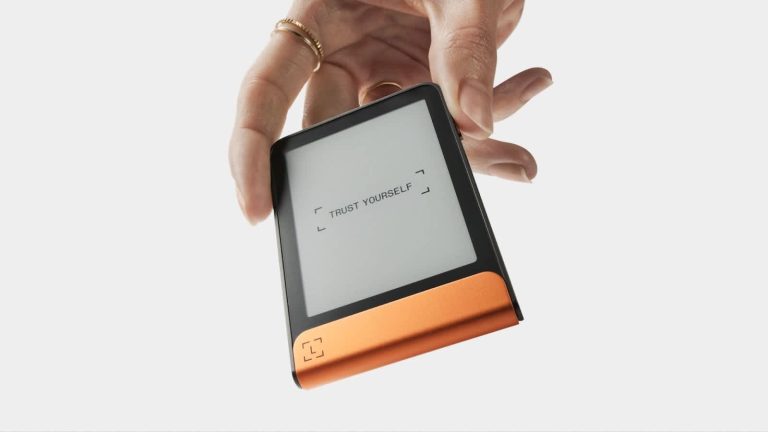
Self-custody puts the full weight of key protection on the owner. Hot wallets, which stay connected to the internet, face constant exposure to remote attacks. Cold wallets reduce that exposure by staying offline, but even they need deliberate security measures around physical access, backup integrity, and seed phrase storage.
The risks aren’t theoretical. James Howells lost access to 8,000 BTC after the hardware holding his keys ended up in a landfill, with holdings valued at roughly $1 billion over a 12-year period. Losses from hacking, phishing, malware, user error, and outright physical destruction of devices remain widespread. Building multiple overlapping security measures makes each individual attack vector harder to exploit, because an attacker who beats one layer still has to get through the next.
How crypto wallets work
A wallet generates two mathematically linked codes: a public key and a private key. The public key runs through a cryptographic hashing algorithm to produce a wallet address, a fixed-length alphanumeric string you can safely share with anyone who needs to send you funds. A typical Bitcoin address is 26 to 35 characters long, while Ethereum addresses start with “0x” and run 42 characters.
The private key is what proves ownership and authorizes outgoing transactions. It must never be shared. Anyone who has it can move your funds to any address they choose.
When you set up a wallet, you also receive a seed phrase (sometimes called a recovery phrase): a series of 12 to 24 human-readable words that acts as a master backup for all your wallet keys. The BIP-39 protocol converts those words into the cryptographic keys your wallet uses. Because BIP-39 is a shared standard, any compatible device can regenerate the exact same keys from the same phrase. That’s what makes recovery possible if your original device breaks or gets lost, but it’s also why protecting the seed phrase is just as critical as protecting the private key itself.
Common threats to your crypto wallet
Crypto wallets face a range of attack vectors, and understanding each one helps you recognize what to watch for.
- Phishing attacks use fake websites, impersonated support teams, and fraudulent emails to trick you into entering your credentials or seed phrase. In 2021, a fake Uniswap site led users to submit wallet credentials, resulting in millions lost. These sites often look nearly identical to the real thing, down to the logo and layout, with only a subtle URL difference.
- Malware and keyloggers arrive through pirated software, rogue browser extensions, or fake wallet apps. Once installed, they can record every keystroke you make, including passwords and seed phrases.
- Clipboard hijackers are a specific type of malware that silently replaces a copied wallet address with an attacker’s address. You copy the correct destination, but when you paste it into the send field, a different address appears. Because wallet addresses are long strings of random-looking characters, the swap is easy to miss unless you verify the pasted address character by character. Running up-to-date anti-malware software and manually checking at least the first and last several characters of a pasted address before confirming a transaction are the most direct defenses.
- SIM swap fraud is one of the more dangerous attack vectors because it bypasses SMS-based two-factor authentication entirely. The attacker contacts your telecom carrier, impersonates you (often using information gathered from social media or data breaches), and convinces staff to transfer your phone number to a new SIM card. Once they control your number, they intercept any SMS verification codes sent to it, then use those codes to reset passwords and access your wallet or exchange account. A SIM swap attack in 2019 resulted in the theft of over $5 million in Bitcoin and other tokens after the attacker convinced telecom staff to port a victim’s number. This is a major reason security professionals recommend authenticator apps or hardware 2FA keys over SMS codes.
- Credential stuffing happens when attackers take leaked username-password pairs from breaches on other platforms and test them against crypto wallet and exchange logins. If you reuse the same password across services, a breach on an unrelated site can hand over your crypto account.
- Exchange and platform hacks target centralized platforms that hold large pools of user keys in hot wallets. Billions of dollars have been stolen through platform breaches over the years, making the security practices of any custodial service a direct risk to your funds.
- Smart-contract exploits in DeFi take advantage of loopholes in protocol code, allowing hackers to manipulate the contract’s logic and drain funds. In some cases, fraudulent backdoors have been built into contracts deliberately, letting development teams siphon user deposits.
- Ponzi schemes and fake giveaways are social-engineering attacks. Scammers impersonate public figures on social media, promising to double any crypto you send to a stated address. Funds sent are simply taken, with nothing returned. Bitconnect, once a top-ten cryptocurrency, operated as a Ponzi scheme between 2016 and 2018 and stole over $2 billion.
Best practices to secure your crypto wallet
These measures form the foundation of wallet security. None of them is complicated on its own, but stacking them together is what makes the difference.
- Use a strong, unique password of at least 12 to 16 characters, combining letters, numbers, and symbols. A password manager like Bitwarden or 1Password can generate and store these for you. Never reuse a password across crypto accounts and personal accounts, and change wallet and exchange passwords on a regular schedule.
- Enable two-factor authentication (2FA) on every wallet and exchange account. Authenticator apps such as Google Authenticator or Authy are far safer than SMS codes because the codes they generate self-destruct and renew approximately every 10 seconds, and they can’t be intercepted through a SIM swap. Hardware-based 2FA keys go a step further: they require physical possession of the device to authenticate, so a remote attacker can’t replicate them. Biometric authentication (fingerprint or facial recognition) adds a device-level access layer on top of these.
- Keep your software updated. Wallet apps, your operating system, and your browser all receive security patches that close known vulnerabilities. Enable automatic updates where possible so you don’t fall behind.
- Run antivirus and anti-malware software on every device you use to interact with wallets or exchanges. This is your frontline defense against keyloggers, clipboard hijackers, and rogue extensions.
- Avoid public Wi-Fi when accessing wallets or exchanges. If you have no choice but to use a public connection, route your traffic through a VPN to encrypt it.
- Create a dedicated email address for your crypto accounts, separate from your personal or work email. This limits the damage if one of your other email accounts is compromised. Along the same lines, avoid accessing wallets on shared, public, or work computers. A dedicated device for crypto activity removes a lot of attack surface.
- Double-check every recipient address before confirming a transaction. Blockchain transactions can’t be reversed, so a mistake or a clipboard hijacker sending funds to the wrong address is permanent. Send a small test transaction before transferring large amounts; the minor network fee is worth the peace of mind.
How to protect your private keys and seed phrase
Your seed phrase is simultaneously your safety net and your biggest vulnerability. Anyone who obtains it can regenerate all associated keys on any compatible device and drain every address tied to that phrase.
Never store your private keys or seed phrase as digital copies. That means no screenshots, no emails, no cloud drives, no text messages. Any file that touches the internet or a networked device can be accessed through a breach or malware.
The safest approach is to write the seed phrase on paper or engrave it on a metal plate designed to survive fire and water damage. Store those physical copies in a secure location: a home safe, a fireproof safe bolted to the floor, or a bank safe-deposit box. Keep copies in more than one geographic location so that no single event, whether a house fire, flood, or burglary, destroys all your backups at once.
For an added layer against theft, you can split the seed phrase into multiple parts and store each part in a different location. That way, someone who finds one part still can’t reconstruct the full phrase. If you need a digital backup as a minimum fallback, use an encrypted offline drive that stays disconnected from the internet.
Keep your holdings private. Never disclose how much crypto you own in online forums or on social media. High-profile crypto influencers have been targeted and had assets siphoned after publicly revealing their positions. In more extreme cases, individuals have been taken hostage and physically coerced into handing over crypto after criminals learned about their holdings. The less visible you are as a target, the less likely you are to become one.
Hardware wallets vs software wallets: which is more secure?
Hardware and software wallets serve different purposes, and most serious holders end up using both. Here’s how they compare:
| Feature | Hardware wallet (cold) | Software wallet (hot) |
|---|---|---|
| Key storage | Dedicated offline device; private keys never leave the device during signing | App or browser extension; keys stored on an internet-connected device |
| Internet exposure | Offline except during transaction broadcast | Always connected |
| Vulnerability profile | Resistant to remote attacks; physical theft or supply-chain tampering are the main risks | Exposed to malware, phishing, keyloggers, and clipboard hijackers |
| Cost | Approximately $50 to $200+ | Free or low-cost |
| Best for | Long-term storage of significant holdings | Frequent trades and small, active balances |
A practical setup for most people is to keep day-to-day spending funds in a hot wallet and move the majority of holdings to a cold wallet. This gives you the convenience of quick access for trading while keeping the bulk of your portfolio offline.
If you’re buying a hardware wallet, purchase only from the official manufacturer or verified sellers. Tampered devices on the secondary market have caused fund losses. When it arrives, verify the firmware version and check the packaging for signs of tampering, such as broken seals, missing shrink wrap, or pre-initialized devices, before you set it up. A legitimate hardware wallet should always prompt you to initialize it as new and generate a fresh seed phrase during first use. If it arrives with a seed phrase already filled in on a card or a pre-set PIN, don’t use it.
Wallet backup and encryption strategies
Back up the entire wallet, not just the keys you can currently see. Some wallets manage many private keys internally, and a partial backup can leave funds stranded.
Most modern wallets are hierarchical deterministic (HD) wallets, meaning a single backup of the recovery phrase restores all past and future addresses generated by that wallet. That makes the seed phrase backup the most important one you’ll maintain.
Any backup stored online or on a network-connected device should be encrypted. Encrypting the wallet or the smartphone it runs on sets a withdrawal password that protects against physical theft, but it won’t stop keylogging malware that captures the password as you type it. Use a strong encryption password: long, randomly generated, or a passphrase built from randomly chosen words.
There’s no bank-style “forgot my password” process for encrypted wallets. Losing the encryption password means permanent loss of funds. If you’re concerned about forgetting it, keep a paper copy of the password in a vault or safe-deposit box alongside your seed phrase backup (stored separately from the phrase itself).
For hardware wallets holding significant funds, maintain at least one backup device. Software wallets can also be backed up to hardware as an additional safeguard. Periodically verify that your backup media are still readable and that stored seed phrases and passwords remain intact. A backup you can’t access when you need it isn’t a backup.
Custodial vs self-custody wallets
A custodial wallet is one where a third party, typically an exchange, holds and manages the private keys on your behalf. The main convenience is account recovery: if you forget your login credentials, the custodian can help you regain access, much like a traditional bank. The trade-off is third-party risk. The custodian’s security practices determine the safety of all the keys it holds. Exchanges have been hacked, gone insolvent, and frozen withdrawals during crises, and when any of those things happen, your funds are caught up in it.
A self-custody (non-custodial) wallet puts you in sole control of your private keys. No third party can freeze, seize, or censor your funds. That autonomy comes with full responsibility: if you lose your keys and seed phrase, nobody can recover your funds for you.
If you choose a custodial service, pick one carefully. Look at the platform’s security track record, whether it holds reserves transparently, and what insurance or protections it offers. To help with that decision, you can compare the top crypto exchanges by fees, security, and trust scores. Enable multi-factor authentication on the account, and don’t store more on the platform than you need for active trading.
Warm wallets: a middle ground
Warm wallets sit between hot and cold wallets. They maintain internet connectivity for convenience, but transactions require an additional human authorization step, such as offline two-factor authentication, before they’re approved. The keys may be stored online, but they can’t move funds on their own.
This setup fits users who need to transact periodically without keeping keys constantly exposed. You don’t get the always-ready speed of a pure hot wallet, but you avoid the full manual process of pulling a hardware device out of a safe every time you want to make a transaction. For holders who trade a few times a week rather than daily, a warm wallet can hit a practical balance between accessibility and protection.
Advanced security measures
Once you’ve covered the fundamentals, these measures add meaningful protection for larger holdings or higher-risk situations.
- Multi-signature (multi-sig) wallets require multiple independent private-key approvals before a transaction can execute. A common configuration is 2-of-3: three keys exist, held on separate devices or by separate parties, and any two must sign before funds move. This eliminates single-point-of-failure risk. If one key is compromised or lost, the attacker still can’t move funds without a second key, and the remaining keyholders can recover access. Multi-sig setups are used by institutions, companies, and families with shared holdings. An organization might require 3 of 5 members to sign before a withdrawal goes through.
- Spreading holdings across multiple wallets and blockchain addresses limits total loss if any single wallet is compromised. You sacrifice some convenience in managing multiple wallets, but the resilience gain is real: one breach doesn’t empty everything.
- Offline (air-gapped) transaction signing separates the signing process from the internet entirely. One computer, permanently disconnected from any network, holds the full wallet and signs transactions. A second, online computer creates unsigned transactions and broadcasts the signed ones. The private keys never touch an internet-connected machine. This is one of the strongest defenses against remote attacks, though it requires more technical setup and adds friction to every transaction. It’s most practical for cold-storage reserves that move infrequently.
- Cold storage for primary reserves keeps the bulk of your holdings entirely offline using hardware wallets, air-gapped computers, or metal-engraved seed phrases stored in secure locations.
- Periodic security audits round out the picture. Review your wallet software versions, test your backups, and confirm that seed phrases remain accessible and intact. Security isn’t something you set up once and forget; it’s a practice you revisit.
Matching wallet security to your situation
The right security setup depends on how you use crypto, how much you hold, and where you think your biggest risk actually lies. At AXL Research Hub, we see the deciding factors boil down to the trade-off between convenience, personal effort, and security, along with an honest assessment of your likeliest point of failure. Is it more likely that you’ll misplace a wallet or seed phrase, or that someone will hack into your account remotely? Your answer shapes which layers to prioritize.
An active trader with a modest account can do well with a custodial hot wallet on a trusted exchange paired with a hardware 2FA key. The exchange handles key management, and the hardware key blocks remote account takeovers. Reviewing the top-rated crypto apps can help active traders find a platform that balances security with usability.
A semi-active holder with a meaningful balance benefits from a cold wallet with hardware 2FA, a properly stored seed phrase backup, and an encrypted backup device. This combination keeps the bulk of funds offline while still allowing periodic access.
A large or long-term investor should consider multi-sig cold wallets, encrypted backups distributed across geographically separate bank safe-deposit boxes, and protected seed phrases. For individuals who want high security without the complexity of a full multi-sig arrangement, a hardware wallet combined with a hardware 2FA device offers strong protection, as long as you follow safe steps when transferring funds to a cold wallet.
What to do if your crypto wallet is compromised
If you suspect your wallet has been compromised, move fast. Every minute counts because a blockchain transaction can’t be undone.
- Transfer remaining funds immediately to a new, secure wallet with freshly generated keys. Don’t send them to another address in the same wallet; create an entirely new wallet.
- Cancel any credit cards or payment methods linked to the compromised account.
- Change passwords on the wallet, the associated email address, and any service that shared the same credentials.
- Review recent transaction history for unauthorized transfers so you have a clear picture of what was taken and when.
- Enable or upgrade two-factor authentication on all related accounts, switching from SMS to an authenticator app or hardware key if you haven’t already.
- Scan all devices for malware and keyloggers before restoring access to any wallet or exchange. If the device itself is compromised, logging into a new wallet from it hands the attacker your new keys.
- Report the incident to the exchange or wallet provider if custodial services are involved. They may be able to flag or freeze the receiving address on their platform.
- Document the breach details for potential law-enforcement reporting, including transaction IDs, timestamps, and any communication from the attacker.
Estate planning for crypto holders
Crypto funds can be permanently lost if no one else knows where your wallets are, what your passwords are, or how to access your seed phrases after your death or incapacitation. Unlike a bank account, there’s no institution that a family member or executor can contact to recover the funds.

A documented backup plan shared with trusted family members or a legal representative prevents this kind of irreversible loss. The instructions don’t need to hand over direct access during your lifetime. They can include wallet locations, password hints stored in a vault, and step-by-step seed phrase access procedures that only become actionable under specific conditions.
Multi-sig setups work particularly well here. You can include a family member’s key in a 2-of-3 configuration, which lets them participate in recovery without granting day-to-day access to your funds. During normal use, the family member’s key sits untouched. After an emergency, they can combine their key with one held by an attorney or stored in a safe-deposit box to move the funds.
This isn’t a step most people think about early on, but for anyone holding crypto long term, it’s as important as the wallet security itself. Without it, strong security can work against your heirs by locking them out permanently.
Building a layered defense for your crypto
No single security measure fully protects a wallet. Strong passwords, authenticator-app 2FA, cold storage, encrypted backups, and multi-sig each handle a different attack vector. Stacked together, they create compounding barriers that force an attacker to beat multiple independent defenses rather than just one.
Your security setup isn’t something you configure once and walk away from. New threats emerge regularly, and wallet providers push updates to address them. Staying informed through wallet-provider release notes and security-focused publications, as recommended by Bitcoin.org, keeps your defenses current.
The cost of prevention, whether it’s a hardware wallet, a safe-deposit box, or an hour spent setting up 2FA, is far lower than the irreversible loss of funds on a network designed to be censorship-resistant and offer no recourse. If you’re new to self-custody and want a walkthrough, our guide on setting up a crypto wallet covers custodial, self-custody, and hardware options step by step.