
What is a hard fork? It’s a change to a blockchain’s rules that older node software can’t follow, so every node has to upgrade or get left behind on the old chain. Whether you end up with one chain or two, and a second coin in your wallet, comes down to how much of the network agrees to the change.
What is a hard fork?
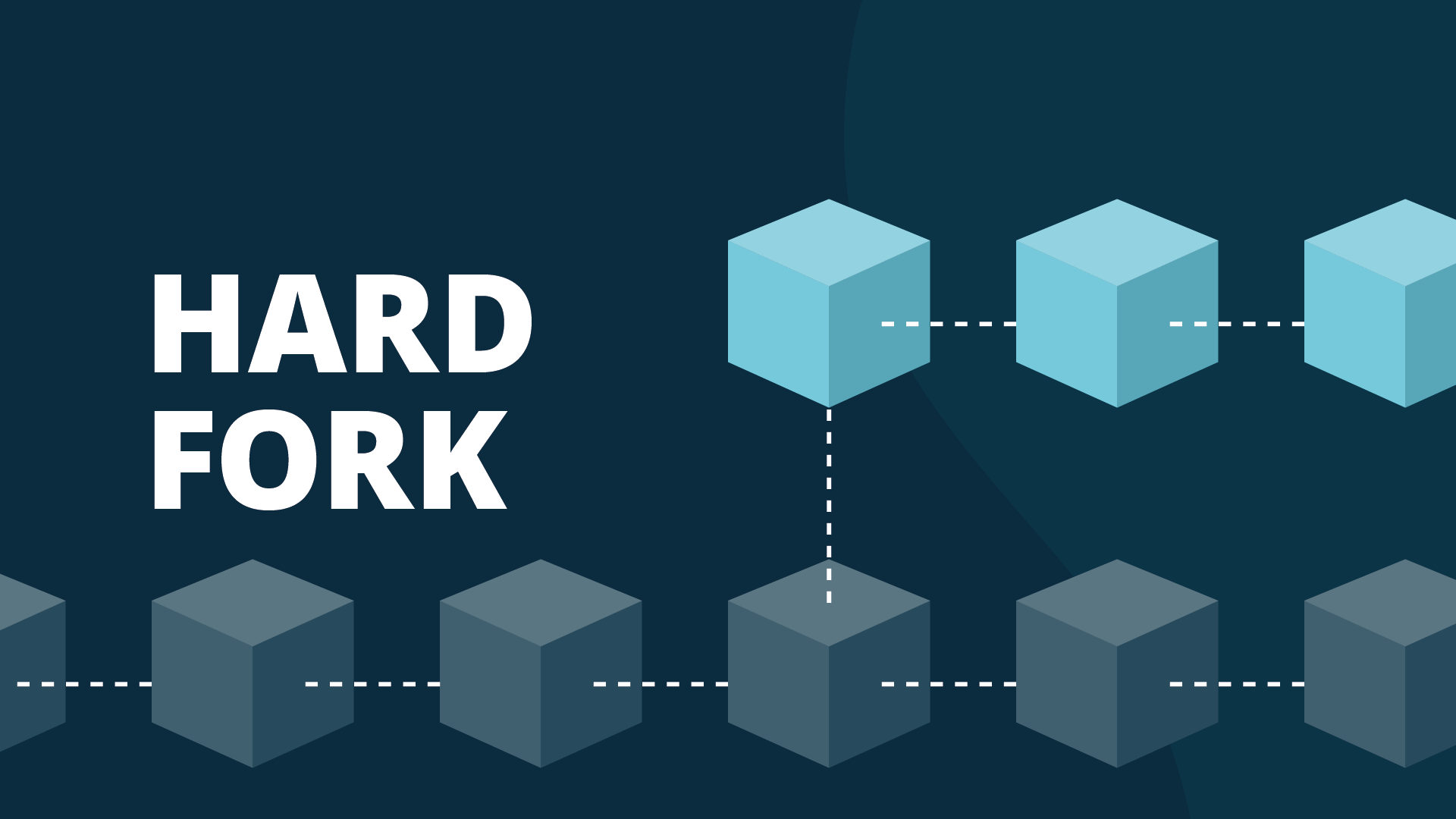
A hard fork is a change to a blockchain’s protocol rules that isn’t backward compatible, meaning older node software can’t follow it. Upgraded nodes accept blocks built under the new rules and build on top of them. Nodes still running the old software reject those same blocks as invalid.
The change can go either way: new rules might make blocks or transactions valid that used to be invalid, or they might make previously valid ones invalid. Because old nodes check every block against the rules they already know, either direction leaves them unable to agree with upgraded nodes.
Picture a fork in the road. One path keeps the old rules, and the other heads off in the new direction. The term comes from software development, where a fork is a new branch of code that’s developed independently of the original.
Blockchain records can’t be edited after the fact, so a hard fork doesn’t touch the original chain’s past. Instead, it produces a new chain that imports the same transaction history up to the split point. From that block on, the two chains and their transactions don’t work with each other.
You’ll also hear “fork” used loosely. In crypto it can mean a chain split, a protocol change, or both. Context tells you which one someone means. A handy way to keep a hard fork straight is to think of it as an upgrade rather than an update: you either upgrade or you’re left behind on the old chain.
How a hard fork splits a blockchain
Every node on a blockchain checks blocks and transactions against a shared set of consensus rules. Nodes also follow a consensus mechanism, which decides who gets to publish the next block. A split begins when a block candidate gets accepted by nodes running one rule set and thrown out by nodes running another.
Nobody flips that switch by hand. The new node software has a predetermined block height written into it. When the chain reaches that block, the new rules switch on. By then, each node operator and miner has either installed the new version or kept running the old one.
From there, the two groups part ways. Upgraded nodes accept the first block built under the new rules and keep extending that chain, while non-upgraded nodes see the same block as invalid and keep building on the last block they consider valid. The result is two chains that share the full ledger history up to the split block and diverge after it.
How it plays out depends on how much of the network upgrades. If everyone agrees, the old chain withers away. If the community is divided, you get two chains that both keep running.
Planned hard forks: the whole network upgrades
The most common hard fork is a planned one: code updates or bug fixes that the network adopts with broad agreement. Because nearly everyone is on board, exchanges, wallets, and other services move onto the new chain together.
If you hold coins, you usually don’t have to do anything. Wallet providers update their software to point at the new chain. Your coins are simply there when the new rules take effect.
The old chain doesn’t survive this kind of fork. Nobody keeps running or supporting it, so it falls out of use and no second coin comes out of it. A new coin only shows up when part of the network refuses to go along.
Contentious hard forks: the chain splits in two
A contentious hard fork happens when the nodes keeping the chain alive can’t reach consensus, and part of the network stays on the old rules. The result is two viable chains, the original and the updated one. Each has its own coin.
Which chain counts as the real one comes down to support. The chain that draws most of the nodes, hashing power, and adoption is usually treated as dominant. It typically keeps the original name.
That label carries weight. Whichever chain the community treats as the main one shapes each coin’s standing afterward, from how exchanges list it to how people talk about it.
Miners decide which chain to secure based on whether they share its goals. Their choice can sink a split. A chain without enough nodes and hashing power behind it may not last long, since there’s little left to keep it secure and running.
The two best-known cases both fit this pattern. Bitcoin and Bitcoin Cash went separate ways over how to scale Bitcoin. Ethereum and Ethereum Classic split over whether to undo a hack.
Hard fork vs soft fork
A soft fork is a backward-compatible update: nodes on older versions still recognize the new blocks as valid. Every node stays compatible whether it upgrades or not, so a soft fork doesn’t split the chain. Upgrading is optional in the short run. It’s like a phone app that keeps working without its newest features until you update it.
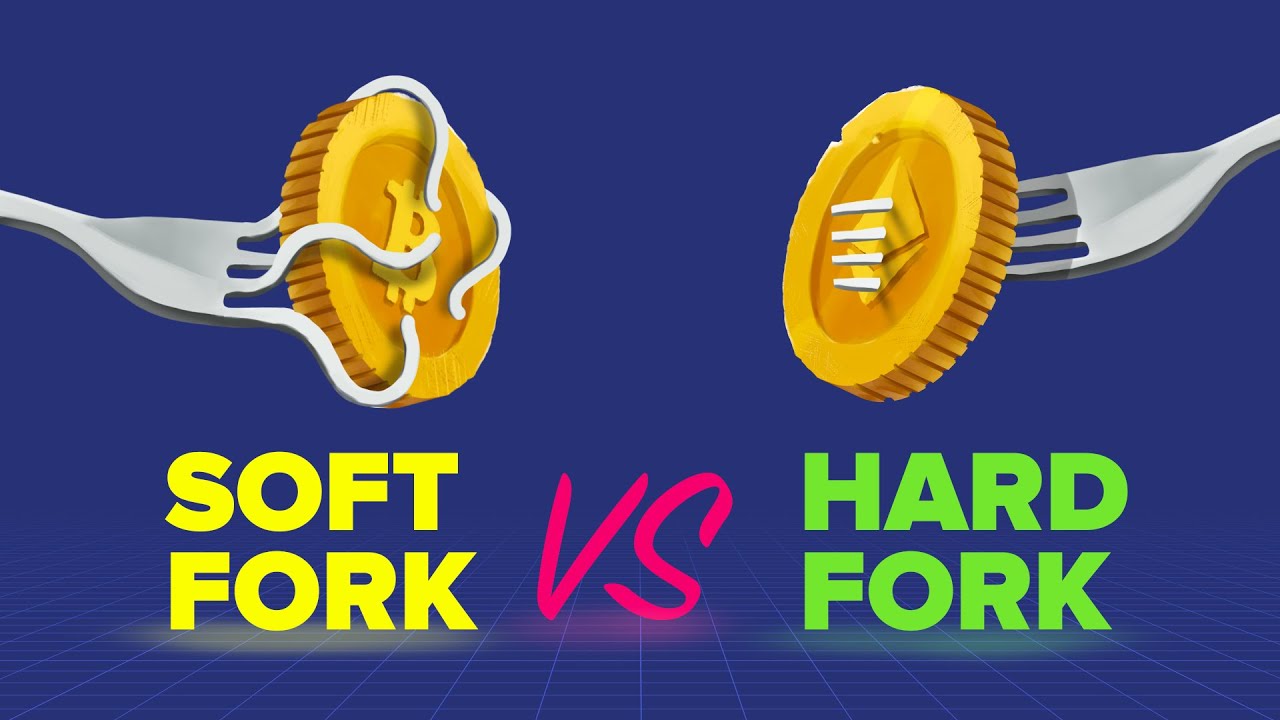
A hard fork leaves no such option. Every node has to switch to the new software to stay on the same network. In software terms, a soft fork is like a Microsoft Word update, while a hard fork is like installing an entirely new version of the program.
| Feature | Soft fork | Hard fork |
|---|---|---|
| Backward compatible | Yes | No |
| Chain split | No | Two chains when part of the network keeps the old rules |
| Node upgrade | Optional | Required |
| New coin | Typically none | Only when the chain splits |
| Extra coins for holders | None | Matching balance on the new chain after a split |
| Typical trigger | Smaller code updates | Major changes or major disagreement |
| Impact on everyday users | Little to none | Usually none in a planned fork; a second coin to sort out after a split |
| Bitcoin examples | SegWit (2017), Taproot (2021) | Bitcoin Cash (2017) |
Both types can bring new features or rules. What sets them apart is the split risk: divided opinion only produces two chains in a hard fork.
A hard fork also means far heavier development work for wallet providers than a soft fork. That extra work explains why wallet support for a forked coin can lag, or never arrive at all.
What is a code fork?
A code fork, also called a source code or project fork, is a new project built from a copy of an existing project’s open-source code. Unlike a hard fork, it shares no transaction history with the original chain. It starts its own ledger from scratch.
That’s what people mean when they say “Litecoin is a fork of Bitcoin.” Litecoin runs a modified version of Bitcoin’s software, but it never carried Bitcoin’s ledger. Dash, Syscoin, and Groestlcoin are also Bitcoin code forks.
The two ideas do overlap at the start. Every hard fork begins with someone copying and modifying the node software before proposing new rules. The difference is what comes after: a hard fork carries the original chain’s history forward, while a code fork begins with none of it.
Why do hard forks happen?
Hard forks happen because a blockchain needs a change its current rules can’t accept. Most of the time that’s a routine upgrade or fix. The forks that make headlines tend to come from hacks, fights over a project’s direction, or changes to how many coins exist, and those are the ones that can leave you holding two coins.
- New features. Some functionality, such as programmable smart contracts, can’t run under the old rules, so adding it takes a rule change older nodes won’t accept.
- Bug and security fixes. When older software versions carry a serious bug or security hole, a hard fork closes it for every node that upgrades.
- Scaling and speed. Larger blocks fit more transactions, but old nodes reject any block over the old size limit, so raising that limit means a hard fork.
- Reversing a hack. Rolling back transactions after a theft rewrites the chain’s history instead of adding features, and that kind of fork tends to divide a community, as Ethereum’s 2016 split showed.
- Disagreement over direction. When the community can’t reach consensus on where a project should go, one camp may run its own rules and split off.
- Coin supply or monetary policy. Some forks change how many coins exist or how they’re issued, sometimes with little innovation beyond that, so it pays to look past the coin handout.
How the decision to hard fork gets made
No company or governing body can order a hard fork on a decentralized blockchain. Unlike in a centralized system, the network’s participants have to reach consensus on the change themselves.
The tools for getting there vary by chain. Some use DAOs (Decentralized Autonomous Organizations), some lean on foundations, and many rely on improvement proposals, governance tokens, and voting.
The typical path runs in a fairly set order. First, someone spots a problem. The developer behind the new rules then publishes an improvement proposal and presents it to the community to gather early support. After a review period, the community votes, often with governance tokens.
A vote isn’t the last word, though. In practice the final say rests with node operators and miners or validators, because they choose which software to actually run. A proposal that wins a vote but never gets installed doesn’t change anything on the chain.
On Bitcoin, who holds sway has shifted over time. Mining is now a competitive business with millions of dollars at stake, and that gives miners real weight in any consensus fight. BIP91 is a good example: this Bitcoin Improvement Proposal activated in 2017 with majority miner support.
Famous hard fork examples
Bitcoin and Ethereum have each hard forked more than once. Their contentious splits produced the best-known cases. Most of the contentious Bitcoin forks came in 2017.
After a split, the forked coin’s price, prospects, and adoption go their own way. Nothing ties the new coin’s fortunes to the original’s.
What is a hard fork in Ethereum?
In Ethereum, hard forks are how the network ships its scheduled upgrades, and each one carries a name. The best-known one, though, was the 2016 rollback after the DAO hack. It split the chain into Ethereum (ETH) and Ethereum Classic (ETC).
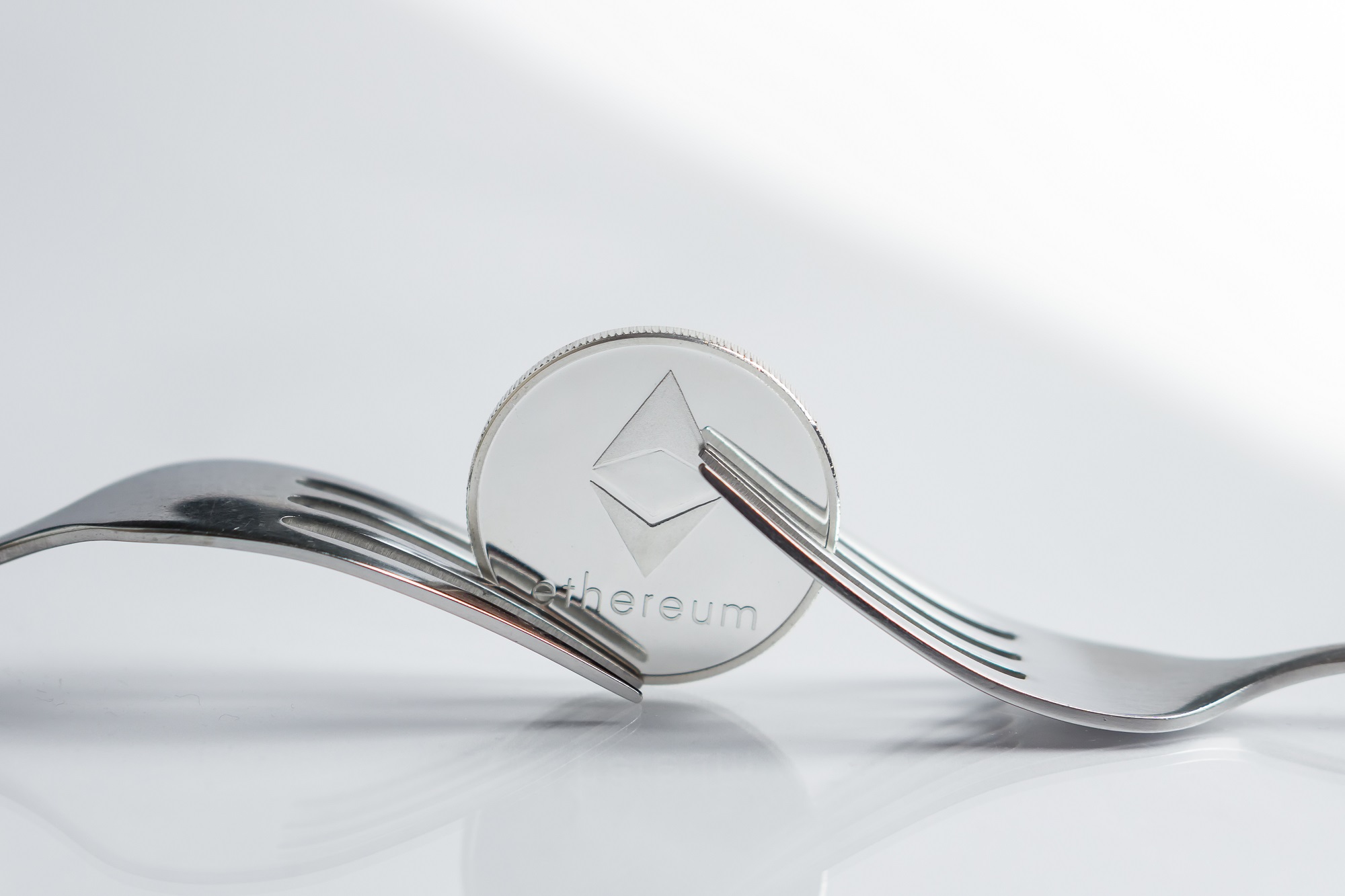
On June 17, 2016, an attacker used a code flaw in the DAO, a Decentralized Autonomous Organization built on the Ethereum blockchain, to drain around 3.6M Ether. That came to about $40 million. The Ethereum community voted for a hard fork that rolled the chain back to a state before the stolen funds moved.
The chain carrying the rollback kept the Ethereum (ETH) name. People who rejected rewriting history stayed on the original chain, which continued as Ethereum Classic (ETC). That makes the DAO fork unusual among hard forks. It changed transaction history rather than protocol features.
Constantinople and Petersburg, both hard fork upgrades in use in 2019, show how much quieter most Ethereum hard forks have been since then. Developer libraries such as web3.js even let a transaction specify which hard fork’s rules it follows.
Ethereum’s move to Proof-of-Stake left a split behind too. Miners who refused the upgrade kept a Proof-of-Work chain going, called EthPoW.
Bitcoin Cash: the 2017 block size split
Bitcoin Cash split from Bitcoin on August 1, 2017, after a dispute over how to scale Bitcoin. The Bitcoin Core majority backed SegWit (Segregated Witness). SegWit separates witness data from transaction data, which lets more transactions fit without making blocks bigger.
Critics linked SegWit to possible transaction malleability. Transaction malleability means a transaction’s hash or ID gets altered, and it’s the exploit behind Mt. Gox’s collapse.
The opposing camp wanted to keep transaction and witness data together and raise the block size instead. Bitcoin’s limit before the split was 1 MB. Before the final break, earlier clients had tried to lift it to 2 or 8 MB.
Bitcoin Cash launched with an 8 MB block size limit. Bigger blocks meant more transactions per block, and the goal was sharply lower fees.
Anyone holding BTC at the split got a matching BCH balance. If you had 2 BTC before the fork, you had 2 BTC plus 2 BCH after it. As of 2025, Bitcoin Cash ranked as the most prominent Bitcoin hard fork by hash rate and market value.
Bitcoin SV (BSV)
Bitcoin SV split from the Bitcoin Cash chain, not from Bitcoin directly. A camp inside Bitcoin Cash wanted even bigger changes and went its own way. SV stands for Satoshi Vision. The project treats the 2009 Bitcoin whitepaper as its own.
BSV raised its block size to 128 MB and then lifted the cap entirely in 2020. That trades miner decentralization for scaling. Blocks that large take serious hardware, so mining is open mainly to professionals.
The chain handles far more transactions by count than Bitcoin. Those transactions carry only fractions of Bitcoin’s value, though, and the fees are just as small. As of 2025, BSV’s median transaction value was well below one cent.
The camp rallied around Craig Wright, who claimed to be Satoshi Nakamoto. Wright lost his legal battles in 2024. After that, the project rebranded as BSV Blockchain.
Bitcoin Gold (BTG)
Bitcoin Gold split from Bitcoin on October 24, 2017, and its key change was the mining algorithm. It switched from SHA-256 to Zhash. The goal was to make mining ASIC-resistant, meaning specialized mining machines lose their edge, and to spread mining across more people.
That switch cut both ways. Miners had to change their equipment and setups to mine BTG, which limited the hashing power behind it.
Every existing Bitcoin address received an equal BTG balance. Most holders sold. BTG’s price fell about 80% from its initial peak, and that early peak was still its all-time high as of 2025.
Lesser-known Bitcoin forks
Bitcoin Diamond and Super Bitcoin both came out of the same 2017 wave as Bitcoin Cash and Bitcoin Gold. Like Clamcoin, they mainly changed how coins were issued or handed out, while eCash grew into a different kind of chain.
- eCash (XEC): It split from Bitcoin Cash over a developer tax that would’ve diverted part of transaction fees from miners to development. BCH Node won the network majority and kept the BCH ticker, and the BCH ABC minority chain became eCash. It later added staking and Avalanche post-consensus, so it now bears little resemblance to a Bitcoin fork.
- Bitcoin Diamond (BCD): This 2017 hard fork handed new coins to BTC addresses at a 10:1 ratio to BTC.
- Super Bitcoin: This 2017 hard fork increased supply and added premining, so a batch of coins existed before public mining started.
- Clamcoin: An anonymous developer launched it in 2014 to change Bitcoin’s monetary policy and redistribute value.
Terra 2.0 and Luna Classic (2022)
In May 2022, the algorithmic stablecoin TerraUSD (UST) lost its peg to the US dollar. The peg depended on people swapping UST for $1 worth of LUNA and back. That swap only works while people trust it, and it failed once confidence vanished.
As holders rushed out, the algorithm printed huge amounts of new LUNA. That flood crushed its value. LUNA’s market value went from over $40 billion to nearly zero within days.
The Terra team, led by founder Do Kwon, hard forked to start fresh. The original chain was renamed Terra Classic, and its token became Luna Classic (LUNC). Terra 2.0 launched on May 28, 2022, with a new LUNA token (LUNA2) and no stablecoin.
Trust stayed low on both sides. LUNC is kept alive mostly by speculators and community members hoping for a comeback.
What happens to your coins after a hard fork?
If you hold coins when a chain splits, you don’t lose anything on the original chain. You’ll typically get the same number of coins on the new chain too. The new coin trades at its own price, though, so your holdings don’t double in value.
The same private keys control both balances. The new chain copies the shared history up to the split, so every address and balance at that block exists on both chains.
The math rarely matches what “free coins” sounds like. Say you hold 100 coins worth $1 each, and the fork gives you 100 new coins worth $0.05 each. You’ve gained $5, not $100.
That’s why people tend to treat forked coins like an airdrop. Forked coins often fall 80% to 90% from their initial prices. Many holders sell quickly for that reason, while the new coin still has some value.
Do you always get free coins?
Often, but not always. Whether you can use forked coins depends on where your coins sit at the moment of the split and whether that platform supports the new chain. The coins exist on the new chain either way, but you need an exchange or wallet that can reach them.
On an exchange, you’ll get credited only if the exchange supports the fork. Most do, since forks bring them revenue too.
In a wallet, the coins become usable on the new chain only once your wallet provider adds support. Providers make that call on technical grounds. Some forks never get supported at all, which goes back to the heavy development work a hard fork demands.
If you keep coins on a platform, check its fork policy before a split, not after. When you’re choosing a platform in the first place, AXL Research Hub’s exchange and wallet reviews lay out the options side by side.
The bigger danger comes from splits without replay protection. On those chains, a transaction you send on one chain can be replayed on the other. Both chains recognize the same keys and history, so the copied transaction looks valid there too. Anyone who rebroadcasts it can move your coins on the second chain without your say, and that’s how holders get robbed.
Before you move coins after a split, find out whether the fork has replay protection. If it doesn’t, the cautious move is to wait until your wallet or exchange explains how it’s handling the split.
How a hard fork affects the network
A split leaves each chain with a smaller network than the one it came from, which lowers stability and security on both sides. Developers and projects have to pick a side. That fragments the ecosystem.
Developer support thins out on both chains as a result. The combined network ends up in worse health than it was before the split.
Contentious forks also dent a project’s reputation. Investors weigh that damage against the project’s fundamentals.
Prices get jumpy around a split. During a Bitcoin chain split, market volatility is the main metric that swings hard.
On your end, the practical side is mostly about software. Splits are usually announced in advance, and they may require you to update or install new software. Shared address formats and similar branding can make it confusing to know which version to run. Double-check that the client or wallet update you download belongs to the chain you actually want.
Hard fork FAQs
Do all nodes and users have to upgrade after a hard fork?
Nodes do. Any node that wants to stay on the same network has to run the new software. Regular holders usually don’t need to take any action, because wallet providers handle the switch.
Can a blockchain split by accident?
Yes. Bugs or clock skews can split a chain without anyone planning it. Those splits resolve on their own quickly. They leave behind orphan blocks, which are valid blocks that end up off the main chain. Only intentional splits have lasting effects.
How many Bitcoin hard forks are still active?
That’s hard to pin down without extensive blockchain analysis. Estimates put the number at only a handful. Many split chains end up abandoned, and some of the active ones have split again.
Hard fork basics: incompatible rules, two chains only without agreement
When a hard fork shows up on a project’s roadmap, check first whether the community backs it. If the whole network agrees, you’ll end up on one upgraded chain and probably won’t need to do anything.
If the community is divided, expect two chains and two coins. That’s the moment to confirm your exchange or wallet’s plans before the split block arrives. AXL Research Hub has guides that can help you check how different platforms handle forks. And if a change is billed as backward compatible, it’s a soft fork, so old software keeps working and nothing splits.