
Kraken is one of the longest-running crypto exchanges in the U.S., and its fee structure, security record, and trading tools make it a platform worth examining closely before you commit funds.
What is Kraken and who is it built for?
Kraken is a U.S.-based cryptocurrency exchange founded in San Francisco in 2011. CEO Jesse Powell started the project after witnessing the Mt. Gox security breach firsthand, and that origin story still shows up in the platform’s security-first approach to holding customer assets.
The exchange serves both retail and institutional users across more than 190 countries. In the U.S., Kraken operates in most states but isn’t available everywhere. Maine and New York are excluded, and availability in certain other states can vary, so it’s worth confirming your state before signing up.
Kraken runs two interfaces under a single account login. The standard Kraken app handles simple buying and selling with a clean, straightforward flow. Kraken Pro opens up a live order book, charting tools, and a full set of order types for traders who want more control. You don’t need separate accounts to use both.
The platform leans toward active and experienced traders, but the standard app and Kraken’s educational library (Kraken Learn) lower the barrier for people just getting started. Beyond crypto trading, Kraken also offers stock and ETF trading, futures, margin trading, and staking, all from one account. That breadth is unusual for a dedicated crypto exchange.
Kraken pros and cons
Kraken’s strengths center on cost, security, and range. Its weaknesses show up in beginner pricing, insurance gaps, and geographic restrictions.
What works well:
- Advanced trading fees on Kraken Pro start at 0.25% maker and 0.40% taker, which undercuts several major competitors. Fees drop further as your 30-day volume grows.
- The platform displays exact costs on-screen before you confirm any trade, on both interfaces. No hidden spreads or post-trade surprises.
- Kraken has never lost customer funds to a security breach across its entire operating history. That said, an insider data-breach and extortion incident in April 2026 did expose some customer data (more on that in the security section below).
- Quarterly proof-of-reserves audits use Merkle-tree cryptography and disclose both assets and client liabilities, so you can verify solvency yourself.
- More than 200 cryptocurrencies are listed (some sources count over 550, depending on how trading pairs are tallied), with staking available on more than 20 assets.
- Over 11,000 stocks and ETFs are tradable commission-free, a feature you don’t expect from a crypto-first exchange.
Where it falls short:
- The beginner-mode all-in cost lands around 2% per trade (a 1% fee plus roughly 1% in spread). That’s steep compared to what you’d pay on Kraken Pro or on some competing platforms.
- Debit-card deposits cost $0.25 plus 3.75% per transaction. With free ACH transfers available, the card fee is hard to justify unless you need instant access and can’t wait for ACH.
- No FDIC coverage on cash balances and no crypto insurance against platform-level losses. Stock holdings do receive SIPC protection, but only within the brokerage portfolio.
- Kraken isn’t available in every U.S. state, which narrows the user base before anything else.
- Bitcoin withdrawal minimums and fees can eat into small transfers. The BTC withdrawal minimum sits at 0.005 BTC, which matters if you’re moving smaller amounts.
Kraken fees explained
What you pay on Kraken depends heavily on which interface you use. The standard app charges a flat percentage plus spread. Kraken Pro uses a volume-based maker-taker model. The gap between those two pricing structures widens as your trade frequency goes up.
Beginner-mode fees
The standard Kraken app applies a 1% trading fee on top of a roughly 1% spread, bringing the all-in cost to about 2% per trade. Before you confirm any purchase, the app shows the full cost breakdown on-screen, so you’ll know the exact dollar amount before your money moves.
Kraken offers a subscription called Kraken+ at $4.99 per month. It waives the 1% trading fee on up to $10,000 in monthly trades, which drops the all-in cost to roughly 1% (the spread still applies). The subscription pays for itself once your monthly trading volume passes about $500, because the 1% you save on that amount covers the $4.99 fee. If you’re regularly buying more than that, the savings add up fast. If you trade less than $500 a month, you’re better off skipping it.
One thing to keep in mind: even with Kraken+, the roughly 1% spread remains. The floor is 1%, not zero. For truly low-cost trading, you’d need to move to Kraken Pro.
Kraken Pro maker-taker fees
Kraken Pro uses a maker-taker fee model, where maker orders sit on the order book and add liquidity while taker orders execute immediately against existing orders and remove it. As your 30-day rolling volume increases, both rates decline according to a tiered schedule.
| 30-day volume | Maker fee | Taker fee |
|---|---|---|
| Below $10,000 | 0.25% | 0.40% |
| $10,000 to $50,000 | 0.20% | 0.35% |
| $50,000 to $100,000 | 0.14% | 0.24% |
| $100,000 to $250,000 | 0.12% | 0.22% |
| $250,000 to $500,000 | 0.10% | 0.20% |
| Above $500 million | 0.00% | 0.05% |
Volume from the standard Instant Buy interface doesn’t count toward your Pro volume tier. Only trades placed through the Pro platform or API move you up the schedule. That’s an important distinction if you split activity between the two interfaces.
Deposit and withdrawal fees
Funding costs on Kraken range from free to surprisingly expensive, depending on the method you choose.
- ACH bank transfers are free to deposit, and Kraken gives you instant buying power before the transfer settles. ACH withdrawals are also free.
- Wire transfers are generally free for most domestic and international deposits. Withdrawals by wire cost between $4 and $13.
- Debit-card deposits cost $0.25 plus 3.75% per transaction. Given that ACH is free, the debit card is hard to recommend unless you specifically need the speed and can’t use a bank transfer.
- Crypto deposits are free across all assets. Crypto withdrawals carry a flat network fee per asset that shifts with blockchain conditions. At the time of reporting, the Bitcoin withdrawal fee was 0.00015 BTC, Ethereum was 0.00016 ETH, and Solana was 0.005 SOL. These figures change, so check the fee schedule before you send.
- The BTC withdrawal minimum is 0.005 BTC. If you’re moving small amounts of bitcoin, that minimum and the network fee can represent a noticeable percentage of the transfer.
Security and proof of reserves
Kraken stores roughly 95% of customer deposits in offline cold storage, held in facilities with round-the-clock armed-guard surveillance. Independent security firms have reviewed and certified the platform’s infrastructure.
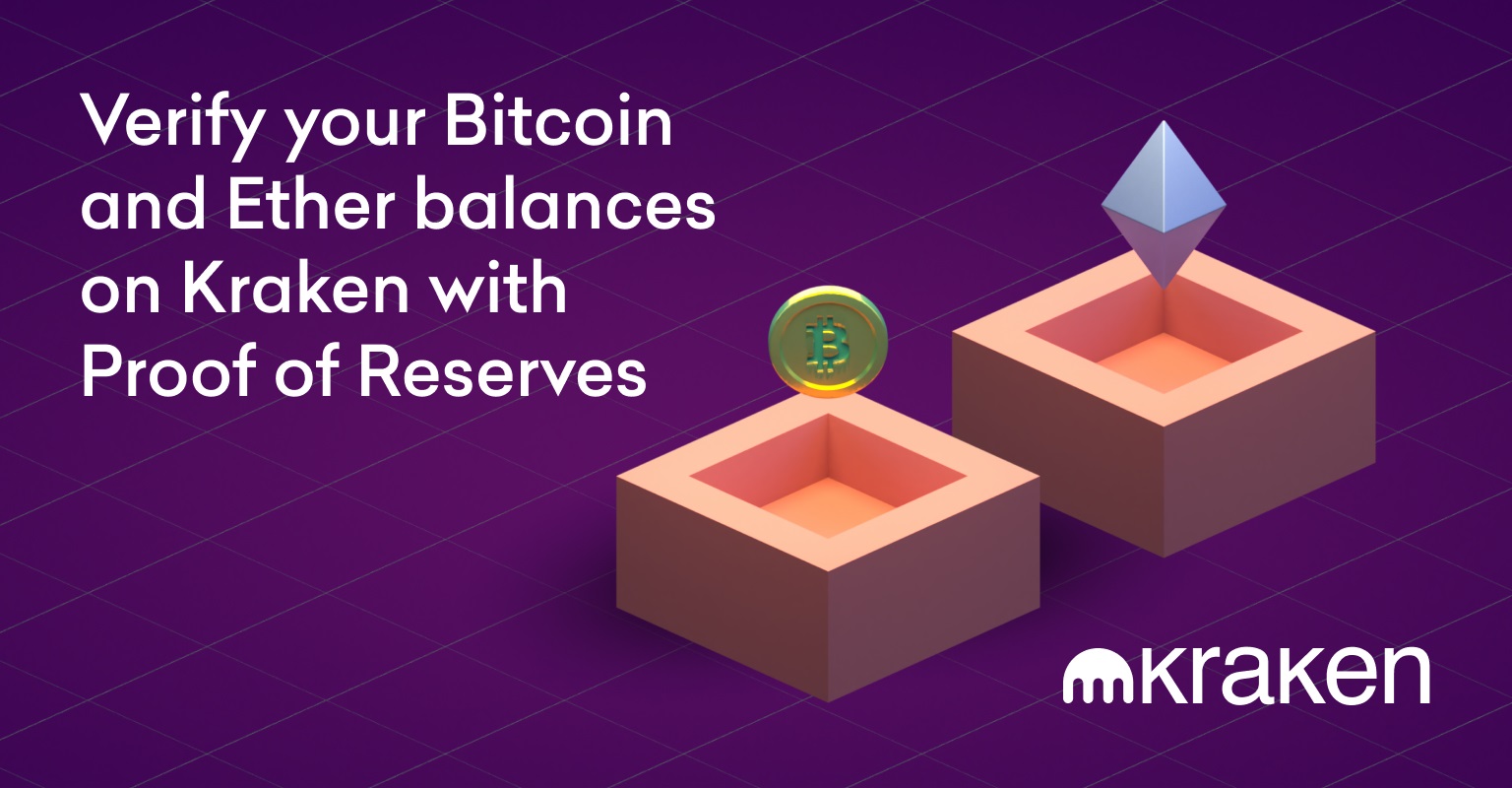
Every quarter, The Network Firm, an independent registered CPA firm, audits Kraken’s reserves using a Merkle-tree cryptographic structure, which lets you individually verify the exchange holds your funds without exposing other users’ accounts. Because the reports disclose both assets and client liabilities, they demonstrate solvency directly. According to Yahoo Personal Finance, the most recent report covering December 31, 2025 showed reserve ratios above 100% for all major assets.
On the user-facing side, Kraken supports two-factor authentication, 3D-secure payments, SSL encryption, email confirmations for withdrawals, and API keys with configurable permissions. These are table-stakes protections, but they’re implemented consistently.
Kraken reportedly maintains a $100 million fund set aside to compensate users if a hack or security breach occurs. That’s not insurance in the traditional sense, and the details around how it would be distributed aren’t fully public, but it does add a layer beyond what many exchanges offer.
That said, Kraken doesn’t carry FDIC insurance on cash balances or crypto insurance against platform-level losses. If you trade stocks and ETFs through Kraken’s brokerage, those holdings receive SIPC protection up to $500,000 (including up to $250,000 in cash), but that coverage applies only within the brokerage portfolio, not your crypto wallet.
The April 2026 incident. Although no breach has ever resulted in stolen customer funds, the exchange is not without security incidents. In April 2026, an insider data-breach and extortion incident affected customer data. This wasn’t a hack of Kraken’s trading infrastructure or cold storage, and no funds were reported stolen, but personal information was exposed. For users, this is a reminder to enable every available security feature on your account (hardware-key 2FA if possible), monitor for phishing attempts that reference your personal details, and treat any unsolicited communication claiming to be from Kraken with extra scrutiny.
Supported cryptocurrencies and what you can trade
Kraken lists a broad range of cryptocurrencies. The exact count varies by source, with figures ranging from more than 200 to more than 550 depending on whether you count individual coins or include all trading pairs. Either way, it covers the major assets and a deep selection of altcoins. Fiat-to-crypto pairs span USD, EUR, CAD, JPY, GBP, CHF, and AUD, so you aren’t limited to dollar-denominated trades.
If you’re still exploring what cryptocurrency is and how it works, Kraken’s educational library covers the fundamentals alongside its trading tools. Crypto-to-crypto conversions through the standard app carry the same flat 1% fee as regular trades. You can start with as little as $1 for a bitcoin trade.
Order types and tools on Kraken Pro
The standard Kraken app keeps things simple: pick a coin, enter an amount, confirm, done. That’s all most casual buyers need.
Kraken Pro unlocks a broader range of advanced orders built for precision. You get market, limit, stop-loss, stop-limit, take-profit, take-limit, iceberg, and trailing-stop orders. The live order book shows real-time buy and sell activity alongside integrated charting, so you can watch price action and place orders from the same screen.
- Recurring orders let you schedule automatic purchases at set intervals. This is the simplest way to dollar-cost average into a position over time without logging in to place each trade manually.
- Kraken Terminal takes things further with an order book, depth chart, toolbar with a markets menu and analysis tools, indicator panels (volume, MACD), real-time customizable charts, and a watchlist. It’s built for the kind of trader who wants everything visible at once.
Staking
Staking returned to U.S. users in 2025 after a regulatory pause. If you’re unfamiliar with the concept, our guide on what staking crypto is explains how it works and the risks involved.
Kraken offers two staking options. Flexible staking lets you unstake at any time, which keeps your funds liquid. Bonded staking locks your coins for a set period in exchange for higher reward rates. Rewards pay out weekly after Kraken deducts a commission.
The commission rates matter because they reduce what you actually earn. Flexible staking carries a 30% commission, and bonded staking charges 25% or lower depending on your staked balance. The net yield you receive is lower than the headline rate shown on the staking page. For example, Solana flexible staking might show a gross reward around 3.37%, but after the 30% commission, the net drops to roughly 2.36%. Bonded staking for Solana at a gross rate near 6.85% nets roughly 5.14% after the 25% cut. These rates fluctuate, so treat any specific number as a snapshot rather than a guarantee.
Staking is available on more than 20 assets, including bitcoin, ethereum, solana, polkadot, cardano, and cosmos.
Stocks, ETFs, futures, and margin trading
Kraken’s stock and ETF trading covers more than 11,000 instruments, all commission-free. Trading hours run 24 hours a day, Monday through Friday, which is wider than standard U.S. market hours. That extended window gives you flexibility to react to news outside the normal 9:30-to-4 session.
Crypto futures let you speculate on price direction without actually buying the underlying asset. You can open futures positions at up to 50x on major cryptocurrencies. Margin trading on spot orders allows borrowing funds at up to 10x, though that cap drops to 5x depending on the currency pair.
Amplified exposure works in both directions. A 10% adverse move on a 10x leveraged position wipes out your entire deposit. Margin fees top out at 0.02% to open a position, with a 0.02% rollover fee every four hours. Bitcoin margin fees are lower at 0.01% to open and 0.01% per rollover. These rollover fees add up if you hold leveraged positions for extended periods, so factor that into any strategy that involves carrying positions overnight or longer.
Kraken has also introduced tokenized stocks (xStocks) and pre-IPO perpetual futures, though neither is available to U.S. users.
Kraken mobile app: Standard vs. Pro
Kraken offers two separate mobile apps, both accessible under the same account login.
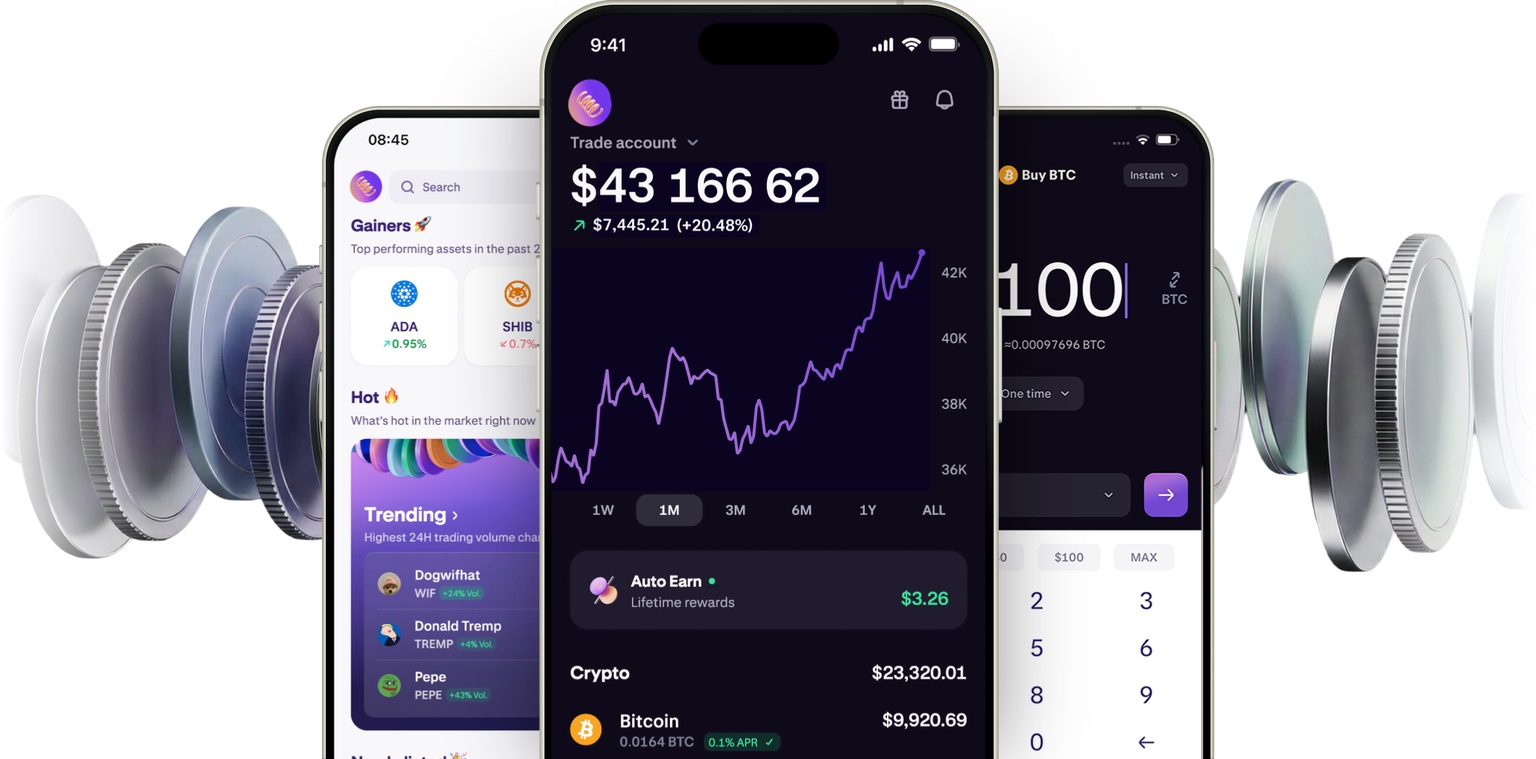
The standard Kraken app handles buying, selling, portfolio tracking, account management, and recurring purchases. It’s designed for simplicity, and the interface reflects that. The Kraken Pro app delivers the full trading experience on mobile, including the order book, charting tools, advanced order types, and margin trading.
One quirk worth knowing: the Pro mobile app doesn’t support funding. You can’t deposit money through it. Deposits have to go through the website. The Pro app also connects to your trading account via API key rather than a standard 2FA login, which adds a setup step but keeps the connection secure.
Both apps carry strong ratings. The standard app has earned 4.7 stars on the App Store and 4.5 stars on Google Play, while the Pro app sits at 4.7 on the App Store and 4.6 on Google Play. Keep in mind that app-store ratings shift over time.
Is Kraken trustworthy? Regulation and compliance
Kraken holds licenses and registrations across multiple jurisdictions: FinCEN in the U.S., FINTRAC in Canada, FCA in the UK, AUSTRAC in Australia, CySEC in Cyprus, and CBI in Ireland. Kraken Bank is licensed by the Wyoming Division of Banking, and in March 2026, Kraken became the first digital-asset bank in the U.S. approved for a Federal Reserve master account, granted by the Federal Reserve Bank of Kansas City. The exchange also secured VARA authorization in the UAE for dirham funding and trading pairs.
That regulatory footprint is broad, but it hasn’t come without friction. In 2023, Kraken agreed to pay a $30 million penalty and temporarily shut down U.S. staking services as part of a settlement. In 2024, an Australian Federal Court fined Kraken A$8 million for unlawfully issuing a margin credit facility to retail customers. These aren’t minor footnotes. They show that regulators have scrutinized Kraken’s practices and the exchange has paid real consequences.
Tax reporting. Kraken reports to the IRS and sends 1099 forms to eligible U.S. users. Staking rewards and trading gains count as taxable income. If you subscribe to Kraken+, you get access to Koinly, a crypto tax platform, at no extra cost. Koinly pulls your transaction history and calculates gains, losses, and income across your trades and staking rewards. Given how complicated crypto taxes can get once you’re trading across multiple pairs and earning staking income, that integration removes a real headache.
Identity verification (KYC). Kraken requires identity verification before you can trade. The exchange collects your Social Security number as part of U.S. regulatory compliance. Every exchange operating legally in the U.S. has to do this. FinCEN’s anti-money-laundering rules require exchanges to verify user identity, and the SSN is how that verification works domestically. Your data is protected with encryption and the same cold-storage security practices that protect the exchange’s other systems.
Kraken uses four account tiers: Starter, Express, Intermediate, and Pro. Each tier requires different documentation, unlocks different funding limits, and may take different amounts of time to verify. The Pro tier allows withdrawals up to $100,000,000 over 30 days, which matters mainly for institutional or very high-volume traders.
How Kraken compares to other crypto exchanges
Kraken is a strong choice for many traders, but three situations point toward a different platform: you live in a state Kraken doesn’t serve, you want FDIC or crypto insurance on your holdings, or the 2% beginner-mode cost is too high for how you plan to trade.
Kraken vs. Coinbase
Coinbase offers FDIC insurance on cash balances and carries crime insurance on a portion of its crypto holdings. Those protections don’t exist on Kraken, and for some users, that’s a deciding factor. For a deeper side-by-side breakdown, see our full Kraken vs Coinbase comparison.
On fees, the picture flips. Coinbase’s advanced-tier fees start at 0.6% maker and 1.2% taker, roughly two to three times what Kraken Pro charges. On a $10,000 maker trade, you’d pay about $25 on Kraken versus roughly $60 on Coinbase. That gap compounds quickly if you’re trading regularly.
Coinbase also has wider state availability across the U.S., and its beginner onboarding is considered among the most guided in the industry.
Is Kraken better than Coinbase?
It depends on what you’re optimizing for. Kraken charges roughly half the advanced trading fees, which gives it a clear cost advantage for active traders. Paired with a security record that, until the April 2026 data incident, had never involved a loss of customer funds, Kraken makes a compelling case for people who trade frequently and want to keep costs low.
Coinbase wins on insurance and accessibility, and our full look at how Coinbase stacks up goes deeper on both. FDIC coverage on cash and crime insurance on crypto are protections Kraken simply doesn’t offer. Coinbase is also available in more states, making it the default if you’re in a location Kraken excludes.
If you’re a frequent trader who prioritizes low fees and a long track record, Kraken has the edge. If insurance coverage and easy onboarding matter more, Coinbase is likely the better fit.
Beginner vs. experienced trader: who gets the most from Kraken?
Experienced and active traders get the most from Kraken. Low Pro fees, a deep set of order types, futures, margin trading, and volume-based fee discounts all reward frequent, informed trading. The platform was built with this user in mind, and it shows.
Beginners can start with the standard app’s clean interface, but the 2% all-in cost is a real disadvantage compared to what other platforms charge new users. That said, Kraken Learn offers a structured library of articles and videos organized by level, covering everything from blockchain basics to advanced trading mechanics. It’s genuinely useful if you want to build understanding rather than just follow prompts.
The strongest argument for a beginner choosing Kraken is the room to grow. You can start in the standard app, learn at your own pace, and graduate to Pro without switching platforms, migrating assets, or setting up a new account. That keeps everything in one place and avoids the hassle of moving between exchanges.
Recurring orders work well for passive, long-term investors regardless of skill level. You set a schedule, pick an amount, and the platform buys automatically at your chosen interval. It’s a clean way to dollar-cost average without checking prices every day.
Kraken also offers funded trading accounts through Kraken Prop, featuring competitive profit splits and 24/7 access, which may appeal to traders looking to trade with more capital than they personally hold.
Customer support and account setup
Kraken provides 24/7 live phone support in English, Spanish, and French, plus 24-hour web chat. That phone availability is notable. Many crypto exchanges push you toward chat or email and don’t offer a phone line at all. High-volume traders can request a personal account representative, which adds a direct contact for complex issues.
In practice, support agents often direct users toward search articles in Kraken’s support center for common questions. The knowledge base is well-organized, but if you’re reaching out to a human, it’s usually because the articles didn’t cover your specific situation. Phone support bridges that gap.
Account creation is straightforward. Automated verification can finish in under 10 minutes in many cases, though some accounts take one to two business days if Kraken requests additional documents. The minimum deposit is $1 for ACH and domestic wire, $10 for debit card, and $4 to $100 for international wire depending on the provider.
One thing Kraken doesn’t offer is a demo account for spot trading. If you want to practice without real money, there’s a paper-trading mode for futures, but nothing equivalent for regular buy/sell activity.
Frequently asked questions about Kraken
Should I give my SSN to Kraken?
Yes. Providing your Social Security number is required under U.S. law for identity verification and anti-money-laundering compliance. Every regulated crypto exchange operating in the U.S. collects this information to meet FinCEN requirements. Kraken uses encryption and its broader security practices to protect personal data. If an exchange doesn’t ask for your SSN, that’s a red flag about its regulatory standing, not a feature.
What are the minimum deposit amounts for crypto on Kraken?
Minimums vary by asset. Bitcoin requires a minimum deposit of 0.0001 BTC, Ethereum requires 0.004 ETH, and Solana requires 0.01 SOL. Sending less than the minimum means the deposit won’t credit to your account, so double-check the threshold for your specific coin before initiating a transfer.
Does Kraken report to the IRS?
Yes. Kraken sends 1099 forms to eligible U.S. users and reports the corresponding information to the IRS. Both trading gains and staking rewards are considered taxable income. Kraken+ subscribers get free access to Koinly for tax calculations.
Is Kraken available in all U.S. states?
No. Kraken operates in most U.S. states but excludes at least Maine and New York. Availability in certain other states may also be restricted, so check Kraken’s support pages for the latest list before creating an account.
Weighing Kraken’s strengths against its trade-offs
Kraken fits active traders well. Low advanced fees on Pro, a security track record that spans more than a decade without customer fund losses, and a feature set that covers crypto, stocks, futures, margin, and staking under one login make it a strong single-platform choice.
The trade-offs are real, though. The 2% beginner-mode cost pushes casual buyers toward either subscribing to Kraken+ or moving directly to Pro. No FDIC insurance on cash and no crypto insurance mean you’re trusting Kraken’s security infrastructure and that $100 million compensation fund rather than a government-backed guarantee. State restrictions may take the decision out of your hands entirely, and debit-card deposit fees are steep when free ACH is sitting right there.
If you’re moving assets off the exchange for self-custody, setting up a crypto wallet before you withdraw ensures your coins land in a wallet you fully control. At AXL Research Hub, we think the strongest case for Kraken is the user who plans to grow. Starting with simple buys and moving into Pro trading, staking, and even stock trading without changing platforms removes a real barrier. If low fees and a deep toolset matter more to you than insurance and universal state coverage, Kraken earns a serious look.