
Bitcoin mining turns computing power into real BTC, but getting started involves more than just plugging in a machine. You need to pick the right hardware, find affordable electricity, choose between solo and pool mining, and understand the costs before your first satoshi lands in your wallet.
What is Bitcoin mining?
Bitcoin mining is the process of using specialized computers to solve cryptographic puzzles, validate transactions, and add new blocks to the Bitcoin blockchain. It serves two purposes at once: it releases new bitcoins into circulation and secures the network without any central authority.
The name borrows from precious-metal extraction, but the real work is computational guesswork governed by the proof-of-work consensus mechanism. Miners race to find a valid solution to a mathematical puzzle. The first one to succeed earns the right to update the distributed ledger with the latest batch of transactions, which prevents anyone from spending the same bitcoin twice.
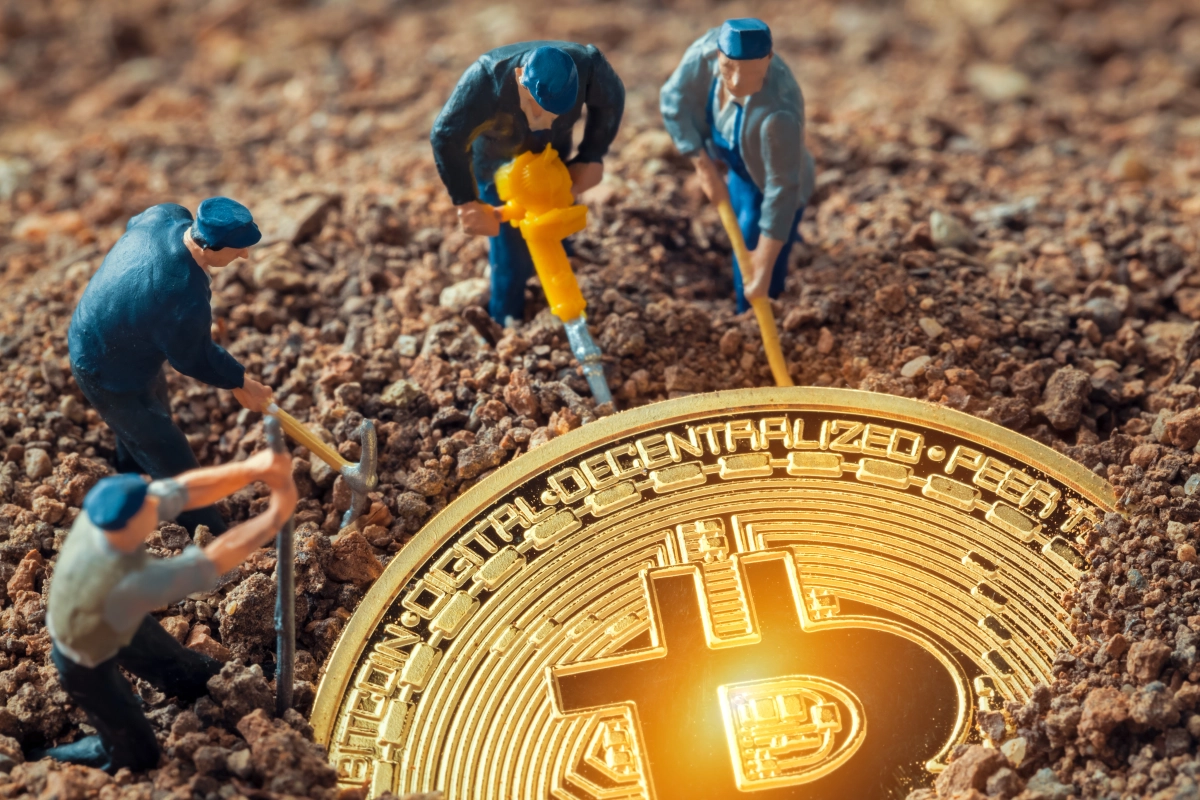
New coins awarded to miners are the built-in incentive that keeps this decentralized system running. After the April 2024 halving, the block reward sits at 3.125 BTC per block. A new block is added roughly every 10 minutes. Bitcoin’s total supply is capped at 21 million coins, and over 19.6 million of those have already been mined, so the window for earning newly minted BTC narrows with every passing year.
How does Bitcoin mining work?
Every candidate block a miner assembles contains a list of pending transactions, the hash of the previous block, and a variable number called the nonce. The miner feeds all of that data into the SHA-256 hashing algorithm, which always produces a fixed-length 64-character hexadecimal string. Even a single-character change in the input produces a completely different output. For example, hashing the text “Hello, world!” through SHA-256 returns a591a6d40bf420404a011733cfb7b190d62c65bf0bcda32b57b277d9ad9f146e.
The miner’s job is to find a hash that falls below a target threshold set by the network, which in practice means the output must start with a certain number of leading zeros dictated by the current difficulty. A real Bitcoin block hash looks something like 000000000000000004c2b7e31c9a7f4c2765cd29cfb88e947b0f7bb46a04f8e6. With each attempt, the miner increments the nonce, re-runs the hash, and checks whether the result qualifies. Finding a valid one can take trillions of tries.
Before even attempting the puzzle, the miner verifies every transaction in the candidate block. That means checking digital signatures, confirming no double-spending, and enforcing all protocol rules. Invalid transactions never make it into a valid block.
The first miner (or pool) to find a qualifying hash broadcasts the completed block to the rest of the network. That miner earns the block reward plus the transaction fees included in the block, and the cycle starts over with a fresh set of pending transactions.
Mining difficulty and the difficulty adjustment
Mining difficulty is a network-wide setting that controls how hard it is to find a hash below the target threshold. The Bitcoin protocol recalibrates this difficulty every 2,016 blocks, which works out to roughly every two weeks, so the average time between blocks stays close to 10 minutes.
The adjustment is straightforward. When more miners join and the total hashrate rises, blocks start getting found faster than once every 10 minutes. The protocol responds by raising the difficulty. When miners leave and hashrate drops, difficulty decreases so blocks don’t slow to a crawl. As of April 2026, network difficulty sits at approximately 139 trillion, with the global hashrate around 1,000 EH/s.
This self-balancing mechanism is what keeps Bitcoin’s issuance schedule predictable regardless of how many machines are pointed at the network. For individual miners, though, it means something very concrete: higher difficulty shrinks your share of the total reward pool unless you upgrade your hardware or find cheaper electricity.
Block rewards, halvings, and Bitcoin’s supply schedule
Block rewards are the main financial incentive for miners. Each time a miner (or pool) solves a block, they receive newly minted BTC plus the transaction fees from every transaction in that block.
The reward halves every 210,000 blocks, roughly every four years, in an event called the halving. This schedule has played out like this:
- 50 BTC per block starting in 2009
- 25 BTC after the 2012 halving
- 12.5 BTC after the 2016 halving
- 6.25 BTC after the 2020 halving
- 3.125 BTC after the April 2024 halving
The next halving is expected around April 2028, which will cut the reward to 1.5625 BTC per block.
Each halving progressively slows Bitcoin’s inflation rate. As the block reward shrinks, transaction fees make up a larger share of what miners earn. That shift matters because Bitcoin’s hard cap of 21 million coins means mining will eventually stop producing new coins altogether, with the last bitcoin projected to be mined around 2140. At that point, miners will rely entirely on transaction fees to justify the electricity and hardware costs of securing the network.
The halving schedule is designed to make Bitcoin scarcer over time. For miners, it means revenue drops in BTC terms every four years unless Bitcoin’s price rises enough to compensate.
Bitcoin mining hardware: ASICs, GPUs, and what you actually need
In Bitcoin’s earliest days, anyone could mine with a standard CPU on a home computer. As more miners joined and difficulty climbed, CPUs couldn’t keep up, so miners moved to GPUs. Today, even GPUs are obsolete for Bitcoin. GPU mining rigs, which combine multiple graphics cards on a single motherboard with a cooling system, are still used for other proof-of-work coins, but they can’t compete on the SHA-256 algorithm that Bitcoin uses.
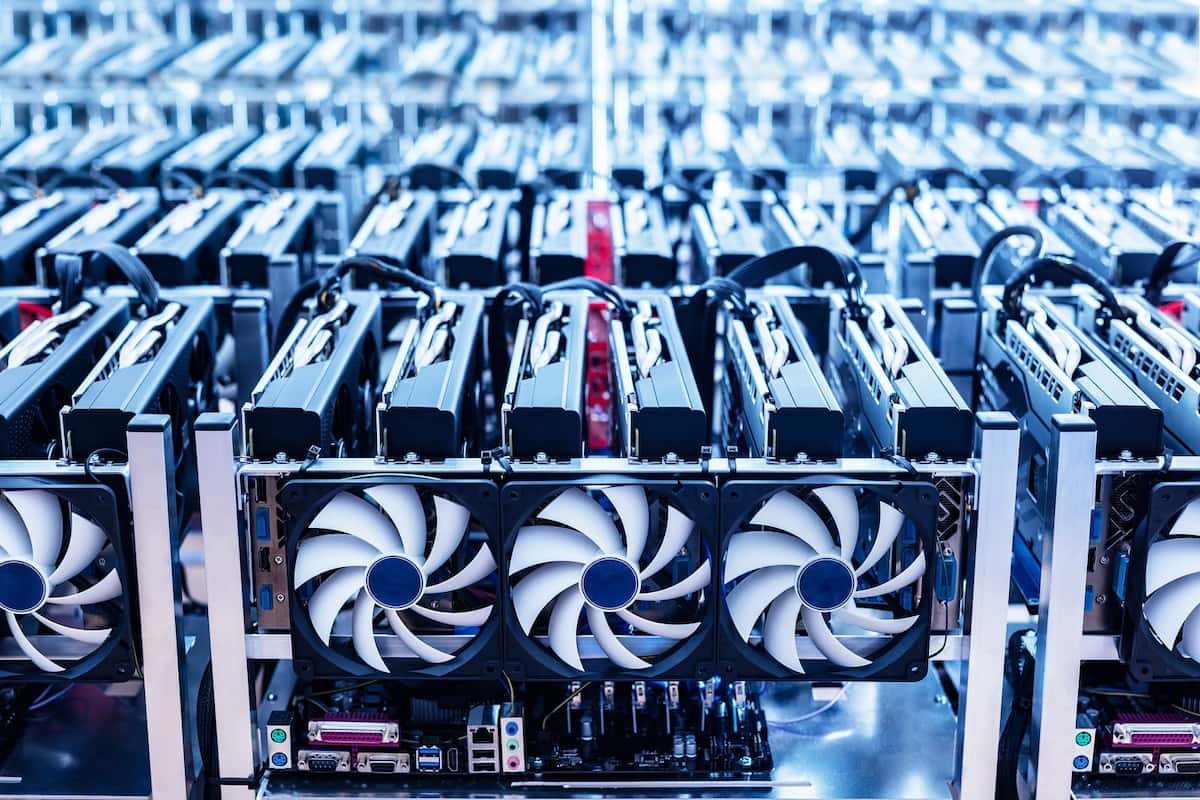
ASIC miners are purpose-built chips designed exclusively for SHA-256. They deliver far higher hash rates and much better energy efficiency than any general-purpose hardware. The key metric for comparing ASICs is joules per terahash (J/TH), which tells you how much electricity the machine consumes per unit of hashing work. A lower number means less power burned for the same output.
The difference between generations is dramatic. An older Antminer S9 runs at over 90 J/TH. The Antminer S21 Pro hashes at 234 TH/s with an efficiency of approximately 17.5 J/TH. The Whatsminer M66S pushes 298 TH/s. Expect to spend anywhere from $2,000 to over $17,000 on an ASIC miner, depending on the model and generation.
When choosing hardware, you’re balancing three things: upfront cost, hash rate (TH/s), and energy efficiency (J/TH). It’s tempting to chase the highest hash rate, but a slightly lower hash rate paired with much better efficiency often yields better long-term returns because electricity is the largest ongoing expense.
How to start mining Bitcoin at home
Getting a home mining operation running involves several steps. Here’s the process from hardware selection through your first payout.
- Pick your ASIC miner. Choose based on hash rate, J/TH efficiency, and your budget. The main manufacturers are Bitmain (Antminer series), MicroBT (Whatsminer series), and Canaan (AvalonMiner series). A typical ASIC draws 3,000 to 4,000 watts continuously, so factor electricity cost into your decision from the start.
- Get a power supply unit (PSU). Your PSU should be rated at least 20% above the miner’s continuous wattage draw to avoid running at full capacity around the clock. Most mining PSUs run best on 200 to 250 VAC input, which usually means a 240V outlet in a U.S. home. PSUs typically cost $50 to $300.
- Set up a dedicated space. ASIC miners generate serious heat and run at 75 to 90 dB, which is roughly as loud as a lawnmower. A bedroom or home office won’t work. Garages, basements, or detached sheds are much better choices because they allow for strong ventilation or active cooling without disrupting daily life.
- Connect to a wired internet connection. Plug the miner into a reliable Ethernet connection. Wi-Fi introduces latency and dropped connections that can cost you shares in a mining pool. A stable wired link keeps communication with the pool or the Bitcoin network consistent.
- Install and configure mining software. If you’re solo mining, you’ll use bitcoind with the getblocktemplate RPC or Stratum-compatible software. The Bitcoin Developer Guide covers the technical details of both approaches. If you’re pool mining, most pools recommend a specific client and provide setup instructions on their dashboard.
- Create a Bitcoin wallet address. You need a receive address where your payouts will land. Set this address in your pool’s dashboard or, for solo mining, in your software’s coinbase configuration. More on wallet choices in the storage section below.
- Join a mining pool. Unless you’re running a warehouse of ASICs, pool mining is the practical path to consistent payouts. Pools charge fees typically between 1% and 2.5% of rewards and distribute earnings proportional to each member’s contributed hash rate.
- Monitor and protect your setup. Track your hash rate, temperatures, and power consumption regularly. Use surge protectors, and if you’re in an area with unreliable power, consider a backup power option. Budget $630 to $5,850 for accessories like cooling, Ethernet gear, surge protectors, and monitoring tools. Advanced cooling systems or a generator can add $5,000 to $10,000 or more.
Managing heat and noise from a home mining rig
ASIC miners produce enough heat to damage components and raise ambient temperatures fast in an enclosed space. Keeping the mining area cool also reduces thermal throttling, which means your machine holds a more consistent hash rate. Here are the main approaches:
- External fans or ducting move hot exhaust air out of the room and cost $50 to $500. Even basic inline duct fans make a noticeable difference if you route the hot air through a window or vent.
- Immersion cooling submerges the ASIC in specialized dielectric coolant, virtually eliminating noise and extending hardware lifespan. Home immersion setups run $2,000 to $10,000, so they make the most sense if you’re running multiple units or live in a warm climate.
- Soundproofing with acoustic panels costs $100 to $1,000 for a small space. This won’t cool the miner, but it makes the 75 to 90 dB drone far more manageable for nearby living areas.
- Relocating to a garage, basement, or purpose-built shed costs $500 to $5,000 depending on scale. A separate structure gives you the most flexibility for ventilation and keeps heat and noise out of your home entirely.
Solo mining vs. pool mining vs. cloud mining
Solo mining gives you the entire block reward if your machine finds a valid block. That’s 3.125 BTC plus transaction fees. The catch is that the probability of solving a block alone with a home setup is extremely low. A single ASIC controls a vanishingly small fraction of the global hashrate, so payments are wildly irregular. You could run for years without finding a block.
Pool mining combines hash power from many miners. When the pool finds a block, the reward is split proportionally by contributed hash rate. You get smaller payouts, but they come far more frequently and predictably. Pool operators set an internal difficulty threshold lower than the network target so miners submit “shares” that prove they’re doing work, even when those shares don’t actually solve a block. Pools typically charge 1% to 2.5% of rewards. For most individuals, pool mining with personally owned hardware offers the best balance of transparency, payout frequency, and control.
Cloud mining takes a different approach entirely. You rent hash power from a remote data center, avoiding hardware ownership, electricity bills, and maintenance. The provider runs the equipment, and you receive a portion of the mined coins. On paper it sounds simple, but cloud mining carries serious fraud risk. Many services are scams that don’t own actual mining hardware. They pay early customers with funds from newer ones until the operation collapses. Even with a legitimate provider, you can’t verify the equipment exists, you can’t optimize its performance, and you can’t resell hardware you never possessed. The lack of control and the number of scams make cloud mining the riskiest option by a wide margin.
Is Bitcoin mining profitable?
Crypto mining profitability depends on how four variables interact: electricity cost, hardware efficiency, Bitcoin’s market price, and current network difficulty. Getting even one of these wrong can turn a projected profit into a monthly loss.
Electricity is usually the deciding factor. A typical ASIC pulling 3 to 4 kW around the clock at the U.S. average residential rate of about 17.65¢/kWh produces a monthly power bill of approximately $445 for a single unit. At that rate, mining revenue from one home ASIC often falls short of covering the electric bill alone. Miners with electricity rates below roughly $0.05/kWh, which drops the monthly bill to about $126, have a realistic chance at profitability. At $0.10/kWh, a single ASIC may lose money each month. At $0.20/kWh, where the monthly cost reaches approximately $504, losses are nearly certain.
Bitcoin’s price, driven by the demand dynamics covered in our Bitcoin basics guide, directly scales the revenue side. Because your revenue is denominated in BTC, a rising market price can turn a thin margin into a healthy profit, while a falling price can wipe out returns no matter how efficient your hardware is. With each halving reducing the coins earned per block, the price side of the equation has to pick up the slack for miners to stay in the black.
Beyond raw electricity, pool fees, hardware depreciation, cooling costs, and potential maintenance downtime all eat into net returns. A full home mining setup, including hardware and accessories, can run $2,000 to $25,000.
Before buying anything, plug your numbers into an online profitability calculator. These tools accept inputs for hash rate, power consumption, electricity rate, and pool fees to estimate daily or monthly earnings. They won’t predict the future, but they’ll tell you whether the math works at today’s conditions.
How long does it take to mine 1 Bitcoin?
Bitcoin mining doesn’t produce exactly 1 BTC per session. Each solved block yields 3.125 BTC, and in a pool that reward is split among all participants according to their hash-rate contribution.
Solo mining with even a high-end home ASIC would statistically take decades or longer to find a single block. The odds of one machine solving the puzzle against the entire global network are vanishingly small. A new block is mined network-wide roughly every 10 minutes, but your single rig controls only a tiny sliver of the total hash power.
In a pool, you earn small fractional payouts on a regular basis. Accumulating 1 full BTC still requires very low electricity costs, efficient hardware, patience, and often multiple ASIC units running simultaneously. Each successive halving makes it take even longer, because the per-block reward shrinks while the computational effort stays the same or increases.
There’s no shortcut here. Anyone claiming you can mine 1 BTC in a day with a home setup is either misinformed or selling something.
Can you mine Bitcoin for free?
Mining always consumes electricity and requires hardware, so truly zero-cost mining doesn’t exist in any practical sense.
Cloud mining platforms that advertise free tiers typically recover their costs through hidden fees, minimal hash-rate allocations that produce almost nothing, or are outright scams. If a service promises free Bitcoin mining, treat it with heavy skepticism.
The closest thing to “free” mining is a setup where electricity comes from solar panels you already own or from a rental arrangement that includes utilities in the rent. That gets your marginal electricity cost near zero, but the hardware purchase and ongoing maintenance still cost real money. And as difficulty rises and block rewards shrink, even near-zero electricity doesn’t guarantee meaningful returns from a single ASIC.
Tax implications of Bitcoin mining
Mining rewards are taxable in the United States. The rules aren’t complicated, but ignoring them can create problems. Here’s how the IRS treats mined cryptocurrency:
- Income recognition at receipt. Under IRS Notice 2014-21, you recognize gross income equal to the fair market value of the coins at the moment you receive them. If your pool pays you 0.005 BTC on a Tuesday, you owe income tax on whatever that 0.005 BTC was worth in dollars at the time of the payout.
- Self-employment income. If mining is your trade or business, or you operate as an independent contractor, the rewards count as self-employment income. That means you owe self-employment tax on top of regular income tax.
- Employee wages. If you mine as an employee and receive cryptocurrency as wages, those payments are subject to federal income tax withholding plus Social Security, Medicare, and unemployment taxes.
- Capital gains when you sell. A second taxable event occurs when you later sell or exchange your mined coins. Gain or loss is measured from the cost basis you established at receipt (the fair market value on the day you received the coins) to the sale price.
- Deductible expenses. When mining qualifies as a business activity, you may deduct electricity costs, hardware depreciation, cooling expenses, and pool fees. These deductions can significantly reduce your tax burden, so keep detailed records of every expense.
Is Bitcoin mining legal?
Neither the U.S. nor Canada prohibits Bitcoin mining, so you’re free to operate in both countries. Both countries are generally friendly toward crypto mining operations, though the regulatory environment varies.
Within the U.S., rules can differ by state. Some states have embraced mining with favorable energy policies, while others have imposed moratoriums or stricter energy-use regulations. Local zoning ordinances may also affect where you can run ASICs, especially in residential areas. FinCEN considers crypto miners potential money transmitters, which could subject certain operations to money-transmission regulations depending on how they handle funds.
Most jurisdictions worldwide haven’t enacted specific laws governing crypto mining, leaving its legal status undefined rather than explicitly prohibited. A small number of countries have outright banned cryptocurrency-related activities, including mining.
Before setting up a mining operation, check your local energy-use rules, zoning requirements, and any state-level money-transmission regulations. Environmental regulations targeting energy consumption are an emerging area that could affect where and how mining operates going forward.
Proof of work vs. proof of stake
Bitcoin uses proof of work (PoW). Ethereum, the second-largest cryptocurrency, switched to proof of stake (PoS) after its transition, a split that shapes every BTC vs ETH comparison. Here’s how the two compare:
| Feature | Proof of work (PoW) | Proof of stake (PoS) |
|---|---|---|
| How blocks are created | Miners compete by expending computational energy to solve a hash puzzle | Validators are selected based on how much cryptocurrency they’ve locked (staked) in the network |
| Rewards | Block reward plus transaction fees to the winning miner | New coins plus a share of transaction fees to validators |
| Security model | Real energy expenditure; attacking the chain requires controlling more than 50% of total hash power (51% attack) | Economic stake; misbehaving validators risk losing their staked coins |
| Main criticism | High energy consumption | Concentrating influence among large stakeholders |
| Notable network | Bitcoin | Ethereum (post-transition) |
Bitcoin has no plans to move away from proof of work. Its security model is purpose-built around energy-backed consensus, and there’s no community consensus to change it. The energy expenditure that critics point to is the same mechanism that makes the network extremely expensive to attack.
Bitcoin mining and energy use
Bitcoin mining is energy-intensive by design. The computational work backing proof of work is exactly what secures the network, so reducing energy use below a certain threshold would weaken security. As difficulty and hashrate rise over time, total energy consumption trends upward unless offset by more efficient hardware.
That reality has drawn growing attention to where that energy comes from. Some mining operations have shifted toward renewable sources like hydroelectric, solar, and wind power. Industrial-scale farms increasingly consider renewable-energy availability and ambient temperature when choosing locations, not just the price per kilowatt-hour. Regions with cool climates reduce cooling costs naturally, which cuts total energy use per hash.
The largest mining operations concentrate in regions with cheap, abundant power. Parts of the U.S., Canada, Iceland, and Scandinavia are popular for different combinations of low electricity rates, cool weather, and regulatory clarity. For home miners, energy awareness matters too. If you’re running an ASIC 24/7, your electricity source and rate are the single biggest factor in whether mining makes financial sense.
What is a Bitcoin mining farm?
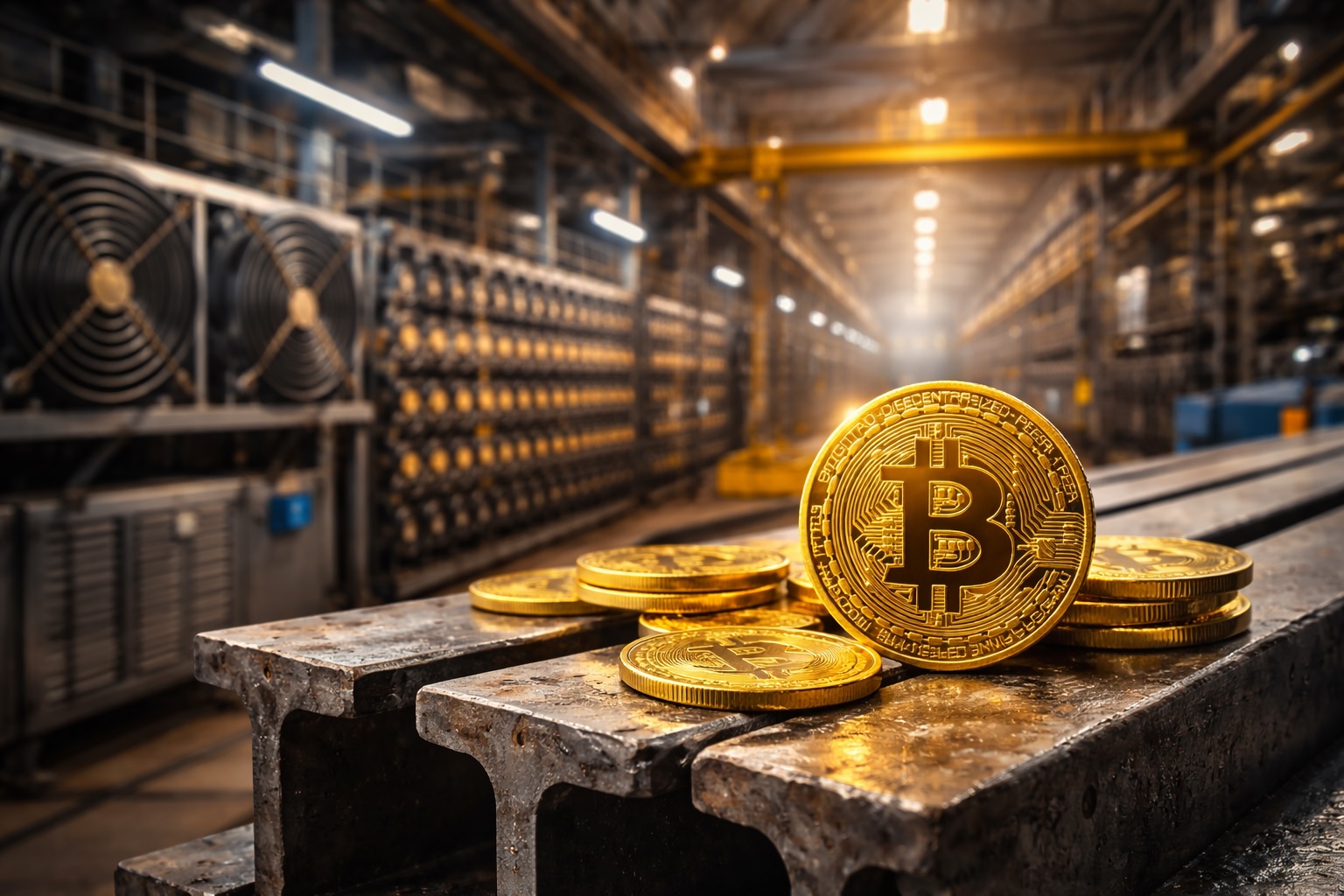
A Bitcoin mining farm is a large-scale facility housing hundreds or thousands of ASIC miners running around the clock, which is what it takes to shorten the time to mine one Bitcoin to days rather than years. These operations look more like data centers than anything resembling a mine. Rows of machines sit on industrial shelving, connected to heavy-duty power infrastructure and cooled by massive ventilation systems or liquid cooling setups.
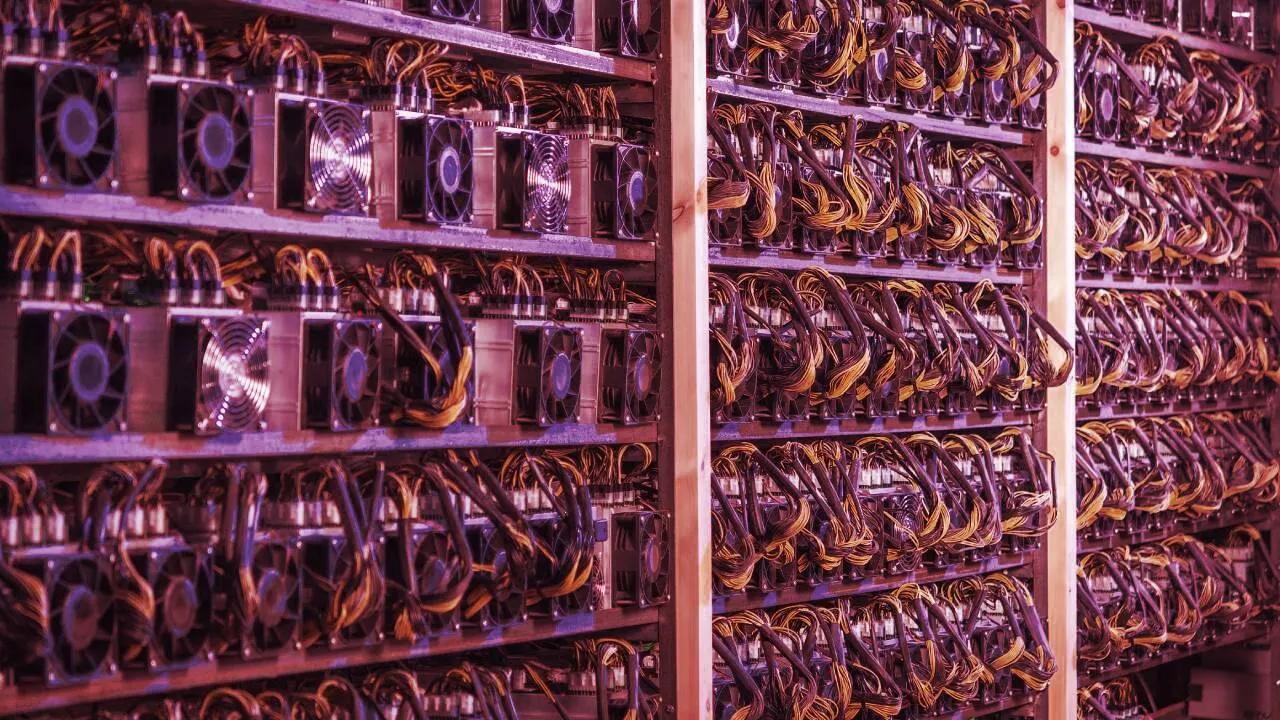
Farms maximize profitability by combining high-volume hardware with negotiated low electricity rates, purpose-built cooling infrastructure, and 24/7 maintenance staff. They’re typically located where power is cheapest and the climate supports natural or low-cost cooling.
The scale advantage of mining farms makes it very difficult for individual home miners to compete on pure revenue. A farm running thousands of the latest ASICs at $0.03/kWh operates in a different universe than a single machine in your garage at $0.12/kWh.
That said, home mining still contributes to network decentralization. More independent miners spread hash power across more participants, which strengthens Bitcoin’s resistance to centralized control. Home mining also gives you direct, private access to newly minted BTC without going through an exchange.
How to store your mined Bitcoin safely
Leaving your mining rewards sitting in a pool’s internal wallet or on an exchange exposes them to hacking, platform insolvency, and loss of private-key control. If the pool or exchange goes down or gets breached, your coins may go with it.
Self-custody means you hold the private keys. The simplest approach is to move coins regularly from your pool payout address to a wallet you control. Hot wallets, which are software wallets on your phone or desktop, are convenient for smaller amounts, but they stay connected to the internet, which increases the attack surface.
Hardware wallets (sometimes called signers) store your private keys offline in a secure chip. Even if the computer you connect the wallet to is compromised, your keys remain protected. For a miner accumulating BTC over time, a hardware wallet is the most practical way to keep rewards safe.
The best setup is to generate a fresh receive address from your hardware wallet and set it as the pool payout address. That way, every reward lands directly in secure self-custody without an extra transfer step. You don’t have to trust the pool to hold your coins any longer than it takes to process the payout.
Frequently asked questions about Bitcoin mining
What equipment do you need to mine Bitcoin?
You need an ASIC miner, a power supply unit with at least 20% headroom beyond the miner’s wattage, a cooling or ventilation setup, a wired internet connection, mining software, a Bitcoin wallet, and ideally a mining pool membership. The total cost for a home setup ranges from $2,000 to $25,000 depending on the hardware and accessories you choose.
Can you mine Bitcoin on a personal computer?
It’s technically possible, but the hash rate of a CPU or consumer GPU is far too low to compete with ASICs. You’d burn more in electricity than you’d ever earn in BTC. Personal computers were viable in Bitcoin’s early years, but the current difficulty makes them impractical.
Can you mine 1 Bitcoin in a day?
Not with a home setup. A new block yielding 3.125 BTC is found network-wide roughly every 10 minutes, but a single miner’s share of that block is a tiny fraction proportional to its hash rate versus the entire network. Accumulating 1 BTC takes considerable time, efficient hardware, and low electricity costs.
How does cryptocurrency mining differ from buying Bitcoin?
Mining earns BTC through computational work and electricity expenditure. You’re providing a service to the network, validating transactions, and receiving newly minted coins as payment. Buying acquires BTC directly on a market at the current price without needing hardware or any technical setup. Mining involves ongoing costs and variable returns; buying is a straightforward transaction at a known price.
What are the main risks of cloud mining?
Many cloud mining providers are scams that don’t own real hardware. They collect payments from customers and either disappear or pay early users with funds from newer sign-ups. Even when the provider is real, there’s no way to confirm the machines exist, no ability to tweak how they run, and no option to sell equipment you’ve never held. The complete lack of control and transparency makes cloud mining the riskiest way to participate in Bitcoin mining.
Where Bitcoin mining goes from here
Block rewards will keep halving roughly every four years, steadily shifting miner revenue toward transaction fees. That transition won’t happen overnight. The next halving around April 2028 will drop the reward to 1.5625 BTC, and meaningful fee-based revenue likely won’t dominate until many halvings from now.
Hardware manufacturers are racing to produce more efficient ASICs with lower J/TH ratios. Each generation squeezes more hashes out of every watt of electricity, which may keep home mining viable for hobbyists with access to cheap power. At the same time, regulatory attention on energy consumption and environmental impact may reshape where and how mining operates, particularly in jurisdictions that prioritize carbon reduction.
Bitcoin’s proof-of-work design is considered foundational to its security model, and no serious consensus exists in the community to change it. Mining remains the mechanism that enables trustless, decentralized agreement on the state of Bitcoin’s ledger. Whether you’re running a single ASIC in your garage or watching the industry from the sidelines, that fundamental role isn’t going anywhere. At AXL Research Hub, we’ll continue covering the tools, costs, and strategies that matter as mining economics evolve.