

Crypto mining is how proof-of-work blockchain networks confirm transactions and release new coins into circulation. If you’ve ever wondered where Bitcoin and similar cryptocurrencies actually come from, the answer starts with miners, the people (and machines) competing to solve cryptographic puzzles in exchange for freshly minted coins. The process replaces the role a bank would normally play: instead of one central authority deciding which transactions are valid, thousands of independent miners verify them and update a shared public ledger.
What is crypto mining?
Crypto mining is the process proof-of-work (PoW) blockchain networks use to validate transactions, add new blocks to the chain, and mint new cryptocurrency coins. It works like a decentralized mint: every time a miner successfully adds a block, the network rewards them with newly created coins plus the transaction fees packed into that block.
At the heart of mining sits a cryptographic puzzle. Miners throw computing power at a hashing algorithm, trying to produce a hash, a fixed-length string of characters generated from variable-length input data, that meets the network’s current target. Think of a hash as a digital fingerprint: change even one character of the input and the output looks completely different. The first miner to find the correct solution earns the right to append the next block.
This competition isn’t just a technical exercise. It’s what keeps the network secure. Because miners must spend real resources (electricity, hardware) to validate blocks, faking transactions or spending the same coins twice becomes computationally impractical. No single party controls which transactions get approved. Instead, the distributed ledger is updated only after verified miners do the work, and the new coins they earn are the economic incentive that keeps them competing honestly.
The consensus protocol behind all of this is called proof of work. PoW requires miners to expend measurable computational resources before a block counts as valid. That expenditure is what gives the network its trustworthiness, without relying on any central authority.
How does crypto mining work?
The mining process follows a repeating cycle. Each round starts when new transactions hit the network and ends when a winning miner collects the reward.
- Transactions enter a waiting pool. When someone sends cryptocurrency, the transaction is broadcast to the network and lands in a pool of unconfirmed transactions awaiting verification.
- Miners assemble a candidate block. Each miner selects transactions from the pool and bundles them into a candidate block. Transactions with higher fees or longer wait times often get picked first.
- The hashing race begins. Every block header contains a field called a nonce, short for “number only used once.” Miners cycle through nonce values one after another, feeding each modified header through the hashing algorithm and checking whether the resulting output falls below the network’s current difficulty target. Bitcoin’s algorithm, for example, produces a 256-bit output, essentially a long string each miner’s machine is trying to match through pure trial and error.
- A miner finds a valid hash. The first miner whose nonce produces a qualifying hash broadcasts the solution to the rest of the network.
- Other nodes verify the result. Nodes across the network independently check the broadcast hash. Consensus is reached once enough participants confirm the solution is correct.
- The block joins the chain. The validated block is appended to the blockchain, officially confirming every transaction inside it.
- The miner collects the reward. The winning miner receives newly minted coins plus the transaction fees bundled in that block. This reward is what funds the entire operation.
The cycle then repeats, with a fresh batch of unconfirmed transactions feeding the next round.
The role of blockchain in crypto mining
Every block a miner adds contains a reference to the hash of the block before it, linking them together in an unbroken chain all the way back to the very first block, called the genesis block. This chaining structure is what makes the blockchain tamper-resistant: if someone altered a transaction buried in an old block, the hash of that block would change, which would invalidate every block built on top of it. Recalculating all those subsequent hashes faster than the rest of the network can add new ones is, for practical purposes, impossible.
The blockchain functions as a decentralized public ledger. Every participant on the network can see the full transaction history and independently verify whether each block is valid and whether the miner who added it actually solved the hash correctly. That transparency eliminates the need for a central authority like a bank. It also makes double-spending, the act of using the same coins in two separate transactions, extremely difficult because the entire network can spot the conflict.
Mining difficulty and how it adjusts
Mining difficulty is a network parameter that controls how hard the cryptographic puzzle is to solve. Every proof-of-work blockchain targets a specific block time, the interval between one block and the next. The network automatically raises or lowers difficulty to keep that interval steady.
When more miners join and deploy faster hardware, blocks start getting solved quicker than the target. The network responds by making the puzzle harder, requiring hash outputs with more leading zeros or a lower numeric value. When miners drop off, the opposite happens: difficulty falls so blocks aren’t produced too slowly.
This adjustment cycle matters directly to individual miners, because rising difficulty means you need more computing power, and therefore more electricity, to earn the same reward you earned last month. That escalation is one of the main reasons home-computer mining became impractical for major coins over time. In Bitcoin’s early years, a regular desktop CPU could find blocks, but as more participants entered and difficulty climbed, the bar kept rising until only specialized hardware could compete.
The adjustment also keeps the network secure by preventing two extremes: if mining ever became too easy, blocks would flood in and destabilize the chain, while overly difficult puzzles would slow transaction confirmations to a crawl. By recalibrating automatically between those bounds, the protocol keeps block production predictable regardless of how many miners are active at any given moment.
Proof of work vs. proof of stake
Proof of work and proof of stake are two different consensus methods blockchains use to validate transactions and add blocks. Here’s how they compare:
| Feature | Proof of work (PoW) | Proof of stake (PoS) |
|---|---|---|
| Validation method | Computational race to solve a cryptographic puzzle | Validators selected based on the amount of crypto they lock up (stake) |
| Who participates | Miners using specialized hardware | Validators who commit tokens to the network |
| Rewards | Newly minted coins plus transaction fees | Newly minted coins plus a share of transaction fees (tips) |
| Energy use | Very high, every competing miner runs hardware simultaneously | Significantly lower, no energy-intensive puzzle-solving |
| Notable blockchain | Bitcoin | Several major networks have adopted PoS |
PoW’s biggest strength is its long track record. Bitcoin, the most prominent PoW blockchain, has operated since 2009 without a successful attack on its core protocol. The trade-off is energy consumption: because every miner on the network runs hardware at the same time, PoW blockchains collectively draw far more electricity than PoS chains.
PoS was developed as a more energy-efficient alternative. Instead of burning electricity to solve puzzles, validators put up their own coins as collateral. If they act dishonestly, the network can slash (destroy) part of their stake. Some blockchain communities have transitioned from PoW to PoS specifically to reduce their environmental footprint, though the security assumptions and trade-offs differ between the two models.
Hardware and equipment for crypto mining
Your hardware choice determines three things: hash rate, energy efficiency, and potential profitability. Miners generally work with one of three hardware categories, CPUs, GPUs, or ASICs, each sitting at a different point on the cost-performance spectrum. A fourth category, FPGAs, occupies a niche between GPUs and ASICs. Every setup also requires a reliable internet connection to stay synchronized with the network.
CPU mining
CPU mining uses the processor already inside a standard personal computer. In Bitcoin’s earliest days, a home CPU was enough to find blocks because so few miners were competing. That era is long gone. Modern difficulty levels make CPU mining impractical for Bitcoin and most major coins. Even the fastest consumer PC lacks the hash rate to compete with dedicated mining hardware, and at today’s difficulty, it would take an extraordinarily long time for a single CPU to mine one Bitcoin.
CPU mining may still work for certain lower-difficulty coins designed to resist specialized hardware, but for any coin with significant competition, the electricity costs will almost certainly outweigh whatever you earn.
GPU mining
GPUs, the graphics cards originally built for gaming and video rendering, can be repurposed for mining through specialized software. Their parallel-processing architecture handles repetitive hashing operations much faster than a CPU.
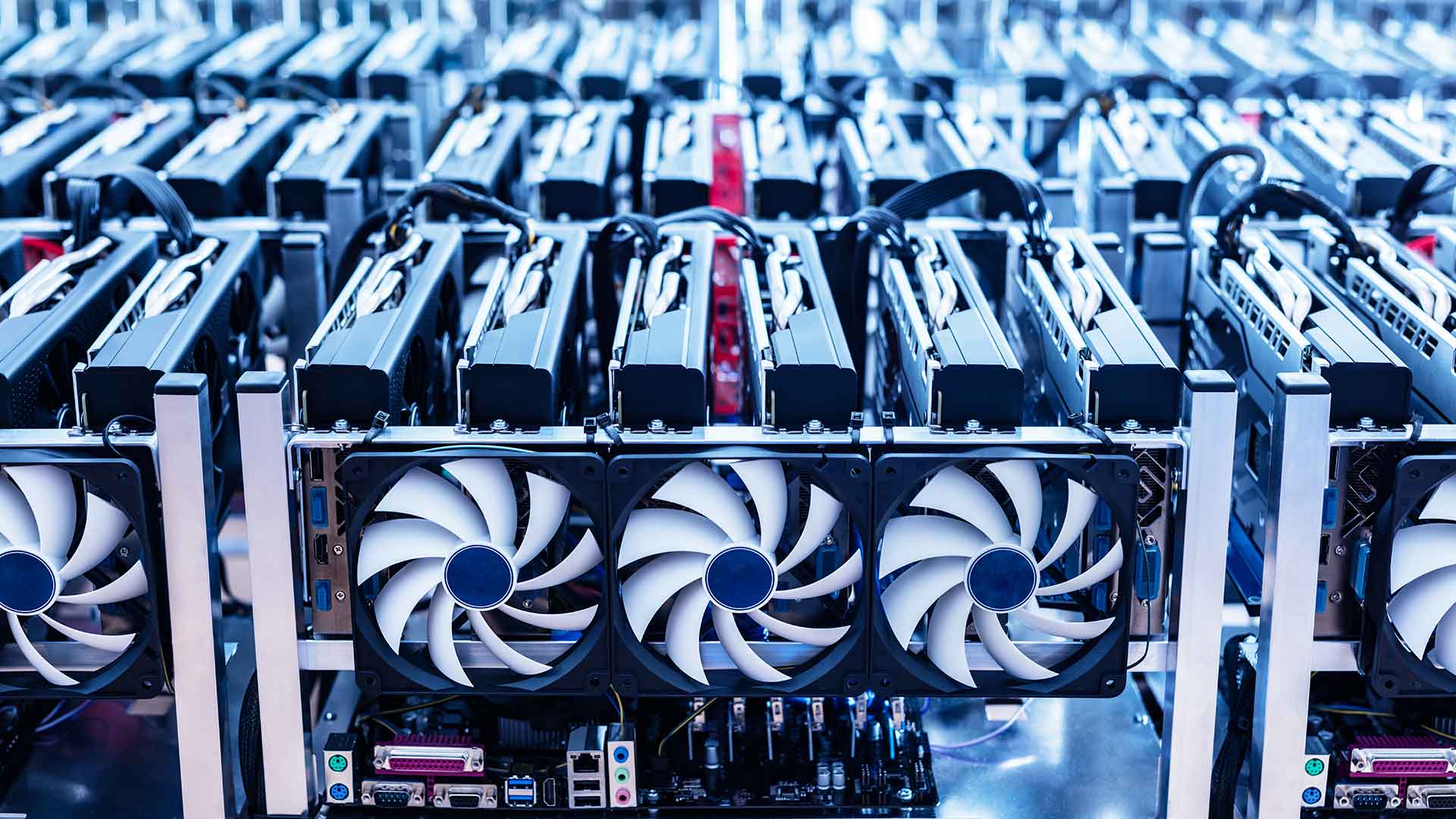
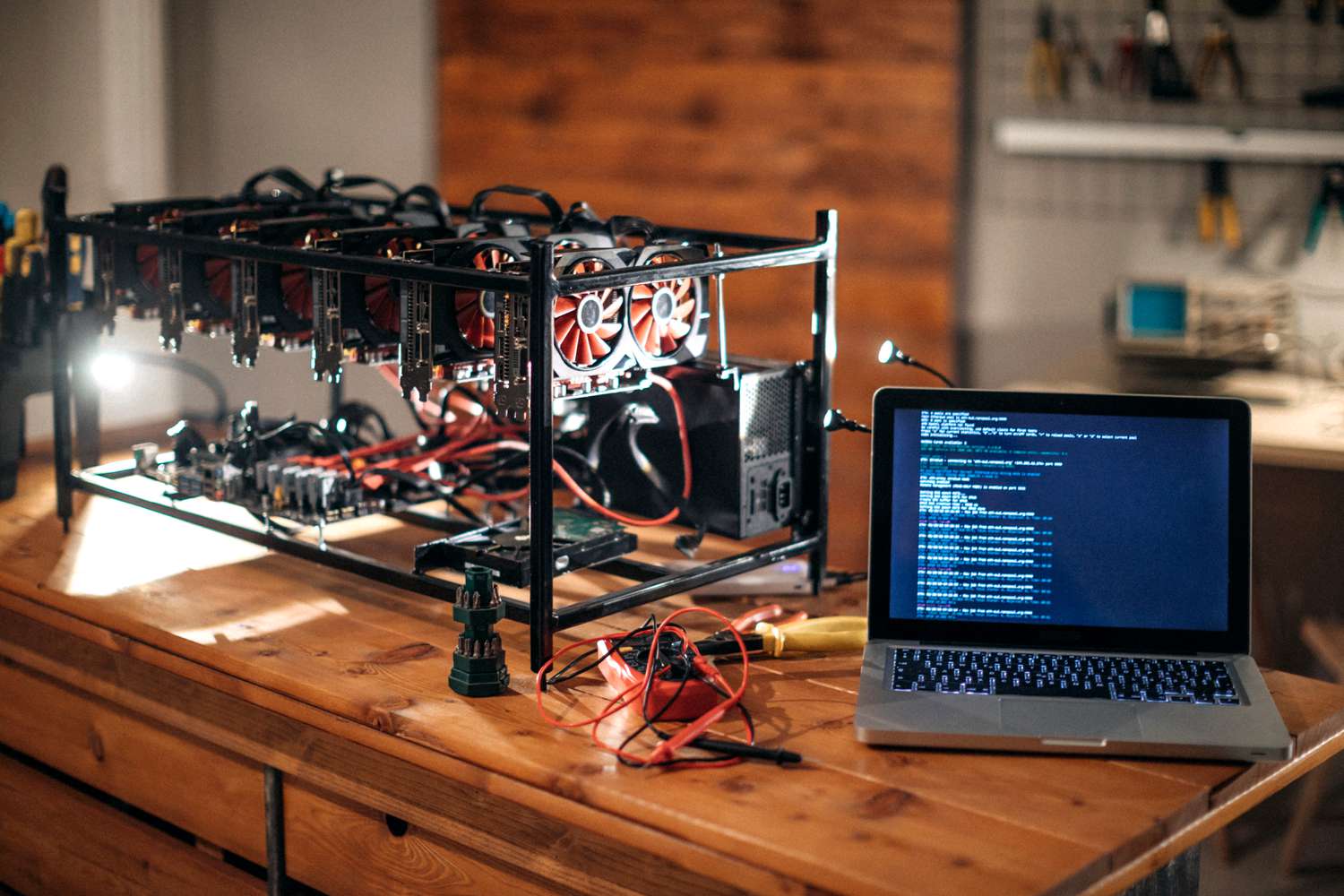
A common approach is to install multiple GPUs on a single motherboard to form a mining rig, boosting the combined hash rate. GPU hash rates are measured in megahashes per second (MH/s), where 1 MH/s equals 1 million hashes per second. Building a rig requires a compatible motherboard, an adequate power supply, and a cooling system, since multiple cards running at full load generate a lot of heat. Some GPU manufacturers have released cards designed specifically for mining rather than gaming.
The main advantage of GPU mining is versatility. A single rig can mine several different coins by switching software, which gives you flexibility to chase whichever coin is most profitable at the moment. The downside is speed: for coins where ASIC hardware exists, a GPU rig simply can’t keep pace.
ASIC mining
An ASIC (application-specific integrated circuit) miner is a device whose internal circuitry is designed and manufactured exclusively to mine a specific cryptocurrency. Nothing else runs on it. That single-purpose design delivers the highest hash rates available, far exceeding what any GPU can produce.
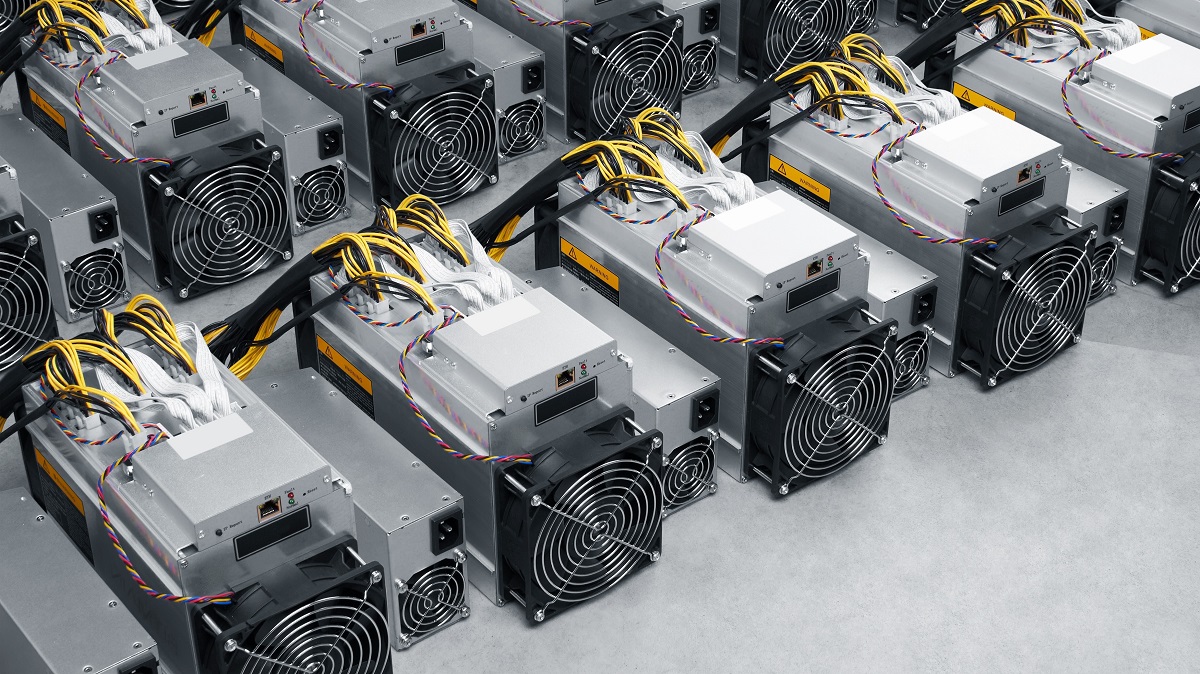
A typical ASIC unit contains a controller board, one or more hash boards packed with ASIC chips, heat sinks, and dual fans. Hash rates are measured in terahashes per second (TH/s), where 1 TH/s equals 1 trillion hashes per second. To put that in perspective, an ASIC rated at 68 TH/s performs 68 trillion hashes per second, roughly 1,000 times faster than a top-rated GPU. Imported units have reached approximately 110 TH/s per unit.
That performance comes with trade-offs. ASIC miners consume large amounts of electricity and throw off significant heat, so they need dedicated cooling, sometimes an entire ventilated room or warehouse. Individual units are often grouped into mining farms with hundreds or thousands of machines running side by side. ASIC miners are also expensive, and because each new generation raises network difficulty, older models can become obsolete quickly, forcing continual reinvestment to stay competitive.
FPGA mining
FPGAs (field-programmable gate arrays) are microprocessors that can be reprogrammed for specific tasks, including crypto mining. They sit in an awkward middle ground: FPGAs offer only a slight performance edge over GPUs and are harder to source, which is why they’ve never gained the same popularity as ASICs or GPUs.
Newer-generation FPGAs run faster and more efficiently than earlier versions, and some miners see them as a potential alternative if the technology continues to improve. For now, though, most miners gravitate toward ASICs for raw speed or GPUs for flexibility.
Methods of mining: solo, pool, and cloud
Three main approaches let miners participate at different scales and risk levels. The right choice depends on your budget, hardware, and how much variance in income you’re comfortable with.
Solo mining
A solo miner operates independently, running personal hardware against the network without splitting rewards with anyone. If you solve a block, the full reward, both the newly minted coins and all the transaction fees, is yours.
The catch is probability. You’re competing against massive pools and industrial-scale operations, so discovering a block on your own is rare. Solo mining is a high-risk, high-reward model: you may go months with no income at all, then land one full payout. For most miners working with limited hardware, the math usually doesn’t pencil out. The expected payout variance is enormous compared to pool mining, and breakeven timelines can stretch far beyond what’s practical unless you have significant hash power of your own.
Mining pools
Pool members combine their computational resources, collectively increasing the chance of solving a block. When the pool finds a block, the reward is split proportionally based on the hash power each member contributed. You earn smaller, more frequent payouts instead of waiting for one big hit.
Pools generally require members to meet minimum hardware specs, typically a GPU rig or an ASIC miner. Official pools tend to receive regular software upgrades and technical support, which can matter when troubleshooting connectivity or configuration issues. Miners can switch pools freely to pursue better reliability or profitability, and pool-comparison platforms let you evaluate options by uptime, fee structure, and supported coins.
The trade-off compared to solo mining is straightforward: lower variance and steadier income, but you never keep a full block reward. Pool fees also eat into your share.
Cloud mining
Cloud mining lets you rent mining hardware remotely for a fee, avoiding the upfront cost of buying equipment. The hosting company manages the hardware, electricity, and maintenance. Your profits depend on the amount of computing power you rent, with higher power generally yielding more blocks.
It’s the most hands-free entry point for beginners, which is why it appeals to people who don’t want to build or maintain rigs. Contracts often require a minimum investment term, though, so you’re locked in even if market conditions change. Cloud mining also carries a higher scam risk than other methods (more on that below), so vetting the provider is critical before committing any money.
How to start mining cryptocurrency
If you’ve decided to try mining, here’s what the setup process looks like:
- Set up a cryptocurrency wallet. You need somewhere to receive and store your mined coins. Options include an online (hot) wallet for convenience or an offline (cold) wallet for stronger security.
- Pick your hardware. At minimum, you’ll want a PC with a high-end GPU. For competitive mining of major coins, an ASIC rig is the practical choice. Make sure your power supply can handle the load and that you have adequate cooling in place.
- Choose mining software. Select software compatible with both your target cryptocurrency and your hardware type. Different coins use different hashing algorithms, so the software needs to match.
- Decide on a mining method. Solo mining, joining a pool, or subscribing to a cloud mining service each fit different budgets and risk tolerances.
- Ensure a stable internet connection. Mining requires your hardware to stay in constant communication with the network. Drops in connectivity mean lost hashing time.
- Configure and start hashing. Set up the mining software, connect to your chosen pool or network, and begin. Most software dashboards show your hash rate in real time.
- Monitor your operation. Track hash rate, electricity draw, and earnings on an ongoing basis. These numbers tell you whether the operation is actually profitable or whether it’s time to switch coins, adjust hardware, or stop.
Is crypto mining profitable?
Profitability hinges on a handful of variables: your hash rate, the cost of electricity where you operate, the price of your hardware, cooling expenses, and the market price of the coin you’re mining. Of these, electricity is usually the largest ongoing cost.
Regional electricity rates create structural differences between miners. Someone mining in a low-cost energy market can stay profitable at difficulty levels that would wipe out margins for a miner paying higher rates. That’s why large mining farms tend to cluster in regions with cheap, abundant power.
Hardware costs compound the challenge. ASIC miners consume substantial power; one widely cited industry estimate puts the average ASIC consumption at roughly 72 terawatts of power to produce one bitcoin in approximately ten minutes, though actual consumption varies with hardware generation and network difficulty. The network-wide energy draw of the most popular PoW blockchains rivals that of midsize countries.
Many blockchain protocols also reduce block rewards on a preset schedule, a mechanism Bitcoin users know as “halving.” Each halving cuts the number of new coins paid per block in half, which directly squeezes miner revenue unless the coin’s market price rises enough to compensate. Over time, these scheduled reductions mean miners earn fewer coins for the same amount of work, making efficiency and low operating costs increasingly important.
Fluctuating cryptocurrency prices add another layer of financial risk. A sudden price drop can erase margins even when your hash rate is competitive. And because mining hardware depreciates quickly, especially ASICs that can become obsolete within a couple of years, you’re constantly weighing whether the shrinking useful life of your equipment justifies continued operation.
Is crypto mining legal?
In most jurisdictions, no specific law addresses crypto mining directly, which leaves legality unclear in many parts of the world. The United States and Canada are generally considered friendly to crypto mining, though that doesn’t mean it’s unregulated.
In the U.S., the Financial Crimes Enforcement Network (FinCEN) has classified crypto miners as money transmitters under its guidance. That classification can subject miners to anti-money-laundering and reporting requirements depending on the scale and nature of their operation. The practical implications vary, but it’s worth understanding before you invest heavily in equipment.
A small number of countries have explicitly banned cryptocurrency-related activities, including mining. Regulatory uncertainty persists in several large markets, where governments haven’t taken a clear position. If you’re considering mining, verify the laws in your specific jurisdiction before committing capital.
Tax obligations for crypto miners in the United States
IRS Notice 2014-21 directly addresses the federal tax treatment of cryptocurrency mining rewards and is the starting point for understanding your obligations as a miner.
When you receive reward tokens from mining, you owe federal income tax on them. The taxable amount equals the fair market value of the coins at the moment you receive them, which counts as the first tax event regardless of whether you sell them later.
If your mining activity counts as a trade or business, or you operate as an independent contractor, those rewards count as self-employment income. That means you’ll owe self-employment tax (covering Social Security and Medicare) on top of regular income tax. If mining rewards are paid to you as wages through an employer, they’re subject to federal income tax withholding plus Social Security and Medicare taxes.
A second tax event occurs when you sell or exchange the coins you mined. Any gain or loss between the fair market value at receipt and the sale price is a taxable capital event.
Accurately tracking and reporting all of this can get complicated, especially if you’re mining multiple coins, selling at different times, or operating in a state with its own crypto tax rules. Keeping detailed records of every receipt, its fair market value on that date, and every subsequent sale is the bare minimum. A tax professional familiar with cryptocurrency can help you avoid costly mistakes.
Benefits of cryptocurrency mining
- Automated coin distribution. Mining distributes newly minted coins efficiently and automatically. No central authority decides who gets new tokens; the protocol handles it through the reward system.
- Economic opportunity in low-cost energy regions. Miners in areas with cheap electricity can build profitable operations, creating income and jobs in places that might not otherwise attract tech investment.
- Open participation. Anyone with the right hardware and an internet connection can mine. There’s no application process, no minimum account balance, and no approval from a financial institution.
Risks and downsides of cryptocurrency mining
- High energy consumption. Popular PoW networks collectively draw electricity comparable to midsize countries. That energy bill is real and ongoing, whether you’re profitable or not.
- Steep upfront costs. Competitive hardware, especially ASICs, requires a significant initial investment that’s out of reach for many prospective miners.
- Environmental harm. Mining powered by nonrenewable energy contributes to greenhouse-gas emissions. Obsolete hardware also generates electronic waste, adding to the environmental footprint.
- Technical complexity. Setting up, configuring, and maintaining mining rigs demands hardware and software knowledge that can be a barrier for newcomers.
- Diminishing block rewards. Scheduled reward reductions, like Bitcoin’s halving events, steadily lower the coins earned per block, squeezing long-term profitability.
- Hardware obsolescence. Mining equipment can break or become outdated within a short period. As a result, each hardware cycle can shorten the profitable window for existing equipment, forcing miners to upgrade or drop out.
- Security vulnerabilities. Hacking, malware, and cryptojacking can steal mining rewards or hijack your equipment. Firmware attacks targeting ASIC miners, pool-side vulnerabilities that expose member payouts, and even physical theft of rigs are all documented risks that many miners underestimate.

Security threats and common crypto mining scams
Cryptojacking is the most widespread mining-related attack. Hackers install malware that secretly uses a victim’s CPU or GPU to mine coins for the attacker. The hijacked device runs at 100% processing power, which causes overheating that can destroy hardware and spike electricity bills without the owner realizing what’s happening. Worse, the malware can spread from one infected device to others on the same network, turning an entire household or office into an unwitting mining farm.
Beyond cryptojacking, several scam types target miners directly:
Wallet scams use fake wallet apps or provide receiving addresses that look legitimate but actually divert your mined coins to the scammer. Always download wallet software from the official source and double-check addresses before configuring your miner.
Cloud-mining scams collect upfront payment or subscription fees but never perform any actual mining. The “dashboard” they show you may display fabricated stats. Before signing a cloud-mining contract, research the company’s track record, look for independent reviews, and be skeptical of guaranteed-return promises.
Exchange scams lure users with unusually low trading fees, then steal login credentials and funds. Stick to well-known exchanges and enable two-factor authentication on every account. The exchange reviews published on AXL Research Hub can help you compare platforms before trusting one with your coins.
How to protect your devices from cryptojacking
- Avoid unsecured public Wi-Fi. Open networks are easy entry points for attackers to push mining malware onto your device.
- Use a VPN. Encrypting your traffic isolates your connection from other users on shared networks.
- Run antivirus software. Choose a solution capable of detecting and quarantining mining botnet infections, not just traditional viruses.
- Place devices behind a firewall. A properly configured firewall monitors both incoming threats and outgoing data, catching unauthorized mining traffic before it leaves your network.
- Keep systems updated. Patch your operating system and firmware as soon as updates are available. Known vulnerabilities in unpatched ASIC firmware and router software are common entry points for attackers.
Environmental impact of crypto mining
Proof-of-work mining’s combined electricity consumption ranks alongside that of entire midsize countries. Much of that electricity still comes from nonrenewable sources, which means PoW mining contributes meaningfully to greenhouse-gas emissions.
The waste problem extends beyond energy. Mining hardware, especially ASICs, has a short useful life. When a new generation arrives and raises network difficulty, older units become unprofitable and get discarded. The resulting electronic waste adds another layer to mining’s environmental footprint.
These concerns have pushed some blockchain communities to move away from proof of work entirely, adopting proof of stake or other lower-energy consensus methods. On the miner side, a growing number of operations are seeking out renewable energy sources, hydroelectric, solar, or wind, to reduce their carbon impact. Neither shift solves the problem completely, but both signal that the industry recognizes the cost.
Choosing the right path into crypto mining
Before buying hardware or signing a cloud-mining contract, run a basic feasibility check. Three factors form the core: how much you can invest in hardware, what you pay for electricity, and the current difficulty level of the coin you want to mine. If any one of these doesn’t work in your favor, the others probably won’t save you.
Your entry method, solo, pool, or cloud, should match your budget and technical comfort. Solo mining only makes sense if you have enough hash power to find blocks within a reasonable timeframe. Pools lower your variance and provide steadier income but take a cut of every reward. Cloud mining removes the hardware burden but introduces counterparty risk and locks you into a contract.
Once you’re running, the work isn’t over. Ongoing monitoring of hash rate, energy draw, and the coin’s market price tells you whether to keep going, switch to a different coin, or shut down. Mining isn’t a set-and-forget operation.
Environmental considerations are increasingly part of the decision, too. Some miners choose to mine proof-of-stake coins that don’t require heavy computation, while others stick with PoW but power their rigs with renewable energy. Whatever path you pick, go in with realistic expectations and a clear understanding of the costs.