
Every cryptocurrency other than Bitcoin falls under the umbrella term “altcoin,” short for alternative coin. That single label covers thousands of projects, from payment-focused coins built to move money faster than Bitcoin to governance tokens that let holders vote on protocol changes. Whether you’re sorting through your first exchange listing or comparing consensus mechanisms, the differences between these projects matter more than the shared label.
What is an altcoin?
An altcoin is any cryptocurrency other than Bitcoin. The term combines “alternative” and “coin,” and it applies to everything from large-cap platforms like Ethereum to obscure tokens with a few dozen holders. Some people also exclude Ethereum from the altcoin label because Ethereum introduced a fundamentally different blockchain capability, smart contracts and decentralized applications, rather than iterating on Bitcoin’s original design. That distinction is debated, not settled.
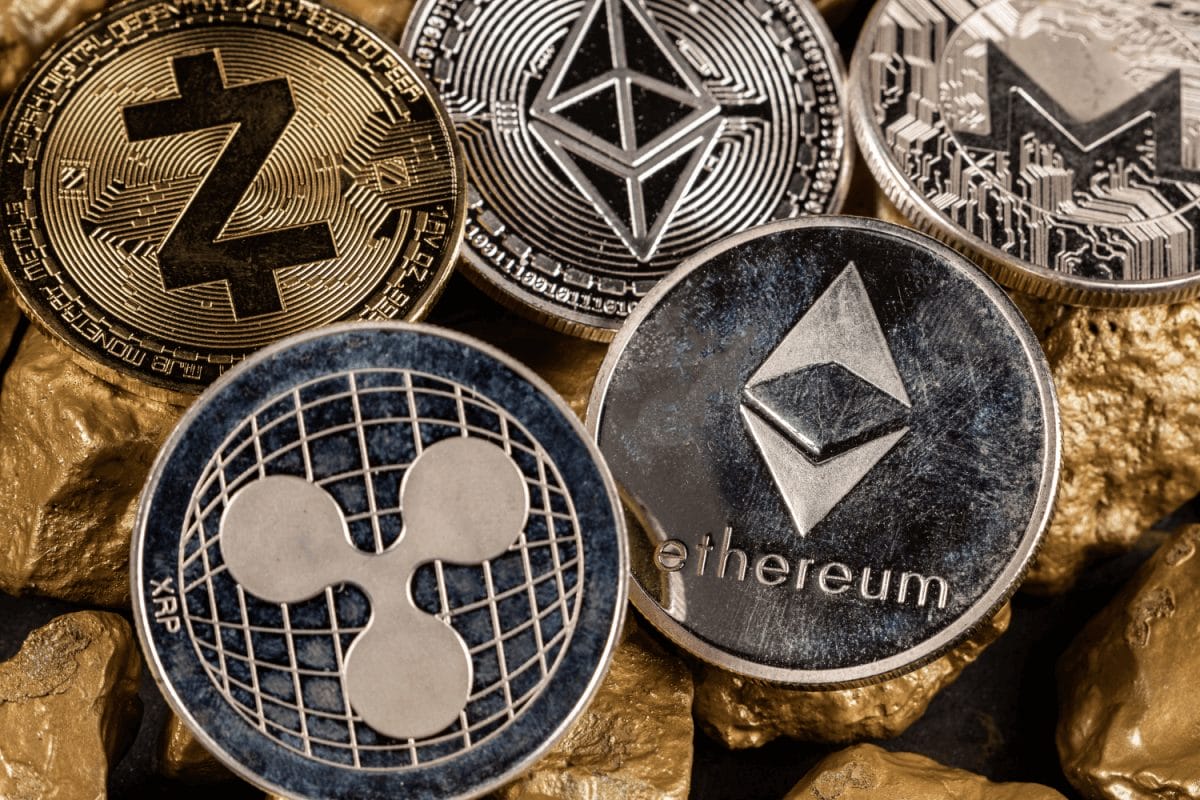
Altcoins include both native coins that run their own independent blockchains and tokens built on top of existing blockchains. The first altcoin was Litecoin, forked from the Bitcoin blockchain in 2011. Litecoin swapped Bitcoin’s SHA-256 proof-of-work algorithm for a different mechanism called Scrypt, which was designed to be less hardware-intensive.
Developers create altcoins to address perceived limitations of Bitcoin or to serve entirely new purposes. Bitcoin’s fixed supply cap of 21 million coins and relatively slow transaction processing leave room for projects that target faster settlement, lower energy use, programmable contracts, or cheaper cross-border payments. Ethereum’s transition from proof of work to proof of stake, which cut its energy consumption by over 99%, illustrates how far some altcoins have moved from Bitcoin’s design, a path Bitcoin’s community has shown no interest in following.
The result is a market with thousands of altcoins ranging from payment assets to governance tools to price-stable units pegged to the US dollar. Each one exists because someone decided Bitcoin alone couldn’t do the job they had in mind.
How altcoins differ from Bitcoin
Bitcoin was built as a settlement layer and store of value. Altcoins branch out from there into smart contracts, fast payments, governance, privacy, and cross-chain interoperability. The table below lays out the core differences.
| Feature | Bitcoin | Altcoins (varies by project) |
|---|---|---|
| Primary purpose | Store of value, settlement | Smart contracts, payments, governance, privacy, interoperability |
| Supply model | Fixed cap of 21 million | Fixed cap, inflationary emission, token burns, or hybrid schedules |
| Consensus mechanism | Proof of work (SHA-256) | PoW, PoS, DPoS, PoA, BFT, and others |
| Block time | ~10 minutes | Fractions of a second to a few seconds on many networks |
| Throughput | ~3-7 transactions per second | Some networks reach tens of thousands |
| Smart-contract support | Limited on the base layer | Common across many networks |
| Risk profile | Slower protocol changes, deeper liquidity | Higher project, tokenomics, and execution risk |
Many altcoins were created as forks, new blockchains branching from Bitcoin or Ethereum code, often because developer groups disagreed on the project’s direction. Litecoin, for example, uses Scrypt proof of work, which is less energy-intensive than Bitcoin’s SHA-256. Bitcoin Cash forked directly from Bitcoin over a block-size dispute.
Supply models are one of the biggest practical differences. Bitcoin’s 21-million cap is absolute. Some altcoins mirror that scarcity with their own fixed caps. Others issue new coins indefinitely, relying on burn mechanisms or fee redistribution to manage inflation. A fixed cap creates scarcity that can support value over time, while an uncapped supply means new units are created indefinitely, which can dilute the value of existing coins if demand doesn’t keep pace. Understanding which model a project uses tells you a lot about its long-term economic behavior.
Altcoins generally carry higher risk than Bitcoin. Smaller teams, unproven tokenomics, thinner liquidity, and faster protocol changes all contribute. Bitcoin’s conservative pace of change is a feature for holders who prioritize stability.
How altcoins work
Altcoins use protocols to create decentralized trust between parties without a central authority. The specific rules differ by project, but four elements shape how any altcoin behaves.
The consensus mechanism is the rule set that validates transactions and adds them to the blockchain. It determines who gets to confirm the next block, how disputes are resolved, and how much energy the network consumes.
Tokenomics, the supply cap, emissions rate, burn mechanics, and unlock schedules, shape an altcoin’s economic behavior. A coin that burns a portion of transaction fees shrinks its circulating supply over time. One that unlocks large batches of tokens on a schedule can see selling pressure on those dates.
Utility defines what the token lets users do: pay fees, access services, vote on governance proposals, or earn staking rewards. Without real utility, a token’s price depends almost entirely on speculation.
Network effect ties it all together. Developer count, active users, the apps built on top, and exchange listings drive adoption and liquidity. A technically sound protocol with no developers building on it won’t attract users, and without users, liquidity dries up.
Proof of work vs. proof of stake
Proof of work (PoW) requires miners to solve cryptographic puzzles using powerful hardware and significant electricity. The network verifies the solution before adding a block, and the miner who solves the puzzle first earns newly created coins. Bitcoin and older altcoins like Litecoin use this model. It’s proven and secure, but energy-hungry.
Proof of stake (PoS) replaces miners with validators who lock up, or “stake,” their own coins as collateral. An algorithm selects a validator to check the next batch of transactions. Holding more staked coins raises a validator’s selection probability, but built-in randomization keeps any single validator from dominating. Validators who act dishonestly, approving fraudulent transactions or going offline, lose part or all of their staked coins. This penalty is called slashing.
PoS is far more energy-efficient than PoW, which is why many modern altcoins adopt it. Ethereum’s move to PoS demonstrated the difference at scale, cutting energy use by over 99%.
These aren’t the only two options. Five main consensus mechanisms are in active use: PoW (Bitcoin), PoS (Ethereum), Delegated Proof of Stake or DPoS (EOS), Proof of Authority or PoA (VeChain), and Byzantine Fault Tolerance or BFT (XRP). Each carries different tradeoffs in security, decentralization, and speed. DPoS, for instance, concentrates validation among a smaller elected group, which increases throughput but reduces the number of independent validators.
Smart contracts and what they enable
Smart contracts are digital agreements written in code that execute automatically when preset conditions are met. When a borrower’s collateral drops below a certain ratio, the contract liquidates it, and when a buyer sends the right amount of tokens, the contract releases the asset. The entire process runs without an intermediary reviewing the transaction, paperwork changing hands, or anyone manually verifying terms.
This automation is what lets altcoins power complex systems. Decentralized lending platforms use smart contracts to match lenders and borrowers, set interest rates algorithmically, and handle liquidations without a bank in the middle. Automated trading protocols use them to create liquidity pools where users trade directly against pooled assets on decentralized exchanges. Token issuance, from stablecoins to NFTs, runs on smart contracts that define supply rules, transfer restrictions, and ownership records.
Around 3,000 tokens run on the Ethereum blockchain alone, which illustrates its role as a programmable base layer. Other platforms like Solana and Avalanche support smart contracts too, each with different performance characteristics, but Ethereum’s head start gave it the largest community of developers and applications.
Types of altcoins and their use cases
Altcoins fall into several functional categories based on what they’re designed to do. A single altcoin can belong to more than one category. Ether, for example, functions as both a utility token (paying gas fees) and a platform coin (securing the network). Category is determined by the coin’s primary function, not by its popularity or price.
Payment coins
Payment coins are designed primarily as digital currency for transferring value between parties. They prioritize fast settlement times and lower transaction fees compared to Bitcoin.
Litecoin, XRP, and Bitcoin Cash are the most well-known payment altcoins. XRP targets cross-border transfers specifically, aiming to move money internationally in seconds without a bank intermediary. Where a traditional wire transfer might take days and pass through multiple correspondent banks, XRP settles on its own ledger in a matter of seconds.
The tradeoff with payment coins is that their use case overlaps with stablecoins and even traditional payment rails that are getting faster. Their value depends on whether the speed and cost advantages hold up as competing systems improve.
Stablecoins
Stablecoins are cryptocurrencies pegged to a stable reference asset, usually the US dollar, to minimize price volatility. Their price fluctuations are designed to stay within a very narrow range, making them function like fiat currency within crypto.
Three models exist, and they carry very different risk profiles.
Fiat-backed stablecoins hold reserves in cash and short-term government debt. USDT and USDC are the dominant examples. USDC maintains a 1:1 peg to the US dollar, with reserves held in regulated financial institutions.
Crypto-backed stablecoins use on-chain collateral, often overcollateralized to absorb price swings. DAI is the leading example. If you deposit $150 worth of ETH, you might mint $100 worth of DAI. The extra collateral acts as a buffer.
Algorithmic stablecoins use smart contracts to adjust supply and maintain the peg, expanding supply when the price rises above $1 and contracting it when the price falls below. The collapse of Terra exposed serious vulnerabilities in this model. Terra’s UST lost its dollar peg on May 11, 2022, triggering a death spiral that wiped out billions in value. That event made the entire market more skeptical of purely algorithmic designs.
Stablecoins are used to park funds during volatile markets, settle trades, back obligations in DeFi protocols, and increasingly for everyday payments. Visa began settling some transactions in USDC over the Ethereum blockchain in March 2021. Stablecoins themselves have limited growth potential by design, since their whole point is to not move in price. Traders and investors use them to manage liquidity, post collateral, and access DeFi rather than for directional exposure.
Utility tokens
Utility tokens provide access to a specific service, facilitate transactions, or earn rewards within a blockchain network. They’re the fuel that makes a particular platform run.
Ether (ETH) is the clearest example. On the Ethereum network, ETH pays gas fees for every transaction and smart-contract execution. It also serves as staking collateral for validators securing the network. Without ETH, nothing moves on Ethereum.
Filecoin takes the concept in a different direction. It’s used to buy storage space on a decentralized network, where providers compete to offer disk space and users pay in FIL tokens.
The value of a utility token tends to reflect real activity and usage on its network rather than speculation alone. If a platform sees growing transaction volume, demand for its utility token rises because people need it to interact with the protocol. Investors typically buy utility tokens because they believe in the underlying project’s product demand, not just price appreciation.
Governance tokens
Governance tokens grant holders voting rights on protocol changes, treasury spending, fee adjustments, and incentive distribution. They’re usually tied to a DAO (decentralized autonomous organization), where rules are encoded in smart contracts rather than managed by a central authority.
Voting power is often proportional to the number of tokens held, similar to shareholder voting in a public company. Uniswap’s UNI token lets holders vote on the development of its decentralized trading platform. Maker’s MKR token enables votes on the operation of the platform that manages the DAI stablecoin, including decisions about which collateral types to accept and what stability fees to charge.
One persistent issue: actual voter participation tends to remain low in many protocols. When only a small percentage of token holders vote, decision-making power concentrates in a small group despite broad token distribution. A protocol might have thousands of token holders, but if only a handful submit votes, the governance system functions more like a small board than a democratic body.
Security tokens
Security tokens represent ownership stakes, fundraising instruments, or tokenized real-world assets such as equity or real estate. They function similarly to traditional securities, and holders may receive dividend-like payouts from platform earnings.
These tokens are regulated by bodies such as the SEC because they meet the criteria of an investment contract under the Howey Test. The Howey Test defines a security as an investment of money in a common enterprise with an expectation of profit derived primarily from the efforts of others. If a token meets all four of those criteria, it’s legally a security regardless of what the project calls it.
The underlying asset must be transparently secured and held for the token to retain value. A security token representing fractional ownership of a building, for example, depends on verifiable proof that the building exists, is properly managed, and that the token actually conveys the ownership rights it claims.
Exodus completed an SEC-qualified Reg A+ token offering in 2021, converting $75 million in common stock to tokens on the Algorand blockchain. Some decentralized trading platforms also reward token holders with a share of fees generated on the platform, which can push those tokens closer to the security classification.
Meme coins
Meme coins are inspired by internet jokes, social media trends, or cultural moments. Community energy and viral sharing drive their price far more than any technical roadmap.
Dogecoin (DOGE) was created as a joke based on the Doge meme and has remained the most recognized meme coin for years. Meme coins typically have a massive or unlimited supply, which accounts for their low per-unit price. A coin with trillions of units in circulation will naturally trade at fractions of a cent.
The price action on meme coins can be extreme. The $TRUMP meme coin hit an all-time high of $73 on January 19, 2025. By February 2026, it was trading at $3.41, a 95.5% decline. That pattern, exponential gains followed by rapid sell-offs, is common across the category. Price movement relies on speculation and social-media hype rather than long-term technical goals. Celebrity-endorsed meme coins have appeared and largely faded, reinforcing how dependent these tokens are on sustained attention.
Privacy coins
Privacy coins obscure sender, receiver, and transaction amount using advanced cryptographic techniques. On a standard blockchain like Bitcoin or Ethereum, anyone can trace transactions between wallet addresses. Privacy coins are designed to break that visibility.
Monero (XMR) and Zcash (ZEC) are the most recognized privacy-focused altcoins. Monero uses ring signatures and stealth addresses to make every transaction private by default. Zcash offers optional privacy through a technology called zk-SNARKs, which lets users prove a transaction is valid without revealing its details.
Regulatory scrutiny is higher for privacy coins than for most other categories. Some exchanges have delisted them in response to evolving compliance rules, particularly in jurisdictions with strict anti-money-laundering requirements. If you hold privacy coins, availability can shift suddenly if a platform revises its listing policies. That regulatory pressure is worth factoring in before buying, since an exchange delisting can cut off your easiest path to sell.
Interoperability coins
Interoperability coins enable communication, data transfer, and token movement between separate blockchains. Without them, each blockchain operates as a silo. Your assets on Ethereum can’t natively talk to a protocol on Solana, and moving tokens between chains requires bridges that carry their own risks.
Polkadot (DOT) connects multiple chains through a relay-chain architecture. Individual blockchains, called parachains, plug into Polkadot’s central relay chain to share security and pass messages to each other.
Cosmos (ATOM) takes a different approach, supporting cross-chain communication via its Inter-Blockchain Communication (IBC) protocol. Rather than a central relay chain, Cosmos creates a network of independent blockchains that can send tokens and data to each other directly through IBC.
Both projects reduce friction for wallets, apps, and trading routes that span multiple chains. As DeFi protocols increasingly operate across several networks, the demand for reliable interoperability grows.
Platform coins
Platform coins form the base layer where decentralized applications operate. Their native tokens pay transaction fees and fund network security through staking. Security strengthens as more validators and nodes participate, because attacking the network becomes progressively more expensive.
Ethereum leads by ecosystem size. It has the largest developer community, the most deployed smart contracts, and the deepest DeFi liquidity. Solana emphasizes high throughput and low fees, making it attractive for applications that need fast finality. Cardano focuses on scalable smart contracts with a staking model designed for broad validator participation. Avalanche targets high-speed transaction processing for DeFi projects, using a subnet architecture that lets different applications run on customized chains.
The competition between platform coins is one of the most active areas in crypto. Each network makes different tradeoffs between speed, decentralization, and developer tooling, and the winner in any given use case often depends on which tradeoff matters most.
Coins vs. tokens: what is the difference?
A coin is the native cryptocurrency of its own independent, standalone blockchain. Bitcoin lives on the Bitcoin network. Ether lives on Ethereum. XRP lives on the XRP Ledger. Each of these blockchains was built from the ground up to support that specific asset.
A token is a digital asset built on top of an existing blockchain rather than running its own. USDC, for example, is a fiat-backed stablecoin that runs on the Ethereum blockchain (and several other networks). It doesn’t have its own chain. It exists as a smart contract deployed on someone else’s infrastructure. Non-fungible tokens (NFTs) work the same way, with most running on Ethereum-based networks.
In casual conversation, “coin” and “token” are used interchangeably, and you’ll even see tokens launched through “initial coin offerings” (ICOs). But the technical distinction matters in practice. When you’re selecting a wallet, you need one that supports the specific blockchain your asset lives on. When you’re withdrawing from an exchange, you need to choose the correct network, sending an Ethereum-based token over the wrong chain can mean permanent loss of funds. And when you’re verifying a contract address, you’re checking the token’s smart contract on the blockchain it was built on, not looking for a standalone chain.
The definitions are still evolving as crypto matures. Some projects start as tokens on Ethereum and later migrate to their own blockchains, shifting from token to coin. Context often matters more than strict classification, but understanding the core distinction helps you avoid costly transfer mistakes.
Top altcoins by market capitalization
Rankings shift frequently in crypto. Prices are highly volatile, and an altcoin in the top five can drop several spots quickly if market conditions change. With that in mind, these are among the largest altcoins by market cap as of early 2026.
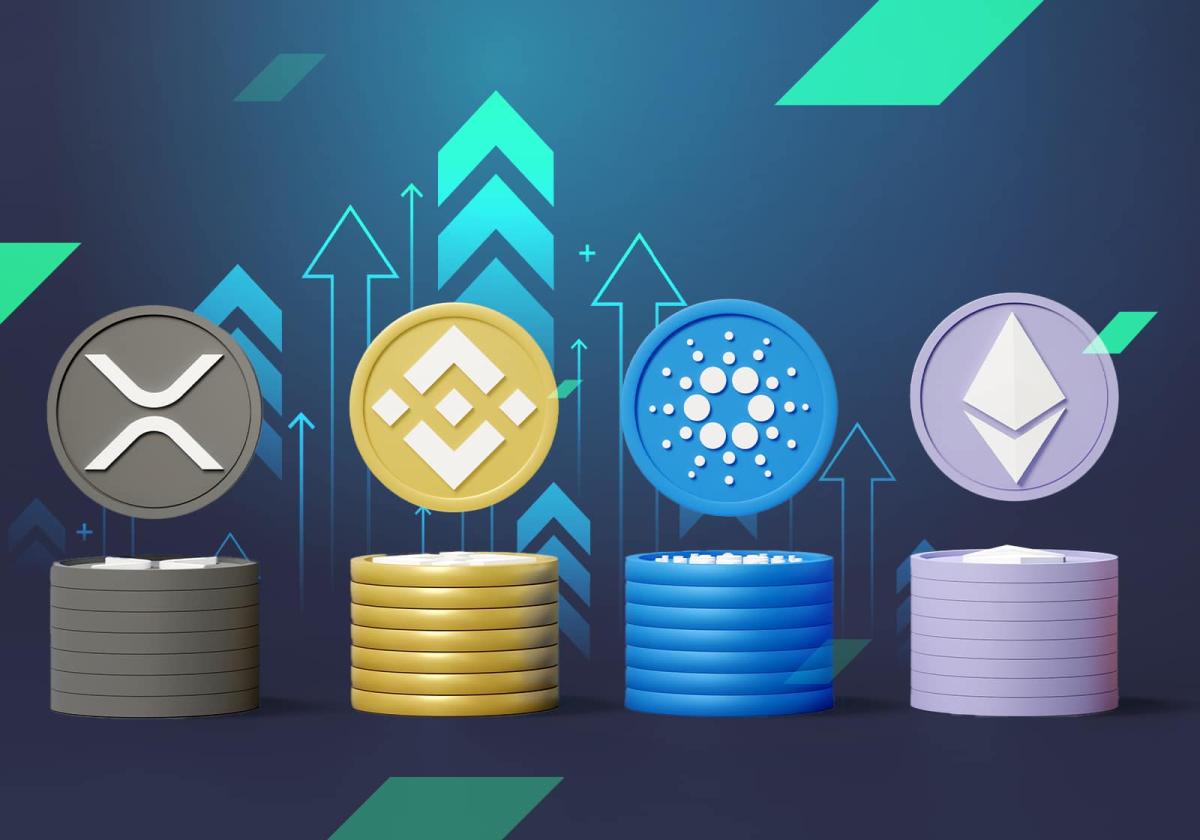
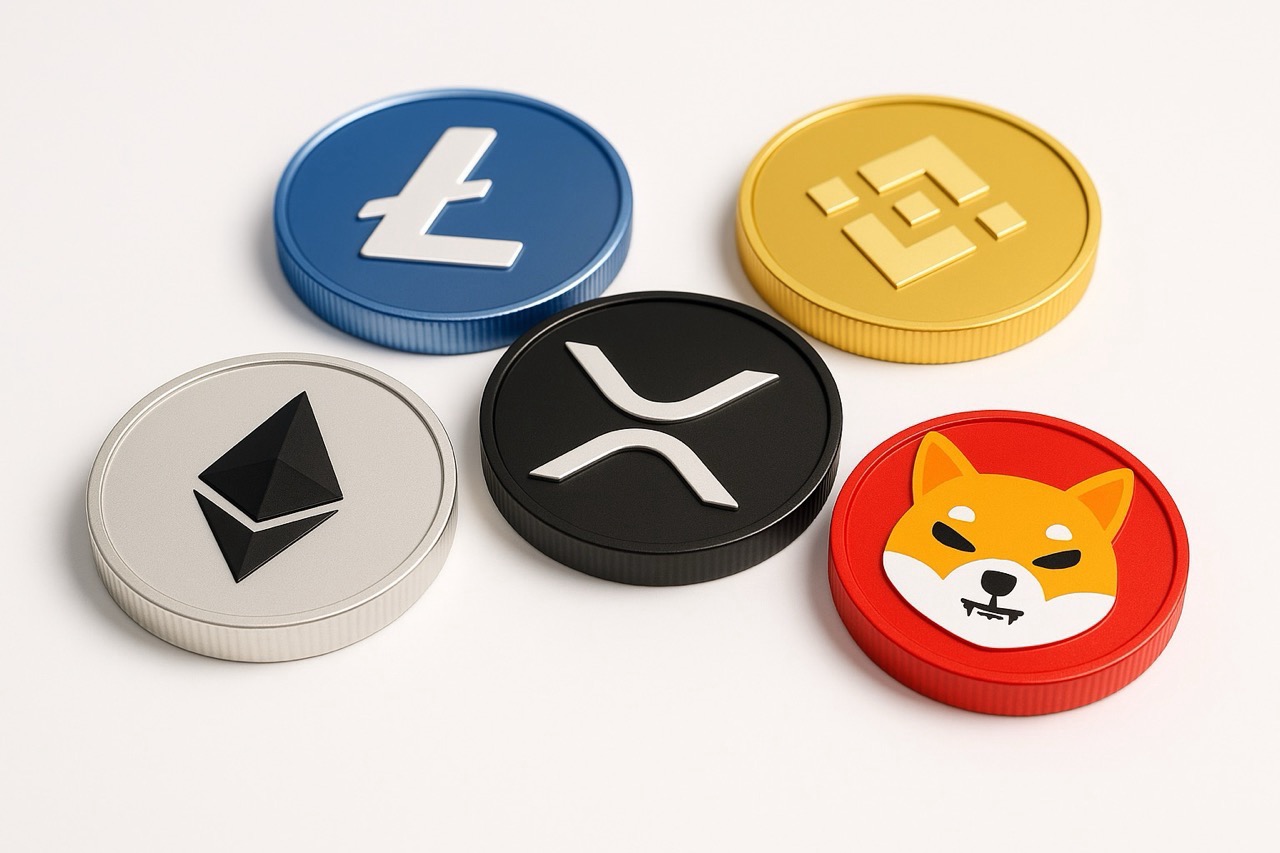
- Ethereum (ETH) pioneered smart-contract technology and powers the largest ecosystem of dApps and DeFi protocols. Its market cap was over $295 billion as of early 2026, representing approximately 10.3% of the total crypto market cap. Bitcoin dominance sat at approximately 60% during the same period, which puts Ethereum’s share in perspective.
- Tether (USDT) is the most widely used stablecoin, designed to maintain a 1:1 value with the US dollar. Its role is less about price appreciation and more about serving as the default trading pair and liquidity source across most exchanges.
- XRP was built for fast, low-cost cross-border payments, targeting settlement efficiency for financial institutions. Its value proposition centers on replacing slow correspondent banking networks.
- BNB was originally created for discounted trading fees on an exchange, but it now fuels a broad ecosystem of dApps, games, DeFi protocols, and NFT marketplaces.
- USDC is a dollar-pegged stablecoin backed by fully reserved assets, primarily cash and short-term US Treasurys, held in regulated financial institutions. Its transparency reports and regulatory positioning differentiate it from USDT.
What is altcoin season and how does it work?
Altcoin season is the period when the majority of top altcoins outperform Bitcoin in price. It officially begins when 75% of the top 50 cryptocurrencies outperform Bitcoin over the preceding 90 days.
The key indicator is Bitcoin dominance, Bitcoin’s share of the total crypto market cap. When Bitcoin dominance is high or rising, it typically signals a Bitcoin-led rally where capital concentrates in BTC. When dominance starts declining, money is rotating into altcoins, and altcoin season may be approaching.
The cycle tends to follow a pattern. Bitcoin rallies first, drawing in new capital and media attention. As BTC’s price stabilizes or slows, traders start looking for higher returns in altcoins, pushing capital down the market-cap ladder. This rotation can happen quickly and reverse just as fast.
Altcoin share of the total market cap fluctuates with broader market sentiment. During risk-on periods, altcoins tend to gain ground. During sell-offs, capital often flows back to Bitcoin or exits crypto entirely. The 75% threshold gives the concept a measurable definition, but the shift from Bitcoin-led to altcoin-led markets is gradual, not a switch that flips overnight.
Benefits and risks of altcoins
| Benefits | Risks |
|---|---|
| Altcoins introduce functions absent from Bitcoin: smart contracts, governance, privacy, interoperability | High volatility, with prices that can swing sharply in a single day, and large portions of value lost quickly |
| Portfolio diversification across different crypto sectors and use cases; altcoins may not always move in the same direction as Bitcoin or the stock market | Lower liquidity than Bitcoin, with many smaller altcoins having thin order books that make it hard to sell at the expected price |
| Smaller market caps can produce higher percentage gains in shorter periods, though with proportionally higher risk | Project scams and fraud: the low barrier to creating tokens means rug pulls and abandoned projects are common threats |
| Some altcoins enable passive income through staking rewards or fee-sharing mechanisms | Cybersecurity threats to exchanges and wallets, with losses that may be unrecoverable |
| Token unlock and dilution risk: large scheduled token releases can push prices down | |
| Many altcoins lose developer and community interest over time and become effectively dead |
Bitcoin has generally remained above 40% of the global crypto market cap since 2016, which reflects its role as the anchor asset. Altcoins collectively make up the rest, but that share is spread across thousands of projects, and the vast majority of them carry far more risk than Bitcoin does individually.
The benefit side is real, though. You can’t build a decentralized lending protocol on Bitcoin’s base layer the way you can on Ethereum. You can’t vote on protocol treasury allocations with Bitcoin. Altcoins open doors that Bitcoin’s conservative design intentionally leaves closed. The question is always whether a specific project’s execution and adoption justify the added risk.
How to evaluate an altcoin project
Before putting money into any altcoin, at AXL Research Hub we think a few checks can save you from the most common pitfalls.
- Read the project white paper. Look for real-world utility, clear tokenomics, and identified team members. Red flags include anonymous founders, no verifiable track record, and vague use cases that could describe any project. If the white paper reads like a marketing brochure without technical specifics, that’s a warning sign.
- Compare market cap to fully diluted value (FDV). Market cap reflects the price multiplied by circulating supply. FDV multiplies the price by total supply, including tokens that haven’t been released yet. A large gap between the two may mean concentrated ownership or upcoming large token unlocks that can flood the market and depress the price.
- Check developer activity. Active GitHub repositories, frequent commits, and a growing contributor base suggest a project with momentum. Dwindling developer support, or developers migrating to other projects, signals declining interest in the codebase.
- Assess liquidity and trading volume. Trending coins may show high volume briefly but drop once public interest wanes. Volume can be measured by unit count or cumulative dollar value over a period. Low liquidity means wide bid-ask spreads, which cost you money on every trade.
- Review the consensus mechanism. PoW, PoS, DPoS, PoA, and BFT each carry different security and energy profiles. Understanding which one a project uses tells you about its decentralization, validator requirements, and attack surface.
- Verify the token contract on the official project page before buying or withdrawing. Many losses occur from sending tokens over the wrong chain or copying an old contract address. Always cross-reference the contract address with the project’s official website or verified social accounts.
- Consider whether the project’s values align with your own. Some investors prefer causes or sectors they understand and believe in, which can help you stay informed and committed through volatile periods.
How to buy altcoins
- Choose an exchange that lists the specific altcoin and trading pair you want. Centralized exchanges offer a familiar interface with order books, while decentralized exchanges let you trade directly from your wallet. Not every exchange lists every altcoin, so check availability first.
- Confirm whether the asset is a native coin or a token on a particular network. This determines the correct blockchain for deposits and withdrawals. Sending tokens on the wrong network is one of the most common ways people lose funds.
- Create a wallet that supports the same network if you plan to hold in self-custody. A wallet built for Ethereum won’t necessarily support tokens on Solana or Cosmos. Match the wallet to the chain.
- Review the trading fee, withdrawal fee, spread, and minimum withdrawal amount on the platform. These costs vary between exchanges and can eat into small purchases. Some platforms charge flat withdrawal fees that are disproportionately expensive for small amounts.
- Buy a small test amount first when using a new chain or wallet. Send a minimal amount and confirm it arrives before committing larger sums. This costs a small extra fee but protects you from costly errors.
- Decide whether to keep the asset on the exchange or move it to a personal wallet for self-custody. Exchange custody is more convenient but carries counterparty risk. Self-custody gives you full control but puts the responsibility for security, including seed phrase storage, entirely on you.
Altcoin FAQs
Is XRP an altcoin?
Yes. XRP is the native token of the XRP Ledger, built for fast cross-border payments. Since any cryptocurrency other than Bitcoin is classified as an altcoin, XRP fits the definition.
Is Solana an altcoin?
Yes. Solana (SOL) is a high-throughput platform coin used to pay for program execution and data storage on the Solana network. It’s an altcoin by the standard definition.
How many altcoins exist?
Thousands. The exact number changes constantly as new projects launch and old ones become inactive or abandoned. There’s no single registry that tracks every altcoin in real time.
Why do some altcoins have a max supply?
Projects with a hard cap limit how many coins will ever exist, so price tends to respond more directly to demand. When there’s no cap, new coins keep entering circulation, which can push down per-coin value if demand doesn’t grow to match. Bitcoin’s 21-million cap is the most well-known example, and many altcoins adopted a similar approach.
Can I store different altcoins in one wallet?
Most modern multi-currency wallets support hundreds of altcoins and tokens. However, always verify that a wallet supports a specific altcoin and its network before sending funds. Sending an unsupported token to a wallet can result in lost funds.
What is decentralized finance (DeFi)?
Decentralized finance uses smart contracts on a blockchain to recreate traditional financial services like lending, borrowing, and trading without a middleman. Instead of a bank approving your loan, a smart contract handles collateral, interest rates, and liquidation automatically. Many altcoins serve as fuel for DeFi applications, paying transaction fees and providing liquidity.
Where altcoins fit as crypto matures
The altcoin market is unlikely to consolidate into a single cryptocurrency. Different problems need different tools, and a privacy coin solves a fundamentally different challenge than a stablecoin or a platform coin. What’s more likely is that the market stabilizes around a smaller set of projects with demonstrated utility and resilient blockchain infrastructure.
Altcoins expand what cryptocurrency can do beyond Bitcoin’s store-of-value role. Programmable finance, on-chain governance, real-world asset tokenization, and cross-chain communication all exist because altcoin developers built them. The crypto market is still young and volatile, and altcoins are finding their roles as the broader market matures.
Thorough research, including white papers, tokenomics, developer activity, and liquidity, is still your best tool for sorting through a market with thousands of options. Most altcoins won’t survive long-term. The ones that do will be the projects where real usage backs the token’s value, not just hype.