

Send crypto, mint an NFT, or interact with a smart contract, and the record of that action either lives on a blockchain or it doesn’t. That distinction, onchain versus off-chain, shapes how secure, transparent, and permanent your data really is. Whether you’re comparing wallet types or trying to understand the broader onchain economy, the mechanics start here.
What does onchain mean in blockchain and cryptocurrency?
Onchain refers to any transaction, data record, or action that takes place directly on a blockchain and has been validated, recorded, and made permanent by the network. Once data is stored onchain, it’s immutable. You can’t alter or delete it after the network confirms it.

This permanence exists because a blockchain is a distributed ledger, a copy of the record held by thousands of independent nodes rather than a single company’s server. That structure removes the need for a central authority. Instead of trusting a bank or payment processor to keep honest books, you rely on the network itself, where every participant can verify every entry.
The word “onchain” covers more than simple transfers of coins from one address to another. Smart-contract interactions, token transfers, wallet balances, and metadata all count as onchain activity when they’re written to the blockchain. If you stake tokens in a DeFi protocol, the record of that deposit lives onchain. If you approve a contract to spend tokens on your behalf, that approval is onchain too.
Onchain stands in contrast to off-chain activity, which happens on secondary layers or entirely outside the blockchain. An off-chain transaction might settle faster or cost less, but it doesn’t carry the same guarantees until it’s eventually anchored to the main chain.
One of the most practical consequences of putting data onchain is public verifiability. Anyone running a node can independently confirm that a transaction happened, that a balance is correct, or that a smart contract executed as written. You don’t need permission, an account, or a subscription. The ledger is open.
How on-chain transactions work
An on-chain transaction moves through a clear sequence from the moment you hit “send” to the point where it becomes a permanent part of the blockchain.
- A user or application broadcasts a transaction to the network. This message specifies the sender’s address, the recipient’s address, and the amount. On Ethereum, it also includes data fields for smart-contract calls. The transaction is signed with the sender’s private key to prove authorization.
- The transaction enters the mempool. The mempool is a waiting area of unconfirmed transactions queued for processing. Every node on the network maintains its own version of the mempool. Transactions sit here until a validator or miner picks them up. On Nov. 5, 2025, the Bitcoin mempool held 5,271 unconfirmed transactions, a relatively light load compared to congested periods when that number can climb into the tens of thousands.
- Validators or miners verify the transaction using the chain’s consensus rules. This is where the two dominant consensus mechanisms diverge. In Proof of Work (PoW), used by Bitcoin, miners compete to solve a computationally intensive cryptographic puzzle. The first miner to find a valid solution earns the right to propose the next block. The difficulty of that puzzle adjusts over time so that blocks are produced at a roughly steady rate, though actual confirmation times vary with network conditions. On Nov. 5, 2025, Bitcoin’s average confirmation time was 519.469 minutes (roughly 9 hours), far longer than the often-cited 10-minute target, illustrating how variable block times can be. In Proof of Stake (PoS), used by Ethereum since its September 2022 merge, validators lock up (stake) their own ETH as collateral. The protocol selects validators to propose and attest to blocks based on the amount staked and other factors. A validator who tries to cheat risks having their staked ETH slashed, meaning the protocol destroys part of their collateral as a penalty. PoS doesn’t require the energy-intensive computation of PoW, but it still enforces correctness through economic incentives rather than trust.
- The validated transaction is grouped with others into a block. That block is cryptographically linked to the previous block through a hash, a fixed-length string derived from the block’s contents and the prior block’s hash. This chain of hashes is what makes tampering so difficult: changing one transaction in an old block would break every hash that follows it, and the rest of the network would reject the altered chain.
- The block is confirmed and added to the chain. At this point, the transaction becomes a permanent, tamper-proof part of the distributed ledger. On most networks, waiting for additional blocks to be built on top of your block (called confirmations) increases confidence that the record won’t be reversed.
Network fees, commonly called gas fees, are paid to incentivize validators or miners for the computational work they perform. These fees aren’t fixed. They fluctuate based on network congestion and demand for block space. When many users compete to get their transactions processed quickly, fees rise. During quiet periods, they drop. On Ethereum, ERC-20 token transfers require ETH to cover these network fees regardless of which token you’re sending.
Every on-chain transaction is trustless in the sense that no intermediary is needed. The consensus mechanism itself enforces correctness, so you don’t have to rely on a bank, broker, or payment processor to confirm that your transfer went through.
Advantages and disadvantages of on-chain transactions
On-chain transactions carry meaningful strengths, but they come with trade-offs that affect how and when you’d choose to use them.
| Advantages | Disadvantages |
|---|---|
| Security: Transactions are validated by decentralized consensus mechanisms, making fraud and tampering close to impossible once a transaction is confirmed. | Slower processing: Confirmation times grow during periods of high network activity because block space is limited and transactions compete for inclusion. |
| Transparency: Every transaction is visible on the public ledger and can be audited by anyone with access to a node or block explorer. | Higher fees: Transaction costs rise with congestion as users bid more to get their transactions into the next block. |
| Immutability: Confirmed records can’t be reversed or altered, providing a reliable audit trail for financial, legal, or regulatory purposes. | Scalability limits: Blockchains process a fixed number of transactions per second, creating bottlenecks as user bases grow. |
| Trustless execution: No intermediaries such as banks or brokers are needed to verify or settle transfers. The protocol handles settlement directly. |
The disadvantages aren’t flaws in the design so much as trade-offs baked into how blockchains prioritize security and decentralization. Scaling solutions like Layer-2 rollups exist precisely to address these limits, though they introduce their own considerations around security and trust, which the next section covers.
On-chain vs off-chain transactions
The core difference comes down to where settlement happens and what you give up or gain in the process.
| On-chain | Off-chain | |
|---|---|---|
| Settlement | Settles on the main blockchain directly | Settles on secondary layers or networks that later submit summaries to the main chain |
| Security | Full consensus of the main chain protects each transaction | Relies on bridges or secondary validation, which may introduce vulnerabilities |
| Speed and cost | Slower and more expensive during congestion | Layer-2 rollups and payment channels batch transactions for faster speeds and lower fees |
| Record permanence | Permanent and publicly verifiable from the moment of confirmation | Depends on the secondary network’s integrity until records are anchored to the main chain |
| Best suited for | High-value transfers where tamper resistance matters most | Frequent microtransactions and instant payments where speed and low cost are priorities |
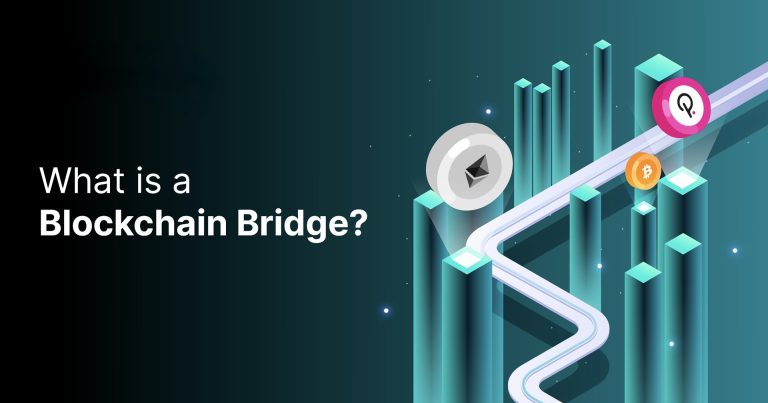
The security trade-off on the off-chain side is real and documented. Off-chain bridges, the systems that move assets between chains or between a main chain and a Layer-2, have been exploited by hackers. Crypto hacking thefts reached $1.4 billion in the first half of 2024, with Layer-2 and bridge exploits contributing a meaningful share. When a bridge is compromised, users whose assets are locked in that bridge can lose funds even if the main chain itself remains secure.
Still, off-chain activity is growing fast. Stablecoins processed over $11 trillion in transfer value in 2024, outpacing some major card networks. Much of that volume moved through a mix of on-chain and off-chain infrastructure.
In practice, you’ll probably use both. Sending a large amount of ETH between two wallets is worth the security of on-chain settlement, while a $4 coffee payment fits better on a Lightning Network channel where speed and low cost matter more. The choice depends on what you’re doing at the moment, not on picking one side permanently.
Custodial vs non-custodial wallets and what onchain ownership means
How your wallet works determines whether your assets truly live onchain under your control or sit in someone else’s system.
A non-custodial wallet gives you direct custody of your private keys. You, and only you, can authorize transactions. Every transfer goes through the blockchain and incurs network fees. No identity verification is required to set one up. Your assets are onchain in the fullest sense: no company holds them on your behalf, and no intermediary can freeze, seize, or lose them.
A custodial wallet works differently. A company, usually a centralized crypto exchange, stores your private keys for you. When you want to send crypto, you’re instructing the custodian to handle the transfer. Internal transfers between users on the same platform may not touch the blockchain at all, meaning they can avoid on-chain fees. Custodial wallets typically require KYC (identity verification), and the platform’s support team can help you recover access if you lose your login credentials.
You pay for that convenience with a real risk: when a custodian holds your keys, you’re trusting that company to remain solvent, stay secure, and not restrict your withdrawals. History has shown that none of those things are guaranteed.
Non-custodial wallets carry a different risk. If you lose your recovery phrase, the 12- or 24-word backup generated when you created the wallet, your access is gone permanently. No support team, no reset email, no recovery process. The keys exist only in that phrase, and if it’s lost or destroyed, so is your ability to move those funds.
The data-breach risk is also different. A non-custodial wallet doesn’t store your personal identity alongside your funds. There’s no centralized database linking your name, address, and government ID to your crypto holdings. A custodial platform, by contrast, holds exactly that combination, making it a higher-value target for attackers.
Onchain ownership, in the non-custodial sense, shifts responsibility entirely to the individual. That’s the point. It’s also the burden.
What is onchain data, what does it reveal?
Onchain data is the complete set of information recorded on a blockchain: transactions, blocks, smart-contract events (called logs), token transfers, and wallet balances. It’s the raw record of everything that has happened on that chain since its first block.

This data is pseudonymous, not anonymous. That distinction matters. Every address on a public blockchain is a visible string of characters, and the full transaction history of each address is permanently accessible to anyone. You can see that address 0x1a2b… sent 5 ETH to address 0x3c4d… on a specific date. What the ledger doesn’t attach is a real-world name. The address itself carries no identity. But if someone links an address to a person through other means, such as a KYC-verified exchange withdrawal, every past and future transaction from that address becomes traceable to that individual. Full transparency and pseudonymity coexist, and the tension between them is one of the defining characteristics of public blockchains.
Raw onchain data comes encoded in hexadecimal values, bytecode, and compact data structures that machines process efficiently but people can’t read without decoding tools. To make it usable, you need to decode smart contracts, translate those hex values into human-readable numbers, and map token contract addresses to recognizable names like “USDC” or “WETH.” Different blockchains structure data differently, so comparing activity across Ethereum, Solana, and Bitcoin means normalizing schemas and labeling known addresses, a process that takes specialized tooling.
Platforms like Token Terminal, DeFi Llama, Dune Analytics, and Glassnode handle much of this work. They index blockchain data, decode it, and present it through dashboards and APIs that researchers, traders, and institutions actually use.
The audience for onchain data extends well beyond crypto traders. Financial institutions, academic researchers, and regulators rely on it for stablecoin tracking, tokenized-asset reporting, and systemic-risk monitoring. The Federal Reserve has cited onchain data in its research. Academic groups at institutions including Yale, Carnegie Mellon, KTH, and TU Munich have built studies on it.
Onchain data has a blind spot, though. It doesn’t capture off-chain activity. Centralized-exchange order books, fiat pricing data, and identity records all exist outside the blockchain. Thorough analysis combines both on-chain and off-chain sources to build a complete picture.
Onchain analysis: turning raw blockchain records into insights
Onchain analysis examines blockchain metrics to identify market trends, sentiment shifts, and protocol health. Two metrics come up in nearly every analyst’s toolkit.
Unique Active Wallet Addresses measures how many distinct addresses interact with a blockchain or protocol over a given period. It’s a proxy for adoption and engagement. A protocol with rising active addresses is attracting users or activity; one with declining addresses may be losing traction. It’s not a perfect measure, since one person can control multiple addresses, but it’s one of the most accessible engagement indicators available.
Total Value Locked (TVL) represents all crypto assets deposited in a specific protocol. It’s commonly used as an indicator of protocol popularity and financial health. When TVL rises, more capital is being entrusted to that protocol’s smart contracts. When it falls, users are withdrawing. TVL doesn’t tell you whether a protocol is safe or well-designed, but it does tell you how much money is on the line.
Several factors make onchain analysis less straightforward than it might seem. Address labeling is a judgment call. Different data providers may disagree on who controls a given address, and that disagreement introduces interpretation risk. If one provider labels an address as belonging to an exchange and another labels it as a whale’s personal wallet, the conclusions drawn from the same raw data will differ.
Block reorganizations on some chains can change recently recorded data. A reorg happens when the network temporarily follows one chain of blocks and then switches to a longer competing chain, effectively undoing the shorter fork. Reliable analytics pipelines account for finality, waiting until enough confirmations have passed before treating numbers as settled.
Fragmentation across many blockchains and Layer-2 networks adds another challenge. Looking at a single chain’s data can understate or misrepresent overall market activity. A protocol’s TVL on Ethereum might look flat while its deployments on Arbitrum and Optimism are growing. Cross-chain analysis isn’t optional if you want the full picture.
What is the onchain economy?
The onchain economy describes the full range of economic activity enabled by blockchain-based infrastructure, where transactions, data management, and asset coordination happen transparently and with less dependence on intermediaries.
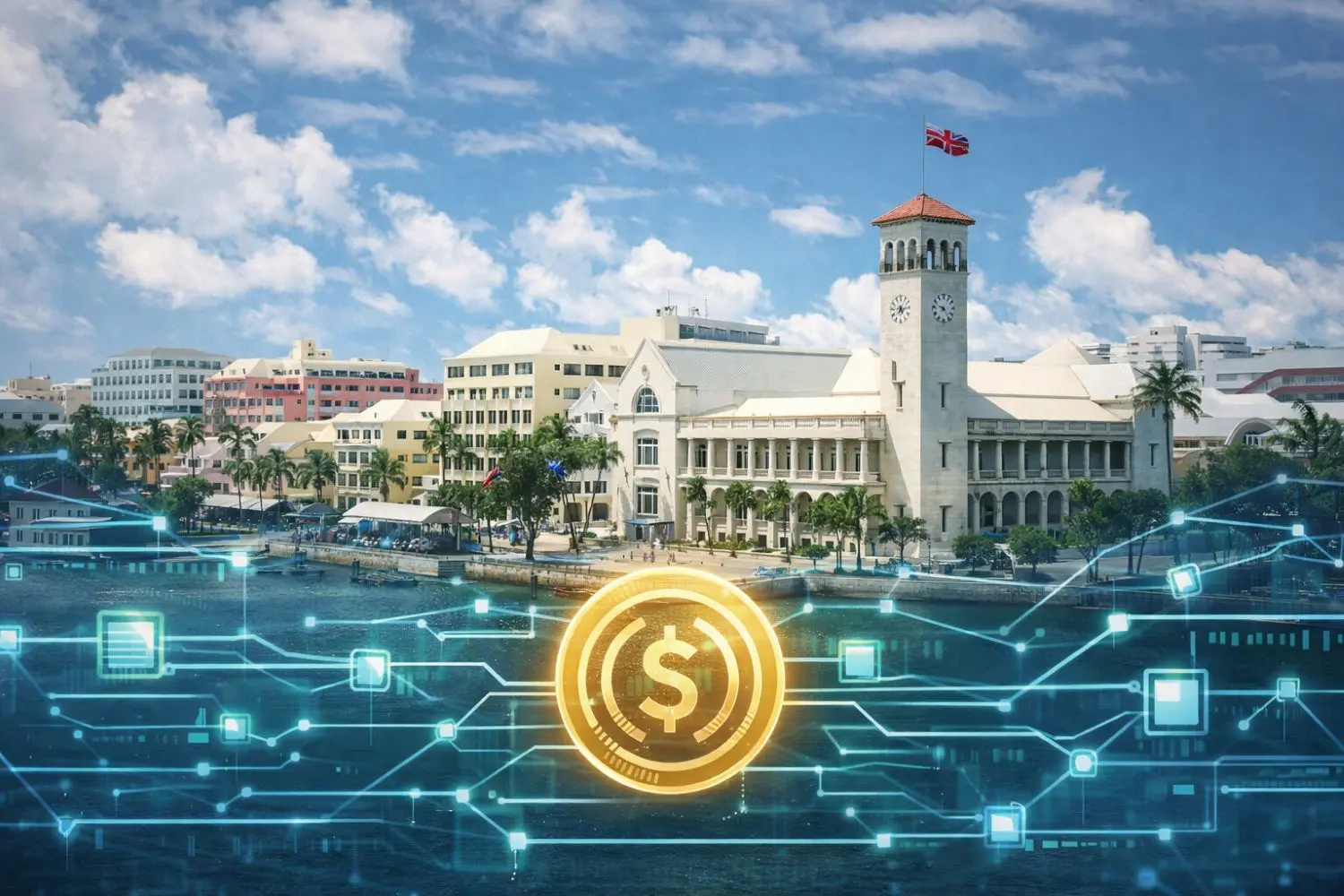
Its scope extends well beyond cryptocurrency trading. Mining operations, energy infrastructure, data centers, semiconductor manufacturing, asset management firms, consumer applications, and traditional-finance integrators all participate in building or using blockchain systems. When a bank settles a tokenized bond on Ethereum or a data center builds GPU capacity for validator nodes, that’s onchain economy activity even though no retail trader is directly involved.
The demand is coming from multiple directions at once. Corporate treasury strategies increasingly include digital assets. Governments are exploring alternative reserve assets. Consumers are looking for digital-first stores of value. Bitcoin ETPs saw $35 billion in inflows in 2024, a clear signal that institutional capital is moving toward onchain infrastructure.
Legacy digital systems still run on slow payment networks, siloed databases, and manual reconciliation processes. The onchain economy replaces those with code-driven automation and shared ledgers. Instead of three banks and a clearinghouse spending days to settle a cross-border payment, a smart contract on a public blockchain can handle it in minutes.
The blockchain trilemma remains a real design constraint: improving scalability, security, and decentralization simultaneously is hard because strengthening one often requires trade-offs with the others. A chain that processes thousands of transactions per second may achieve that speed by concentrating validation among fewer nodes, reducing decentralization. A chain that prioritizes decentralization and security, like Bitcoin, processes fewer transactions per second.
The transition is still early-stage. Infrastructure is being built, standards are being debated, and regulators are still defining their approach. But the foundation for a new generation of financial and industrial systems is being laid onchain, block by block.
What you can bring onchain beyond cryptocurrency
Blockchains aren’t limited to moving coins between wallets. A growing range of real-world data and assets now lives onchain.
- Real-world assets (RWAs): Tokenized versions of Treasury bonds, money-market funds, and equities can be recorded and traded on a blockchain. Tokenization divides ownership into digital units that settle in minutes instead of days, and the ownership record stays on the public ledger rather than in a brokerage’s internal database.
- Carbon credits: Environmental instruments placed on a blockchain gain transparent tracking and trading. Each credit’s history, from issuance through retirement, is permanently visible, which makes it harder to double-count credits or sell retired ones.
- Concert tickets and event passes: Storing tickets as blockchain tokens prevents counterfeiting and enables verifiable secondary-market transfers. A buyer can confirm the token’s provenance before purchasing, and the original issuer can program royalties into resales.
- University degrees and professional credentials: Issuing diplomas and certifications onchain creates tamper-proof verification records. An employer can confirm a credential’s authenticity against the blockchain instead of calling the issuing institution.
- Artwork and collectibles: NFTs and other tokens prove provenance and ownership history for physical and digital art. Every transfer of ownership is logged, creating a verifiable chain of custody that traditional art markets have historically struggled to maintain.
- Supply-chain records: Each handoff, inspection, or quality check recorded on a blockchain creates an auditable trail from origin to consumer. A grocery chain could trace a package of coffee beans back to the farm where they were grown, with every step visible on the ledger.
- Digital identity: Self-sovereign identity frameworks let individuals control which personal details they share and with whom. Instead of handing over a copy of your driver’s license to every service that asks, you share a cryptographic proof that you meet a requirement (over 18, resident of a specific state) without revealing the underlying document.
Onchain, crypto, blockchain, and Web3: how the terms relate
These four terms overlap but aren’t interchangeable. Here’s how they connect.
- Onchain describes any activity, data, or asset that’s been verified and stored directly on a blockchain. It’s the most specific of the four terms: it tells you where something lives and that it’s been confirmed by the network.
- Cryptocurrency is digital currency secured by cryptographic techniques on a blockchain. Bitcoin and Ethereum are the most prominent examples. Crypto is one type of thing that exists onchain, but it’s not the only type.
- Blockchain is the underlying technology: a distributed, decentralized digital ledger that records transactions in cryptographically linked blocks. It enables tokenization of value and is the infrastructure that makes onchain activity possible. Not everything involving a blockchain is onchain, some interactions happen off-chain and only reference the blockchain periodically.
- Web3 is the broader vision of a decentralized, blockchain-based internet where participants can read, write, and own their data and digital assets. Web 3.0, as a more specific term, refers to the next generation of the World Wide Web, building on Web 1.0 (read-only static pages) and Web 2.0 (read-write platforms like social media) by adding ownership and user sovereignty.
Think of it as layers: blockchain is the infrastructure, onchain is the state of being recorded on that infrastructure, cryptocurrency is one application running on it, and Web3 is the big-picture idea of what a world built on these tools could look like.
Frequently asked questions
Is onchain data anonymous?
No, it’s pseudonymous. Addresses on a public blockchain are visible character strings, and every transaction tied to an address is permanently recorded and viewable by anyone. But the ledger doesn’t attach real-world names to those addresses. If an address is linked to a person’s identity through other means, like a KYC-verified exchange withdrawal, the entire history of that address becomes traceable to that person.
How do on-chain transactions get validated?
A transaction is submitted to the network and enters the mempool, the queue of unconfirmed transactions. Validators (in Proof of Stake) or miners (in Proof of Work) verify it against the chain’s consensus rules. Once verified, the transaction joins a batch of other confirmed transactions to form a new block. A hash ties that block to the one before it, and once it’s appended to the chain, your transaction becomes a permanent ledger entry.
How safe is an onchain (non-custodial) wallet?
You hold the private keys, so no third party can freeze or seize your funds. The main risk is on your side: if you lose your recovery phrase, you lose access permanently. There’s no support team to reset it. As long as you secure your crypto wallet recovery phrase and don’t share it, a non-custodial wallet keeps your assets under your direct control.
How do I get funds out of a non-custodial wallet?
Initiate a send transaction to another wallet address or to a centralized platform where you can convert crypto to fiat. You’ll need enough of the chain’s native token (ETH on Ethereum, BTC on Bitcoin) to cover the network fee. Confirmation time depends on blockchain congestion at the time you send.
What does “enable on-chain transactions” mean in a wallet?
It means choosing to have your transaction processed and settled on the main blockchain rather than through an off-chain or Layer-2 shortcut. Some wallets default to Layer-2 for speed and lower cost, so enabling on-chain transactions routes your transfer through the main chain instead. This may involve higher fees and longer wait times, but you get the full security and permanence of main-chain settlement.
The shift from online to onchain
Blockchain infrastructure is moving from a niche experiment to core financial plumbing. Banks, regulators, and asset managers are integrating onchain records into their operations, not as a speculative bet but as a practical upgrade to systems that have run on slow settlement rails and fragmented databases for decades.
How accurate and standardized onchain data is will determine whether firms can operate reliably in this environment. We’ve covered at AXL Research Hub how raw blockchain data requires significant processing before it’s useful, and that challenge only grows as more institutions depend on it for compliance, reporting, and risk management.
What the onchain model replaces is opacity. Manual reconciliation gives way to automated verification. Siloed records give way to shared ledgers. The transition is far from complete, but the direction is clear: the infrastructure that handles how money moves and how data is stored across industries is being rebuilt onchain.