
Most people in the U.S. have heard of Coinbase, yet brand familiarity won’t help you figure out what you’ll actually pay in fees, how secure your funds really are, or whether the platform lines up with the way you trade.
What is Coinbase and who is it for?
Brian Armstrong and Fred Ehrsam launched Coinbase in 2012 as a U.S.-based centralized cryptocurrency exchange. and publicly traded on Nasdaq under the ticker COIN since April 2021. That public listing means Coinbase files regular financial disclosures and audited statements, a layer of transparency most crypto exchanges don’t offer. The platform operates across more than 100 countries with licensing in the U.S., UK, and Europe.
At its core, Coinbase positions itself as the beginner-friendly entry point to crypto. The simple buy-sell interface lets you purchase Bitcoin or Ethereum with a few taps, and the onboarding flow is clean enough that someone opening their first exchange account won’t feel lost. But the platform has grown well beyond that starting point. Advanced Trade, accessible from the same account, gives active traders an order book with charting tools and lower fees. And in 2026, Coinbase added zero-commission stock and ETF trading for U.S. customers, pushing it beyond a crypto-only exchange for the first time.
The exchange supports 240-plus cryptocurrencies for U.S. users, including Bitcoin, Ethereum, Solana, and XRP, along with more than 550 crypto-to-crypto trading pairs. There’s no account minimum, and the minimum trade amount is just $1.
Coinbase is strongest for beginners, compliance-focused investors, and anyone who values trust and ease of use over squeezing out the lowest possible trading cost. It’s a weaker fit if you’re a fee-sensitive high-volume trader, you want the deep altcoin listings you’d find on offshore exchanges, or you need a full derivatives suite with copy trading.
Pros and cons of using Coinbase
Coinbase bundles a lot under one roof, but the trade-offs between convenience and cost are real. Here’s what stands out on both sides.
Pros:
- Large asset selection covering 240-plus cryptocurrencies, and as of 2026, zero-commission stocks and ETFs for U.S. customers.
- The simple interface makes one-tap buying straightforward, with a clean onboarding flow that doesn’t overwhelm first-time buyers.
- Advanced Trade lives inside the same account, offering lower maker/taker fees and professional charting through TradingView integration. No separate sign-up needed.
- Coinbase Learn and the earn-while-you-learn program pay small crypto rewards for completing short educational modules, giving newcomers a way to pick up tokens while learning how things work.
- As noted above, that public-company status brings audited quarterly financials, giving you visibility into the company’s health that privately held exchanges simply don’t provide.
Cons:
- Fees on the simple buy platform are steep. A test purchase of $200 in Bitcoin via a linked bank account cost approximately $5.82, about 2.9%. The same $200 purchase via debit card cost roughly $10.41, about 5.2%. Fee presentation has also become less transparent over time, making it harder to predict your total cost before the confirmation screen.
- Customer support funnels most inquiries through automated chatbots. Getting to a live agent by phone is difficult unless your account has been flagged as compromised.
- The altcoin roster, while broad by U.S. standards, is smaller than what major offshore exchanges list.
- Coinbase takes a commission from staking rewards, which reduces your net yield compared to staking directly on-chain. Staking rewards top out at roughly 14% APY before that commission is applied.
Coinbase fee structure explained
Coinbase’s fee system has three layers that combine to determine your actual cost: a spread baked into the quoted price, a transaction fee that varies by payment method and order size, and blockchain network fees on withdrawals.
On the simple buy flow, a spread of approximately 0.5% is folded into the price you’re quoted. On top of that, Coinbase adds a separate transaction fee. The total cost is hard to predict before you reach the final confirmation screen, and the platform sometimes displays the fee amount in crypto units rather than dollars, which makes the true cost less obvious.
Payment method makes a meaningful difference. Purchases through a linked bank account carry much lower fees than debit or credit card buys. For transactions between $10 and $25, the Coinbase fee can run up to $2.99. At the extreme low end, fixed fees on very small orders can take a large share of the purchase, so minimum-size trades are rarely cost-effective.
Converting one cryptocurrency to another on the simple platform carries a conversion margin of up to 2%, which adds up if you’re rotating between assets frequently.
Advanced Trade works differently. It uses a transparent maker/taker fee schedule tied to your 30-day trading volume, recalculated hourly. Placing limit orders qualifies you for the lower maker rate instead of the taker rate, which can cut costs significantly compared to market orders on the simple platform.
There’s no monthly account fee on the core Coinbase platform. Recurring charges apply only if you subscribe to Coinbase One. For fiat movements, wire deposits carry a $10 fee and wire withdrawals cost $25. Paying by debit or credit card costs noticeably more per transaction than pulling funds from a linked bank account, as outlined in the fee breakdown above.
Advanced Trade maker/taker fee tiers
The full fee schedule for Advanced Trade is now accessible only inside the logged-in interface and is no longer displayed publicly on the website. Maker fees drop as your 30-day spot and derivatives volume rises, and taker fees fall in parallel but stay higher at each tier. Some tiers also factor in asset balance thresholds.
| Tier | 30-day volume minimum | Maker fee | Taker fee |
|---|---|---|---|
| Intro 1 | $0 | 0.600% | 1.200% |
| Intro 2 | $10K ($1M asset balance) | 0.400% | 0.800% |
| Advanced 1 | $25K ($5M asset balance) | 0.250% | 0.500% |
| Advanced 2 | $75K ($15M asset balance) | 0.125% | 0.250% |
| Advanced 3 | $250K ($25M asset balance) | 0.075% | 0.150% |
| VIP 1 | $500K | 0.060% | 0.125% |
| VIP 5 | $20M | 0.010% | 0.050% |
| VIP 8 | $250M | 0.000% | 0.020% |
For most retail traders, the Intro 1 tier is where you’ll start. At 0.60% maker and 1.20% taker, even the entry-level Advanced Trade rates are noticeably cheaper than a typical simple-platform purchase. Using limit orders instead of market orders is the simplest way to pay maker pricing and cut your per-trade cost without needing higher volume.
Coinbase One subscription plans
Coinbase One is a paid subscription that removes transaction fees on simple trades up to a monthly cap, bundles staking boosts, adds USDC rewards, and unlocks better support. There are three tiers, and the gap between them is large enough that picking the wrong one either wastes money or leaves savings on the table.
| Feature | Basic | Preferred | Premium |
|---|---|---|---|
| Monthly price | $4.99 (or $49.99/year) | $29.99 (or $299.88/year) | $299.99 |
| Zero-fee simple trades | Up to $500/month | Up to $10,000/month | Unlimited |
| Staking boost | 5% | 10% | 15% |
| USDC rewards | 3.5% | 3.5% | 3.5% |
| Account protection | Up to $1K | Up to $10K | Up to $250K |
| Advanced Trade spot-fee rebates | None | Up to $100/month | Unlimited |
| Support | Standard | 24/7 priority | Concierge |
The Basic tier fits light users who buy small amounts each month. If your simple-trade volume regularly exceeds $500, the Preferred tier’s $10,000 cap and 10% staking boost start paying for themselves, especially with the added Advanced Trade rebates. Premium is aimed at high-balance users who want unlimited zero-fee simple trades, the highest staking boost, concierge support, and up to $250K in account protection.
One important detail: even with Coinbase One, the spread still applies on simple trades. “Zero-fee” removes the transaction fee but doesn’t eliminate the roughly 0.5% spread baked into the quoted price. So your total cost isn’t actually zero.
Is Coinbase safe and legit?
As mentioned earlier, Coinbase’s Nasdaq listing subjects it to SEC oversight with regular public financial reporting. That level of disclosure goes well beyond what most offshore platforms provide.
On the regulatory side, Coinbase is registered with FinCEN and holds licenses in multiple U.S. states, along with authorizations in the UK and Europe under entities regulated by BaFin, CBI, CySEC, CSSF, MAS, OSC, ASIC, and BMA. In April 2026, Coinbase received conditional approval from the U.S. Office of the Comptroller of the Currency (OCC) to build a national trust bank. That approval adds a layer of federal oversight specifically for custody and market infrastructure, strengthening Coinbase’s position as a custodian for institutional clients and potentially giving retail users additional assurance that customer assets are held to bank-grade standards.
USD balances in qualifying custodial accounts are covered by FDIC insurance up to $250,000 per individual. Crypto holdings are not FDIC-insured. Customer assets are maintained on a one-to-one basis and held separately from corporate operating funds, so Coinbase isn’t lending out your crypto to fund its own operations.
The company references SOC 1 and SOC 2 Type II audits for its custody controls, and the majority of crypto assets are stored in cold storage. The platform itself has never been directly hacked, but phishing, social engineering, and impersonation scams remain the primary risk for users.
Security features and account protections
Coinbase offers several layers of account security, though the strength of your setup depends on which options you enable.
- Two-step verification is required for sensitive account actions. You can use authenticator apps, SMS, or hardware security keys. Coinbase treats hardware keys like YubiKey as stronger than SMS-based login, and for good reason: SMS is vulnerable to SIM-swap attacks.
- Passkey support enables phishing-resistant sign-ins, removing the risk of entering credentials on a fake site.
- Biometric login (fingerprint or face recognition) is available on supported mobile devices.
- Withdrawal address allowlisting lets you restrict outgoing transfers to pre-approved wallet addresses, so even if someone gains access to your account, they can’t send funds to an unknown address.
- Anti-phishing guidance and scam warnings are built into the help center and appear as app notifications.
May 2025 insider data breach: what happened and what changed
In May 2025, Coinbase disclosed in an SEC filing that overseas customer-support agents had been bribed to steal user data as part of a social-engineering operation. The breach led to a $20 million extortion demand against the company.
According to the SEC filing, no passwords or private keys were compromised. But the stolen data, which included personal information handled by support agents, fueled a wave of sophisticated impersonation phone scams. Attackers posed as Coinbase support, using the stolen details to appear credible, and tried to trick users into handing over 2FA codes or seed phrases. The company recorded reimbursement and legal costs tied to the incident in its financial statements.
The practical fallout for users was significant. If you received an unsolicited call from someone claiming to be Coinbase, the stolen data made those calls convincing in a way that generic phishing attempts aren’t. Coinbase has stated clearly that its support team will never make unsolicited phone calls and will never ask for 2FA codes or seed phrases. If you get a call like that, it’s a scam.
The best defense is enabling strong multi-factor authentication not just on your Coinbase account, but on the email account linked to it. Treat any inbound call, text, or email claiming to be from Coinbase with skepticism, regardless of how much personal detail the sender seems to know.
How the trading platforms work
Coinbase runs two trading interfaces inside the same account, and switching between them takes a single dropdown toggle.
The simple interface is built for first-time buyers. You pick a cryptocurrency, enter a dollar amount, and buy. It handles everything behind the scenes, including routing the order and calculating fees, so you don’t need to understand order books or limit orders to get started.
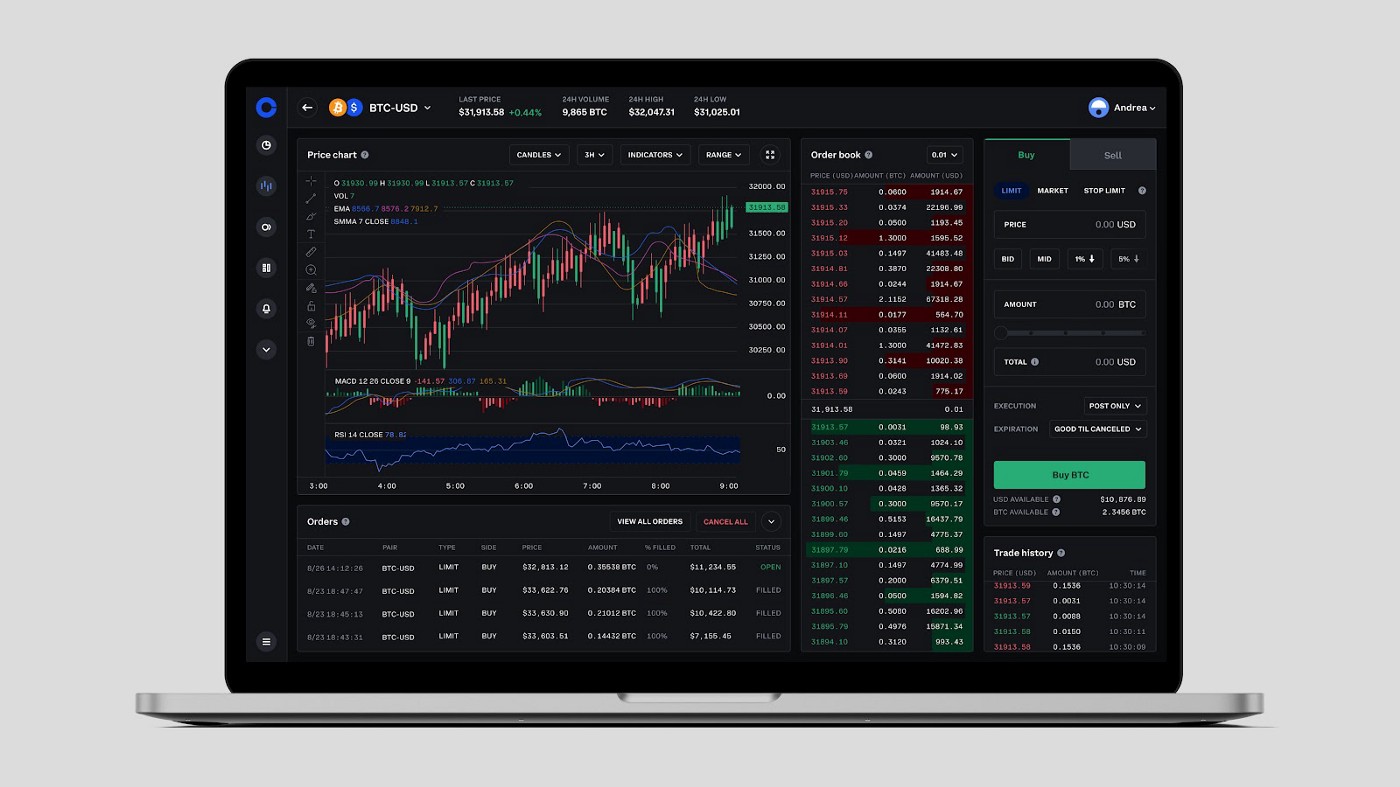
Advanced Trade replaces the former Coinbase Pro and is where active traders will spend their time. It provides a full order book with market, limit, and stop-limit orders, plus API access for algorithmic trading. TradingView integration brings real-time charting and technical-analysis tools directly into the interface, which is uncommon among crypto exchanges. Price-movement tracking is available across multiple time frames, including 1-hour, 24-hour, 1-week, and 1-year views.
That said, research tools on Advanced Trade are thin beyond the charts. There are no integrated news feeds, economic calendars, or AI-driven market insights built into the platform. And Coinbase doesn’t offer a demo or paper-trading environment, so there’s no way to practice with fake money before risking real funds.
AI-powered tools and new trading products
Coinbase has been adding AI and expanding its product lineup beyond spot crypto trading.
Coinbase Advisor is an in-app AI investment assistant designed to help you evaluate your positions. It’s a starting point for understanding what you hold and how it’s performing, though it doesn’t replace independent research. Coinbase for Agents takes a different approach: it connects your account to external AI models that can execute trades and manage transfers within preconfigured limits you set. This is early-stage infrastructure, but it points toward a future where automated agents handle routine portfolio tasks on your behalf.
On the data side, a partnership with Chainlink DataLink provides on-chain access to premium exchange data (spot prices, order books, futures data) for DeFi pricing and risk management. This is more relevant to developers and institutional users than to retail traders, but it strengthens the range of services built around Coinbase’s data.
The futures product lineup expanded in 2025 to include XRP, Natural Gas (NGS), and Cardano (ADA) contracts. Natural Gas futures are sized at 1,000 MMBtu per contract with up to 11x leverage, while Cardano futures are 1,000 ADA per contract with up to 5x leverage. The total catalog now exceeds 18 futures contracts across crypto, metals, and energy.
Coinbase also introduced a paycheck direct-deposit feature that routes your salary into USDC or other crypto, with a daily deposit ceiling of $200,000.
Supported cryptocurrencies and asset types
Coinbase’s asset coverage has grown significantly, and it now spans well beyond just crypto. If you’re still exploring what cryptocurrency is, Coinbase’s built-in learning tools can help bridge the gap.
- More than 240 cryptocurrencies are available for U.S. users, including major coins like Bitcoin and Ethereum and more recently listed altcoins. The listing count changes regularly as tokens are added and occasionally delisted.
- Stablecoins such as USDT, USDC, and DAI are tradeable on the platform.
- Fiat-to-crypto markets support USD, EUR, GBP, and other currencies through bank deposits, debit and credit cards, and e-wallets.
- Crypto staking is available on select assets including Ethereum, Solana, Cosmos, Tezos, and others. Rewards reach up to approximately 14% APY across nine eligible coins, though Coinbase takes a commission that reduces what you actually receive. Rates fluctuate and aren’t guaranteed.
- An NFT marketplace supports buying, selling, and storing Ethereum-based NFTs, and Coinbase Wallet lets you interact with DApps and DeFi protocols.
- Institutional and OTC trading is handled through Coinbase Prime, which is built for large block trades with reduced market impact.
- Zero-commission stock and ETF trading is available 24/5 for U.S. users, a 2026 addition that makes Coinbase a multi-asset platform rather than a pure crypto exchange, which is part of why it still ranks among the top crypto exchanges.
Deposits, withdrawals, and payment methods
How you move money in and out of Coinbase affects both your cost and your timeline. Here’s what to expect from each method.
- Linked bank account (ACH) transfers are the cheapest way to deposit but take 1 to 3 business days to settle. This is the method to use if minimizing fees matters more than speed.
- E-wallet options include Apple Pay, Google Pay, and region-dependent services such as Maya and Mercado Pago.
- Debit and credit card purchases go through instantly but carry a fee of approximately 3.99%, making them the most expensive deposit method.
- Stablecoin transfers (USDT, USDC) can be deposited directly via blockchain networks, which is useful if you’re moving funds from another exchange or wallet.
- Crypto withdrawals can be initiated immediately after a fiat purchase, which is a notable advantage over exchanges that impose multi-day settlement holds before you can move your crypto off-platform.
- Fiat withdrawals to a bank via ACH take roughly 2 to 3 business days. Debit-card withdrawals may arrive slightly faster.
- Sending crypto to an external wallet requires precise address entry. There’s no reversal mechanism if you send to the wrong address, so double-check before confirming.
- Network fees on crypto withdrawals depend on blockchain congestion. You can reduce these by choosing cheaper networks such as Arbitrum or Optimism when available for your asset.
Customer support and educational resources
Coinbase officially offers 24-hour support via chat, phone, and email. In practice, getting to a human is harder than that sounds.
Most in-app help paths route to automated chatbots. Reaching a specific support topic via chat often means clicking through several automated prompts before getting useful help. Phone support works through a callback request that requires a logged-in account, which creates a real problem: if you’re locked out, you can’t request a call. A separate phone number exists for locking or unlocking compromised accounts, but it doesn’t handle general questions.
Email support is available to both account holders and non-account holders, though finding the submission form takes some digging. If you subscribe to Coinbase One at the Preferred tier, you get 24/7 priority support. The Premium tier includes concierge support, which bypasses the standard queue entirely.
On the educational side, Coinbase Learn offers a library of articles and tutorials covering crypto basics. The earn-while-you-learn program pays small amounts of crypto for completing short video courses and quizzes. It’s a low-risk way to pick up new tokens while building your understanding, and AXL Research Hub considers it one of the better onboarding tools available on any exchange for complete beginners.
Why some users cannot withdraw funds from Coinbase
Withdrawal issues on Coinbase typically trace back to a few specific triggers rather than a platform-wide problem, and knowing how to withdraw from Coinbase step by step avoids most of them.
Account reviews and identity-verification holds can temporarily freeze withdrawals while compliance checks complete. If Coinbase’s automated systems flag your account for suspected unauthorized activity, the account locks automatically, and you’ll need to re-verify your identity to regain access.
Newly deposited fiat funds purchased through ACH may have a settlement period before the purchased crypto can be sent off-platform, though Coinbase shortens this window compared to many competitors. The friction gets worse if you’re flagged by fraud-detection systems. Some users experience extended review timelines with limited visibility into what’s happening or when it will resolve.
Support friction compounds the problem. If your account is locked, you can’t use the standard callback system since it requires being logged in. That leaves email or the compromised-account phone line as your only options. Coinbase has stated that requiring login for callbacks protects account security and provides faster, more accurate assistance, but it doesn’t help someone staring at a frozen account with no clear path to resolution.
Coinbase Wallet and Base App
Coinbase Wallet is a separate self-custody product. Unlike your Coinbase exchange account, where Coinbase holds the keys, the Wallet puts private keys in your hands. You’re responsible for backing them up, and if you lose access, Coinbase can’t recover your funds. For a broader look at custodial versus self-custody options, see this guide on crypto wallet setup.
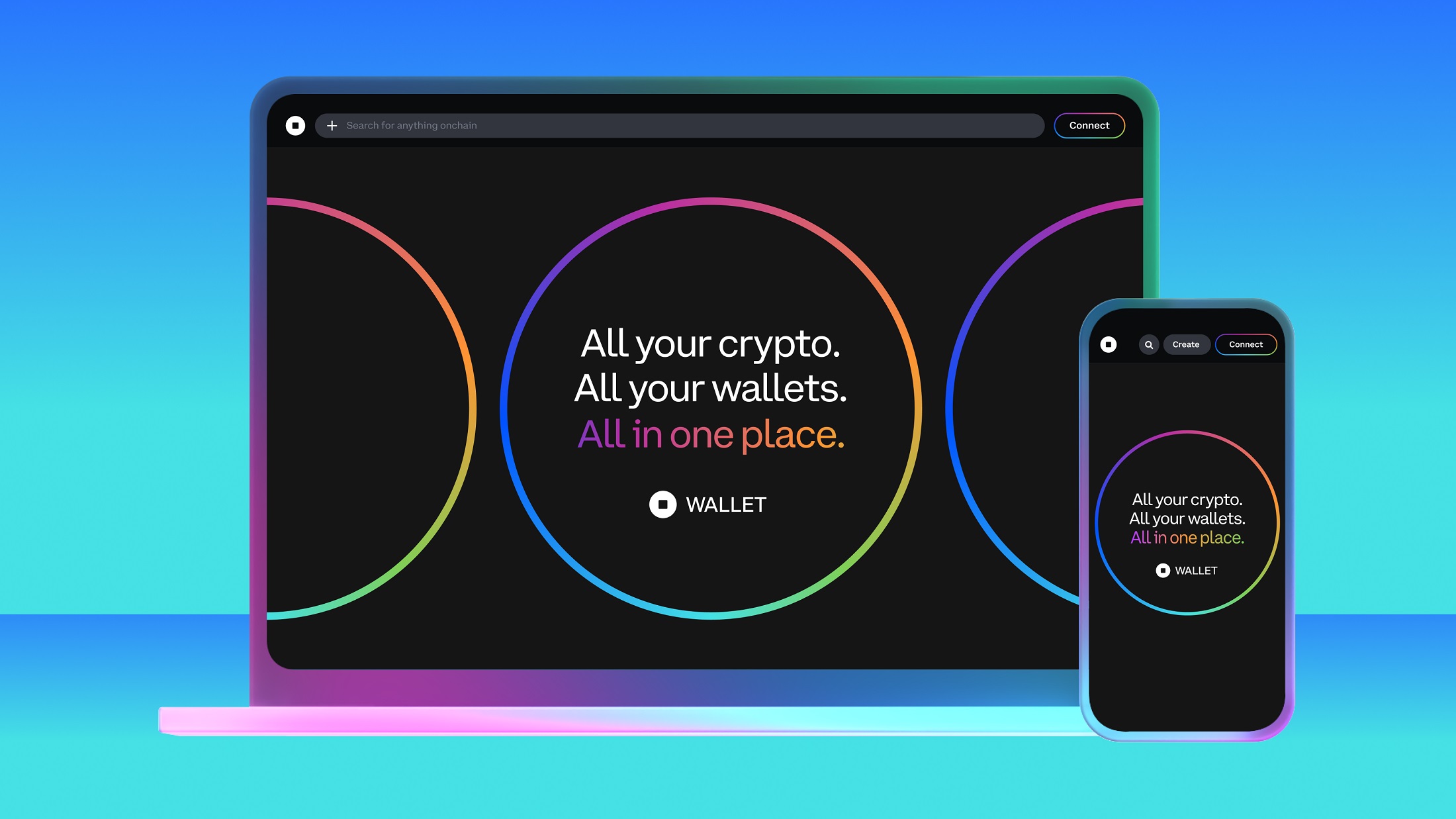
Base App is the newer standalone wallet focused on on-chain activity: storing, managing, and using crypto across on-chain applications. It’s built around Base, Coinbase’s Ethereum Layer 2 network, which is designed for lower-cost and faster transactions compared to Ethereum’s main chain. If you’re already using Coinbase Wallet, you can still access your assets through Base App.
Regulatory standing and global reach
Coinbase holds a broad set of regulatory registrations and licenses. In the U.S., it’s registered with FinCEN as a money services business and licensed by the New York Department of Financial Services for virtual currency business activity under NMLS number 1163082. Stock and securities services are offered through Coinbase Capital Markets Corp, a subsidiary registered with FINRA and a member of SIPC. SIPC protection covers securities held through that subsidiary but does not extend to digital assets or crypto-held cash.
The platform operates in more than 100 countries, though feature availability varies by region. Derivatives, prediction markets, and certain products are restricted in specific jurisdictions. Prediction markets, for example, aren’t available in Nevada.
One thing worth flagging: the UK’s FCA has issued regulatory warnings against clone firms impersonating the authorized Coinbase entity. The FCA-registered Coinbase entity itself is legitimate, but if you encounter a site or contact claiming to be Coinbase in the UK, verify through the FCA register before engaging.
Frequently asked questions
Does Coinbase charge a monthly fee?
No. The core Coinbase platform has no monthly fee. Coinbase One subscriptions, which are optional, range from $4.99 to $299.99 per month and add perks like fee-free trades up to a cap, staking boosts, and priority support.
Is Coinbase good for beginners?
Yes. Between the beginner-friendly buying flow, the learning library, and the option to earn small crypto rewards through short courses, Coinbase lowers the barrier to entry more than most exchanges. The trade-off is that fees on the simple buy flow are higher than on Advanced Trade, so beginners pay a convenience premium until they’re comfortable switching to the advanced interface.
What is the difference between Coinbase and Coinbase Advanced Trade?
The simple platform wraps your cost into a spread and a transaction fee, giving you a one-tap buying experience with no order-book decisions. Advanced Trade exposes the full order book with maker/taker pricing, limit orders, stop-limit orders, and TradingView charting. Fees on Advanced Trade are lower, especially if you use limit orders to qualify for maker pricing. Both live inside the same account.
Does Coinbase report to the IRS?
Yes. Coinbase is required to report certain user transactions to the IRS. If you’re trading or earning crypto on the platform, assume those activities will be reported and plan your tax filings accordingly.
How long do Coinbase withdrawals take?
Fiat withdrawals via bank transfer take roughly 1 to 3 business days. You can move your crypto off-platform right after buying, unlike exchanges that make you wait through a multi-day settlement window.
What happens if Coinbase goes bankrupt?
Coinbase backs every customer deposit one-for-one and keeps those holdings in accounts separate from its own operating money. However, crypto holdings are not FDIC-insured, and recovery in a bankruptcy scenario would depend on legal proceedings. USD balances in qualifying custodial accounts carry FDIC coverage up to $250,000.
What is the minimum amount you can trade on Coinbase?
The minimum trade amount is $1, though at that size the fee takes a large bite, so very small purchases are rarely cost-effective.
Deciding whether Coinbase fits your trading goals
Coinbase’s strongest case is for first-time crypto buyers who want a regulated, easy-to-navigate platform with a clear path from simple purchases to order-book trading. If you want to understand what Bitcoin is and buy some with minimal friction, Coinbase reduces counterparty risk in ways most offshore exchanges can’t match, especially with the OCC conditional approval for a national trust bank adding federal oversight to its custody operations.
The cost penalty on the simple platform is real, though. Switching to Advanced Trade or subscribing to Coinbase One narrows the gap with lower-fee alternatives, and the difference between funding with a bank account versus a debit card can cut your per-trade cost nearly in half.
Customer support limitations and the absence of a demo account remain pain points. If you run into an account lock, the support experience can be frustrating, particularly since locked-out users lose access to the phone callback system. The expansion into stocks, ETFs, futures, and AI-powered tools signals Coinbase’s shift toward a multi-asset platform, though depth in each new category is still developing.
If your priorities center on the lowest possible fees, deep derivatives access, or maximum altcoin selection, you’ll find stronger options elsewhere. For newcomers curious about Ethereum basics or exploring their first altcoin purchase, Coinbase’s guided experience and regulatory standing make it a reliable on-ramp. But for a regulated U.S. exchange that balances accessibility, asset variety, and institutional-grade custody, Coinbase remains a solid starting point.