
Bitcoin offers more than one path to profit, but each one comes with real risk and a learning curve. Whether you’re thinking about buying and holding, trading short-term price swings, earning interest through lending, or mining new coins, the strategy you pick should match your time, capital, and tolerance for volatility.
Can you really make money with Bitcoin?
Yes, people have made money with Bitcoin, sometimes life-changing amounts. A single coin traded at roughly $0.09 in 2010. By late 2025, Bitcoin hit an all-time high above $126,000, translating to a return of approximately 70,000,000% for anyone who bought early and held. That kind of growth is real, but it’s also the exception, not the baseline expectation.
Bitcoin enables several income paths: long-term holding, active trading, lending, mining, and earning rewards, each of which builds on Bitcoin basics you should understand first. Price volatility is the engine behind most of those opportunities. The same swings that create profit windows can wipe out gains in days or hours. Nothing about Bitcoin guarantees a positive return.
Promises of free Bitcoin and get-rich-quick schemes are almost always scams. Crypto remains a high-risk asset class, sometimes compared to penny stocks in terms of volatility and speculation. The bulk of any investment portfolio belongs in lower-risk instruments like index funds and bonds. Bitcoin’s fixed maximum supply of 21 million coins supports a scarcity argument for long-term appreciation, but scarcity alone doesn’t prevent steep drawdowns along the way.
How Bitcoin works as an investment vehicle
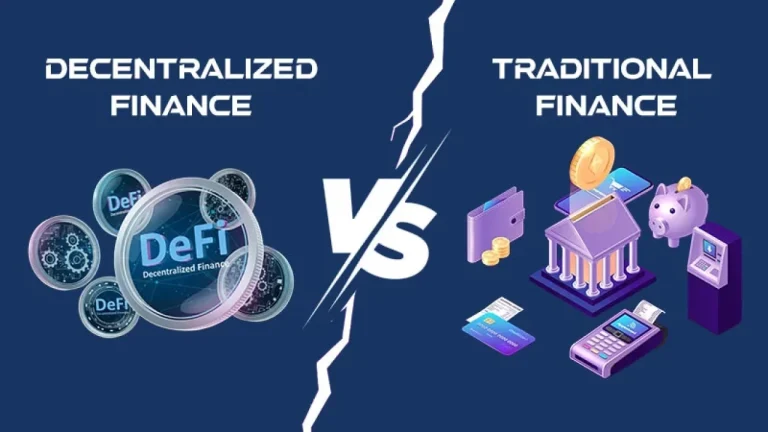
Every Bitcoin transaction gets recorded on a blockchain, which is a public ledger maintained and verified by a decentralized network of computers rather than any single institution. No central authority, no bank, and no single company controls it. The software is open-source, meaning anyone can inspect the code, and cryptographic techniques secure every transaction so counterfeiting is virtually impossible. Bitcoin.org provides a detailed breakdown of this peer-to-peer architecture.
That decentralized design enables fast, low-fee transfers anywhere in the world without needing a currency exchange. You can send Bitcoin from New York to Tokyo as easily as sending it across town, and the recipient gets Bitcoin, not a converted local currency that a bank had to process.
Only 21 million coins will ever exist, a cap written into the protocol that no update or authority can change. That fixed ceiling creates value dynamics you also see in commodities like gold: when demand grows against a supply that can’t expand, price tends to climb. Of course, demand can also drop.
Bitcoin is stored in digital wallets rather than bank accounts. A hot wallet stays connected to the internet through your computer, phone, or tablet, making it convenient for frequent transactions. A cold wallet stores your Bitcoin offline on a device like a USB drive, accessible only with a keycode. Cold storage is more secure but less convenient for quick trades.
One critical difference from traditional banking: if you lose your private key, you permanently lose access to your Bitcoin. There’s no password reset, no customer service line, and no government-backed insurance protecting your holdings the way FDIC coverage protects bank deposits. You’re responsible for your own security.
Buying and holding Bitcoin for long-term gains
Buy-and-hold, often called HODLing in crypto circles, is the simplest strategy. You purchase Bitcoin and wait for the price to appreciate over months or years. Since its 2009 launch, Bitcoin’s value has increased approximately 12,000%. Ethereum, for comparison, has appreciated more than 92,000% since its 2015 launch, a gap that comes up often when weighing Bitcoin vs Ethereum. Those numbers show what long-term patience can produce, though past performance doesn’t predict future results.
Buying is the easy part; staying put when your account balance plunges is where most people fail. Drawdowns of 30% to 50% from recent highs are routine for Bitcoin, and a prolonged downturn can stretch those losses across months or even years. If you panic-sell during a crash, you lock in the loss and cut yourself off from any recovery that follows. Historically, the long-term investors who earned large returns were the ones who rode out those wild short-term swings without selling.
A common guideline limits risky assets like Bitcoin to no more than 10% of your total portfolio. That ceiling keeps a major drawdown from derailing your broader financial goals. If Bitcoin drops 50% but represents only 5% of your holdings, the damage to your overall portfolio stays manageable.
Bitcoin ETFs and fund-based exposure
Spot Bitcoin ETFs, approved by the SEC in January 2024, let you gain exposure to Bitcoin through a traditional brokerage or retirement account. If you hold a 401(k) or IRA and previously couldn’t access Bitcoin directly, ETFs opened that door. You buy shares of the fund the same way you’d buy shares of a stock ETF, and the fund holds Bitcoin on your behalf.
The trade-off is straightforward. ETFs simplify access and portfolio diversification, especially for investors who don’t want to manage wallets, private keys, or exchange accounts. But ETF holders don’t own actual Bitcoin. You can’t spend it, move it to a personal wallet, or use it in DeFi protocols. You own a financial product that tracks Bitcoin’s price.
ETFs also carry the same volatility as Bitcoin itself. A 40% drop in Bitcoin means a roughly 40% drop in your ETF shares. The convenience of a brokerage account doesn’t smooth out the ride. What ETFs do remove is the operational risk of managing your own crypto custody, which matters if security and simplicity rank higher than direct ownership for you.
Bitcoin trading strategies
Active trading tries to profit from price movements over different timeframes. Unlike holding, it demands constant attention, technical skill, and strict risk management. Most retail day traders lose money. Even professional stock traders frequently struggle to beat simple buy-and-hold returns over the long run. Each trading style below carries a different skill set, time commitment, and risk profile.

Day trading
Day trading means opening and closing multiple positions within a single day to capture short-term price moves. You’re watching charts, reading indicators, and making quick decisions for hours at a stretch.
Two common approaches sit under this umbrella. Range trading involves identifying overbought and oversold zones on a price chart and timing entries and exits around those levels. Scalping pushes the timeframe even shorter: high-volume trades held for seconds or minutes, often executed by automated bots rather than a person clicking buttons.
Compared to stocks, where a normal day might see a 1% to 2% move, Bitcoin can swing 5% to 10% on no unusual news at all. That extra volatility makes day trading Bitcoin considerably harder, because losses pile up just as fast as gains when the price turns against you.
There’s also a tax record-keeping burden that grows with every trade. Each buy and sell is a separate taxable event in the eyes of the IRS. A trader placing dozens of trades a week generates hundreds of taxable transactions per year, all of which need accurate cost-basis records.
Swing trading
Swing trading sits between day trading and long-term holding. You hold positions for several days to a few weeks, targeting medium-term trends rather than intraday noise. The time commitment is lower than day trading because you’re not glued to a screen all day, but you still need chart analysis skills to identify entry and exit points.
The appeal of swing trading is the potential for larger per-trade gains compared to scalping or intraday moves. You’re riding a trend over days instead of scraping fractions of a percent in seconds. The downside is overnight and weekend risk: Bitcoin trades 24/7, and a position can move sharply against you while you sleep.
Arbitrage trading
Crypto arbitrage exploits price differences for the same coin across different exchanges. Because crypto exchanges are largely unregulated and set prices independently based on their own order books, spreads between platforms can reach up to 30% in extreme cases. Your profit is the price gap minus transaction fees and transfer time costs.
Execution speed matters more here than in almost any other strategy. Price gaps close quickly as other traders spot the same discrepancy. By the time you buy on Exchange A and transfer to Exchange B to sell, the window may have narrowed or disappeared entirely.
Anyone can create a crypto exchange, so liquidity and trading volume vary widely from platform to platform. Low-liquidity exchanges are where the biggest arbitrage windows appear, but they’re also where withdrawal delays and platform reliability become real concerns. You need accounts funded on multiple exchanges in advance to act fast enough.
Bitcoin futures and options
Futures contracts let you speculate on Bitcoin’s future price without holding any actual coin. You agree to buy or sell Bitcoin at a specific price on a set date. Options work similarly but grant the right, not the obligation, to buy or sell at a preset price. Both instruments let you profit whether the market rises or falls, depending on the position you take.
Futures and options also serve as hedging tools. If you hold a large Bitcoin position and want to protect against a short-term drop, you can open a futures or options position that profits from the decline, offsetting some of your losses on the underlying holding.
These are complex instruments. Leverage amplifies both gains and losses, and a wrong-way move can wipe out your entire position quickly. Unless you thoroughly understand derivatives, margin requirements, and market dynamics, futures and options carry more risk than most beginners should take on.
Earning passive income with Bitcoin
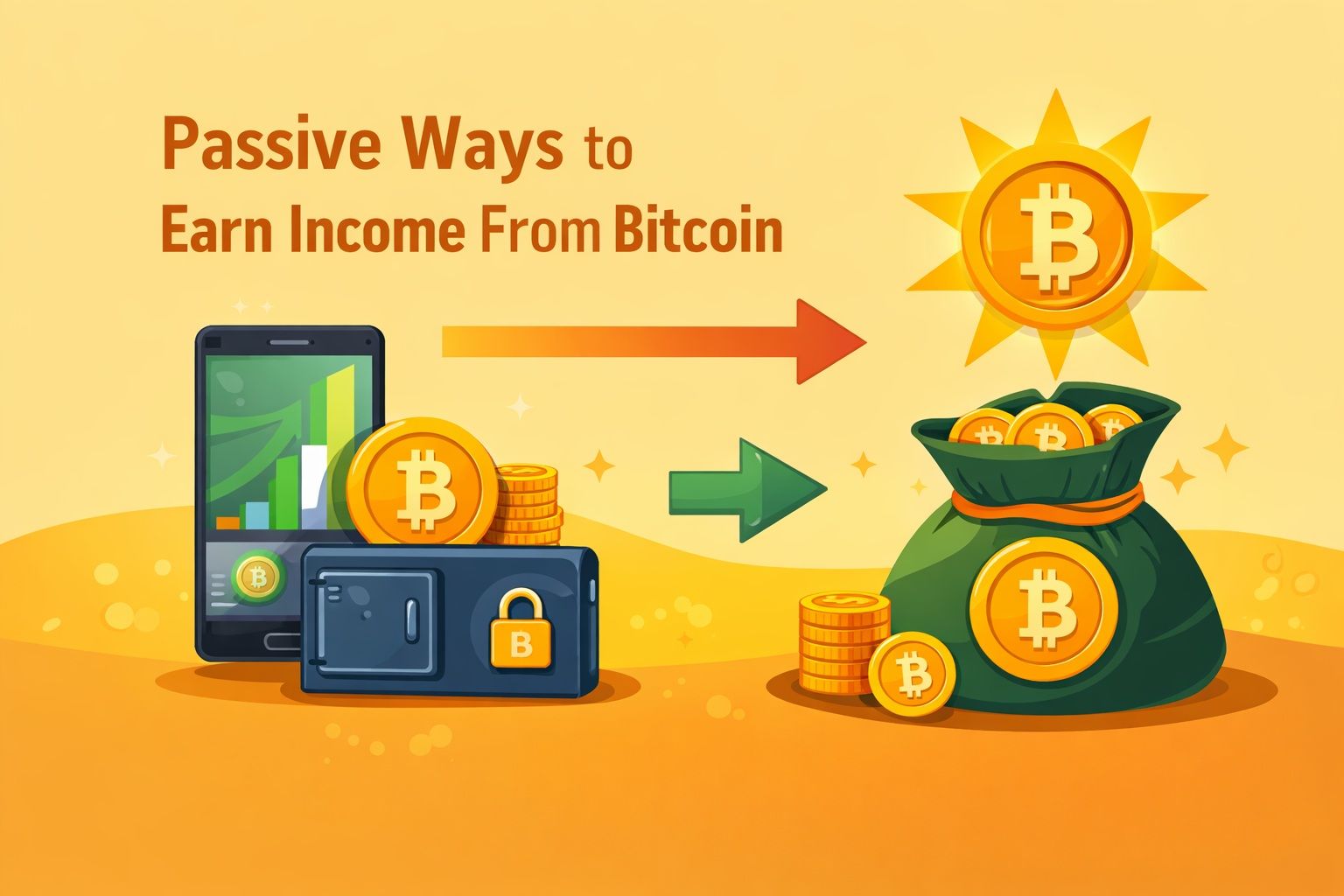
Several methods generate returns on Bitcoin you already own without requiring active trading. Lending, interest accounts, crypto credit cards, and staking alternative coins all fall into this category. These strategies suit holders who prefer a low time commitment, but every one of them carries platform risk, counterparty risk, or both.
Lending Bitcoin
Lending platforms let you lend your Bitcoin to borrowers and earn interest on it. Typical return ranges have fallen between roughly 4.5% and 7.25%, though rates vary by platform, loan term, and market conditions. Some DeFi protocols quoting stablecoin lending have advertised APYs of 8% to 15%, but those rates fluctuate and shouldn’t be treated as fixed.
The risk here is real and recent. Multiple lending platforms froze withdrawals during 2022, leaving depositors unable to access their funds for months. Most have since reopened, but that episode is a clear reminder of counterparty risk. When you lend Bitcoin through a platform, you’re trusting that platform to manage borrower defaults, maintain liquidity, and stay solvent.
Before depositing, evaluate the platform’s collateralization ratios (how much collateral borrowers must post), withdrawal terms, and regulatory standing. A higher interest rate often signals higher risk, not a better deal.
Crypto credit cards with Bitcoin rewards
Certain credit cards pay purchase rewards in Bitcoin or other cryptocurrencies instead of cash back or airline miles. Reward rates generally top out around 3% on select spending categories and about 1% on everything else. Some cards also offer sign-up bonuses tied to spending thresholds within the first few months.
The catch is that spreads and transaction fees applied by the card issuer can reduce your effective reward rate. If the card charges a 1% spread when converting your rewards to Bitcoin, a 3% reward becomes closer to 2% in actual value. Read the fee schedule before signing up, and compare the net reward to what you’d earn from a traditional cash-back card.
This approach won’t build a significant Bitcoin position quickly, but it’s a low-effort way to accumulate small amounts over time through spending you’d do anyway.
Staking and liquid staking
Bitcoin itself doesn’t support staking. It runs on proof of work, where miners validate transactions using computing power. Staking belongs to proof-of-stake networks like Ethereum, Solana, and Polkadot, where holders lock up coins to help secure the network and earn rewards in return.
If you hold proof-of-stake coins, you can stake them, earn yield, and convert those rewards into Bitcoin. Liquid staking takes this a step further by letting you earn staking yield while retaining the ability to trade or use your staked tokens through a liquid staking derivative. Restaking protocols have also emerged, letting you earn multiple yields from the same staked asset by securing additional networks simultaneously.
Lock-up periods vary by network and protocol. During a lock-up, you can’t withdraw your staked coins, which means you’re exposed to price drops without the ability to sell. Exchange-based staking removes some of the technical complexity but introduces custody risk, since the exchange holds your coins.
Mining Bitcoin
Miners validate transactions and add new blocks to the blockchain roughly every 10 minutes. When a miner successfully validates a block, they earn a reward of newly minted Bitcoin plus transaction fees paid by users on that block. The current block reward is 3.125 BTC, and transaction fees can add roughly $4,000 to that total.
That block reward hasn’t always been 3.125 BTC, and it won’t stay there. Bitcoin undergoes a “halving” roughly every four years, cutting the block reward in half. This mechanism controls the rate at which new Bitcoin enters circulation and reinforces scarcity. Each halving reduces miner revenue from new coins, which historically has preceded significant price increases as the reduced supply meets steady or growing demand. For miners, though, a halving means you need either a higher Bitcoin price or lower operating costs to stay profitable.
Mining requires specialized ASIC hardware, which can cost over $10,000 per rig, along with large ongoing electricity costs. For most individual investors, the upfront equipment cost and monthly power bills outpace mining income, especially in regions with high electricity rates. Some U.S. states also impose strict mining regulations, so checking local laws before investing in equipment is a practical first step.
Mining pools let participants combine computing power and share smaller, more frequent payouts instead of waiting to solve a block solo, which could take months or years for a single rig. Pools charge fees, and larger pools split rewards among more participants, reducing each member’s share.
Cloud mining services rent processing power from remote data centers, removing the need for hardware setup and maintenance. The trade-off is trust: you’re paying a company upfront and hoping their operation is legitimate and profitable enough to return more than you paid. Many cloud mining operations have turned out to be unprofitable or outright fraudulent.
DeFi, tokenized Bitcoin, and yield farming
Wrapped or tokenized Bitcoin represents your BTC on other blockchains like Ethereum, letting you participate in DeFi protocols that don’t run on Bitcoin’s own network. The most common example is Wrapped Bitcoin (WBTC), an ERC-20 token pegged 1:1 to BTC.
With tokenized Bitcoin, you can lend on DeFi lending platforms, provide liquidity to decentralized exchanges, or deposit into yield farming strategies. Yield farming works by depositing Bitcoin-pegged tokens into liquidity pools, where you earn a share of trading fees and sometimes additional governance tokens as incentives. Auto-compounding vaults take this further by automatically reinvesting your yield-farming returns, saving you the gas fees and time of manual reinvestment.
This space requires familiarity with decentralized applications, wallet interactions, and the specific risks involved. Smart-contract bugs can drain a pool entirely. Impermanent loss occurs when the price ratio of tokens in your liquidity pool shifts, potentially leaving you with less value than if you’d simply held the tokens. These aren’t theoretical risks; they happen regularly in DeFi.
Airdrops and faucets
Airdrops distribute free tokens to users who complete tasks, hold certain assets, or participate early in a project. Some airdrops have turned out to be worth thousands of dollars, though most distribute tokens with little or no lasting value.
Faucets dispense very small amounts of cryptocurrency for simple actions like solving captchas or watching ads. Neither method generates meaningful income on its own, but both offer low-effort starting points for people who want to begin accumulating crypto without spending money.
Scam airdrops are common. They often ask you to connect your wallet to an unfamiliar site or send a small amount of crypto to “verify” your address. Engage only with verified projects on established platforms, and never share your private keys or seed phrase to claim a reward.
Risk management and security practices
Every Bitcoin strategy carries risk. How you manage that risk often matters more than which strategy you pick.

- Diversify across asset classes. Bitcoin’s extreme volatility can erase gains quickly. Spreading your investments across stocks, bonds, real estate, and crypto limits the damage any single asset can do to your overall portfolio. Avoid concentrating most of your holdings in cryptocurrency.
- Use cold storage for long-term holdings. A cold wallet kept offline reduces your exposure to exchange hacks, phishing attacks, and malware. Keep your hot wallet balance limited to what you need for active trading or short-term use.
- Enable two-factor authentication everywhere. Turn on 2FA for every exchange account, wallet app, and email address associated with your crypto holdings. An authenticator app is more secure than SMS-based 2FA, which is vulnerable to SIM-swap attacks.
- Set clear rules for selling. Short-term traders should define predetermined loss thresholds before entering a trade, not after they’re already losing. Long-term holders need to commit in advance to riding out drawdowns rather than selling on emotion during a crash.
- Invest only money you can afford to lose. If losing your entire Bitcoin investment would cause financial hardship, you’ve invested too much. This is a high-risk asset class, and treating it otherwise leads to poor decisions under pressure.
- Stay current with regulatory changes and security disclosures. Crypto regulations in the United States continue to evolve, and exchange security incidents happen regularly. Following reliable news sources helps you react to changes before they affect your holdings.
Bitcoin taxes in the United States
In the eyes of the IRS, cryptocurrency falls under property-tax rules rather than currency rules. That means standard property-tax rules apply to every Bitcoin transaction, and the reporting requirements are more involved than many new investors expect.
Several actions trigger a taxable event: selling Bitcoin for U.S. dollars or any fiat currency, trading one cryptocurrency for another, using Bitcoin to pay for goods or services, and receiving Bitcoin as wages, interest, mining income, or staking income. Simply buying Bitcoin with dollars and holding it is not a taxable event.
Gains or losses are classified as capital gains (short-term or long-term, depending on how long you held) or ordinary income, depending on the circumstances. Mining income and Bitcoin received as payment for work are typically treated as ordinary income at the fair market value when received.
If you end the year with a net loss on your crypto trades, you can deduct up to $3,000 of that loss against other income. Any excess carries forward to future tax years. Tax-loss harvesting takes advantage of this: you sell a position at a loss to realize the deduction, then reinvest. Unlike stocks, crypto has historically not been subject to the wash-sale rule (which prevents you from claiming a loss if you repurchase the same asset within 30 days), though this is an area where regulations may change.
Record every transaction’s purchase price and sale price from the start. Frequent trading multiplies the record-keeping burden dramatically. A day trader placing 20 trades a week generates over 1,000 taxable events in a year, each requiring accurate cost-basis documentation. The IRS has updated its reporting questions on Form 1040 multiple times since 2020, and enforcement attention on crypto has increased steadily.
How beginners can start earning with Bitcoin
- Choose a broker or a crypto exchange. A broker handles matching buyers and sellers and often provides a simpler interface. An exchange lets you trade directly on an order book with more control over pricing. At AXL Research Hub, we cover both options in detail to help you compare fees, features, and supported coins.
- Create an account and complete identity verification. Most regulated platforms require a government-issued ID and sometimes a selfie or proof of address. This process, called KYC (know your customer), usually takes a few minutes to a couple of days.
- Fund your account with fiat currency. Start with a small amount while you’re still learning how the platform works. Bank transfers are typically the cheapest funding method; credit card deposits often carry higher fees.
- Place your first Bitcoin purchase. You don’t need to buy a whole coin. Many platforms let you buy as little as a few dollars’ worth of Bitcoin, so you can get started without a large commitment.
- Select a storage method. A hot wallet on your phone or computer is convenient for small amounts and frequent access. A cold wallet (a hardware device stored offline) is the safer choice for any amount you plan to hold long term.
- Define your investment goal. Are you holding for years, trading short-term price moves, or looking for passive income through lending? Your goal determines which strategies apply and how you should allocate your time and capital.
- Track every transaction for tax purposes from day one. Don’t wait until tax season to reconstruct your trade history. Use a portfolio tracker or spreadsheet to log each buy, sell, and transfer as it happens.
Frequently asked questions
Can you make $100 a day with Bitcoin?
It’s possible on some days through day trading or swing trading, but it depends entirely on your capital size, market conditions, and skill level. A trader working with $1,000 needs a 10% daily return to hit $100, which is unrealistic to sustain. Larger accounts have an easier time in dollar terms but still face the same volatility risk. Most retail traders lose money over time, so treating $100 a day as a reliable target isn’t realistic.
What would $1 of Bitcoin bought 10 years ago be worth today?
Bitcoin’s price has risen by orders of magnitude over the past decade, turning even tiny early purchases into substantial sums. The exact dollar amount depends on the current price at the time you check, but the trajectory from single-digit dollars per coin to six figures illustrates the scale of growth that long-term holders have experienced.
How much is $100 worth of Bitcoin right now?
The fractional amount of Bitcoin you’d receive for $100 changes with the live market price. Check a price-tracking site like CoinMarketCap or CoinGecko for the latest conversion. At any given price, you can divide $100 by the current price per coin to see how much Bitcoin that buys.
Can you stake Bitcoin?
No. Bitcoin uses a proof-of-work consensus mechanism, which doesn’t support staking. The closest passive-income alternatives are lending your Bitcoin through a lending platform or staking proof-of-stake coins like Ethereum and converting the rewards into Bitcoin.
Choosing the right strategy for your goals
Long-term holders prioritize patience and portfolio discipline over frequent action. The skill here isn’t analysis; it’s emotional control during drawdowns that can last months. If you don’t have the stomach to watch your investment drop 40% without selling, pure buy-and-hold will test you.
Active traders need a different set of tools: technical analysis skills, predefined risk rules for every trade, and detailed tax records that grow with every transaction. The time commitment is significant. Day trading, in particular, can feel like a full-time job, and the majority of people who try it don’t come out ahead.
Passive-income seekers, whether through lending, staking alternative coins, or crypto credit cards, balance yield against platform and counterparty risk. The returns are more modest than active trading profits on a good day, but the time commitment is far lower.
Combining strategies often makes sense. You might hold a core Bitcoin position for long-term appreciation while lending a portion to earn interest, or use a crypto rewards card to accumulate small amounts alongside a regular investment plan. Each approach carries its own risk, and matching a strategy to your personal risk tolerance, time availability, and capital size is what determines your outcome more than any single tactic.