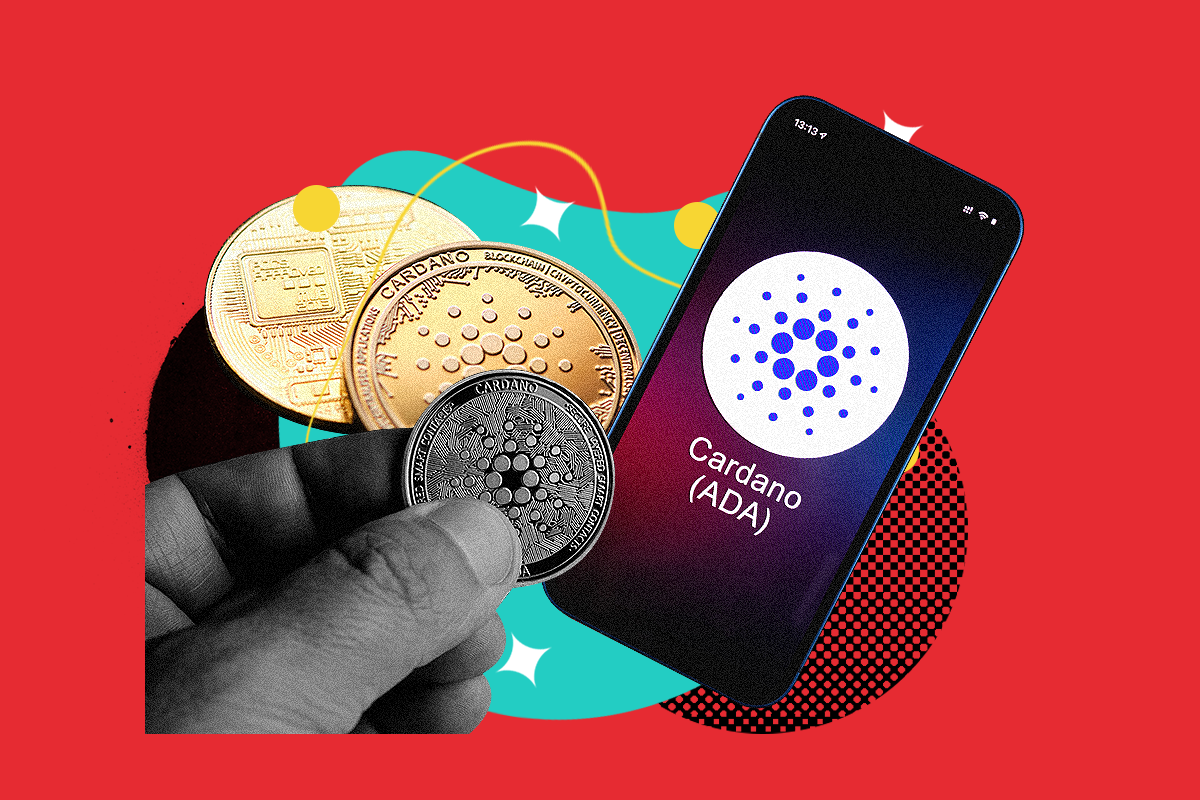

ADA sits roughly 95% below its 2021 all-time high of $3.10, trading near $0.22 with a market cap around $8.1 billion as of late August 2026. That gap between past peak and present price is exactly what makes the question worth asking: does Cardano still have the fundamentals to reward patient holders, or has the market moved on?
What is Cardano and how does it work?
Cardano is a smart-contract blockchain founded by Charles Hoskinson, one of Ethereum’s co-founders, with development starting in 2015 and a mainnet launch on September 27, 2017. The project is named after the Italian polymath Gerolamo Cardano, while its native token, ADA, takes its name from mathematician Ada Lovelace.
Three organizations guide Cardano’s development, each covering a different piece of the work. IOHK (also known as Input Output) is the blockchain engineering firm responsible for core protocol research and code, while the Cardano Foundation focuses on community growth and partnerships. EMURGO rounds out the trio by driving commercial adoption and enterprise integrations.
On the network, ADA pulls triple duty: it pays transaction fees, it’s staked to help secure the chain and earn rewards, and it’s used to vote on governance proposals that direct the protocol’s future. When smart contracts went live in September 2021, those same tokens also became the currency powering a growing layer of decentralized applications (dApps) and DeFi protocols.
What sets Cardano apart from most competitors is its research-first philosophy. Every protocol upgrade goes through an internal and external peer-review process involving software engineers and university partners before it’s deployed. That process prioritizes security and correctness, though it also means features reach users more slowly than on chains that ship first and patch later.
Key features that affect Cardano’s investment potential
Cardano’s architecture and design decisions shape both its strengths and its limitations as an investment, a narrower question than whether crypto is a good investment at all. Here are the features that matter most when you’re evaluating ADA.
- Ouroboros proof-of-stake consensus. Cardano runs on Ouroboros, a proof-of-stake protocol that claims energy efficiency roughly four million times greater than Bitcoin’s proof-of-work mechanism. Lower energy consumption reduces operating costs for validators and positions the chain favorably as regulators and institutional investors pay more attention to environmental impact.
- Two-layer architecture. Cardano separates its settlement layer (where ADA moves between wallets) from its computation layer (where smart contracts execute). This split is designed to let each layer scale and upgrade independently, giving developers more flexibility than single-layer chains where every transaction competes for the same block space.
- Extended UTXO (eUTXO) model. Instead of tracking balances in accounts the way Ethereum does, Cardano uses an extended version of Bitcoin’s UTXO model. The practical result is that transactions can be processed in parallel when they don’t touch the same outputs, and users get stronger privacy guarantees by default. The trade-off is that building dApps on eUTXO requires a different development approach, which has slowed early ecosystem growth.
- Peer-reviewed upgrades. Academic rigor reduces the chance of critical bugs reaching the live network. For investors, that means fewer surprise exploits of the kind that have drained billions from other chains. The cost is speed: features that competitors ship in months can take Cardano years to finalize.
- Capped maximum supply. ADA has a fixed, finite issuance cap. No new tokens can be minted beyond that limit. Like Bitcoin’s scarcity mechanics, if demand for ADA grows over time, the fixed supply puts upward pressure on price. If demand doesn’t materialize, the cap alone won’t support a recovery.
Cardano’s historical price performance
Cardano’s price history shows sharp spikes during bull markets followed by steep drawdowns, a pattern that defines most altcoins but hits especially hard with ADA because of the heights it once reached.
ADA peaked at $3.10 in 2021, when Cardano climbed to the third-largest cryptocurrency by market cap behind Bitcoin and Ethereum. At that moment, it was widely labeled the top “Ethereum killer” because Ethereum still ran on proof of work and charged fees that priced out smaller users. The narrative was powerful, and money followed it.
That ranking didn’t hold. Other competing blockchains, particularly Solana and newer layer-2 networks, shipped features faster and attracted developers and users at a pace Cardano couldn’t match. By 2025, ADA had dropped to roughly eighth by market cap and remained well below its prior high. The slide wasn’t just about broader market conditions. It reflected how hard it is to regain market share once users and capital settle into other platforms.
From an all-time low of $0.02 to an all-time high of $3.10, ADA’s full range illustrates both the upside crypto can deliver and the severity of the drawdowns that follow. Investors who bought at the peak and held through mid-2026 are sitting on losses exceeding 90%.
Cardano ecosystem growth and on-chain metrics
Price alone doesn’t tell you whether a blockchain is gaining traction. On-chain data paints a more useful picture, and Cardano’s numbers in this area show a mixed but improving story.
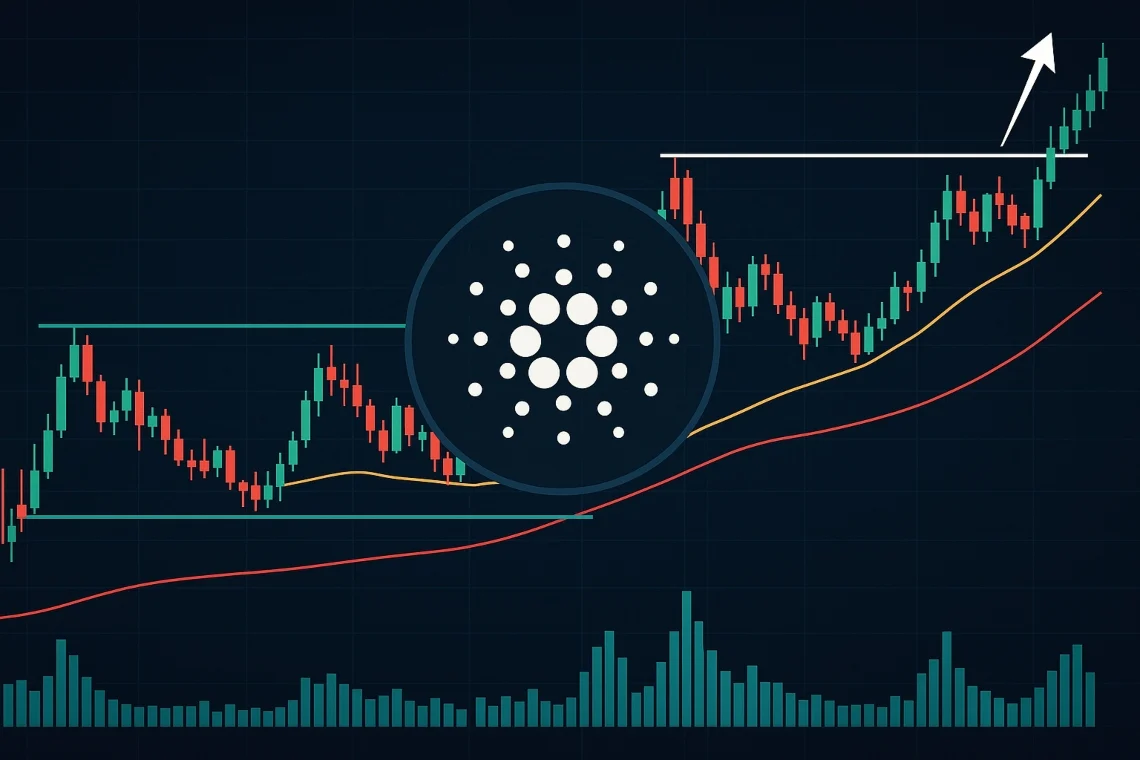
DeFi total value locked (TVL) on Cardano surpassed $700 million in 2025 after sitting at roughly $400 million in 2024, which means capital flowing into Cardano-based lending, borrowing, and liquidity protocols has nearly doubled year over year. That growth is real, but it needs perspective: Cardano still ranks around 30th in TVL among all chains, far behind Ethereum’s tens of billions and even well short of mid-tier competitors that carry significantly more locked capital.
Transaction volume tells a story of cumulative utility. The network has recorded more than 105 million transactions since launch. Smart contract usage rose 31% in September 2024, while the user base expanded to over 4.8 million wallets. Growth in both metrics suggests the chain isn’t just being used by a small group of insiders; new participants are arriving.
Stablecoin supply on the chain is worth tracking as a separate indicator. Stablecoins represent liquid capital that’s ready to be deployed into DeFi or used for payments. When stablecoin supply on Cardano grows over multiple quarters, it signals that real financial activity is deepening. When it stagnates or falls, capital is flowing elsewhere.
On the spending side, the Cardano Foundation increased its budget by roughly 15% year-over-year, with a 2025 roadmap that includes a $50 million liquidity initiative targeting stablecoins, DeFi, and real-world asset tokenization. That kind of directed spending can accelerate ecosystem development, but it only pays off if projects built with that funding attract and retain users.
Pros of investing in Cardano
When you break down the bull case for Cardano, the arguments pull from three directions: how the chain is engineered, what it has shipped recently, and what upcoming events could drive fresh demand. Not every pro carries equal weight, so here’s what stands out and why each one matters for ADA holders.
- Energy-efficient proof of stake. Cardano’s Ouroboros consensus uses a fraction of the energy that proof-of-work chains consume. As environmental concerns grow among both retail investors and institutional allocators, and as regulators weigh energy-use disclosures for digital assets, this efficiency becomes a practical advantage rather than just a talking point.
- Decentralized on-chain governance. The Plomin and Chang hard forks introduced a governance system that gives ADA holders direct voting power over treasury spending and protocol proposals. This is a structural shift. Before these upgrades, decisions about Cardano’s direction were made primarily by IOHK and the Cardano Foundation. Now, anyone staking ADA can participate in proposals that allocate treasury funds to development teams, marketing, or ecosystem projects. If participation is strong, this model can speed up funding for high-value initiatives. If participation stays low or becomes contentious, it could slow decision-making instead.
- Institutional partnerships. Cardano has established partnerships with institutions such as the European Investment Bank and the Japan Bank for International Cooperation. These relationships lend credibility and open doors to real-world use cases in areas like bond issuance, supply-chain verification, and identity systems.
- U.S. strategic reserve inclusion. In March 2025, the U.S. government announced ADA’s inclusion in a national crypto strategic reserve. ADA’s price surged 78% immediately after the announcement. Beyond the short-term price reaction, the inclusion raised Cardano’s profile among policymakers and institutional investors who track government-endorsed assets.
- Potential spot ADA ETF. A filing for a spot ADA ETF on U.S. stock exchanges could, if approved, make ADA accessible to investors who use traditional brokerage accounts and don’t want to manage wallets or private keys. ETF approval for Bitcoin demonstrated how much institutional capital these products can attract.
- Staking with self-custody. ADA holders can stake their tokens and earn passive rewards without giving up custody. You delegate to a stake pool, your tokens never leave your wallet, and rewards accrue automatically. This reduces the opportunity cost of holding ADA compared to tokens that sit idle. Keep in mind that staking rewards are paid in ADA, so their dollar value rises and falls with the token’s price.
Cons and risks of investing in Cardano
The risks here aren’t hypothetical. Several have already played out, and others are structural challenges that won’t resolve quickly.
- Slow development has real consequences. Smart contracts didn’t arrive until September 2021, four years after Cardano’s mainnet launched. By that point, Ethereum had a mature DeFi ecosystem, and chains like Solana and Avalanche had already attracted developers with faster tooling and lower barriers. Cardano’s first decentralized exchange had to shut down shortly after launch due to transaction-processing issues, which damaged early confidence in the chain’s readiness.
- Competitors move faster and attract more builders. Faster development cycles on rival chains have drawn larger developer communities and deeper liquidity pools. When a developer chooses where to build, they often go where the users and capital already are. That creates a compounding disadvantage for chains that fall behind early.
- DeFi activity is still small in absolute terms. Ranking around 30th in TVL means Cardano’s DeFi ecosystem is a fraction of what leading chains offer. If users find better yields or more sophisticated protocols elsewhere, capital can leave quickly. The $700 million in TVL is growing, but it’s not yet large enough to create the kind of gravity that keeps liquidity anchored.
- Extreme price volatility. ADA has experienced drawdowns exceeding 90% from cycle highs. That level of decline can wipe out years of gains and isn’t something risk-averse or short-horizon investors should accept. Even for long-term holders, watching a position lose 90% of its value tests conviction.
- Signs of organizational strain. Cardano’s founder has publicly warned of a “wave of failures” in the blockchain industry. A prominent Cardano analytics platform has already shut down, and the community canceled a planned summit in Singapore. None of these events are fatal on their own, but together they raise questions about cohesion within the project.
- Governance could become a bottleneck. The voting system described above only works if enough holders actually show up to use it. If voter turnout is low or factions clash over treasury allocation, funding decisions could slow rather than accelerate development. Governance is a tool, and tools are only as good as the people using them.
- A full recovery may take years. A return to prior price levels may not materialize before 2030, if it happens at all. That demands a level of patience most investors don’t have, especially when faster-moving assets offer shorter feedback loops.
On-chain metrics every ADA investor needs to watch
Price charts get all the attention, but the metrics below tell you whether Cardano’s network is genuinely growing or just riding market-wide sentiment. Tracking them over multiple quarters gives a far clearer picture than watching daily candles.
- Stablecoin supply on Cardano. When the total value of stablecoins issued on Cardano grows consistently over three or more quarters, it means capital is entering the ecosystem and staying liquid for DeFi use, payments, or trading. If that supply flattens or shrinks, it’s a signal that users are bridging their stablecoins to other chains where they see better opportunities.
- DeFi TVL trend. Total value locked measures how much capital is committed to Cardano’s lending, borrowing, and liquidity protocols. Consistent upward movement reflects growing financial commitment from users who are putting their money to work on-chain. A sharp drop that doesn’t recover within a few weeks usually signals declining confidence in the chain’s DeFi offerings. Cardano’s TVL surpassed $700 million in 2025, but it’s the direction of movement, not the snapshot number, that matters most.
- Network fee revenue. Fees are what users pay to transact on the chain. Gradual growth in total fees collected indicates genuine usage: people are actually interacting with smart contracts, sending ADA, and minting tokens. If fees stay extremely low even after major development updates go live, that suggests the new features aren’t attracting enough demand to move the needle.
- Active wallet count. A rising number of unique active wallets over months points to organic adoption. The key distinction is the timeframe. If wallet activity spikes only during price rallies and then drops back to baseline, growth is speculative rather than structural. Sustained wallet growth through sideways or declining price action is a stronger signal. Cardano reported over 4.8 million wallets, but the active portion of that total is what you want to follow.
- Daily and monthly transaction count. A stable upward pattern in transactions indicates that the chain is being used for real activity, not just token transfers during hype cycles. More than 105 million total transactions have been recorded on Cardano, but recent monthly and daily trends matter more than the lifetime total. Declining volume despite new features going live suggests adoption isn’t sticking.
Can Cardano reach $1 or $10?
The math behind a price target is straightforward: price equals market capitalization divided by circulating supply. ADA’s circulating supply is approximately 36.7 billion tokens, which anchors any target price to a specific market cap that has to be justified by real demand.
At $1 per token, Cardano’s market cap would sit around $36.7 billion. That’s significantly higher than its current level but within a range ADA has traded at before. Reaching $1 would require meaningful growth in adoption, liquidity, and overall market sentiment. It’s ambitious from where ADA stands today, but it doesn’t require assumptions that break the bounds of what crypto markets have demonstrated in past cycles.
At $10 per token, the market cap would climb to roughly $367 billion. For context, that would be many times larger than Cardano’s 2021 peak market cap. Reaching that level would require massive, sustained global usage of Cardano’s smart contracts, DeFi protocols, and real-world applications, combined with very favorable macroeconomic conditions and a crypto market environment where capital flows heavily into altcoins. It’s a figure that’s technically possible but practically requires nearly everything to go right over many years.
Short-term forecasts from various models suggest ADA could trade between roughly $0.60 and $1.50 under bullish conditions, with support estimated around $0.75 to $0.85 and resistance near $1.20 to $1.50. Long-range algorithmic models project widely divergent outcomes. One model’s 2030 average price estimate is roughly $0.09. Another model projects an average around $0.18 by 2040. A 2050 projection range from one model spans $0.41 to $1.27.
The spread between those projections tells you something important: no model reliably predicts crypto prices over multi-year horizons. Demand depends on factors that are inherently unpredictable, including regulatory changes, competing technology, macro conditions, and shifts in user behavior. Treat any projection as a scenario, not a forecast.
Does Cardano have a future?
Cardano’s future as a functioning blockchain isn’t in question. The network processes transactions, supports staking, and runs smart contracts. The real question is whether it can grow its ecosystem fast enough to remain competitive and drive sustained demand for ADA.
A 2025 strategy document outlines a plan for Cardano to become a blockchain powerhouse by 2030, with emphasis on real-world applications in identity, supply chain management, and DeFi. Two upcoming upgrades could open significant new use cases if delivered on schedule. Hydra is a layer-2 scaling solution designed to process transactions off the main chain and settle them in batches, which would dramatically increase throughput. Midnight is a privacy-focused sidechain that would allow users and businesses to interact with Cardano-based applications while keeping sensitive data confidential.
Blockchains gain value through network effects. More projects built on Cardano attract more users. More users create more demand for ADA to pay fees and participate in governance. That cycle, once it reaches critical mass, becomes self-reinforcing. Cardano hasn’t hit that tipping point yet, and whether it does depends less on the roadmap itself and more on whether the team executes it while the window of opportunity is still open.
Optimism among the community and some analysts persists, but conviction built on a plan isn’t the same as conviction built on results. The deciding factor is execution.
Cardano vs. Ethereum vs. Solana
Investors comparing layer-1 blockchains often weigh these three against each other. Each chain appeals to a different thesis, and the table below captures the key differences.
| Feature | Ethereum | Solana | Cardano |
|---|---|---|---|
| Consensus | Proof of stake (since 2022) | Proof of stake + proof of history | Proof of stake (Ouroboros) |
| Development pace | Moderate, large contributor base | Fast iteration, rapid shipping | Slow, peer-reviewed process |
| DeFi TVL | Highest among all chains | Strong and growing | Growing but ranks around 30th |
| Transaction fees | Higher than competitors | Very low | Low |
| Block speed | Moderate | Very fast | Moderate |
| Developer ecosystem | Deepest and most mature | Strong recent growth | Smaller, growing steadily |
| Known trade-offs | Fee spikes during congestion | History of network outages, high volatility | Slow feature deployment, smaller user base |
| Investor profile fit | Established ecosystem exposure | Speed-focused growth bets | Conviction in methodical, research-first infrastructure |
Ethereum offers the deepest liquidity and the widest range of dApps, which makes it the default for investors who want broad exposure to DeFi and smart-contract activity. Solana appeals to those betting on speed and low-cost transactions, though its history of outages is a risk factor. Cardano fits investors who believe that security-first, peer-reviewed development will pay off over a longer time horizon, even if adoption lags in the short term.
Some investors skip the single-chain debate entirely and hold a basket across multiple platforms, spreading risk across different development philosophies and adoption curves.
How to invest in ADA responsibly
Buying ADA is straightforward. It’s available on major cryptocurrency exchanges. But how you size your position, manage volatility, and handle the tax side of things matters just as much as the entry point.
Dollar-cost averaging is the simplest way to reduce timing risk. Instead of putting a lump sum into ADA at one price, you invest a fixed dollar amount at regular intervals (weekly, biweekly, or monthly). When ADA’s price drops, your fixed amount buys more tokens. When it rises, you buy fewer. Over time, this smooths out your average cost and removes the stress of trying to call the bottom.
Position sizing keeps a bad outcome from becoming a devastating one. A conservative allocation of 1% to 3% of your portfolio limits downside while still giving you meaningful exposure if ADA performs well. Moderate allocations of 3% to 5% increase your upside but require comfort with larger swings. Anything beyond 5% demands high risk tolerance and a clear understanding that ADA could decline significantly from any entry point.
Once you’ve purchased ADA, you can stake it directly on the exchange where you bought it or transfer it to a self-custody wallet. Self-custody wallets let you delegate your ADA to a stake pool while keeping your tokens under your own control, which is both more secure and often yields slightly better staking returns than exchange-based staking. Either way, your rewards arrive as ADA tokens, which means their dollar value fluctuates alongside the token’s market price.
Rebalancing is worth building into your routine. If ADA runs up sharply and suddenly represents 10% of your portfolio when you intended 3%, trimming back to your target locks in gains and keeps your risk profile where you set it. On the flip side, avoid leverage. Borrowing to buy a volatile asset like ADA amplifies losses just as much as it amplifies gains, and margin calls during a 90% drawdown can liquidate your position entirely.
Tax obligations are easy to overlook and painful to sort out retroactively. In the U.S., gains from selling ADA are generally subject to capital gains tax, and staking rewards may be treated as taxable income when received. The exact treatment depends on your situation, but the practical advice is simple: track every transaction from the start. Reconstructing a year’s worth of buys, sells, stakes, and reward payouts after the fact is tedious and error-prone.
Frequently asked questions
What will Cardano be worth in 5 years?
No one can reliably answer this. ADA’s value in five years depends on ecosystem adoption, DeFi liquidity growth, crypto market cycles, and regulatory developments that are impossible to predict with precision. Algorithmic models produce wildly different figures, from below $0.25 to above $1, which tells you more about the uncertainty than about any likely outcome. Watching on-chain metrics quarter by quarter gives you a better read on the direction than any single price forecast.
Should I buy XRP or Cardano?
They serve different purposes. XRP, which we assess separately in our look at XRP as an investment, focuses on cross-border payments infrastructure and has built its value proposition around speed and low cost for financial institutions moving money internationally. Cardano targets smart contracts, dApps, and decentralized governance. The choice depends on which thesis you find more compelling: betting on payments infrastructure adoption, or betting on a research-first smart-contract platform growing its ecosystem over time. Some investors hold both as separate bets on different use cases.
Is Cardano too risky to own or too cheap to ignore?
At roughly 95% below its all-time high, ADA offers asymmetric upside if a turnaround materializes. A relatively small dollar investment could produce outsized returns if Cardano reaches even a fraction of its former peak. But the steep decline also reflects real challenges: slow development, stronger competitors like Solana (we weigh Solana as an investment separately), and an ecosystem that’s still small relative to leading chains. Whether ADA is “too cheap” or “too risky” comes down to your time horizon, your risk tolerance, and whether you’re willing to hold through extended periods of underperformance while the team executes on its roadmap.
Where Cardano stands heading into 2027
Cardano occupies a space between proven potential and unfinished execution. The technical foundations are strong: peer-reviewed code, energy-efficient consensus, and capped supply, backed by the on-chain governance upgrades discussed earlier. The ecosystem is growing, with DeFi TVL roughly doubling in a year and wallet counts climbing. Regulatory tailwinds, including the U.S. strategic reserve inclusion, have raised ADA’s profile in ways that were hard to imagine a few years ago.
But adoption still lags behind faster-moving chains. DeFi activity, while growing, ranks far below the leaders. The peer-reviewed development process that protects the network also delays the features that could attract the next wave of users and capital.
At AXL Research Hub, we think the investment decision comes down to a straightforward question: do you value security-first, methodically built infrastructure enough to wait for it to pay off, knowing that faster competitors may capture users in the meantime? If the answer is yes, a modest, well-sized ADA position with a multi-year horizon and active attention to on-chain metrics makes sense as part of a diversified portfolio. If you need faster feedback loops or can’t stomach 90% drawdowns, there are assets better suited to your risk profile.
Monitor the metrics. Watch the execution. Let the data, not the headlines, guide your decisions.