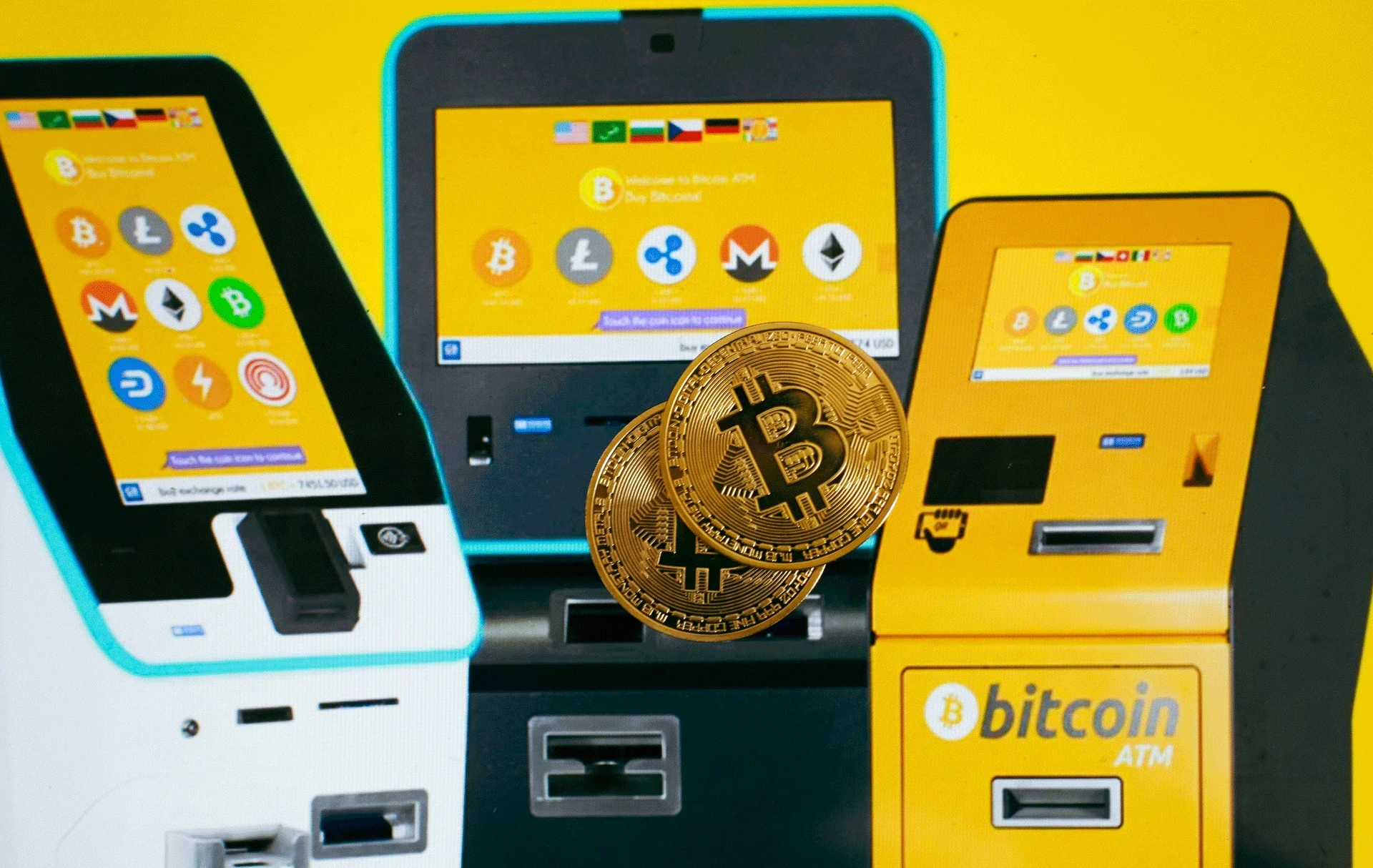

Bitcoin ATMs let you walk up to a kiosk, feed in cash, and walk away with crypto in your wallet, no bank account or exchange signup needed. Most kiosks only sell. Bidirectional machines also buy crypto back for cash, and either way the transaction needs 10 to 30 minutes on the Bitcoin network before it confirms.
What is a Bitcoin ATM and how does it work?
A Bitcoin ATM is a physical kiosk that lets you buy or sell bitcoin (and sometimes other cryptocurrencies) using cash or, on some machines, a debit card. Despite the name, these machines don’t connect to a bank account. They connect to a cryptocurrency exchange in the background.
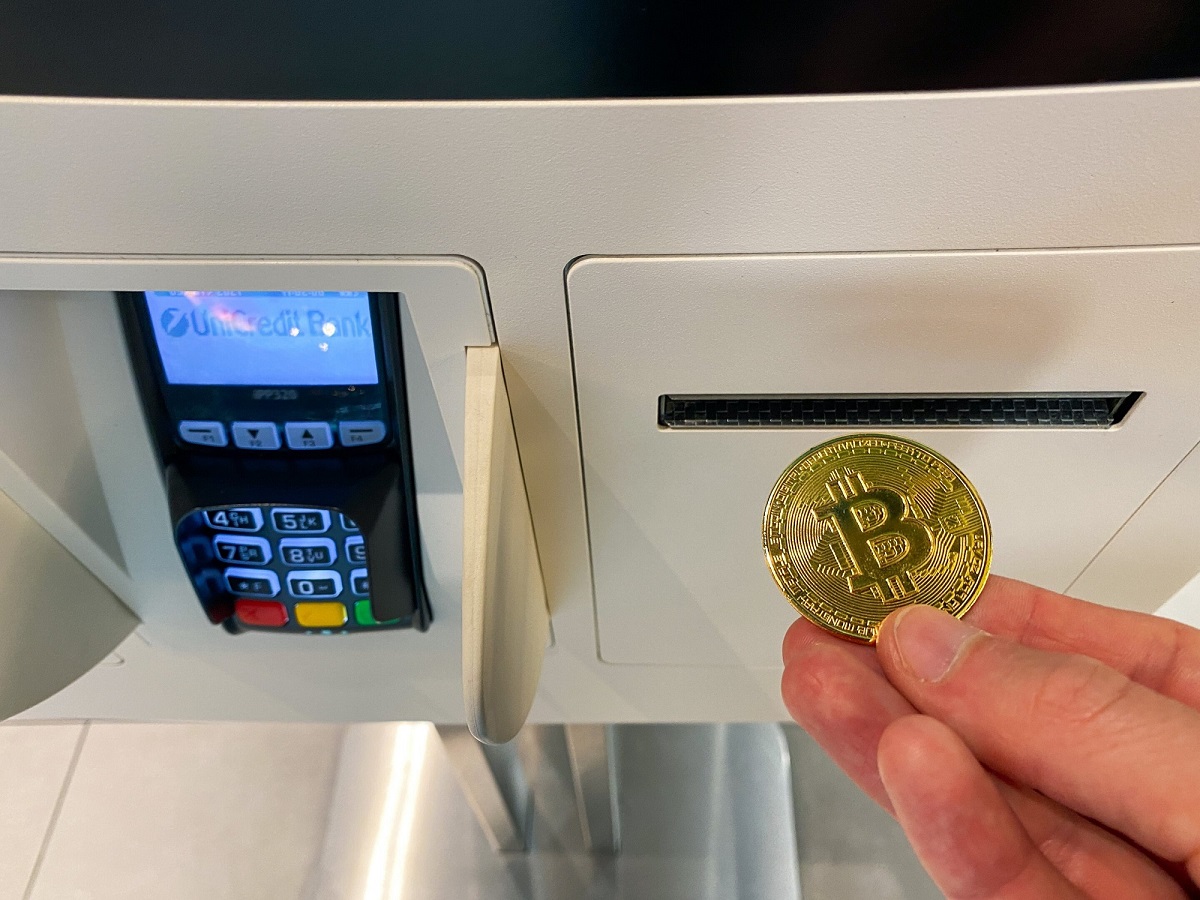
When you insert cash, the machine converts your dollars into crypto at a live exchange rate. You provide a QR code from your wallet app, and the machine uses that code as the destination address for the purchased coins. Once you confirm, the transaction is submitted to the blockchain, recorded permanently on the network’s public ledger. Confirmation times depend on how congested the network is at that moment. Bitcoin confirmations typically take 10 to 30 minutes, while most altcoins confirm in under 5 minutes.
There are two main types of machines. Buy-only machines are the most common. They accept cash and send crypto to your wallet. Bidirectional machines handle both directions: you can also sell crypto by sending it to the machine’s address and collecting dispensed cash once the blockchain confirms the transfer. If you’re planning to sell, check the machine’s listing before making the trip, because most kiosks only support buying.
These machines are distinct from traditional bank ATMs. Most units don’t have a bank card slot and have no link to checking or savings accounts. The very first crypto ATM, a Robocoin machine, opened on October 29, 2013, at Waves Coffee Shop in Vancouver, Canada.
What you need before visiting a Bitcoin ATM
Showing up prepared saves you time and avoids the frustration of getting to the machine only to realize you’re missing something. Here’s what to have ready before you leave the house:
- A crypto wallet app on your smartphone. You need a wallet that can generate a QR receive address. Trust Wallet, Exodus, BlueWallet, and MetaMask all work (MetaMask or Trust Wallet weighs the two most popular), but any wallet app with a QR code for receiving will do. Open the app before you get to the machine and have the receive address ready to scan.
- Your mobile phone with an active number. Most machines send a one-time SMS verification code during the transaction. If your phone can’t receive texts, you won’t be able to proceed.
- Cash in the amount you plan to spend. Most Bitcoin ATMs are cash-only. Bring bills in the denomination you want to insert. Typical minimum purchases run $10 to $25 depending on the operator.
- A government-issued photo ID (for larger purchases). Transactions below the operator’s threshold often require nothing more than your phone number. That threshold is commonly around $900 to $2,000 depending on the operator and your state. Above it, you’ll need a driver’s license or passport. Some operators let you pre-register through their app or website to unlock higher daily limits (up to $50,000 with certain operators) and skip extra steps at the kiosk.
You don’t need a bank account, a credit card, or a trading account on any exchange. If you don’t own a wallet yet, some machines can generate a paper wallet for you, but a mobile wallet is far more practical if you plan to use Bitcoin ATMs more than once, since a paper wallet is easy to lose or damage.
How to buy bitcoin at a Bitcoin ATM step by step
The buying process is straightforward. Most people finish at the machine in under 2 minutes.
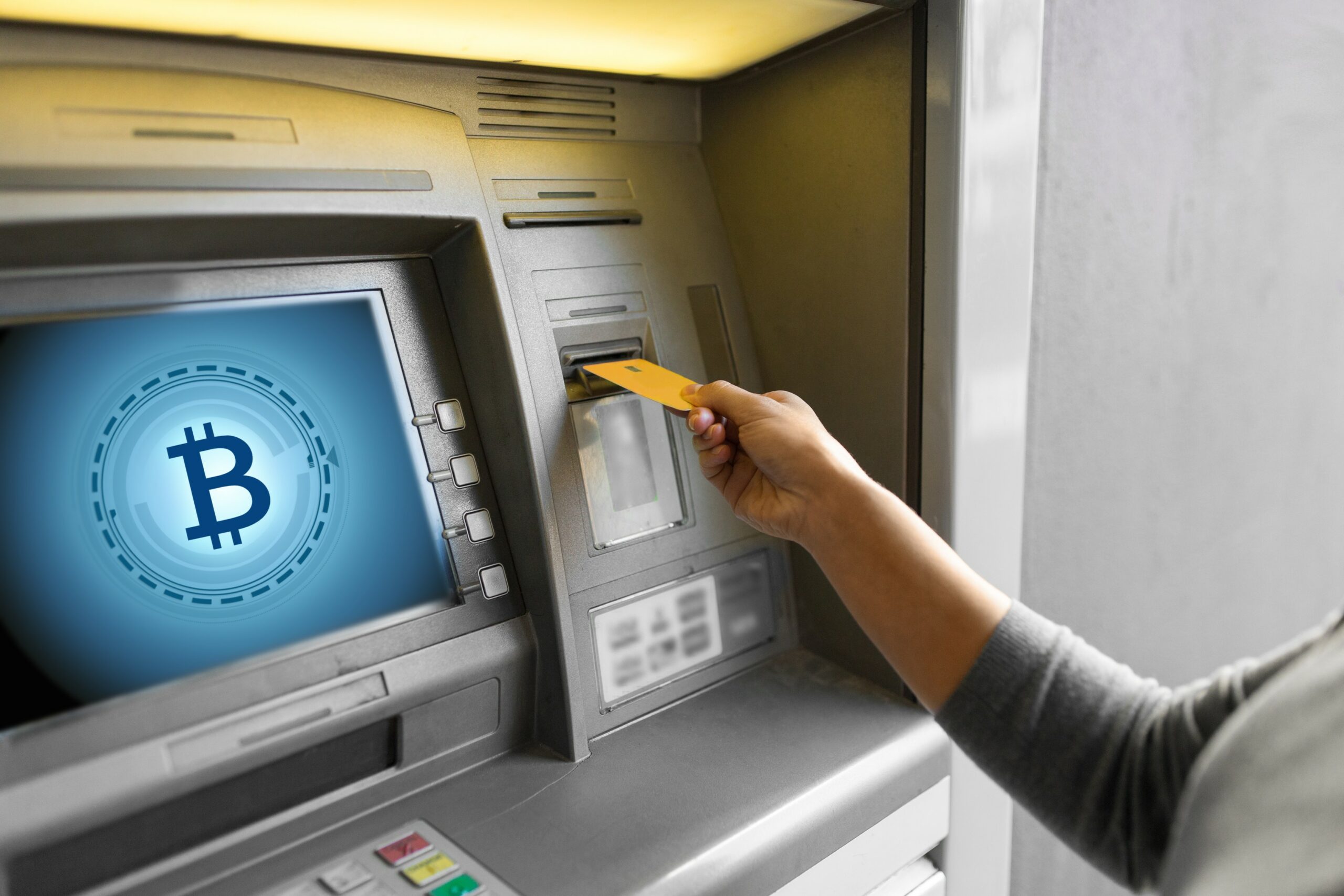
- Find the nearest machine. Use an ATM locator tool like CoinATMRadar or search “Bitcoin ATM near me” in Google Maps. Confirm the machine is operational and check its hours before heading out.
- Tap “Buy Bitcoin” or “Buy Crypto” on the home screen. If the machine supports multiple cryptocurrencies (BTC, ETH, USDT, USDC, DOGE, SOL, LTC, XRP, and others depending on the operator), select the one you want, and if it’s a stablecoin, our USDC vs USDT guide explains which to pick.
- Enter your mobile phone number. The machine sends an SMS verification code. Type it in when it arrives.
- Scan your wallet’s QR code. Hold your phone screen up to the machine’s scanner. Some machines also let you type in the wallet address manually, but scanning is faster and reduces the risk of a typo.
- Verify the destination address. The screen displays the address it’s about to send crypto to. Compare it character by character with the address in your wallet app. Crypto sent to a wrong address cannot be recovered, period.
- Insert cash bills one at a time. The screen shows a running total of your dollars inserted and the equivalent crypto amount at the machine’s live rate.
- Review everything. Before you confirm, check the total amount, the fees, the exchange rate, and the destination address one more time.
- Confirm the purchase. The machine submits the transaction to the blockchain.
- Collect your receipt. Most machines print a paper receipt, send an SMS receipt, or both.
Your crypto typically shows up in your wallet within minutes, though full blockchain confirmation for Bitcoin takes roughly 30 to 45 minutes. You can track the status inside your wallet app while you go about your day.
How to sell bitcoin at a Bitcoin ATM
Selling works only on bidirectional machines. Before you visit, check the machine’s listing on a locator tool to confirm it supports selling. Here’s the process:
- Tap “Sell Bitcoin” on the home screen.
- Enter the amount of cash you want to receive. The machine calculates how much crypto you need to send based on the live rate and fees.
- The machine displays a wallet address or QR code. This is the address you’ll send your crypto to.
- Open your wallet app and send the specified amount of crypto to that address. Double-check the address before hitting send.
- Wait for at least one blockchain confirmation. The machine won’t release cash until the network confirms your transfer. This waiting period is the main reason selling at a Bitcoin ATM takes longer than buying.
- Collect your cash once the confirmation clears.
Selling limits are often lower than buying limits at the same machine. Selling fees typically run 5% to 15% of the transaction amount, while buying fees at the same machine typically range from 6% to 20%. The wait for blockchain confirmation can be a few minutes for altcoins or upwards of 30 minutes for Bitcoin, so plan accordingly.
Bitcoin ATM fees: what to expect and why they are high
Bitcoin ATM fees are percentage-based rather than flat-dollar in most cases, though some operators add a small flat charge on top. Common buy fees run 6% to 20% of the transaction, but the range varies widely: one operator posts buy fees from 4.99% to 21.90%, while another source reports fees as high as 15% to 30%, with an average around 19% as of mid-2026. Beyond the service fee itself, you should also expect a network fee of roughly $3 to $10 per transaction.
To put that in dollar terms: on a $1,000 purchase, you might pay roughly $100 to $250 in total fees depending on the operator and location.
Those numbers look steep next to online exchanges, where fees typically fall between 0.1% and 1.5%. The gap comes down to what it costs to run these machines. Operators pay for the hardware itself, retail-space rent, regular cash pickups and armored transport, regulatory compliance including FinCEN registration and state licensing, and insurance. All of those costs get passed along to the user.
There’s another layer that’s easy to miss. The exchange rate displayed on the machine’s screen isn’t the same as the online spot price you’d see on CoinGecko or an exchange. The operator marks up the rate as part of its fee structure, building profit into the spread between what they pay for the bitcoin and what they charge you. The all-in price shown on screen before you confirm includes both the service fee and this exchange-rate spread, so on reputable machines there aren’t hidden charges, but the total cost is still higher than what you’d pay online.
For large purchases, online exchanges are far more cost-effective. Bitcoin ATMs make the most sense for smaller, convenience-driven buys where speed and simplicity matter more than saving on fees, especially for a first-time buyer who has just read up on Bitcoin basics.
Bitcoin ATM limits
Every machine enforces both a minimum and a maximum transaction amount, and these limits vary by operator, location, and how much identity verification you’ve completed.
Per-transaction minimums are typically as low as $10 to $20, though some operators set them at $25. On the ceiling side, some machines impose per-transaction caps as low as $100.
Daily purchase limits depend on your verification level:
- Without ID (phone verification only): up to $900 to $2,000 per day, depending on the operator and state regulations.
- With full identity verification (government ID, sometimes a selfie): up to $10,000 to $25,000 per day.
If you plan to buy regularly or need higher limits, pre-registering through the operator’s app or website can move you into a higher tier without extra steps each time you visit the machine.
Identity verification and regulatory requirements
All Bitcoin ATM operators in the U.S. must register with FinCEN (the Financial Crimes Enforcement Network) as money service businesses. They’re also required to follow Bank Secrecy Act anti-money laundering rules, which means collecting customer information and reporting suspicious activity to authorities.
What this looks like in practice depends on how much you’re transacting. For small purchases, many machines require only your phone number and an SMS verification code. Once you cross the operator’s threshold, commonly around $900 to $2,000 (the exact amount varies by state and operator), the machine asks you to scan a government-issued ID such as a driver’s license or passport. Some operators also require a selfie or facial photo that they match against the ID.
The anonymity that people once associated with Bitcoin ATMs has largely disappeared. These are regulated financial transactions, and operators are legally required to know who’s using their machines above certain dollar amounts. That said, if you’re buying a small amount and only providing a phone number, the level of personal information collected is still less than what a typical online exchange requires during account setup.
How to find a Bitcoin ATM near you
The U.S. hosts the largest share of the global installed base by a wide margin. As of mid-2026, there are over 20,000 kiosks operating across the country (the estimated global installed base was over 38,000 machines as of 2025, with North America accounting for roughly 90% of the worldwide market). Texas, California, and Florida have the highest state-level concentrations, though rural areas have significantly fewer machines than cities.
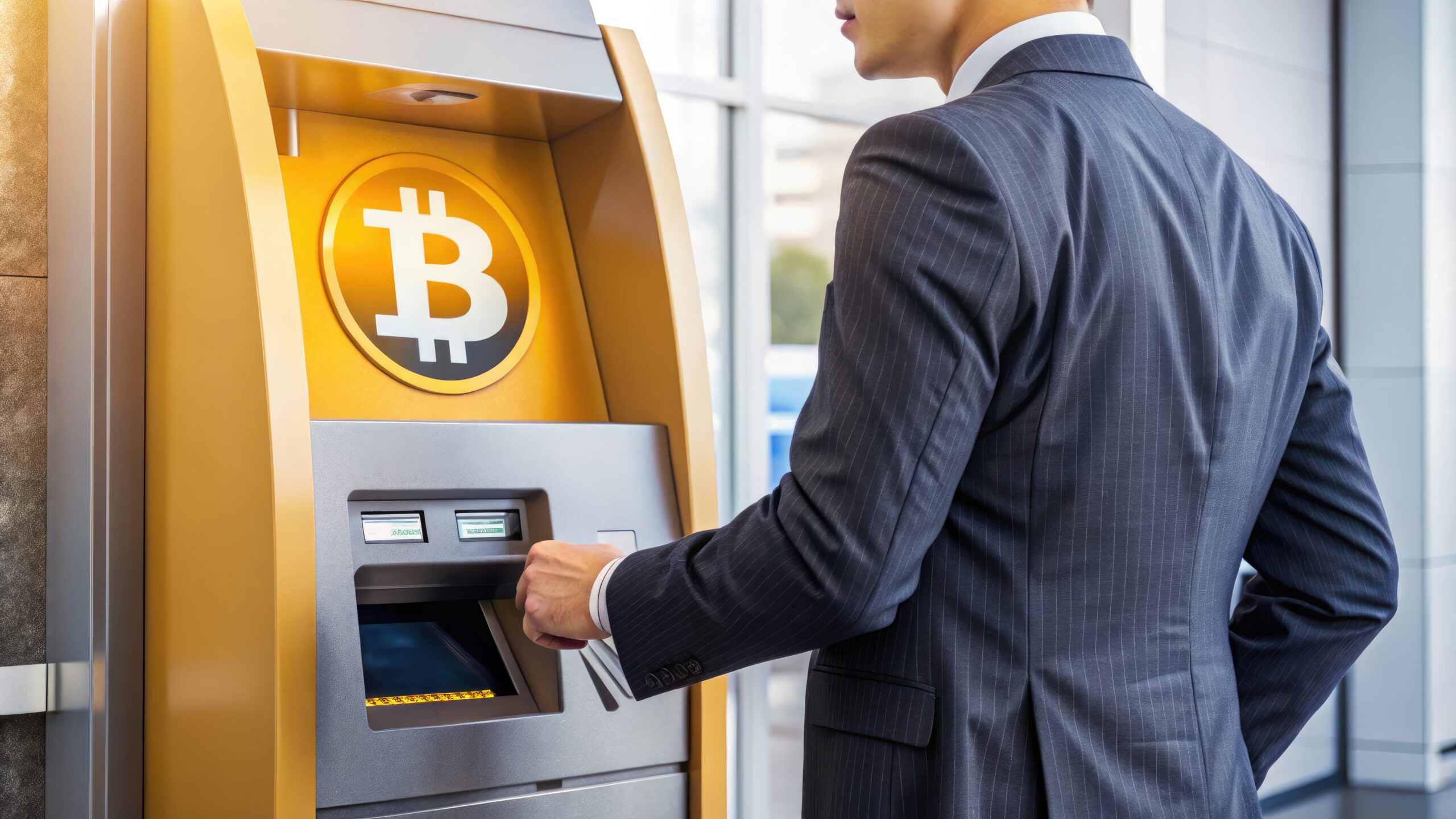
Here’s how to find one:
- CoinATMRadar maintains the most comprehensive global directory of crypto ATMs. You can filter by coin type, transaction direction (buy or sell), and operator.
- Google Maps returns results when you search “Bitcoin ATM near me,” often with hours and user reviews.
- Operator websites and apps. Major operators like Bitcoin Depot, CoinFlip, and others publish their own machine locators.
Common host locations include convenience stores, gas stations, grocery stores, pharmacies, shopping malls, laundromats, bars, restaurants, airports, and train stations. Some machines run around the clock, but many follow the host business’s hours. Confirm availability before making the trip, especially if you’re driving out of your way.
What happens after you buy bitcoin at an ATM
Once you confirm at the machine, the purchase is broadcast to the network and your crypto is on its way. Here’s what to expect and what to do:
- Your coins arrive in your wallet within minutes, but full confirmation takes longer. Bitcoin’s blockchain typically needs 30 to 45 minutes for full confirmation. Most other supported assets, like Ethereum, Litecoin, or stablecoins, confirm in under 5 minutes. Until confirmation is complete, the balance may appear as “pending” in your wallet app.
- Track the confirmation status. Open your wallet app or paste the transaction ID into a blockchain explorer (like Blockchair for Bitcoin or Etherscan for Ethereum) to watch it progress through confirmations in real time.
- Once confirmed, the balance is fully available in your wallet. You can send it, hold it, or move it to another wallet. Keep in mind that the value fluctuates with the market from the moment it lands.
- Keep your receipts. Save both the printed receipt and the SMS receipt. You’ll want these records for tax purposes, since the IRS treats crypto purchases as taxable events when you later sell at a gain or loss. The receipt documents your cost basis: what you paid, when you paid it, and what you received.
- Guard your wallet’s private keys and recovery phrase. Never share them with anyone. If someone asks for your seed phrase, it’s a scam, full stop.
Are Bitcoin ATMs safe?
Machines operated by licensed, FinCEN-registered businesses are generally safe to use. The transaction itself is protected by encrypted connections and wallet-based authentication. In most cases, the process is non-custodial: your crypto goes directly to your personal wallet and is never held by the operator.
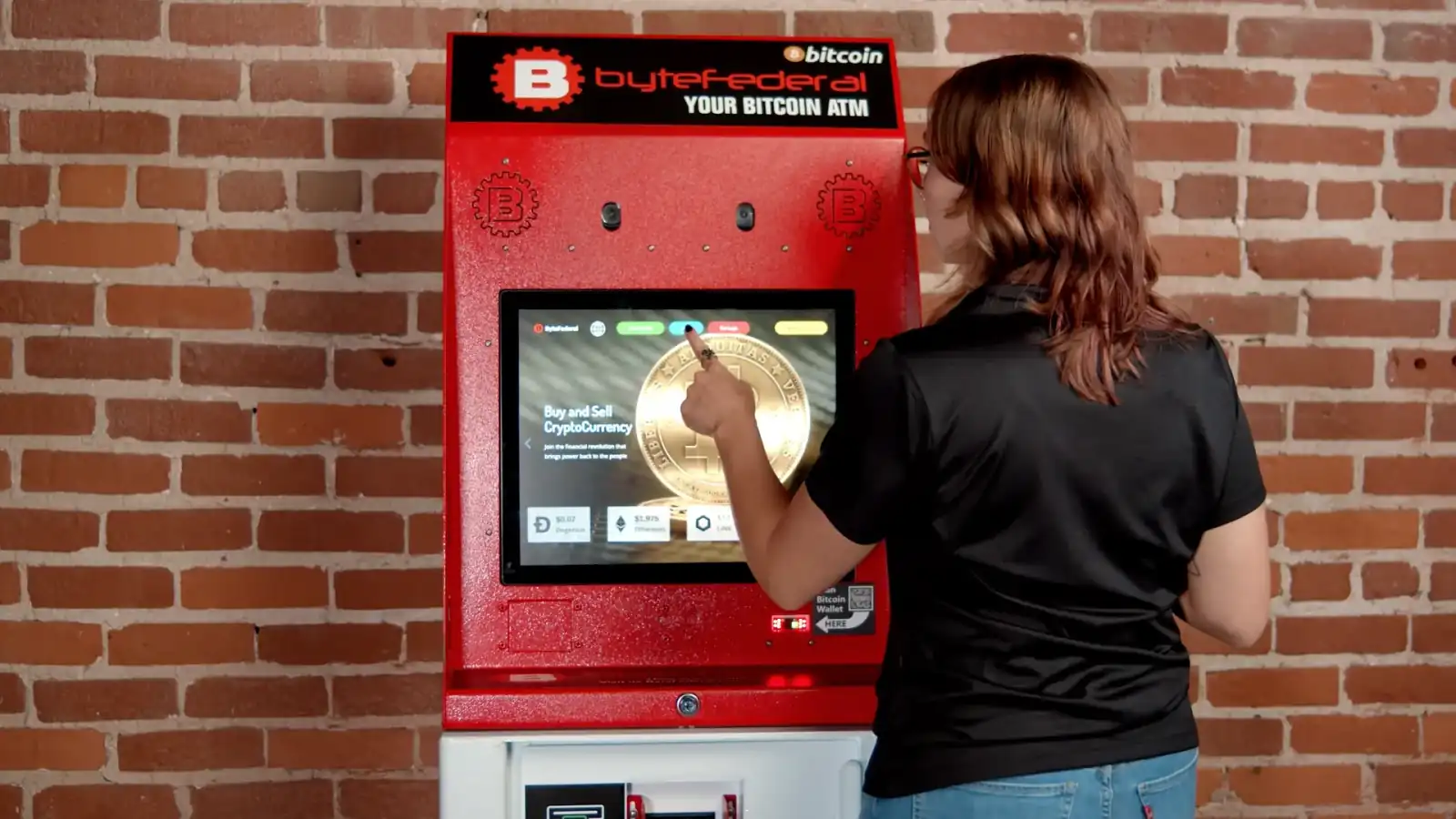
The real safety risk isn’t the machine. It’s the scams that send people to Bitcoin ATMs in the first place. The FTC reported that consumers lost over $110 million to Bitcoin ATM scams in 2023, with losses exceeding $65 million in just the first half of 2024. These scams follow recognizable patterns:
- Government impersonation. Someone calls claiming to be from the IRS, Social Security Administration, or local law enforcement. They say you owe money, a warrant has been issued, or your benefits are about to be frozen. They instruct you to go to a Bitcoin ATM and deposit cash to “resolve” the issue. No legitimate government agency asks for payment through a Bitcoin ATM.
- Romance scams. Someone you’ve been talking to online asks you to send bitcoin, often framing it as an investment, an emergency, or a way to prove trust. The relationship is fabricated, and the crypto goes to a scammer’s wallet.
- Fake tech support. A pop-up on your computer or a phone call claims your device is compromised. The caller walks you through going to a Bitcoin ATM and sending money to a “secure” wallet that actually belongs to the scammer.
- Investment scams. Unsolicited messages promising guaranteed returns or insider access to a crypto opportunity direct you to deposit cash at a Bitcoin ATM. Guaranteed returns don’t exist in crypto.
The red flag across all of these: an unsolicited call, text, email, or social media message telling you to go to a Bitcoin ATM to pay a bill, settle a debt, claim a prize, or help someone. If that happens, stop. It’s a scam.
A few additional things to keep in mind: cryptocurrency is not insured by the FDIC. Funds in a crypto wallet carry both market risk and security risk (if you lose your private keys, you lose access). Stick to machines from operators you can verify through their official websites, and avoid kiosks in poorly lit or unmonitored locations.
Who uses Bitcoin ATMs
Bitcoin ATMs serve a wider range of people than you might expect. Here’s who uses them and what draws them to a kiosk instead of an online exchange:
- Unbanked individuals. People without access to traditional banking can still buy crypto with cash at a Bitcoin ATM. There’s no bank account requirement, no credit check, and no minimum balance to maintain.
- Privacy-conscious users. Some people prefer not to link a bank account or upload extensive personal documents to an online exchange. While Bitcoin ATMs do require verification above certain thresholds, smaller cash purchases involve less data collection than a full exchange account.
- Travelers. If you’re in a new city or country with local cash in your pocket, a Bitcoin ATM converts it to crypto quickly without needing to set up a local bank account or exchange account.
- Remittance senders. People sending money to family abroad sometimes use Bitcoin ATMs to convert cash to crypto, which the recipient can then convert to local currency at the other end.
- First-time crypto buyers. A physical kiosk with an on-screen walkthrough feels more familiar than trying to figure out a trading app for the first time. The guided interface takes away some of the intimidation.
- Convenience-driven buyers. For small purchases where speed matters more than saving a few dollars in fees, walking up to a machine and finishing in two minutes beats waiting for a bank transfer to clear on an exchange.
Keeping your crypto secure after the transaction
If your phone is lost, broken, or stolen, your wallet’s recovery phrase (sometimes called a seed phrase) is the only thing that lets you get back into your crypto. Write it down on paper and store it somewhere safe offline. Never save it in a notes app, a text message, a screenshot, or cloud storage. If someone gets your recovery phrase, they can drain your wallet.
Always double-check the destination address at the machine before confirming a purchase or sale. Sending crypto to an incorrect address is irreversible. There’s no customer service line that can undo a blockchain transaction.
Save your printed receipt and SMS receipt from every transaction. These records document your cost basis, the date, the amount of crypto received, and the fees paid. You may need them for tax reporting: the IRS requires you to report capital gains or losses when you eventually sell, trade, or spend the crypto you bought. Keeping organized records from the start saves headaches later.
If you use Bitcoin ATMs regularly, consider pre-registering with the operator through their app or website. Pre-registration typically streamlines future visits by saving your verification information, and it gives you a single place to view your full transaction history across multiple visits. At AXL Research Hub, we recommend treating this the way you’d treat any financial record: organized, backed up, and easy to pull up when you need it.