
Bitcoin is a digital currency that runs on a worldwide network of computers, with no government, bank, or company in charge. If you’ve seen headlines about bitcoin crossing six figures or wondered whether it belongs in your portfolio, you’re not alone.
What is bitcoin?
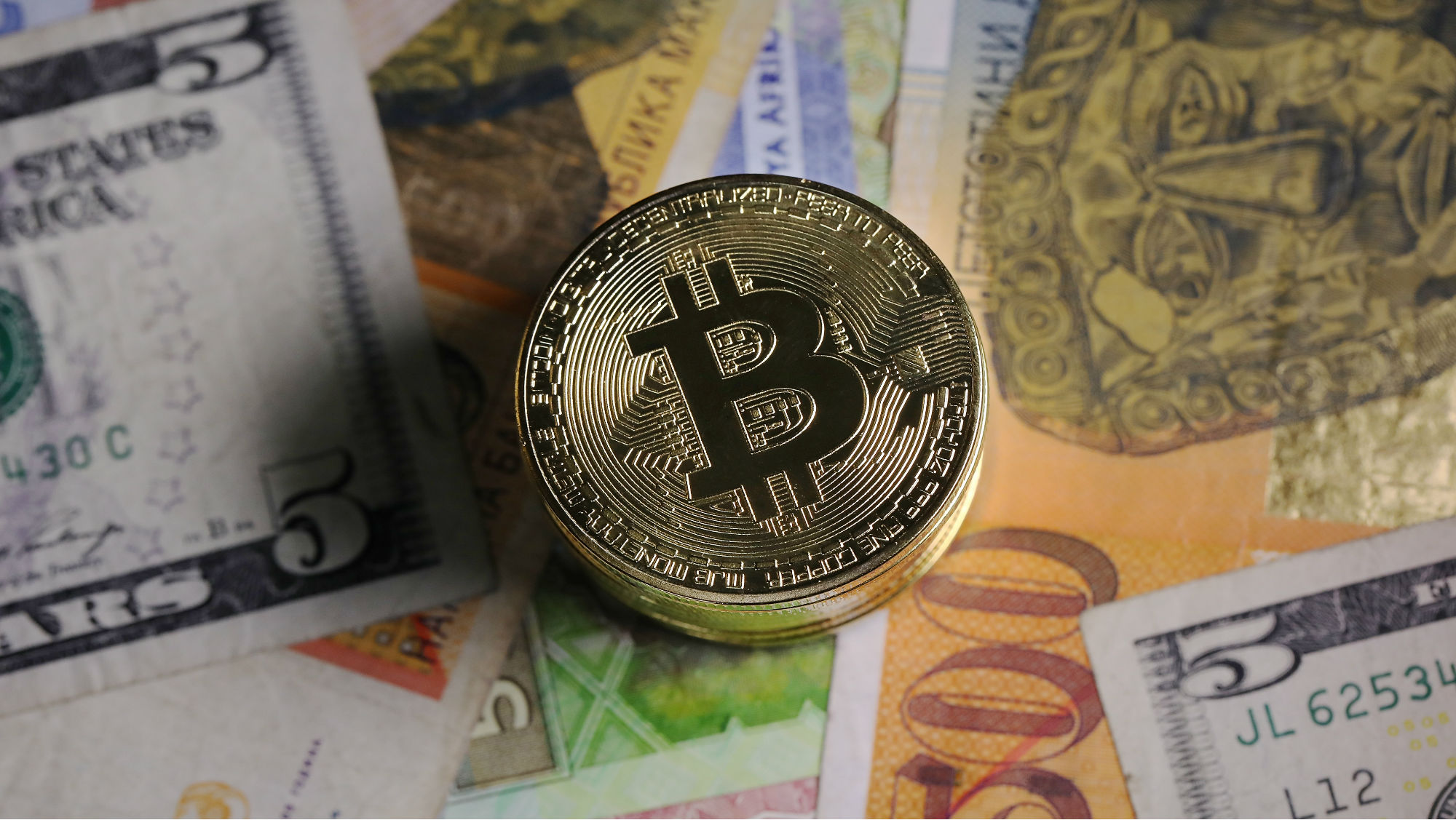
Bitcoin lets you send money straight to another person online, cutting out banks and payment processors entirely. It exists only in digital form. There are no physical coins or bills. Instead, bitcoin lives on a peer-to-peer computer network where thousands of machines keep a shared record of every transaction, a job handled by miners (see Bitcoin mining basics).
The ticker symbol is BTC, and the currency symbol is ₿. Bitcoin’s maximum supply is capped at 21 million coins, a limit written into the software itself. That fixed ceiling is one reason people compare bitcoin to gold: both are scarce, and both attract buyers who see them as a potential store of value. That scarcity is also the clearest line between bitcoin and faster networks, which is where the Solana vs Bitcoin split sits: speed and low fees against a hard supply cap.
You don’t need to buy a whole bitcoin. Each one is divisible to eight decimal places, and the smallest unit is called a satoshi. One satoshi equals 0.00000001 BTC, which means there are 100 million satoshis in a single bitcoin. At any price level, you can own a fraction.
Bitcoin serves two roles. It’s a medium of exchange, meaning you can use it to pay for goods and services wherever merchants accept it. It’s also treated as an investment asset, bought and held by people who expect its price to rise over time.
One convention worth knowing: capital-B “Bitcoin” refers to the network and the protocol, the technology itself. Lowercase-b “bitcoin” refers to the currency unit, the thing you buy, send, or hold. You’ll see both throughout this guide, and the distinction matters when you’re reading technical discussions or news articles.
Who created bitcoin and when?
On October 31, 2008, a white paper titled Bitcoin: A Peer-to-Peer Electronic Cash System appeared online under the pseudonym Satoshi Nakamoto. Nobody knows who Nakamoto really is, whether one person or a group, and the identity has never been confirmed despite years of speculation.
At its core, the white paper proposed a way for people to pay each other online without trusting a middleman, an ambition that earlier digital cash projects had pursued without fully succeeding. David Chaum developed ecash in the 1980s, Adam Back introduced Hashcash in 1997, and Wei Dai’s b-money and Nick Szabo’s bit gold both appeared in 1998. Each project solved part of the puzzle, but none managed to build a decentralized system that also prevented the same coins from being spent twice.
Nakamoto’s breakthrough was combining cryptographic proof with a distributed ledger in a way that solved the double-spend problem without a central authority. The Bitcoin network went live on January 3, 2009, when Nakamoto mined the first block, known as the genesis block. Embedded in that block was a headline from The Times: “Chancellor on Brink of Second Bailout for Banks.” The reference wasn’t accidental. It pointed directly at the financial system failures that motivated the project.
Nine days after launch, Hal Finney received the first bitcoin transaction: ten bitcoins sent by Nakamoto. The first known commercial purchase came later. On May 22, 2010, a programmer paid 10,000 BTC for two pizzas, a date now celebrated as Bitcoin Pizza Day.
Nakamoto is estimated to have mined roughly 1 million bitcoins before stepping away from public activity around 2010, after handing control of the code repository to developer Gavin Andresen. Since then, the project has been maintained by an open-source community of developers.
How does bitcoin work?
Bitcoin runs on a global network of computers called nodes, each holding a full copy of the transaction ledger with no central server directing them. One reference estimate puts the count at over 18,000 nodes spread across countries worldwide, and their collective agreement on which transactions are valid is what keeps the system synchronized.
When you send bitcoin, the transaction is broadcast to the network and validated through cryptography. Every user has a pair of cryptographic keys: a public key, which works like an address others can send bitcoin to, and a private key, which authorizes outgoing transactions. When you sign a transaction with your private key, the resulting cryptographic signature proves you own the bitcoin at that address and prevents anyone from altering the transaction after it’s been broadcast.
Once validated, the transaction is recorded permanently on the blockchain. Initial confirmations typically arrive within 10 to 60 minutes, depending on network activity and the fee attached to the transaction.
What is a blockchain?
A blockchain is a shared, public digital ledger that records every bitcoin transaction in chronological order. Transactions are grouped into blocks, and each block contains a reference to the one before it, forming a chain. That cryptographic linking between blocks is what makes it extremely difficult to go back and alter past records. Changing one block would break the chain for every block after it, and every node on the network would reject the tampered version.
The blockchain is distributed, meaning identical copies exist on every node. No single party controls the data. Anyone can view the ledger, which provides transparency, while the cryptographic design provides security. This combination is what lets bitcoin operate without a bank or government vouching for the records.
What is bitcoin mining?
Mining is the process that verifies pending bitcoin transactions and adds them to the blockchain in new blocks. Miners compete to solve a cryptographic puzzle. The first one to find a valid solution earns the right to add the next block and collects a reward: newly created bitcoin plus the transaction fees from every transaction in that block.
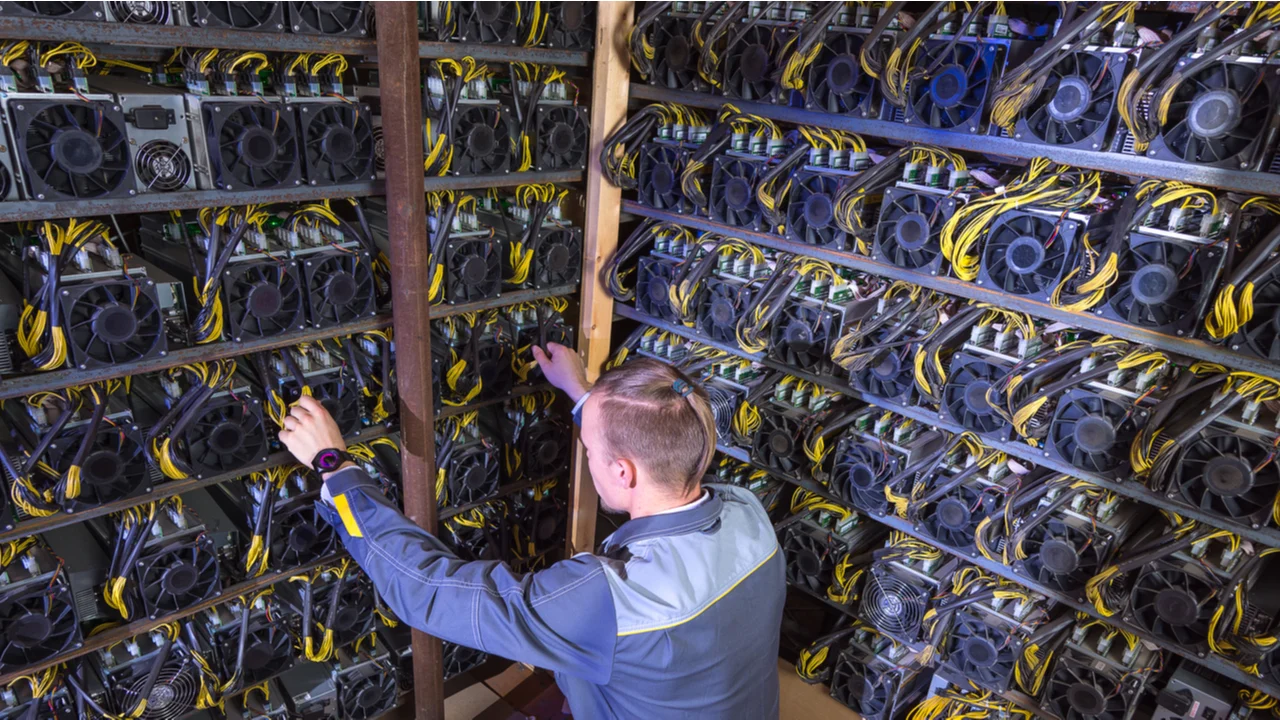
This competition works like a decentralized lottery. Because no single participant can predict or control who solves the puzzle first, no one entity can dominate the chain. Bitcoin uses a proof-of-work consensus mechanism, meaning raw computing power is what secures the network.
Solving these puzzles requires specialized hardware called ASICs (application-specific integrated circuits). General-purpose computers can’t compete anymore. The energy consumption is significant, and that’s one of the most common criticisms of bitcoin.
The target time for adding a new block is approximately 10 minutes. The network automatically adjusts the difficulty of the puzzle to keep that pace roughly steady, regardless of how much total computing power miners throw at it, which is why mining one Bitcoin today takes anywhere from minutes to decades depending on your share of that power.
New bitcoin enter circulation on a preprogrammed schedule. When the network launched, the block reward was 50 BTC. That reward halves at a fixed interval, and as of the most recent halving, it stands at 3.125 BTC per block.
How the halving controls bitcoin’s supply
Every 210,000 blocks, roughly every four years, the block reward is cut in half. This halving schedule is hardcoded into the Bitcoin software. It can’t be changed unless the overwhelming majority of the decentralized network agrees to modify it, which makes changing it highly unlikely.
The reward progression so far: 50 BTC per block at launch, then 25, then 12.5, then 6.25, and now 3.125. Each halving slows down the rate at which new bitcoin enters circulation, which means bitcoin’s inflation rate declines over time on a known, predictable curve.
As of June 2026, approximately 20,057,778 BTC are already in circulation out of the 21 million maximum. The remaining coins will be mined in smaller and smaller increments over the coming decades.
Historically, halvings have preceded periods of price appreciation, though past patterns don’t guarantee future results. The scarcity argument is straightforward: if demand stays constant or grows while new supply slows, the price faces upward pressure. That logic has attracted both long-term holders and speculative traders around each halving event.
What gives bitcoin its value?
Bitcoin’s price is driven by supply and demand, the same force behind stocks, commodities, and other currencies. The fixed supply of 21 million coins creates built-in scarcity. Unlike a central bank, which can print more money, nobody can create additional bitcoin beyond that cap.
On the demand side, several factors push and pull the price. Adoption by companies and individuals increases demand. Regulatory developments can either encourage or discourage buying. Macroeconomic conditions, like inflation fears or banking instability, tend to drive interest in assets outside the traditional financial system. And investor sentiment, which can shift quickly on news or social media, amplifies moves in both directions.
Bitcoin’s usefulness as a borderless, peer-to-peer payment method adds practical demand on top of speculative interest. You can send value to anyone with a bitcoin address, anywhere, without asking a bank for permission.
One thing bitcoin doesn’t do is generate interest or dividends on its own. Returns depend entirely on price movement. If the price goes up after you buy, you profit. If it drops, you lose. There’s no underlying cash flow like a stock dividend or bond coupon.
The price history reflects that volatility. Bitcoin was worth approximately $0.09 near its founding in 2009. By January 2015, the price was roughly $320. It exceeded $64,000 in November 2021, then fell to roughly $15,500 by November 2022. By late 2024, it had climbed above $100,000. Those swings illustrate both the opportunity and the risk.
Because you can buy a tiny fraction of a bitcoin, you don’t need tens of thousands of dollars to participate. You can buy $10 or $50 worth at any price level, which keeps it accessible regardless of the headline number.
How to buy bitcoin
There are several ways to get bitcoin, and the right one depends on how much control you want over your coins and how comfortable you are with the process.
The most common method is signing up on a cryptocurrency exchange. You create an account, verify your identity through a KYC (know your customer) process, link a bank account or card, fund your account, and buy BTC. Transaction fees on exchanges commonly range from 0.5% to 4% depending on the platform and how you fund the purchase. Card payments typically cost more than bank transfers.
Other options include:
- Bitcoin ATMs. These machines let you buy bitcoin with cash or a debit card, and our guide on using a Bitcoin ATM walks through the process. You provide a bitcoin address (or the ATM generates one), insert your payment, and the bitcoin is sent to that address. Fees tend to be higher than online exchanges.
- Peer-to-peer platforms. Buyers and sellers trade directly without a centralized order book. You negotiate the price and payment method with the other party. This approach offers more privacy but requires more caution about counterparty risk.
- Wallets with built-in exchange features. Some hardware and software wallets let you buy bitcoin directly inside the wallet app, skipping the step of transferring coins from an exchange.
- Spot bitcoin ETFs. These funds track bitcoin’s price and trade on traditional stock exchanges. You buy shares through a regular brokerage account, which means you get exposure to bitcoin’s price movement without managing private keys or wallets yourself. The trade-off is that you don’t actually hold bitcoin; you hold shares in a fund.
Bitcoin wallets and private keys
A bitcoin wallet doesn’t store bitcoin the way a physical wallet holds cash. Your coins always live on the blockchain. What the wallet stores is your cryptographic keys, the proof that you own specific bitcoin at a specific address.
Wallets come in two main forms. Software wallets are apps on your phone or computer. They’re convenient for everyday use and quick transactions. Hardware wallets are physical devices that store your private keys offline, which provides stronger protection against hacking because the keys never touch the internet during normal use.
Your private key works like a password. Whoever holds it controls the bitcoin at that address. There’s no “forgot my password” option, no customer support line to call. If you lose access to your private key and don’t have a backup (usually a recovery phrase), the bitcoin tied to that key is permanently gone.
This reality creates a choice every bitcoin holder faces. Some people keep their bitcoin on exchange-hosted wallets for convenience. The exchange manages the keys, which means you’re trusting them with custody, similar to trusting a bank with your cash. Others prefer self-custody, holding their own keys in a personal wallet for full control. Self-custody puts the responsibility for security entirely on you, but it removes the risk of an exchange freezing your account or getting hacked.
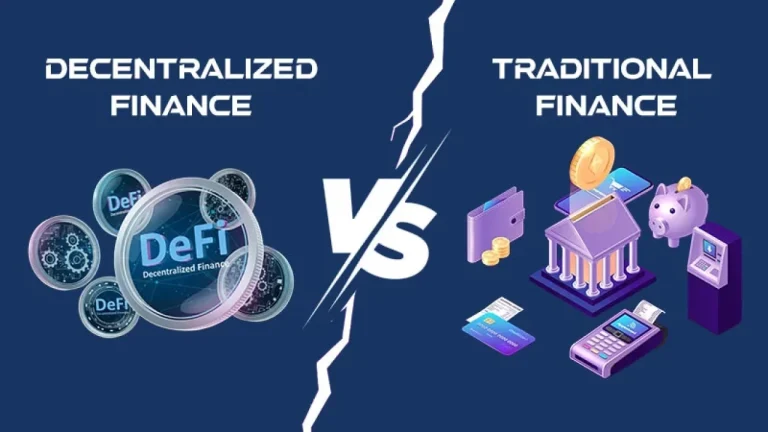
How bitcoin differs from traditional currencies
| Feature | Bitcoin | Traditional currencies (USD, EUR) |
|---|---|---|
| Issuer | No central issuer; created by the network’s code | Issued and regulated by governments and central banks |
| Form | Purely digital | Physical (cash) and digital |
| Transfers | Peer to peer, no intermediary needed | Bank transfers and card payments go through intermediaries |
| Deposit insurance | No government insurance | FDIC, SIPC (in the U.S.) cover certain deposits and accounts |
| Access | Open network anyone can join | Payment apps like Venmo or PayPal require permission and move dollars through the banking system |
| Reversibility | Irreversible once confirmed | Credit card and bank transactions can be reversed or charged back |
| Supply | Fixed at 21 million | No hard cap; central banks can increase the money supply |
The irreversibility point deserves extra attention. When you send bitcoin and the transaction is confirmed on the blockchain, it’s final. There’s no disputing the charge or requesting a chargeback the way you would with a credit card. That finality is a feature for merchants who lose money to chargebacks, but it’s a risk for buyers who send bitcoin to a wrong address or fall for a scam.
Pros and cons of bitcoin
Bitcoin offers real advantages over traditional payment methods and financial assets, but it carries equally real downsides. Here’s where it shines and where it falls short.
What works in bitcoin’s favor:
- Fast cross-border transfers. You can send bitcoin to someone in another country without waiting for bank processing times or paying steep international wire fees. Average bitcoin transfer fees have been reported in the range of roughly $0.50 to $2.50, compared to wire transfer fees that can reach up to $60. That said, bitcoin fees rise when the network is congested.
- Decentralization. No single institution controls the network, which means no single entity can freeze your assets or block your transactions. For people in countries with unstable banking systems, that independence matters.
- Cryptographic security. The network is extremely resistant to hacking and fraud because every transaction is verified through cryptographic proof across thousands of nodes. Attacking the network would require controlling a majority of its computing power, which is prohibitively expensive.
- Transparency. Every transaction is recorded on a publicly viewable ledger. Anyone can audit the blockchain, which creates a level of accountability that closed banking systems don’t offer.
Where bitcoin falls short:
- Price volatility. Rapid swings in value can produce large losses quickly and make bitcoin impractical as everyday money. A payment worth $50 today might be worth $42 tomorrow.
- Energy consumption. Proof-of-work mining uses a significant amount of electricity. A single bitcoin transaction can consume more electricity than an average U.S. household uses in about 38 days, according to widely cited estimates.
- Limited track record. Bitcoin launched in 2009, giving it less than two decades of history. How it behaves during prolonged economic crises or unprecedented regulatory pressure is still uncertain.
- No yield. Bitcoin doesn’t pay interest or dividends. Some people lend their bitcoin through third-party platforms to earn a return, but those strategies carry their own risks, including platform insolvency.
- Lost keys mean lost funds. If you lose your private key with no backup, your bitcoin is gone permanently. There’s no recovery mechanism.
- Not universally accepted. While adoption is growing, most merchants still don’t accept bitcoin.
- Competition. Other cryptocurrencies offer different technology trade-offs, like faster transaction speeds or lower energy use, which means bitcoin isn’t the only option in the space.
Ways to use bitcoin
Bitcoin started as a payment system, but it’s grown into something people use in several different ways.
- Payments. You can send bitcoin to any recipient worldwide, as long as you have their address. Some online and physical stores accept it directly at checkout.
- Long-term holding. Many buyers treat bitcoin as a store of value, buying and holding it with the expectation that scarcity and adoption will push the price higher over years.
- Short-term trading. Active traders try to profit from bitcoin‘s price swings over days, weeks, or months. The volatility that makes bitcoin risky as a currency makes it attractive to speculators.
- Portfolio diversification. Some investors add bitcoin to a broader portfolio as a way to hold an asset that behaves differently from stocks and bonds. Keep in mind, though, that bitcoin has shown correlation with stock markets during downturns, which limits how well it diversifies in exactly the moments you’d want it most.
- Merchant acceptance. Some well-known companies accept bitcoin for travel bookings, technology products, and charitable donations.
Bitcoin taxes in the United States
In the U.S., selling, trading, or otherwise disposing of bitcoin is generally a taxable event. The IRS treats bitcoin as property, not currency, which means capital gains rules apply.
If you hold bitcoin for less than one year before selling, any profit is taxed at short-term capital gains rates, which match your ordinary income tax bracket. Hold for more than one year, and the profit qualifies for long-term capital gains rates, which are lower for most people.
Using bitcoin to buy goods or services also triggers a taxable disposition. If you bought bitcoin at $30,000 and used it to buy a laptop when the price was $50,000, you’d owe capital gains tax on the $20,000 difference, even though you never “cashed out” to dollars.
Active trading across many transactions makes record-keeping complicated fast. Every trade is a separate taxable event, and you need to track your cost basis for each one. If you’re making frequent trades or holding significant amounts of bitcoin, working with a tax professional who understands cryptocurrency is a practical step.
Risks of investing in bitcoin
Bitcoin can produce strong returns, but it can just as easily produce steep losses. Before putting money in, understand what you’re exposed to.
- Volatility. Price swings of 20% or more in a matter of weeks aren’t unusual. That cuts both ways, but the downside is what catches people off guard.
- Regulatory uncertainty. Governments are still figuring out how to regulate cryptocurrency. Future rules could restrict how bitcoin is bought, sold, or used, which could affect both access and price.
- Exchange and wallet hacking. Platforms have been compromised in the past, and users have lost funds as a result. Choosing a reputable exchange and using strong security practices reduces this risk but doesn’t eliminate it.
- Scams and fraud. Criminals have posed as exchanges, investment managers, and even customer support agents to steal bitcoin. If someone promises guaranteed returns or pressures you to send bitcoin quickly, that’s a red flag.
- No deposit insurance. Bitcoin held on an exchange or in a personal wallet isn’t covered by FDIC or any equivalent government insurance. If the exchange fails or you lose your keys, there’s no backstop.
- Potential for total loss. Never invest more than you can afford to lose. That advice sounds generic, but with bitcoin it’s especially relevant because of the combination of volatility, irreversibility, and lack of insurance.
Is bitcoin legal?
Bitcoin is legal to buy, hold, sell, and use in the United States. No U.S. law requires any business or individual to accept it as payment, but there’s no prohibition on owning or transacting in it.
The regulatory picture has developed over time. In March 2013, FinCEN issued guidance classifying bitcoin miners who sell their mined coins as money services businesses, bringing them under existing financial regulations. More recently, a U.S. executive order establishing a strategic bitcoin reserve was signed in March 2025, and Texas signed legislation to create a state bitcoin reserve in June 2025. These moves signal growing government engagement with bitcoin rather than any effort to ban it.
Internationally, the legal status varies widely. Bitcoin is restricted or outright banned in countries including China, Afghanistan, Egypt, and Kuwait, among others. El Salvador made headlines in 2021 by adopting bitcoin as legal tender, but it revoked that status by 2025. Some other countries have begun testing or acquiring small amounts of bitcoin at the central-bank level, though these efforts are still early.
The takeaway for U.S. residents is that bitcoin is firmly legal here, but the regulatory framework is still evolving. New rules around reporting, taxation, and exchange operations could come at any time, so staying informed matters.
Bitcoin price history and key milestones
Bitcoin’s price history reads like a roller coaster with a generally upward slope. Here are the major markers:
- 2009: Bitcoin launched with negligible value. Early adopters mined and traded it for fractions of a cent.
- Early 2011: The price crossed $1 for the first time.
- Late 2017: A speculative frenzy pushed bitcoin to nearly $20,000.
- 2018: China imposed a complete trading ban, and the price fell sharply.
- 2021: Bitcoin climbed past $60,000 before retreating.
- November 2022: The price dropped to roughly $15,500 amid broader crypto market turmoil.
- January 2024: Spot bitcoin ETFs launched in the U.S., drawing $4.6 billion in trading volume on their first day. The arrival of ETFs gave traditional investors a regulated, familiar way to get bitcoin exposure.
- December 2024: Bitcoin surpassed $100,000.
Price movements have historically lined up with halvings, regulatory shifts, institutional adoption, and macroeconomic trends. None of these patterns guarantee future performance, but they do show what kinds of events tend to move the market.
Can you turn bitcoin into cash?
Yes, and the process is straightforward. The most common way is to sell your bitcoin on a cryptocurrency exchange and withdraw the proceeds to a linked bank account. You place a sell order, the exchange matches it with a buyer, and the resulting cash balance can be transferred to your bank.
Peer-to-peer platforms offer another route. You list your bitcoin for sale, agree on a price with a buyer, and receive payment in your local currency directly.
Some payment platforms also let you sell bitcoin and transfer the balance to a bank account without going through a dedicated crypto exchange.
Withdrawal limits and processing times vary by platform. Bank transfers from exchanges can take anywhere from a few days to a week, depending on the exchange’s policies and your bank’s processing speed. If you need cash quickly, factor that timeline into your plans.
Frequently asked questions about bitcoin
What happens if you put $100 in bitcoin?
You receive a fractional amount of BTC based on the market price at the time of your purchase. If bitcoin is priced at $50,000, for example, your $100 buys 0.002 BTC. From that point on, the value of your holding rises and falls with bitcoin’s price. You could end up with more than $100 or less than $100, and there’s no guarantee in either direction.
How many bitcoins are in circulation?
Around 20,057,778 BTC had been mined by June 2026. With the hard cap set at 21 million, fewer than a million bitcoins are left to be mined, and they’ll be released gradually over the next century-plus.
Can you buy less than one whole bitcoin?
Yes. You can buy a fraction as small as 0.00000001 BTC. The smallest unit, a satoshi, equals 0.00000001 BTC. Most exchanges let you buy as little as a few dollars’ worth.
Bitcoin’s fixed supply: what comes next
Only 21 million bitcoins will ever exist. That hard cap is enforced by the network’s code, and changing it would require overwhelming consensus across the decentralized network of nodes, miners, and developers. In practice, that makes it nearly impossible to change because the participants who secure the network have a strong incentive to preserve scarcity.
The decreasing issuance schedule means the last fractions of a bitcoin won’t be mined until approximately 2140. Long before that, block rewards will become so small that transaction fees will make up the majority of what miners earn. Whether those fees are large enough to keep miners incentivized to secure the network is one of the open questions about bitcoin’s long-term sustainability. If mining becomes unprofitable for too many participants, the network’s computing power could decline, which would weaken its security. On the other hand, if bitcoin adoption and transaction volume grow, fees could fill the gap left by shrinking block rewards.
The scarcity narrative draws direct comparisons to precious metals. Gold is valuable partly because there’s a finite amount of it in the earth’s crust, and extracting it gets harder over time. Bitcoin mirrors that dynamic by design, which is why you’ll often hear it called “digital gold.” At AXL Research Hub, we think that comparison is useful but imperfect: gold has thousands of years of track record and industrial uses beyond investment, while bitcoin is still building its history. The 21 million cap is real and verifiable, but what the market ultimately pays for each of those coins depends on demand, and demand depends on adoption, regulation, and trust, all of which are still in motion.