
A cross-chain bridge is the tool you use when your tokens sit on one blockchain but the app, fee level, or marketplace you want lives on another. Bridges don’t actually move coins: they lock or burn them on the source chain and issue an equal token on the destination, which is why bridges are so useful and also why they’ve been hacked for billions.
What is a cross-chain bridge?
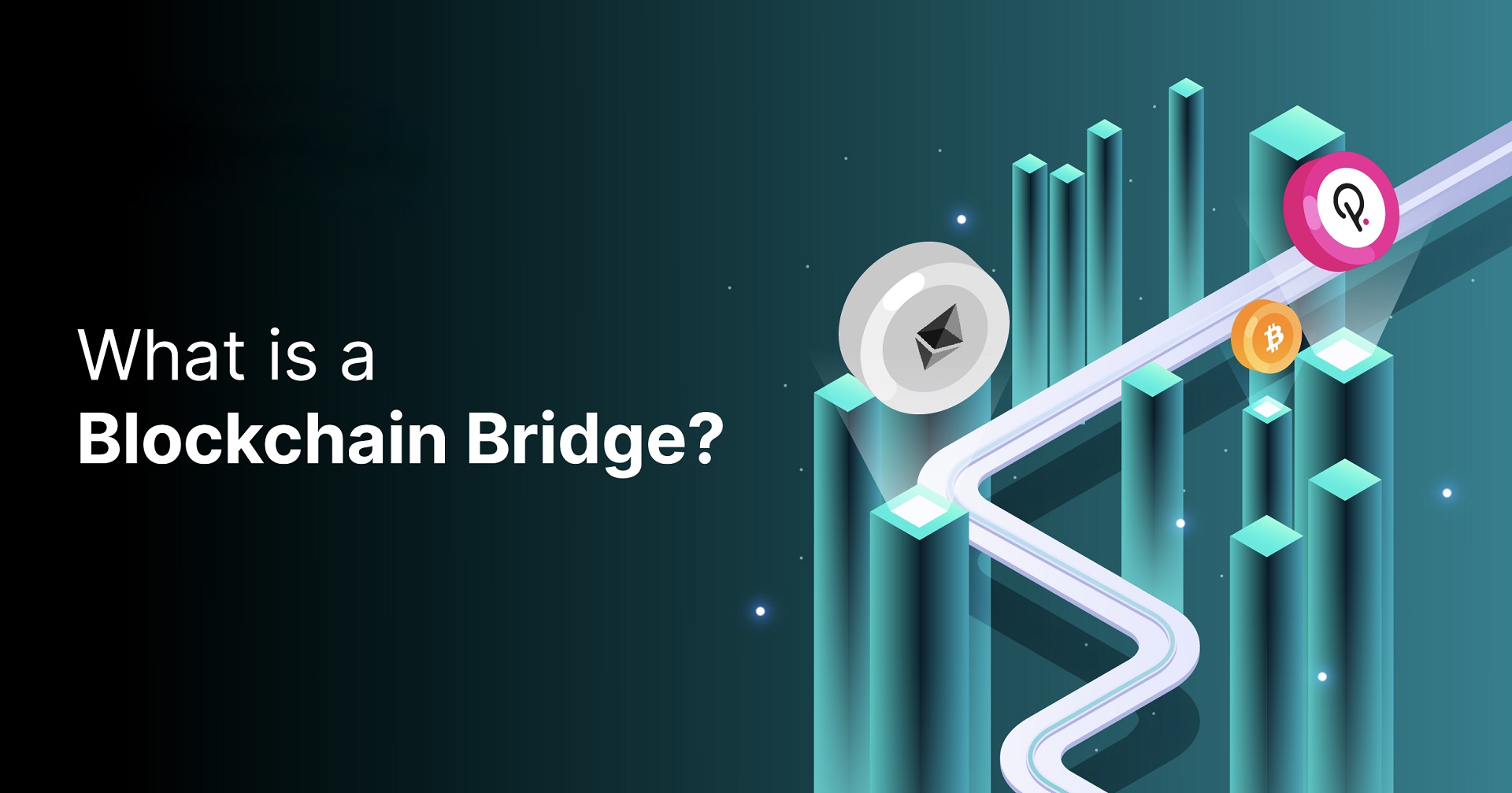
A cross-chain bridge, also called a blockchain bridge, is a protocol that connects two separate blockchains so crypto tokens, data, and NFTs can pass between them. It runs on smart contracts and links chain ecosystems that otherwise have no way to talk to each other.
A currency exchange counter abroad is a good comparison. Your dollars still hold value when you land in another country, but the corner shop won’t take them until you’ve changed them into local money. A bridge does the same job for crypto. It takes an asset from one chain and gives you a version of it that works somewhere else.
Bridges don’t all carry the same things. Some move only tokens. Others pass general data, such as a smart contract call or a governance decision, so an action on one chain can set off something on another.
You’ll usually run into bridges in ordinary situations. A lot of people move tokens from Ethereum to Polygon to pay lower fees, and someone holding an NFT might bridge it to Solana to sell it there. For DeFi as a whole, this is a big deal: value can move to wherever it’s most useful instead of staying stuck on the chain where it started.
Why blockchains need bridges
Every blockchain is an isolated system with its own architecture, standards, and protocols. Chains work like separate islands. Nothing that happens on one is visible to another, and assets can’t travel between them on their own.
The standards problem is the easiest one to see. A token built to one chain’s standard doesn’t work on another chain, the same way an iOS app won’t install on an Android phone. ERC-20, the Ethereum token standard behind most DeFi and gaming dApps, means nothing to the Bitcoin network. You can’t send BTC straight to an Ethereum account, and Bitcoin can’t run the smart contract functions that Ethereum apps rely on.
The internet solved a similar problem with shared protocols. HTTP and TCP/IP let any computer exchange data with any other, whoever built it. Blockchains have nothing like that. There’s no standard way to connect chains, so each network handles it in its own way, and bridges fill the gap.
The need has grown along with the number of chains. Early blockchains ran into limits on speed and scaling, and the industry’s answer was hundreds of Layer 1 and Layer 2 networks. Users, assets, and liquidity ended up scattered across dozens of chains. Chains also specialize: Ethereum is known for smart contracts, while Cardano is known for native staking. That’s why developers often deploy one dApp on several chains at once, so they can reach the users and features each chain offers.
Without bridges, getting the full benefit of crypto would mean picking one chain and staying there. That brings back the centralization crypto was supposed to get rid of, with a blockchain playing gatekeeper instead of a bank.
How does a cross-chain bridge work?
A cross-chain bridge works by holding or destroying your original asset on one chain and creating a matching representation on the other, because assets can never physically cross between incompatible chains. Depending on the bridge, smart contracts, dApps, or a centralized operator coordinate the transfer.
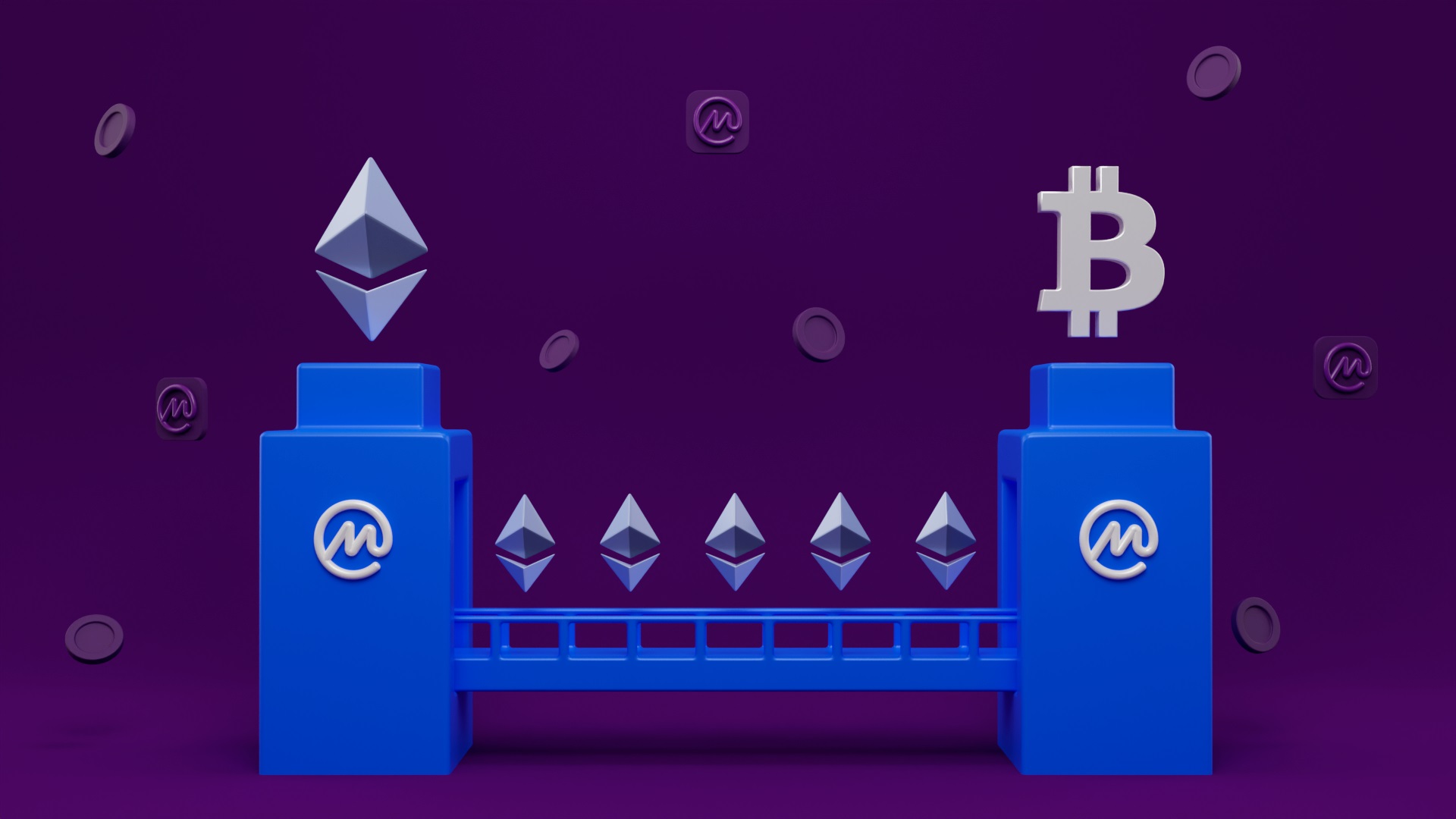
That representation is usually a wrapped token: a token on one chain that stands for the native coin of another chain at equal value. Wrapped Bitcoin (WBTC) is the best-known example. It represents BTC on the Ethereum blockchain, which lets you use bitcoin’s value inside Ethereum apps. A wrapped token is only worth what backs it, though. Whatever holds the original asset, whether that’s a contract or a custodian, is the part of the bridge where security matters most.
Bridges use three main models: lock-and-mint, burn-and-mint, and lock-and-unlock. They differ in what happens to your original tokens and where the tokens on the destination side come from.
Lock and mint
Most bridges are built on lock-and-mint. You deposit tokens into a smart contract on the source chain, which holds them like a vault, while a backend communication system watches for that lock event. As soon as it sees one, it triggers a contract on the destination chain to mint the same amount of a wrapped asset, so if you lock ETH on Ethereum, for example, you get WETH on Avalanche.
The upside is that the locked value can go to work in the new ecosystem while the originals stay put. The downside is that the vault grows every time someone bridges, and every wrapped token in circulation depends on it. If an attacker drains the vault or tricks the destination contract into minting without a real deposit, the wrapped tokens lose their backing. A big pool of locked assets like this is exactly what bridge attackers go after.
Burn and mint
With burn-and-mint, the bridge burns your tokens on the source chain, removing them from circulating supply for good. It then mints new tokens on the destination chain to replace the ones it burned.
Because nothing gets locked, there’s no growing vault on the source side to steal from. As long as every mint matches a burn, total supply stays the same across chains. The trade-off is that the bridge has to be allowed to mint the token on every chain it covers, so this model fits tokens whose issuer controls minting on each of those chains. It also moves the risk into the minting logic. If a destination contract accepts a fake burn message, it creates tokens from nothing.
Lock and unlock with liquidity pools
In the lock-and-unlock model, the tokens you get on the destination side come from an existing liquidity pool instead of being newly minted. The bridge provider keeps pools, basically an inventory of various cryptocurrencies, and pays you out of the coins already sitting on the other side in exchange for what you deposited.
The benefit is that you can receive the destination chain’s real tokens instead of a wrapped version. The weakness is that the model only works when the destination pool holds enough to cover each transfer. If you send a large amount into a thin pool, the transfer can stall or go through at a worse rate. That’s where the liquidity risk covered further down comes from.
Types of blockchain bridges
Bridges range from centralized to decentralized. Trusted bridges sit at one end, trustless bridges further along, and cross-chain messaging protocols go beyond tokens to carry general data.
You’ll also hear about native bridges. These are first-party bridges built by a chain’s own team, and they usually carry both tokens and data.
Trusted (centralized) bridges
A trusted bridge relies on a central operator or a closed federation. That party takes custody of your deposit, mints the wrapped version, and releases the original when you bridge back. There are two common setups:
- Custodial: one entity holds the reserve and issues wrapped tokens. WBTC works this way: the custodian BitGo holds the matching BTC in reserve.
- Federated: a set of known validators controls the bridge together. Wormhole uses a federated design secured by 19 guardians. That spreads control further than a single custodian, but you’re still trusting a defined group.
Trusted bridges are faster and simpler to build because they verify transfers off-chain, and a central operator can add new assets or chains quickly. You pay for that speed with trust. If the operator mishandles funds, steals them, or gets its custody hacked, user money is on the line. The custodian’s or validators’ private keys are a single point of failure: if someone steals them, every bridged asset can be drained. You also give up self-custody, which runs against the whole idea of decentralization.
Trustless (decentralized) bridges
A trustless bridge swaps human custodians for smart contract code. A smart contract on chain A locks your asset and produces a cryptographic proof. A contract on chain B checks that proof and mints the wrapped asset. Relayers, oracles, or validators watch one chain for lock events and carry the proof to the other chain, where code verifies it with no human approval step.
A “trustless” bridge still asks you to trust that the code is correct and, often, that most of the relayers are honest, so the label doesn’t mean you’re trusting nothing. The exception is designs built on trust-minimized light clients.
This design has real advantages. The contracts are open source, so anyone can inspect them. Many independent nodes make the bridge hard to shut down. Your funds stay in self-custody instead of passing to an operator.
The costs come from complexity. Complicated code and cryptography mean more room for bugs someone can exploit. Verifying proofs on-chain can also be slow or expensive, and that limits how many chains a single trustless bridge can support.
Cross-chain messaging protocols
Cross-chain messaging protocols carry contract calls, votes, NFTs, and other data, not only tokens. One chain can trigger a smart contract action on another. You could start a DEX trade on chain A from chain B, or send an NFT from Solana to Ethereum.
They verify messages between chains in one of three main ways:
- Light clients and relays: each chain checks the other chain’s events through simplified verification. Cosmos IBC and the NEAR Rainbow Bridge take this approach.
- Validator or relayer networks: independent nodes watch one chain and verify messages for another as a group. Axelar, LayerZero, and Wormhole fall into this group.
- Hub model: one central chain routes messages among many connected chains. The Polkadot relay chain and Chainlink CCIP follow this design.

The big advantage is reach. One framework links many chains, so you don’t need a separate bridge for every pair of chains. When the design is solid, security can come close to that of the chains underneath it. The weak spots are that these protocols still rely partly on relayers or oracles, that every chain needs its own integration work, which can lead to fragmentation, and that more code gives bugs more places to hide.
Popular cross-chain bridge examples
The chains themselves built many of the major bridges, usually to connect their own network with Ethereum or to tie their own ecosystem together. Plenty of others aren’t tied to a big chain, including Poly Network, Hop Exchange, and Connext. Whichever one you use, open it from the project’s official site and double-check the address. Copycat bridge apps exist specifically to steal deposits.
Polygon Portal (Polygon Bridge)
Polygon Portal connects the Polygon sidechain with Ethereum mainnet. It’s the bridge behind the common Ethereum-to-Polygon route, which people use to get lower gas fees than they’d pay on Ethereum mainnet. Polygon’s native token traded for years under the ticker MATIC.
Avalanche Bridge
Avalanche Bridge covers two networks: Avalanche and Ethereum. Avalanche, whose token is AVAX, built its reputation on fast smart contracts and was an early mover in cross-chain technology.
NEAR Rainbow Bridge
The NEAR Rainbow Bridge sends Ethereum-based assets onto NEAR, and its support reaches networks beyond Ethereum too. It’s best known for stopping an attempted hack using its own smart contract functions. Automated watchdogs challenged the malicious transaction, which Aurora Labs CEO Alex Shevchenko described afterward. The attacker lost a 5 ETH safe deposit. That economic penalty is built into the design, so a failed attack costs the attacker money.
Binance Bridge
Binance Bridge links Ethereum with Binance Smart Chain (BSC, since renamed BNB Smart Chain). The usual flow is to lock ERC-20 tokens on Ethereum and receive equivalent tokens on BSC to use in BSC dApps. The same route works in reverse when you want your tokens back on Ethereum.
Cosmos Gravity Bridge
Gravity Bridge works in both directions between Cosmos and Ethereum. Cosmos-based tokens show up in popular Ethereum wallets and AMMs, which opens Ethereum DeFi to the Cosmos ecosystem, whose token is ATOM. Going the other way, it carries ERC-20 tokens onto the Cosmos blockchain.
Polkadot relay chain
The Polkadot multi-chain network, whose token is DOT, lets developers launch customized chains called parachains. The relay chain provides shared security and moves assets between the connected parachains, so it acts as a built-in bridge for the whole ecosystem.
Cross-chain swap vs. blockchain bridge
A cross-chain swap trades one cryptocurrency for a different one across networks, often on a DEX with no centralized crypto exchange involved. A blockchain bridge keeps the same asset and moves it to another chain by locking it and issuing an equivalent token. A standard swap, which exchanges tokens inside a single network, is a third and separate thing.
| Factor | Cross-chain swap | Blockchain bridge |
|---|---|---|
| What changes | The asset itself | The chain the asset lives on |
| Custody | Non-custodial; you keep your private keys | Centralized or decentralized, depending on design |
| Security | Atomic swaps with no intermediary | Centralized designs are prone to hacking |
| Network support | Limited; some chains unsupported or only under conditions | Most major chains can be connected |
| Speed and liquidity | Delays when liquidity is thin | Slowdowns during network congestion |
| Fees | No centralized exchange fees | Extra fees possible on top of network gas |
| Ease of use | Atomic swap mechanics are hard for most users | Lets you use one asset across many chains |
| Example route | USDT on Ethereum to BNB on Binance Smart Chain | ETH on Ethereum to ETH on Polygon |
The choice comes down to what you’re trying to do. If you want to end up holding a different coin, a swap does it in one move. If you want to keep the same asset and use it on another chain, you need a bridge.
How to bridge crypto step by step
The example below sends BTC to Ethereum as WBTC, the ERC-20 token minted one-for-one for each BTC sent to the bridge. Other routes follow the same pattern with different assets. Your wallet has to support both chains, and our wallet reviews at AXL Research Hub cover which networks each wallet handles.
- Pick a route that supports both chains. For this transfer, you need a Bitcoin-Ethereum bridge. Open it from the official site, because cloned bridge pages are a common trap.
- Set the network fee. Most wallets give you slow, medium, and fast options, or a custom amount (in Gwei on Ethereum). A higher fee gets confirmed faster. Set it too low and the transaction can drag or even get canceled.
- Check the numbers before you sign. Look at the rate, the network fees, and the maximum slippage. If slippage is set loose, you could receive noticeably less than you expected.
- Approve the deposit in your wallet. This signature sends the funds, so make sure the destination address is right.
- Let the bridge lock your BTC. It goes to the bridge contract or custodian and stays locked there.
- Receive your WBTC. The custodian or contract mints the matching WBTC and sends it to your destination address.
- Use it on Ethereum. WBTC works like any ERC-20 token, so you can swap it, sell it, or earn yield in Ethereum dApps and still have BTC exposure.
- Bridge back when you’re done. Send the WBTC to the bridge. It gets burned, and the locked BTC is released to you.
How long does bridging crypto take?
Bridging time depends on the route you pick, how busy the networks are, and the fee you pay. Higher fees get confirmed faster, while trustless bridges and anything touching a congested Ethereum can take longer. No bridge has one fixed transfer time.

Your fee tier is the part you control. When you pay more, validators pick up your transaction sooner. When you pay less, you’re waiting in line, and a transaction priced too low can stall or get canceled.
The bridge’s design matters too. Trustless bridges verify proofs on-chain, which adds steps a trusted bridge skips by checking things off-chain. That’s part of the price of not relying on a custodian.
Network load is the factor you can’t control. Ethereum gets slow and expensive in gas when activity spikes, so any transfer that touches it takes longer. During high-volume periods, congestion slows some bridges more than others. If timing matters, bridging during quieter hours or choosing a route that avoids a crowded chain can make a real difference.
What cross-chain bridges are used for
The most common use is wrapping BTC, ETH, and other coins so you can use them in dApps, earn better interest rates, or take part in a wider ecosystem. Bitcoin holders get the most out of this. They can reach Ethereum-standard DeFi and games without selling BTC to buy ETH, which would mean giving up their bitcoin position and possibly owing tax on the sale.
Cross-chain DeFi builds on that. Moving funds between chains lets you chase better yields, tap deeper liquidity, and run strategies that use several chains at once instead of being limited to what one chain offers.
Bridges also connect private and public networks for businesses. That makes hybrid apps, supply chain systems, and institutional use possible. China’s Blockchain-based Service Network (BSN), for example, brings private and public blockchain frameworks together for supply chain and cross-border trade apps.
Governance is another use. Cross-chain DAOs can coordinate votes across separate chains, so token holders don’t all need to be on the same network to take part.
Can bridges transfer NFTs?
Yes. NFT bridges move Ethereum-standard NFTs, built on ERC-721 and ERC-1155, to other chains and back again. You keep the same token while changing the chain it lives on, so you can mint, hold, or sell it wherever the conditions suit you.
NFT bridges took off after the 2021 NFT boom clogged Ethereum and pushed gas fees sky-high. Less crowded chains charged much less to mint, so creators started there.
That led to a common path for artists. They mint their first NFTs on a low-cost chain where they need less money up front, then bridge them to Ethereum to reach bigger marketplaces like OpenSea and a wider audience.
Harmony’s Horizon bridge moves ERC-721 and ERC-1155 tokens between Ethereum and Harmony. Wormhole, Multichain (formerly Anyswap), and Polygon Bridge have also offered NFT bridging. Check that a bridge actually supports your NFT’s standard and both chains before you send anything.
Benefits of cross-chain bridges
Bridges are most useful when they let you move to wherever fees, liquidity, or apps work in your favor without cashing out first:
- Lower fees: when one network gets crowded and gas fees spike, you can move to another chain. Bridges to Ethereum Layer 2s cost less than staying on mainnet.
- No fiat detour: you move crypto to crypto across chains, with no step where you convert to dollars and buy back in.
- Liquidity that moves: value flows between platforms instead of sitting in separate silos, so a token can do more in DeFi. An ERC-20 token can trade on a Solana DEX when the price there is better.
- Idle crypto put to work: coins sitting untouched can earn passive income in DeFi apps on other chains.
- More apps from one set of holdings: you can use dApps and features across many ecosystems. An NFT minted on Polygon can serve as loan collateral on Ethereum through a bridge.
- Less dependence on one chain: if your holdings are spread across networks, they keep working when one chain goes down. Solana, for example, is known for network outages.
- Better scaling: spreading transactions across chains cuts processing times on any single network.
These benefits depend on the bridge holding up. Everything on the list assumes the assets backing your wrapped tokens are still there, and that’s exactly what the risks below put at stake.
Risks of cross-chain bridges
Bridges hold large pools of locked assets, so attackers target them often. Chainalysis estimated that bridge hacks made up about 69% of stolen crypto funds in 2022, roughly $2 billion. Bankless counted bridge hack losses of over $2.7 billion in its 2022 tally.
Regulation is a separate concern. Transfers that cross networks and jurisdictions may come with regulatory and compliance requirements, depending on where you are and which platforms you use.
Centralization risk
Centralized bridges get their speed from a central structure, and the cost is trusting one authority. A central custodian holding the funds behind every transfer is an obvious target, and those custodians get attacked again and again. Decentralized bridges spread trust across the network, which makes attacks harder, but they can still be hacked.
Smart contract vulnerabilities
A logic flaw or a technical mismatch in a bridge’s contracts can let someone withdraw funds they never deposited. Keeping those contracts sound is harder than it is for most apps, because a bridge has to deal with each chain’s own programming language and virtual environment at the same time. Every additional chain adds more places for something to go wrong.
Liquidity risk
A bridge can run short of liquidity for the asset you’re moving. It usually happens when demand for one side outweighs supply, when prices drift apart between chains, or when market swings and slippage eat into what you receive. Lock-and-unlock bridges are the most exposed, since they pay out of whatever the destination pool holds.
Biggest bridge hacks and what went wrong
Web3 bridge hacks caused about $3 billion in losses through 2025, and well-known bridges on major chains were among the victims. The Harmony bridge alone lost $100 million. The same causes come up again and again: compromised keys, bugs in signature verification, and upgrades that weren’t properly tested.
Ronin Bridge hack
In March 2022, attackers took $624 million from the Ronin Bridge: 173,600 ETH and 25.5M USDC. Ronin Network, the chain behind Axie Infinity, was secured by only nine validator nodes, and withdrawals needed five signatures.
The attackers, the North Korea-linked Lazarus Group, socially engineered operators and gained control of five validator keys. Four came from Sky Mavis and one from Axie DAO, which was enough to get past the multi-signature setup. Three things made it possible: Sky Mavis held too much of the validator power, private keys weren’t well protected, and nobody noticed the theft for nearly a week. Afterward, Ronin spread its validators across more parties and tightened monitoring.
Wormhole exploit
In February 2022, an attacker exploited Wormhole’s Ethereum-to-Solana route for $320 million. Wormhole’s Solana-side contract didn’t verify signatures correctly, so forged signatures went through, and the attacker minted 120,000 wETH with no matching ETH deposit.
Those unbacked tokens threatened to spread damage across Solana DeFi, since any protocol accepting wETH was suddenly holding tokens with nothing behind them. Wormhole’s parent company replaced the lost ETH, which kept the wider market from feeling the impact. The exploit showed that a bridge marketed as trustless can still fail because of its contract code.
Nomad Bridge hack
Nomad lost about $190 million in August 2022 because of a small logic error added in a contract upgrade in June 2022. The bug broke message validation, so anyone could copy a valid transaction, swap in their own address, and withdraw funds.
Once word spread, it turned into a free-for-all. There were over 1,100 copy-paste transactions, many from people with no hacking skills at all. One simple oversight was enough to empty the bridge.
Cross-chain bridge security measures
Each of the big hacks points to a specific defense, and well-run bridges stack several of them so one failure doesn’t drain everything.
Key and validator protections deal with what happened at Ronin. Multi-signature schemes split approval for withdrawals across several keys, and validators confirm that locked and minted amounts match. Those controls only help if the keys are held by truly independent parties. Ronin’s multisig failed because one company controlled most of the keys.
Code checks deal with Wormhole and Nomad. Third-party audits, formal verification, and testing every contract upgrade are aimed at the kinds of bugs behind those losses: a signature check that accepted forgeries and an upgrade that broke validation.
Damage limits assume something will eventually break. Time locks and rate limits cap how much value can leave a bridge in a set window, so a breach can’t drain the whole bridge at once. Circuit breakers pause unusual withdrawals during an attack, which would have mattered once anyone could copy the Nomad exploit. Intrusion detection, constant monitoring, and incident response plans are there to catch theft early, unlike Ronin’s week of silence.
Bridges also check transfers in different ways. Some use native verification by the destination chain’s own validators. Others use external verification backed by extra safeguards. Each approach puts the trust in a different place.
Your own part is mostly about phishing. Copies of bridge apps pretend to be real platforms so they can grab your deposit. Bookmark the official site, check the URL before connecting your wallet, and don’t trust bridge links from ads or direct messages.
Main challenges of cross-chain interoperability
Bridges solve the isolation problem one connection at a time, and that’s where most of the remaining friction comes from. There are over 100 bridges across EVM and non-EVM chains, all built differently:
- Too many bridges: every bridge uses its own design, so you have to find and compare options by hand before each transfer.
- Trade-offs: each bridge favors speed, cost, or security and gives up something on trust or on how easily it can expand to new chains.
- Split liquidity: each bridge usually needs its own pools, which spreads liquidity thin across standards and chains and makes slippage worse.
- Complicated steps: bridging often assumes you understand several ecosystems, their wallets, and their fee systems.
- Developer workload: with no standard design, building many bridges into one dApp isn’t practical.
Bridge aggregation grew out of these problems.
What is bridge aggregation?
A bridge aggregator is a layer that connects many bridges and their liquidity through a single API. It works like a DEX aggregator: it compares liquidity, fees, speed, and security across bridges and picks a route for your transfer, so you don’t have to research each bridge yourself.
For you as a user, the main win is one interface. You enter where you’re starting, where you want to end up, and how much, and the aggregator handles the rest. Smart routing looks for the cheapest cross-chain path, which brings your fees down. Pooling liquidity from several bridges cuts slippage, even on large transfers that would strain any one pool.
You often won’t even see the aggregator. Developers integrate one API or SDK instead of many separate bridge protocols, which saves them research, integration, and maintenance work. You get to stay inside the app you’re already using instead of leaving for a third-party bridge, with direct links to DEXs when you also need to swap.
An aggregator still sends your funds through the bridges underneath it. If one of those bridges fails, routing through an aggregator won’t protect the money moving through it.
Cross-chain bridge FAQs
What is a multi-signature wallet?
A multi-signature wallet needs several signatures or approvals before a transaction goes through. Bridges use them a lot as a security layer, because one stolen key can’t move funds by itself. Ronin showed the limit, though: when enough keys sit with one party, the protection falls apart.
Is multi-chain the same as cross-chain?
No. Multi-chain means a token can be used on several chains, such as Ethereum and Polkadot. Cross-chain means moving an asset from a source chain to a destination chain, which is what a bridge does.
Why not just swap on an exchange instead of bridging?
You can, but the costs add up. An exchange route charges a fee for the swap and more fees each time you move funds between wallets and platforms. A bridge converts your asset to a wrapped coin in one transaction, so you skip most of those extra hops.
Where cross-chain bridges are heading
Interoperability is increasingly seen as a requirement for a multi-chain future, and the push to connect systems now reaches past crypto networks to AI platforms. The direction is easy to describe, even if the details are still being worked out.
For users, the goal is simpler transfers and eventually one wallet system that handles every chain without you thinking about which bridge sits underneath. For developers, the aim is multi-chain dApps that combine what several blockchains each do well. Businesses are looking at ways to make supply chains more transparent, integrate DeFi, and run real-time transactions across chains without high costs.
Plenty of work is still open, including security against quantum threats, adaptive routing, and smart contracts that run across several chains. If that work pays off, bridges will do more than swap tokens and will carry information, payments, and shared resources between networks.