
Most blockchains can’t talk to each other. Ethereum doesn’t natively share data with Bitcoin, and standalone networks each have to build their own security and handle their own scaling. Polkadot was designed to fix that problem by connecting separate blockchains into one interoperable network, letting them pass data, tokens, and other digital assets back and forth.
What is Polkadot and how does it work in simple terms?
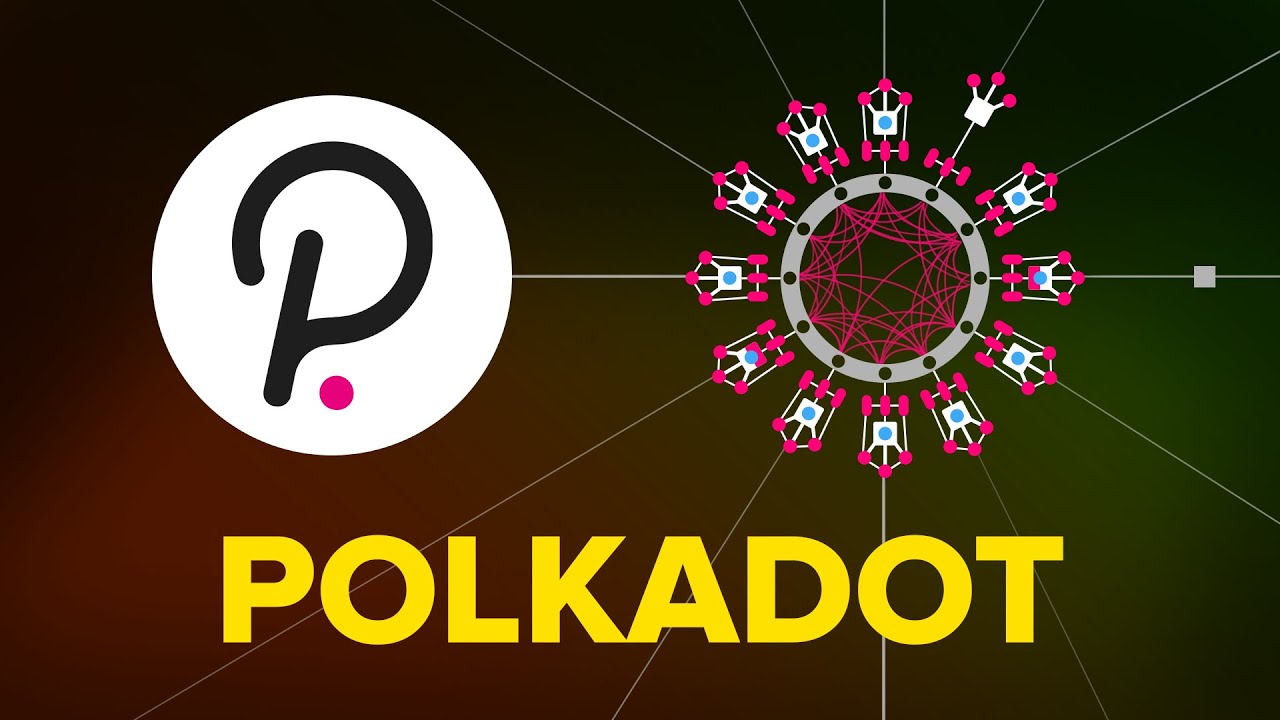
Polkadot is a multi-chain blockchain protocol that links separate blockchains into a single network where they can communicate and share security. It’s often called a “network of networks” or a Layer 0 solution because it provides the underlying infrastructure for other chains and applications rather than hosting decentralized apps (DApps) directly on its own chain.
The core problem Polkadot addresses is isolation. Most blockchains operate as closed systems. If you want to move an asset from one chain to another, you typically need a centralized exchange or a third-party bridge with its own trust assumptions. Polkadot builds cross-chain transfers of data, tokens, and digital assets into its base layer, so otherwise incompatible networks can interact without relying on outside intermediaries.
The protocol tackles three well-known blockchain limitations at once: interoperability (chains talking to each other), scalability (processing more transactions without bottlenecks), and shared security (new or small chains benefiting from the same economic protection as larger ones). It runs on a proof-of-stake consensus model, which means validators stake tokens rather than burning energy to secure the network.
Polkadot was conceived by Gavin Wood, who co-founded Ethereum and served as its first CTO. Wood also coined the term “Web 3.0.” He published the Polkadot whitepaper in November 2016, and the project held a crypto ICO (initial coin offering) in October 2017 that raised $145 million in under two weeks. The network itself launched in May 2020.
History and founders of Polkadot
Gavin Wood left Ethereum in 2016 after serving as its first CTO and core developer. He co-founded Parity Technologies (originally called EthCore), a company that built the Parity Ethereum client, later developed the Substrate blockchain framework, and ultimately built the Polkadot network itself.
In 2017, Wood and his collaborators co-founded the Web3 Foundation, a non-profit created to support research, development, and fundraising for Polkadot. That same year, the project’s October ICO ranked among the largest token sales at the time, bringing in $145 million. Further private-sale funding rounds followed.
The mainnet rolled out in stages, beginning with the relay chain’s genesis block in May 2020. Nominated proof-of-stake (NPoS) validator elections began the following month, in June 2020. The governance system, which at that time included a council and a technical committee, was activated in July 2020. DOT balance transfers were finally enabled in August 2020, giving token holders the ability to move their DOT freely on-chain. That deliberate staging let the team and the community test each layer of the network before adding the next.
The relay chain and its function
The relay chain is Polkadot’s central hub. Every connected parachain reports back to it, and it’s responsible for consensus, shared security, cross-chain interoperability, and transaction finality across the entire network.
By design, the relay chain does not support smart contracts or general-purpose DApps. All application logic gets pushed out to the parachains. This deliberate minimalism keeps the relay chain lean so it can focus its capacity on coordinating the system as a whole rather than executing individual transactions for one app.
That coordination role is what gives even small or brand-new parachains the same level of economic security as the overall network. A parachain doesn’t need to recruit its own massive validator set to be safe; it inherits security from the relay chain. The relay chain also separates the process of adding new transaction blocks from block validation, which helps the network finalize transactions faster than if both steps had to happen in sequence.
Parachains: independent blockchains running in parallel
The name “parachain” comes from “parallelized chain.” Each parachain is a sovereign blockchain with its own governance rules, native tokens, fee structure, and use cases. Because they process transactions in parallel rather than competing for space on a single chain, the overall network’s throughput scales as more parachains come online. Plans envision capacity for up to 1,000 parachains.
Parachains don’t need to build their own validator sets. They submit transaction proofs to the relay chain, which handles finality and security. That means a small DeFi parachain gets the same economic security guarantees as a large gaming parachain, without either one having to bootstrap its own consensus mechanism.
This model lets parachains specialize. Some focus on decentralized finance, others on identity management, supply chain tracking, gaming, or IoT integrations. Over 350 projects have been reported across the network, spanning DeFi, smart contracts, NFTs, and gaming.
How parachain slots are allocated
Polkadot originally used crowdloan auctions to allocate parachain slots. Projects would rally their communities to lock up DOT tokens as collateral, and the highest bids won limited slots for a fixed lease period. This model worked, but it required projects to tie up large amounts of DOT for extended stretches, creating a high barrier to entry.
In late 2024, the Agile Coretime model replaced slot auctions as part of the Polkadot 2.0 upgrades. Under Agile Coretime, projects purchase blockspace on demand or in bulk, paying only for what they actually use. A startup testing an idea can buy a small slice of coretime without locking millions of dollars in DOT, while a high-traffic parachain can buy in bulk at a discount. The shift lowers the financial barrier and makes how resources are allocated more responsive to real demand.
Bridges to external blockchains
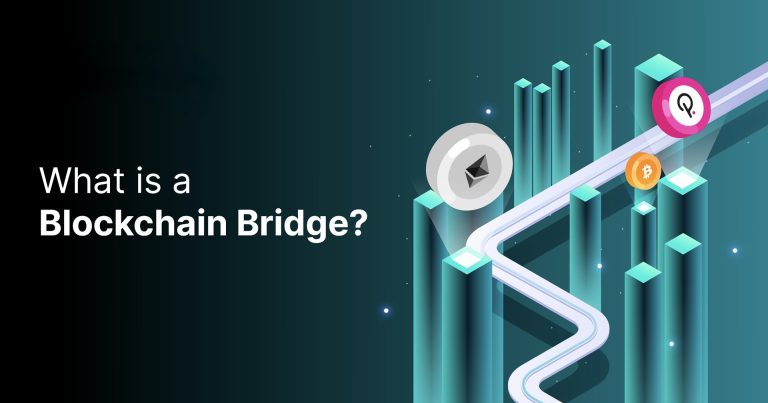
Parachains can talk to each other through the relay chain, but Polkadot also needs to reach blockchains outside its own network. That’s what bridges do. They create communication channels between Polkadot parachains and external networks like Ethereum and Bitcoin, allowing data and assets to flow in both directions.

Without bridges, Polkadot’s interoperability would stop at the edges of its own relay chain. A DeFi parachain, for example, might want to tap into Ethereum’s deep liquidity pools or accept Bitcoin as collateral. Bridges make those interactions possible by translating messages between the two networks’ different protocols. Developers building on Substrate, Polkadot’s blockchain framework, can connect their chains to other networks through these bridges.
The practical impact is significant. DApps running on Polkadot parachains can access liquidity, users, and functionality from networks that have their own large, established communities. Instead of building everything from scratch inside a closed network, projects can plug into what already exists elsewhere. This broader reach is a major part of Polkadot’s value as connective infrastructure rather than a standalone chain.
Nominated proof-of-stake consensus mechanism
Polkadot uses nominated proof-of-stake (NPoS) to select validators and reach consensus. NPoS consumes a fraction of the energy that proof-of-work blockchains like Bitcoin require, where miners run specialized hardware around the clock to solve cryptographic puzzles. By eliminating that computational arms race entirely, Polkadot’s consensus model is dramatically more energy-efficient. It also differs from simpler proof-of-stake designs by adding a nomination layer that distributes stake more evenly across validators, which strengthens decentralization.
Four roles keep the network running:
- Validators stake DOT and participate directly in consensus. They validate transaction proofs submitted by collators and produce new blocks on the relay chain. Running a validator node requires both technical infrastructure and a substantial DOT stake.
- Nominators back validators they trust by delegating their own DOT. When a validator performs correctly and earns rewards, nominators receive a share. This lets DOT holders who don’t want to run a node contribute to network security and earn yield at the same time.
- Collators sit on individual parachains, maintaining full transaction records and packaging valid transactions into proofs that get submitted to relay chain validators.
- Fishermen monitor the network for dishonest or malicious behavior and report it. They act as a check on both validators and collators.
Dishonesty carries real financial consequences. Slashing reduces the staked DOT of validators and their nominators when misbehavior is detected. If a validator tries to validate a fraudulent transaction or goes offline repeatedly, the protocol cuts a portion of their stake. Nominators share this risk, which gives them a strong incentive to back reliable validators.
The minimum stake required to become an active nominator fluctuates with network conditions; there’s no single fixed number to point to. For holders whose DOT balance falls below the active-nominator threshold, native staking pools offer a way to participate. These pools aggregate smaller stakes, giving more DOT holders access to staking rewards without needing to meet the full threshold on their own.
What is the DOT token used for?
DOT is the native token of the Polkadot network and serves several distinct functions:
- Governance voting. DOT holders submit and vote on proposals that shape the network’s future, from protocol upgrades to treasury spending. Every holder gets a voice, and voting power scales with the amount of DOT staked.
- Staking and network security. Validators and nominators lock DOT as collateral to secure the relay chain. Honest participation earns staking rewards paid in newly minted DOT. Misbehavior triggers slashing, reducing the staked amount.
- Parachain bonding and coretime. Under the legacy auction model, DOT was locked to secure parachain slots. The newer Agile Coretime system lets developers purchase blockspace on demand with DOT, paying based on actual usage rather than winning a long-term lease.
- Transaction fees. Every operation on the network costs a small amount of DOT, similar to gas fees on Ethereum.
- Treasury funding. A portion of newly minted DOT and collected fees flow into an on-chain treasury. The community votes on how those funds get spent, directing grants toward development, tooling, and research.
Polkadot follows an inflationary token model with no fixed supply cap. New DOT is minted each year primarily to pay staking rewards. This inflation is intentional: it incentivizes DOT holders to stake rather than sit idle, because holding unstaked DOT means your share of the total supply gradually dilutes. The staking rewards are designed to offset that dilution for active participants. Treasury spending and transaction fee burns also affect the net inflation rate, but the protocol doesn’t guarantee a deflationary outcome the way some fixed-supply tokens do.
How Polkadot governance works
Polkadot operates as a decentralized autonomous organization where all governance happens on-chain. In June 2023, the network launched OpenGov, replacing the earlier Governance V1 model that relied on a council and a technical committee to filter proposals.

Under OpenGov, any DOT holder can submit a proposal, and any DOT holder can vote on it. There’s no elected council acting as a gatekeeper. Multiple referenda run simultaneously across different governance tracks, each with its own voting period and approval threshold. A routine parameter change follows a different track than a large treasury spend, and each track is calibrated so that higher-impact decisions require more support and longer deliberation.
One of Polkadot’s more distinctive features is forkless upgrades. Protocol changes approved through governance are enacted autonomously on-chain, without requiring the kind of hard fork that splits a blockchain community into “old chain” and “new chain” camps. The network simply updates itself.
Treasury spending is governed through the same on-chain process. Projects apply for grants, DOT holders vote to approve or reject the funding, and funds are released automatically if the vote passes. This keeps how the network funds its growth decentralized rather than controlled by a foundation or core team.
The Polkadot Fellowship, a body of technical experts elected by DOT holders, plays a supporting role. Fellowship members can fast-track urgent bug fixes and flag malicious proposals, but they don’t have veto power over the broader community’s decisions.
Substrate: the blockchain development framework
Substrate is an open-source, modular framework for building custom blockchains. Instead of coding a consensus engine, networking layer, and runtime from scratch, developers assemble pre-built components like modular pieces, choosing the consensus mechanism, database structure, and governance model that fit their project. Over 200 projects have been reported using Polkadot’s SDK.
Any blockchain built with Substrate is inherently compatible with the Polkadot network. It can connect as a parachain and access the relay chain’s shared security and cross-chain messaging without extra integration work. That compatibility is baked in at the framework level.
Substrate and Polkadot aren’t locked together, though. A Substrate-built chain can run entirely on its own, independent of Polkadot, if the developers prefer. And parachains can technically be built with alternative software if a team has a reason to go that route. The relationship is opt-in, not mandatory.
The framework was designed to address a real bottleneck in earlier-generation blockchain development: the amount of time and specialized engineering it takes to launch a new chain. By packaging common blockchain components into a software development kit, Substrate cuts the time to market for Web3 projects significantly. Teams can focus on their application logic and business model instead of reinventing low-level infrastructure.
Kusama: Polkadot’s canary network
Kusama is Polkadot’s live pre-production environment, a fully operational network where teams deploy and stress-test new features before they roll out to Polkadot’s mainnet. The term “canary network” comes from the coal-mining practice of sending a canary into a tunnel first; if something goes wrong, you find out on Kusama before it affects Polkadot.
This isn’t a testnet with play money. Kusama uses real tokens (KSM) with real economic value, but the barriers to entry are deliberately lower. Launching a parachain or becoming a validator on Kusama requires fewer tokens than on Polkadot, making it accessible to smaller teams and experimental projects that aren’t ready to commit the capital Polkadot demands.
Governance on Kusama runs up to four times faster than on Polkadot. Token holders get a 7-day voting period on proposals, followed by an 8-day validation period before changes are ratified on-chain. That compressed timeline means upgrades ship quickly, sometimes on short notice. Validators on Kusama have to stay on their toes, adapting to updates that arrive faster than they would on the more deliberate Polkadot mainnet.
Kusama’s unofficial motto is “expect chaos,” and it’s earned. The faster upgrade cycles deliberately trade some stability for speed, giving the network a proving ground where rough edges get discovered and fixed before code reaches Polkadot. Stakeholders who participate in Kusama governance track proposals, referenda, and upgrades closely because the pace doesn’t leave much room for catching up after the fact.
Polkadot 2.0 and the JAM proposal
Polkadot 2.0 covers a series of architectural upgrades that have been rolling out since Polkadot’s final codebase launched in 2023, each one expanding the network’s capabilities. Three key technical upgrades define this phase: Async Backing, Agile Coretime, and Elastic Scaling. Together, they’re designed to increase scalability, speed up transaction processing, and improve how the network allocates resources.
Agile Coretime, introduced in late 2024, is the most visible change for developers. Instead of locking capital into long-term parachain slot auctions, projects buy blockspace based on their exact needs, responding to real-time demand. A project with seasonal traffic spikes can scale up its coretime during peak periods and scale back when things quiet down. By the Polkadot 2.0 rollout period, the network reported 50 interconnected chains and over 200 SDK-based projects.
The bigger long-term bet is JAM, short for Join-Accumulate Machine. Proposed by Gavin Wood in 2024, JAM is a redesign intended to eventually replace the relay chain with a general-purpose, highly parallelized architecture. Where the current design routes everything through the relay chain and out to parachains, JAM would allow arbitrary programs to run on shared network infrastructure, expanding Polkadot’s capabilities well beyond the parachain model.
As of 2026, JAM remains in active research and development. There’s no confirmed launch date, and the final design is being worked out through on-chain governance. It represents the most ambitious rethinking of Polkadot’s architecture since the original whitepaper, but it’s still a proposal being refined rather than a finished product.
How Polkadot compares to Ethereum
| Feature | Polkadot | Ethereum |
|---|---|---|
| Architecture | Multi-chain network with parallel parachains | Single general-purpose blockchain |
| Scalability approach | Parallelizes transactions across parachains | Scales through rollups and layer-2 networks |
| Shared security | Parachains inherit economic security from the relay chain automatically | Layer-2 solutions build their own security or rely on the main chain differently |
| Smart contracts | Not on the relay chain; hosted on parachains | Native smart contract execution on the base layer |
| Upgrades | Forkless, enacted on-chain through governance | Requires hard forks for major protocol changes |
| Cross-chain communication | Built into the protocol via relay chain and bridges | Relies on external bridges and projects like Moonbeam |
| Block space | Each parachain has dedicated throughput | All applications compete for the same block space |
Ethereum and Polkadot don’t aim to do the same thing. Ethereum is a general-purpose blockchain where developers deploy smart contracts directly, and every DApp shares the same block space. When demand surges, gas fees spike and transactions slow down for everyone. Ethereum’s scaling strategy relies on layer-2 rollups that batch transactions off-chain and settle them back to the main chain.
Polkadot takes a different approach by giving each parachain its own dedicated capacity. A congested gaming parachain doesn’t affect a DeFi parachain running alongside it. Shared security means a new parachain doesn’t have to convince validators to join its network; it plugs into the relay chain and inherits protection immediately. Bridges and cross-chain projects like Moonbeam let the two networks interact, so developers don’t have to choose one or the other exclusively.
Real-world use cases for Polkadot
Polkadot isn’t a smart contract platform itself. It provides infrastructure that DApp developers use to build and integrate smart contracts across an interoperable network. The real-world applications show up on parachains, each one tailored to a specific use case:
- DeFi. Parachains running decentralized finance services benefit from shared security and low transaction fees. Because each DeFi parachain has its own block space, heavy trading volume on one protocol doesn’t clog the network for others, a problem that regularly hits single-chain DeFi networks.
- Custom blockchain development. Startups and enterprises use Substrate to build purpose-built chains that plug directly into the Polkadot network. A healthcare company needing specific privacy rules or a logistics firm requiring particular data structures can design a chain around those requirements rather than adapting to a general-purpose platform.
- IoT. Internet-of-Things networks involve massive numbers of devices generating small, frequent transactions. Interoperable parachains let IoT-focused chains communicate with supply chain or identity chains without routing everything through a single congested network.
- Governance and voting. On-chain governance mechanisms provide transparency and auditability that traditional voting systems struggle to match. Parachains built for governance applications can run elections, organizational votes, or grant allocation processes where every decision is recorded and verifiable.
- Gaming. Game studios build on dedicated parachains to get both asset interoperability and dedicated throughput. In-game items minted on one gaming parachain can move to another, and heavy gameplay traffic doesn’t compete with unrelated DeFi or identity transactions.
- Identity and supply chain tracking. Parachains designed for identity management or supply chain verification operate independently with their own rules while still sharing the relay chain’s security. A supply chain parachain can track goods from manufacturer to consumer, and an identity parachain can verify credentials, with both able to reference each other’s data when needed.
How to buy and stake DOT tokens
- Buy DOT on a cryptocurrency exchange. DOT is listed on major crypto exchanges where you can purchase it with fiat currency (like USD) or trade other crypto for it. You’ll need to create an account and complete identity verification on the exchange before buying.
- Transfer DOT to a compatible wallet. Move your DOT from the exchange to a wallet that supports Polkadot staking. Keeping tokens on an exchange means you don’t control the private keys, and you won’t have access to native staking options.
- Decide how you want to stake. You have a few paths. Running a validator node requires significant technical setup and a substantial DOT stake. Most holders opt to nominate validators instead, delegating their DOT through the NPoS system and earning a share of the rewards when their chosen validators perform correctly.
- Check the current nominator threshold. The minimum DOT required to be an active nominator changes with network conditions. Before you commit, verify the current threshold so your stake doesn’t end up inactive.
- Use a staking pool if you’re below the threshold. Native staking pools let smaller holders participate by aggregating stakes. You still earn rewards proportional to your contribution, just through the pool rather than as a direct nominator.
- Understand the risks. Staked DOT is subject to slashing if the validator you’ve nominated misbehaves. Research validators carefully, looking at their track record and commission rates. Diversifying across multiple validators reduces your exposure to any single one getting slashed.
Frequently asked questions about Polkadot
Is Polkadot a good investment?
DOT’s value depends on network adoption, developer activity, and broader crypto market conditions. There’s no guaranteed return. Anyone considering DOT should research the project independently, understand the inflationary token model, and evaluate whether crypto is a good investment given their own risk tolerance before putting money in.
Why is Polkadot popular among developers?
Polkadot solves two problems that make blockchain development expensive and slow: interoperability and security bootstrapping. Instead of building a standalone chain and recruiting its own validators, a project can launch a parachain and inherit shared security from the relay chain immediately. Substrate further lowers the barrier by giving developers a modular toolkit for building custom blockchains without starting from zero.
Is Polkadot a stablecoin?
No. DOT is a utility and governance token whose price fluctuates based on market supply and demand, just like other crypto assets. It isn’t pegged to the US dollar or any other currency.
Polkadot’s role in the evolving multi-chain landscape
Polkadot has grown from a 2016 whitepaper into a working multi-chain network with hundreds of projects building across its parachains. The architectural shifts toward Agile Coretime and JAM show a network that keeps adapting its design to match what developers actually need rather than locking in one model permanently.
The protocol complements existing blockchains rather than trying to replace them. Cross-chain bridges, Substrate compatibility, and the relay chain’s shared security position Polkadot as connective infrastructure for Web3, a layer that ties different networks together rather than asking everyone to abandon what they’ve already built. That positioning is one of Polkadot’s clearest strengths and one of its biggest challenges: the network’s long-term trajectory, as the AXL Research Hub team sees it, depends on continued developer adoption, the quality of parachain applications, and its ability to keep pace with competing multi-chain and layer-2 solutions that are evolving just as fast.