
Solana is a public blockchain that processes transactions, stores a shared ledger, and runs applications across thousands of computers worldwide. Its first block was produced on March 16, 2020, and the native token SOL now sits inside the top 10 by market cap, carried there by cheap transactions, the 2021 NFT boom, and a steady flow of memecoins.
What is Solana?
Solana is a Layer 1 blockchain designed to deliver fast transaction speeds, low costs, and smart-contract functionality on a single chain. Its native cryptocurrency, SOL, ranks among the top 10 cryptocurrencies by market cap. Anatoly Yakovenko and Raj Gokal founded the project, with Solana Labs headquartered in San Francisco. The network’s first block was created on March 16, 2020.
Solana is often described as an alternative to Ethereum because both support decentralized apps (dApps) and smart contracts. The key difference is priority: Solana leans heavily toward throughput and affordability, while Ethereum has historically focused on flexibility and a large developer community.
The network gained mainstream traction during the NFT boom in 2021 and later became a popular chain for memecoins, DeFi apps, and stablecoin payments, all of which feed into the question of whether Solana is worth buying. That 2021 surge was dramatic: SOL’s price rose roughly 12,000% over the year, hitting $259.96 and a market cap above $74 billion by early November 2021, while Solana Labs closed a $314 million funding round in June of the same year. SOL later reached an all-time high of $294 in January 2025.
How does Solana work?
Solana’s consensus mechanism combines proof of stake with a protocol called Tower BFT (Byzantine Fault Tolerance). Proof of stake works a bit like a lottery: people who hold SOL lock their tokens as a stake, and the network randomly selects stakers to validate ledger entries. The more SOL you stake, the better your odds of being selected.
Tower BFT builds on top of that by using a timestamp tracking system called Proof of History. This system creates a tamper-proof sequence of events, so validators don’t have to spend as much time negotiating the order in which transactions happened. Because all nodes share a synchronized timeline, Solana confirms transactions almost instantly without each node rebuilding the full state from scratch.
Solana also uses parallel processing, which means the network handles many actions at the same time rather than queuing them through a single path. On blockchains that process transactions one by one, heavy traffic creates backlogs. Solana’s architecture avoids much of that bottleneck by running independent transactions in parallel.
What is Proof of History?
Proof of History is a cryptographic sequence that records verifiable timestamps for every event on the chain. It creates a record where the order of transactions can be quickly checked by any validator, without those validators needing to communicate back and forth to agree on what happened first.
It works alongside consensus rather than replacing it. By providing a shared clock, Proof of History reduces the coordination overhead that slows other blockchains. Validators already know the order of events before they start voting on whether to confirm them, which cuts out a significant chunk of processing time.
This was the core innovation by Anatoly Yakovenko, who identified time synchronization as the main bottleneck in blockchain throughput. In other words, Solana’s speed begins with timing and ordering, not solely with hardware capacity.
What is Alpenglow?
Alpenglow is a major consensus upgrade approved by roughly 98% of validators to replace both Proof of History and Tower BFT. It introduces two new components: Votor, which handles voting and finalization, and Rotor, which handles block propagation.
The target is transaction finality in under 150 milliseconds, approximately 100 times faster than what Proof of History currently delivers. For context, that would mean a transaction is confirmed before you could blink twice.
Alpenglow entered live validator testing in May 2026, with full mainnet activation targeted for late 2026. Whether it performs as intended at full scale remains to be seen. Validator testing is a controlled environment, and real-world traffic at peak loads will be the true test. Still, the near-unanimous validator support signals strong community confidence in the direction.
What is SOL and how is it used?
SOL is the native token that powers every operation on the Solana network. It has three primary uses: paying transaction fees, earning staking rewards, and participating in governance votes about the network’s future.
Every transaction on Solana includes a base fee of 5,000 lamports per signature, which works out to 0.000005 SOL. The total cost of a typical transaction stays under $0.01. During periods of high demand, users can add a priority fee to move their transaction ahead in the queue. This is similar to tipping a miner on other networks, but the amounts involved are still small.
The base fee gets split down the middle. Half is permanently burned, meaning it’s removed from circulating supply forever. The other half goes to the validator who processes the transaction. One detail that catches beginners off guard: fees still apply even when a transaction fails. If you approve a transaction and it doesn’t go through, you still pay the fee. That makes it worth double-checking transaction details before you confirm.
Unlike Bitcoin, which has a hard cap of 21 million BTC, SOL has an unlimited total supply. New SOL is created through an inflation schedule that rewards stakers and network participants. To understand what is Bitcoin and how its fixed supply differs from SOL’s inflationary model, see our separate guide. The rate of inflation isn’t fixed permanently. It can change if the Solana community votes in a new proposal. There’s an ongoing debate in the crypto community over whether the current burn rate from transaction fees offsets the inflationary issuance adequately. Supporters argue that as network activity grows, more SOL gets burned. Critics point out that at current usage levels, the burn is a fraction of what’s being issued. This tension around tokenomics is worth understanding before you form your own view.
Solana speed, fees, and performance compared
| Solana | Bitcoin | Ethereum (Layer 1) | |
|---|---|---|---|
| Throughput | Thousands of TPS | ~7 TPS | 20 to 30 TPS |
| Typical transaction fee | Under $0.01 | Generally above $0.10 | Generally above $0.10 |
| Consensus mechanism | Proof of stake + Proof of History | Proof of work | Proof of stake |
| Primary focus | Speed and affordability for apps and payments | Potential digital store of value | Flexibility for decentralized apps |
| Validator count | Thousands | N/A (miners) | Over 1 million |
| Uptime track record | Multiple documented outages | Strong | Stronger stability record |
The raw throughput gap stands out immediately. Solana processes thousands of transactions per second compared to Bitcoin’s roughly 7 and Ethereum’s 20 to 30 on its base layer. That speed difference is why Solana attracts applications that need frequent, cheap on-chain actions.
Ethereum’s Layer 2 networks can rival Solana’s speed, but they add complexity. You’re dealing with bridging tokens between layers, different security assumptions, and a more fragmented user experience. Solana keeps everything on a single layer, which simplifies things for both developers and users.
The validator count gap raises a different question. Ethereum runs over one million validators, while Solana’s number sits in the thousands. That difference feeds an ongoing centralization debate. Solana’s higher hardware requirements to run a validator mean fewer people can participate, which some argue concentrates power among well-funded operators. Solana supporters counter that raw validator count doesn’t tell the full story, and that the network’s stake distribution matters more. Ethereum, meanwhile, has a stronger track record of uptime stability, a point Solana’s outage history makes hard to dismiss.
What can you do on Solana?
Solana’s low fees and fast confirmations open it up to a wider range of everyday uses than blockchains where each transaction costs several dollars. Here’s what people actually do on the network:
- Wallet-to-wallet transfers. Sending SOL or Solana-based tokens between wallets costs a fraction of a cent and settles in under a second. That makes it practical for micropayments and direct payments where traditional fees would eat into the amount being sent.
- Decentralized finance (DeFi). You can swap tokens, lend, and borrow through on-chain applications without going through a bank or broker. To learn what is DeFi and why it matters, we cover the basics in a dedicated guide.
- NFT minting and trading. Creating and trading NFTs on Solana is cheaper than on Ethereum’s base layer, which attracted a large community of artists and collectors, especially during 2021 and 2022.
- Stablecoin payments. Visa added Solana blockchain support for merchant payments using USDC in September 2023, bringing institutional recognition to the network’s payment capabilities.
- Memecoin launches and trading. Low fees and high throughput make Solana a go-to chain for launching and trading memecoins. This has been a double-edged sword: it drives activity but also attracts scams and short-lived tokens.
- Gaming and consumer apps. Games and apps that involve many small, frequent on-chain actions fit Solana well because each action costs almost nothing.
- Real-world asset tokenization. Ownership of physical assets like real estate or art can be tracked and transferred on-chain. This is still early, but Solana’s speed and low cost make it a candidate for scaling this kind of use case.
Solana Mobile also released the Saga smartphone in April 2023 with pre-installed decentralized apps, pushing toward a mobile-first crypto experience.
What is staking on Solana?
Staking on Solana means delegating your SOL to a validator so your tokens help secure the network. You keep ownership of your SOL the entire time, but you assign its staking weight to the validator you choose. That validator processes transactions, votes on blocks, and maintains the shared ledger. When they do their job well, you share in the rewards.
Yield from staking is variable and not guaranteed, because how much you earn depends on the validator’s performance, network conditions, and possible future changes to the staking program. Validator choice matters more than most beginners realize: if your validator has frequent downtime, is misconfigured, or charges high commissions, your rewards take a hit. Splitting your SOL across multiple stake accounts is one way to spread that risk.
Slashing, where a staker loses part of their tokens when a validator acts maliciously, exists as a concept on Solana but isn’t automatically enforced at the protocol level. That could change through future governance decisions, but for now it means validators face fewer penalties for bad behavior compared to some other proof-of-stake networks.
There’s a practical trade-off to keep in mind: staked tokens are locked during activation and withdrawal periods. You can’t instantly sell or move them. During volatile markets, this delay could mean you can’t react to price swings as quickly as you’d like.
One less obvious dynamic is that Solana’s inflationary issuance shifts value toward stakers and away from holders who don’t stake. If you hold SOL and don’t stake it, your share of the total supply is effectively diluted over time as new SOL is created and distributed to stakers.
Solana advantages and disadvantages
Solana’s strengths and weaknesses are closely tied. The same design decisions that make it fast and cheap also introduce the risks that critics point to.
Fast confirmations and low fees lower friction for both users and developers. If you’re building a consumer product that needs hundreds of thousands of daily on-chain actions, each costing under a cent, Solana is one of the few Layer 1 chains where that’s economically viable. Payments, DeFi, NFTs, gaming, and social tools all run on the same chain, which concentrates activity and liquidity instead of scattering it across separate networks.
That same speed and throughput give Solana a foothold in stablecoin payments and the asset tokenization space mentioned above, where sub-second settlement and negligible fees could eventually compete with traditional payment rails.
The outage history, though, is hard to ignore. On September 14, 2021, the network went down for approximately 17 hours. On May 1, 2022, bots caused an outage lasting about 7 hours. On May 31, 2022, an offline-transaction bug knocked the network offline for roughly 4.5 hours. A consensus bug took it down for about 6 hours on October 1, 2022. And on February 6, 2024, another outage lasted approximately 5 hours. Beyond full outages, a March 2025 congestion event rendered the network essentially unusable for many users after a popular memecoin launch triggered a massive traffic surge. For a network that pitches itself on reliability and speed, each incident chips away at that promise.
Because running a Solana validator demands expensive hardware, fewer people can afford to participate, which feeds the centralization criticism. Competing Layer 1 blockchains argue they achieve faster speeds, though critics counter that some of those rivals operate with even greater centralization.
Interest in the ecosystem tends to follow broader crypto market cycles. Hype around memecoins can drive activity numbers up while pulling attention away from the durable use cases that matter for long-term adoption. App quality varies too. Scams, bugs, and poor design are realities across the ecosystem, and users carry the risk of interacting with unvetted applications.
Solana’s regulatory and legal history
Solana has faced significant legal and regulatory challenges that any prospective user or holder should understand.
A class-action lawsuit filed on July 1, 2022, accused Solana Labs of selling unregistered securities and misleading investors about the circulating supply of SOL. The lawsuit alleged that Anatoly Yakovenko lent a market maker over 11.3 million tokens in April 2020 without publicly disclosing it. Solana stated it would reduce supply by that amount but burned only 3.3 million tokens, according to the complaint.
In June 2023, the SEC alleged that SOL qualifies as an unregistered security as part of a broader enforcement action involving multiple tokens. The Solana Foundation denied that the token is a security. SOL’s price dropped nearly 30% after the SEC announcement, and some exchanges delisted SOL in response. By November 2024, SOL was relisted on at least one major exchange for U.S. customers.
Separately, an August 2022 wallet hack affected 9,231 wallets and resulted in approximately $8 million stolen. The breach was traced to third-party wallet software, not a flaw in the Solana protocol itself, which is why picking one of the best Solana wallets matters.
The FTX collapse in November 2022 hit Solana especially hard. FTX held $982 million in SOL tokens, and SOL’s price dropped 40% in a single day following the bankruptcy filing. By the end of 2022, Solana had lost more than $50 billion in market capitalization since the start of that year.
Regulatory rules and guidance for digital assets continue to evolve in the United States, creating ongoing uncertainty around access, market structure, and taxation.
How to get exposure to SOL
There are a few paths to gaining exposure to SOL, each with different trade-offs around control, convenience, and risk:
- Direct purchase through a crypto exchange or wallet. You buy SOL, hold it in a wallet you control, and can stake it for rewards if you choose. This gives you full ownership and the ability to use your SOL on-chain, but it requires understanding custody, seed-phrase security, and wallet management. Losing your seed phrase means losing your tokens permanently.
- Spot SOL ETFs. These launched on U.S. exchanges in October 2025 and let you hold exposure to SOL through a standard brokerage account without managing private keys. ETF and ETP products handle custody and operations, but they charge fees that vary by provider. You should review each product’s prospectus before buying.
Regardless of which path you take, SOL is highly volatile and carries the risk of total loss of principal. No FDIC or SIPC insurance covers digital-asset accounts. AXL Research Hub covers exchange and wallet options in separate guides if you’re looking for specific platform comparisons.
How Solana fits into internet capital markets
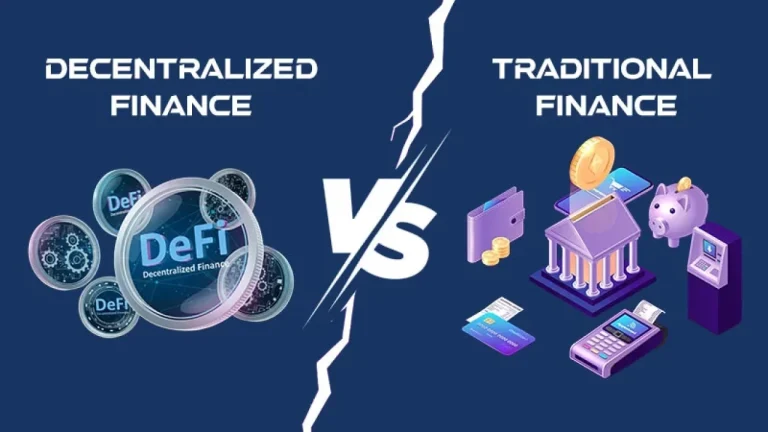
Traditional finance routes most transactions through intermediaries: banks, brokers, and payment processors. Each layer adds fees, delays, and barriers to participation. If you’ve ever waited days for a wire transfer to settle or paid a brokerage fee on a small trade, you’ve felt those costs directly.
Internet capital markets would let assets such as equities, art, or real estate flow as freely as digital messages, settling instantly on open networks without intermediaries controlling who can participate. Think of it as applying the openness of email to financial transactions.
Solana’s sub-second finality and sub-cent fees make it a candidate for that kind of always-on, transparent, globally accessible market. A tokenized share of real estate settling on Solana would cost a fraction of a cent and finalize in under a second, compared to the days and hundreds of dollars a traditional closing might involve.
Whether this vision materializes depends on more than raw network performance. Long-term viability depends on whether Solana can host applications with mass-scale user adoption beyond speculation. Regulation, institutional trust, and user experience all need to catch up to the technical capability.
Frequently asked questions
Who created Solana?
Anatoly Yakovenko and Raj Gokal founded Solana. The project was developed by Solana Labs and is supported by the Solana Foundation, which focuses on ecosystem growth and decentralization efforts.
How fast is Solana compared to other blockchains?
As noted in the comparison table above, Solana handles thousands of transactions per second, far outpacing Bitcoin’s roughly 7 and Ethereum’s 20 to 30 on Layer 1. Typical settlement takes under one second. Ethereum’s Layer 2 solutions can approach similar speeds, but they add bridging steps and complexity that Solana avoids by keeping everything on one layer.
What are Solana’s transaction fees?
The base fee is 5,000 lamports per signature, which equals 0.000005 SOL. All in, you can expect to pay less than $0.01 for a standard transaction. During periods of heavy network traffic, you can attach an optional priority fee to get your transaction processed faster.
Can a beginner use Solana without deep technical knowledge?
Yes. Setting up a wallet, making a small transfer, and trying one simple app covers the basics. The main learning curve is safe wallet practice, not protocol theory. Knowing how to store your seed phrase securely and how to verify transactions before approving them matters more than understanding how Proof of History works under the hood.
Is Solana safe?
Network safety depends on the validators running the chain and the quality of the software. The outage history shows that network-level risks are real. On the user side, safety depends on your wallet behavior, how you store your seed phrase, and whether you verify transactions before approving them. No blockchain eliminates user error.
Why can the SOL price move sharply when the network seems unchanged?
SOL’s price reacts to broad crypto market liquidity, exchange flows, and headlines, not only what’s happening on-chain. A major news event, a shift in Bitcoin’s price, or a regulatory announcement can move SOL significantly even if the network itself is running normally.
Solana’s place in the blockchain landscape
Solana combines speed, low cost, and smart-contract capability on a single Layer 1 chain, making it a contender for payments, DeFi, NFTs, gaming, and tokenized real-world assets. Few other networks offer that range of use cases at comparable cost.
The trade-offs are real, though. A documented outage history, an ongoing centralization debate, regulatory uncertainty, and a volatile token price all factor into any honest assessment. The Alpenglow upgrade, a growing developer community, and the availability of spot ETFs mark a maturing network, but execution risk persists on every front.
Evaluating Solana means looking beyond price. On-chain usage, validator health, ecosystem breadth, and how regulations around digital assets develop will tell you more about where the network is heading than any single price chart. If you want to understand the broader space Solana operates in, our guide on how cryptocurrency works is a good starting point.